




Best Titanium Bar Dental Implants: Key Specs for Global Buyers


 2026-11-18 11:41:04
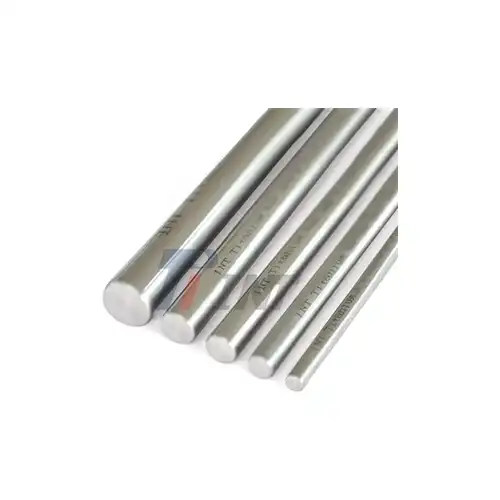
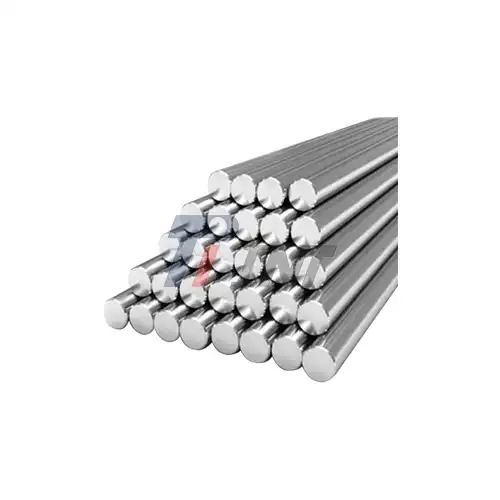
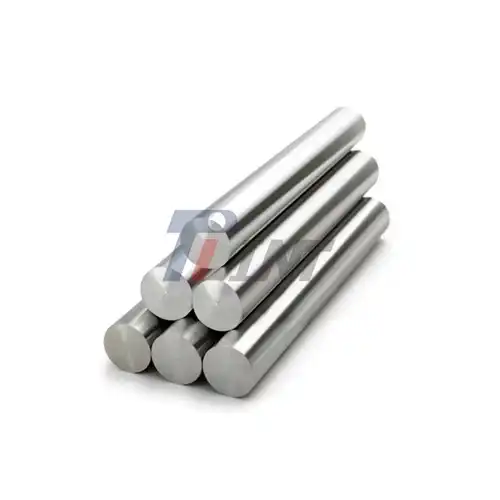
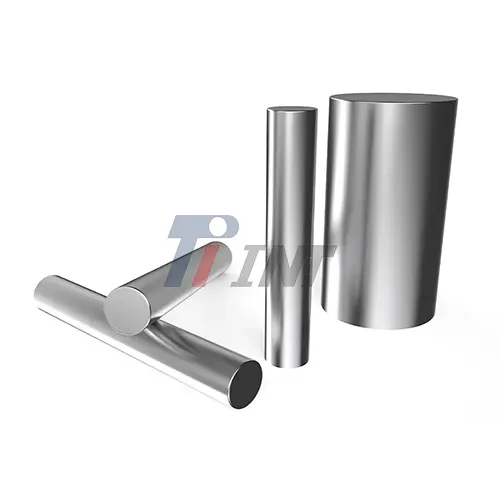
The best titanium bar dental implants start with medical-grade Ti-6Al-4V ELI (Grade 23) or Grade 5 bar that follows ISO 5832-3, with ELI also covered by ASTM F136. Buyers should check four key specs: alloy grade and chemistry, diameter tolerance and straightness, surface quality, and full documentation, including material certificates and lot traceability. A scratch or microcrack found after turning costs far more than the bar itself, so clean surfaces and stable dimensions protect your machining yield. At Baoji INT Medical Titanium Co., Ltd., we supply the titanium rod that implant makers machine into their parts.
|
|
|
What Is a Titanium Bar Dental Implant System?
Core Components and Function
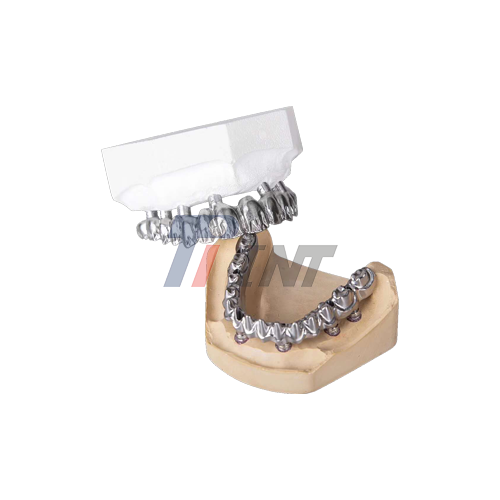
Titanium bars are used to connect several tooth implants to a hard base. The most important parts are the false teeth, bars, screws, clips, clamps, denture bases, and caps. When you chew, the force is spread across all of the implants instead of just one. This is because the bar ties them together. In this style, a removable overdenture made with titanium bar dental implants is safer and more stable than a denture that is held in place by tissue. A set implant bridge, on the other hand, can't be taken out. People with full-arch lower or upper cases and people who need extra memory are two types of users.
From Placement to Delivery: The Workflow
We start with evaluation. Implant placement, healing, scanning or sketching, digital design, cutting, checking, testing it on, and delivery follow. The plan is flexible. The patient's health, bone stability, graft type, and doctor's filling might affect the plan. Before surgery, the team evaluates threads, connection, passive fit, surface finish, and tissue clearance. Katsoulis and colleagues studied how poorly fitting implant prosthesis impacted patients in 2017. You should still verify passive fit. The bars must be the same substance so machines operate the same with each pair.
Why Raw Titanium Matters to Buyers
Lots of people who buy something don't see the bar that goes behind it. Swiss-type lathes and CNC mill-turn machines are the names of tools that cut titanium tube into pieces. It doesn't matter how long it took to make a part if the rod hides a flaw. We only sell pure titanium, Ti-6Al-4V ELI, rods, wires, plates, and forged titanium alloy items. Mr. Zhan Wenge started Baoji INT Medical Titanium Co., Ltd. in 2003. He's worked with metal for more than 30 years. In the long run, it will save you money to judge the bar first.
Key Titanium Bar Dental Implant Materials and Grades
Grade 5, Grade 23, and Grade 4 Compared
Grade 5 (Ti-6Al-4V) and Grade 23 (Ti-6Al-4V ELI) both have the same bases. ELI limits the amount of intermediate elements, and ASTM F136 limits the amount of oxygen to 0.13%. Because it doesn't have as many interstitials, the material is both soft and strong. This makes it perfect for use in medicine. ASTM F136 says that 860 MPa is the weakest point for pulling apart and 795 MPa is the weakest point for stretching.
It's not as dense as steel or cobalt-chrome (4.4 g/cm³), and it can't stretch as much as 114 GPa. Why is it important to have less stiffness? A 1998 review by Niinomi of medical titanium alloys shows this. Pure titanium Grade 4 (ISO 5832-2) is not as strong as other grades, but it does not rust. Using the right alloy ensures the longevity of titanium bar dental implants.
Product Advantages of Our Medical Titanium Bar
Our Ti-6Al-4V and Ti-6Al-4V ELI bar is great for use in dentistry and medicine because of this.
- Biocompatibility: Titanium doesn't react with living things, so there's not much chance that it will be turned down. The stuff can become bone and muscle over time. For this main reason, titanium is used to make false teeth. Besides that, it works fine for a long time in hospitals.
- Light weight and fatigue resistance: The metal is strong for how light it is, which gives manufacturers a lot of options. It works well with items that are stressed over and over, like those that chew loads, because it doesn't get tired quickly. Plus, it makes them last longer.
- Corrosion resistance and customization: That's what we can do for you. The metal won't rust, so it stays strong even in wet places. The bars we make will be perfect for your surgery, and we'll make sure they're safe while they're being sent. Hip gadgets and tools used in surgery are both made of the same stuff.
Because these things are stable, they solve common production problems like materials that wear out, rust, and make waste.
Documentation and Surface Quality
Request this certificate. Science, engineering, and heat testing should match ASTM F136 or ISO 5832-3. Grades should be correct. Get the biocompatibility inspection reports and lot monitoring your quality team needs. See the examples yourself thereafter. Look for iron scale, cracks, scratches, and not-round ends. Surface faults might be undetected until the part is rotated, indicating a break. All Baoji INT products are safe, according to ISO 9001:2015, ISO 13485:2016, and the EU CE. Check sample sizes and surfaces before creating a trial batch for the first sale.
Essential Titanium Bar Implant Specifications and Compatibility
Dimensions, Tolerances, and Straightness
First, find the range, width, and length. For work on implants and abutments, a bar that is 3 to 6 mm thick is often used for high-quality titanium bar dental implants. Tell them what range of diameters you need, such as h6 or h7, and whether you want them to be straight or round. The number of parts that pass review and the way the bar goes through the lathe guide nut change for each set number. There are waves and cuts that don't happen when a bar is round or bent. Note the cut's length, its finish, and how the end face looks. They will know what sizes they have in stock and what needs to be made to order if you ask about all of them at once.
Passive Fit: CAD/CAM Milling Versus Casting
Passive fit means the bar doesn't stress any implants. If the implants don't fit, the screws might loosen and load extensively. When using CAD/CAM to create titanium castings, structure and precision remain the same. Cast surfaces may be rough or filthy and need more maintenance to appear attractive. Designers have several casting options. Compare pricing, wait time, and completion time. One method is more precise. Milling will do what you expect if you don't modify the material. Machine parameters must be modified whenever the substrate changes.
Attachment and Compatibility Checks
Overdenture bar attachments include Hader, Dolder, round, resilient, and non resilient. Every choice has its own repair, prosthesis space, and storage. It's not enough to get along. Check the base, link type, joint height, screw specifications, thread design, and force values. Remember these. No matter their size or appearance, parts don't always fit. Send implant files to a specialist for review before fabrication. Show your model and description document before buying bar stock. You can get the right things for your part.
Titanium Bar Dental Implants Versus Alternative Solutions
Bars, Locator, Ball, Fixed Bridges, and Zirconia
Each implant holds a tooth in place with the help of a locater and a ball connection. Parts are simple to change, and they work well with simple cases. More space needs to be made around the prosthesis, and it needs to be cleaned very carefully. You can connect the implants in any way you want because they are held together by a bar. People who have an implant bridge that is set in place can't clean it.
The stone zirconia is the color of teeth. It's not made of metal and doesn't change shape when it's loaded like titanium does. There isn't a clear winner for titanium bar dental implants. Which one to choose depends on how many implants are needed, how far apart they are, how strong the bone is, and how much space there is between the teeth.
Choosing a Design by Buyer Type
In some situations, normal sizes are needed because the case is done over and over again. In other situations, implant sites that are hard to get right need designs that are made just for them. It's important that they always have enough and that the labels are easy to read. For OEM implant brands, being able to repeat, having a digital process that works with the brand, having options for private label, and having a steady supply of materials from everyplace are the most important things.
You should match your model to the grade of the material, how well it works with other things, quality control, paperwork, minimum order quantity, wait time, logistics, and help from experts when you do your evaluation. They can only use a few at a time, but they need a lot of different sizes. Find out how many of each size you need to make the order before you say yes.
Maintenance, Repair, and Long-Term Planning
Every day, you should clean and care for your overdentures. The person who has dentures should clean around the bar every day, and the doctor should check the base wear, clips, housings, and screw security every so often. Quite often, substructures don't fit properly, inserts wear out, and hardware comes loose. It costs less to buy a new clip than to fix a false tooth or make a new bar. Make sure you know how to fix things right away. It's also important to keep CAD files, models, part lists, inspection records, and more. If you ever need to find the certificate for the bar material, batch records will help you do it.
Procurement Guide: Buying Custom and Wholesale Titanium Implant Bars
How to Prepare a Request for Quotation
Emails that are meant to do something don't go back and forth. Put these in the first message you send.
- Material and standard: Pick the metal (Ti-6Al-4V, Ti-6Al-4V ELI, or pure titanium) and the standard you need, like ASTM F136 or ISO 5832-3. You should make a list of all the things that your quality team needs, such as the material permit, inspection records, and any biocompatibility paperwork.
- Size and quantity: For each size, write down its width, length, and range. Then, write down how many things fit into each size. Write down how much you want to buy every three months and whether you need standard or special lengths. Full lists let suppliers check that they have enough stock. People who make implants often order small amounts of a lot of different sizes.
- Delivery and packaging: The things need to be shipped and packed in a certain way. Please let us know where they are going and when you need them. While the bar is being shipped, ask for safe packaging that will protect the ends and sides. Also, make a list of any import or customs papers you need.
The supplier should be honest and give you a good quote for titanium bar dental implants. They should also let you know about any problems before they happen. Don't just look at the unit price when you figure out the risk of scrap and the cost of freight.
How to Evaluate a Manufacturer
Start with the record. Present ISO 13485:2016 and ISO 9001:2015 certifications to the group in charge. ISO 13485:2016 became part of the US FDA's Quality Management System Regulation on February 2, 2026. This is why more gadget manufacturers are asking vendors to achieve this requirement. Next, examine the supplier's records to understand how they manage and monitor non-standard batches. Make sure your link works. Your partner should show you visuals and answer tech questions clearly. Red signs include unchecked awarding, inconsistent sample numbers, and poor recordkeeping. Baoji INT has clientele with over 10 years of experience.
Pre-Order Checklist and Sample Approval
Look over three groups of points before you give a trial order. A few technical points are the grade, the diameter, the tolerance, the finish on the outside, and how straight it is. When making a business decision, you should think about the unit price, the minimum order quantity (MOQ), the wait time, the time it takes to approve a sample, the packing, the shipping terms, and how the seller handles broken or non-standard bars.
Things like visa forms, certificates, records, and rules for the end market all have places where they need to be properly filled out. Before they buy a lot, some buyers like to see samples. This way, they can be sure that the quality will stay the same from batch to batch. After that, they move on to rolling sales and add the provider to the list of ones that can work. Getting through the first time can take anywhere from one to three months. The second time, it goes by faster.
Conclusion
You need to think about more than just the shape of the bar when you get titanium bar implants. Teeth implants are linked together by titanium bars that hold an overdenture in place. The things that are under that structure are what make it work. Ti-6Al-4V ELI is made with ASTM F136 and ISO 5832-3. Grade 4 pure titanium is used for forms that need less strength. Some of the most important specs for titanium bar dental implants are the width, straightness, quality of the surface, and papers like material certificates and the ability to keep track of the product.
Based on how well they fit and join and what your case needs, you can choose bars and finder, ball, fixed, or zirconia. People who want to get a good deal should get clear quotes, test samples, and work with a company whose ISO 13485:2016 quality system has been checked. Less waste, extra work, and delays happen when the specifications are clear from the start.
FAQ
Can I use Grade 4 or Grade 5 titanium?
They can both be used on implants. There is no rust on the fourth grade because it is made of pure titanium. Grade 5 steel is a stronger metal. Your choice will depend on how it's made, how heavy it is, and where the market rules say it should go.
Is a bar always better than locator or ball attachments?
No. When the case is simple, locater and ball attachments are better because it's easy to switch out parts. A bar is useful when you need to bind and spread the weight in a certain way. The choice is based on the number of implants, where they are put, and the amount of space that is ready.
What do you need for a custom quotation?
You need to send the alloy grade, diameters, tolerances, lengths, numbers, market location, packing needs, and documents in order to get the papers you need. Drawings and digital files speed up the review process and cut down on the number of messages that need to be sent back and forth.
How do I qualify a new supplier?
Take a look at the samples to see how big they are and how good the surface is. Then, make one or two test lots. If things don't change, add the seller to your list of trusted sellers and buy from them more often.
Request a Titanium Bar Dental Implants Specification Review
Baoji INT Medical Titanium Co., Ltd. is a titanium bar dental implants supplier for manufacturers that need Ti-6Al-4V and Ti-6Al-4V ELI rod. Send your grade, diameters, tolerances, quantities, and destination market to export@tiint.com, and our team will review the specification with you. Every product has passed ISO 9001:2015, ISO 13485:2016, and EU CE safety certification. Visit inttitanium.com for more details.
References
1. ASTM International, ASTM F136: Standard Specification for Wrought Titanium-6Aluminum-4Vanadium ELI (Extra Low Interstitial) Alloy for Surgical Implant Applications, 2021.
2. International Organization for Standardization, ISO 5832-3: Implants for Surgery — Metallic Materials — Part 3: Wrought Titanium 6-Aluminium 4-Vanadium Alloy, 2021.
3. International Organization for Standardization, ISO 5832-2: Implants for Surgery — Metallic Materials — Part 2: Unalloyed Titanium, 2018.
4. International Organization for Standardization, ISO 13485: Medical Devices — Quality Management Systems — Requirements for Regulatory Purposes, 2016.
5. Niinomi, M., Mechanical Properties of Biomedical Titanium Alloys, Materials Science and Engineering: A, 1998.
6. Katsoulis, J., et al., Misfit of Implant Prostheses and Its Impact on Clinical Outcomes: Definition, Assessment and a Systematic Review of the Literature, European Journal of Oral Implantology, 2017.