




Gr1 Titanium Welding Wire TIG Guide: Settings, Shielding, and Tips


 2026-11-18 11:40:59
To weld well with Gr1 titanium welding wire (ERTi-1), run DCEN, hold a short arc, and shield the weld pool, the filler tip, and the cooling bead with high-purity argon. Clean the joint and the wire with approved solvents. Match the wire diameter to the base-metal thickness, and add a back purge when the root side gets hot. A bright silver bead tells you the shielding worked. Treat every setting in this guide as a starting point, and qualify it against your joint, equipment, and customer specification before production.
|
|
|

Know Your Gr1 Titanium Welding Wire Before You Weld
Good welds start with the right filler. These three sections cover what the wire is, which standards apply, and how to pick a diameter.
What Is Gr1 Titanium Welding Wire?
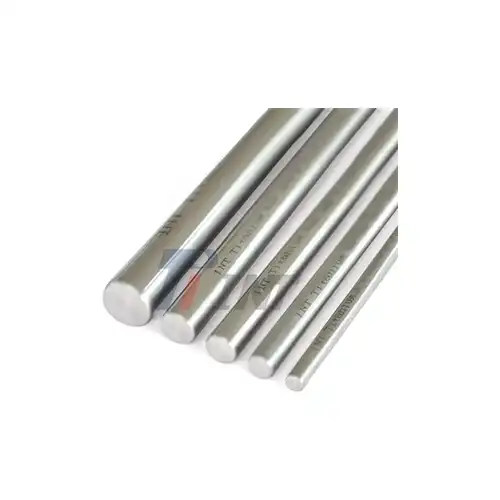
Gr1 titanium welding wire uses clean business-grade filler metal. AWS A5.16 calls it ERTi-1. Grade 1 unalloyed titanium contains the least iron and oxygen, making it light and easy to deal with. This makes the metal simple to produce and rust-proof in saltwater, moist chlorine, and many organic acids. The material melts at 1,660°C due to its density of 4.51 g/cm³. Grade 1 products' pull strength is 240 MPa (35 ksi), therefore don't anticipate Grades 2 or 4 strength. A broad data sheet is not what I advise buyers. Instead, I recommend reading the mill certificate for chemical, mechanical data, and heat number.
Standards, Classifications, and Specifications
A valid order contains many names, as "titanium." It lists the grade, AWS classification, product standard, width range, surface condition, and packing instructions. Now, ASTM B863 includes titanium and titanium alloy wire, while AWS A5.16 covers ERTi-1 and Grade 1 filler. Note that it will alter depending on the item's form and the customer's sketch. Get confirmation that the two function together, a chemical report, mechanical findings, and heat or lot tracking if needed. ISO 9001:2015 and ISO 13485:2016 have certified Baoji INT Medical Titanium Co., Ltd. The EU CE certifies our products as safe. Titanium wire and metal are also available. Gas, petrochemicals, and other industries utilise these.
How to Choose the Correct Gr1 Titanium Welding Wire Diameter
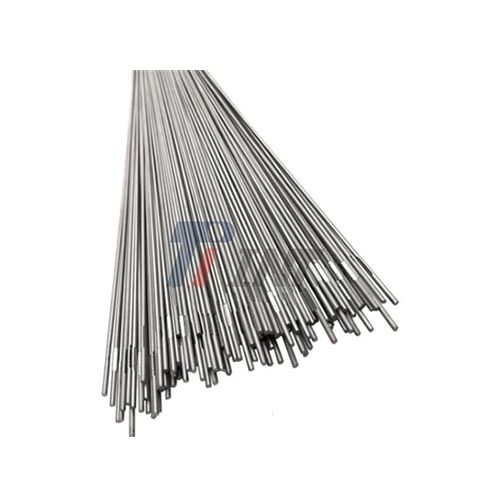
Based on base metal thickness, joint form, welding location, root gap, and current range, choose the width. 1.0 mm or 1.2 mm wire melts fast and is simple to work with, making it ideal for accurate work and thin sheets. 1.6–2.0 mm works for most purposes. Thicker pieces or larger gaps may need 2.4 or 3.2 mm. Thicker wire might freeze the pool. Too weak wires cause dab to fire too frequently. The hot tip is removed from the gas cover. Also, make sure your technique fits the framework. TIG requires handwork, and sticky rods work. Spools use feeders that accomplish the job. Consider space and shopping frequency before choosing a pack size.
TIG Settings, Shielding, and Welding Procedure
Titanium changes when it comes in contact with oxygen, nitrogen, and hydrogen. Read on to learn how to keep air away from the weld and how to quickly tell if something is wrong.
Gr1 Titanium Welding Wire TIG Settings: Amperage, Gas Flow, and Arc Control
These settings are concepts, not facts for Gr1 titanium welding wire. Most shops connect titanium with 2% lanthanated or ceriated tungsten points. To reduce gas dispersion, they shorten the curve. Amps depend on wire thickness, width, location, and depth. TiO₂ is typically combined with 99.995% pure argon. Many retailers acquire 99.999% pure, low-dew-point argon. Too much flow draws air into the pool. Lack of flow lets odour in. A back purge, gas lens, huge cup and shield trail behind in the safe region. Much larger. Get silver beads. If straw, blue, grey, or white, investigate.
Step-by-Step TIG Procedure
On the work order, compare wire grade, diameter, lot number, and certificate. Now do something different. Clean the filler and joint with a safe cleaner. Work on both using clean gloves and the correct tools. Look at the torch next. Ensure the DCEN is charged, the tungsten was ground, the lines are clean, and there are no leaks. Set the pre-flow to fill the cup with argon before the arc. Post-flow must be long enough to wrap the bead. Create a pool. Then hit the circle. Finally, apply filler with the hot rod tip within the screen. Hold the flame over the weld until the metal is below 800°F (425°C). NDT as needed and record parameters and lot numbers. Then examine the colour and bead form.
Common Gr1 Titanium TIG Welding Problems and How to Avoid Them
For the most part, air, dirt, or heat can damage tin. There's a leak, the arc is too long, or the gas isn't pure. You took the torch away too soon. Most of the time, porosity is caused by a gas joint that isn't tight enough, water, oil, or dirty wire. First, check the connections and clean them again. Most of the time, the current, trip speed, or fit-up need to be changed when something breaks, doesn't fuse, or doesn't go all the way through.
When the electrode hits the pool or the filler, tiny bits of tungsten show up. To get rid of these, grind the tip again and keep the arc short. Make a bead that flakes and goes light gray or white now. More nitrogen and oxygen than it needs have been taken in. Figure out what's wrong, fix it, replace any parts that might be broken, and re-certify the process before producing again.
Storage, Applications, and Material Choices
A well-tuned TIG setup won't work if the wire is dirty or the filler doesn't match the job. These parts talk about how to deal with, examples of use, and similarities.
Gr1 Titanium Welding Wire Storage, Handling, and Quality Control
Keep Gr1 titanium welding wire in the sealed box it came in until you need it. Put it somewhere dry, clean, warm, or cool. Steel that is oily, wet, or full of chemical fumes is more likely to get porous and dirty if you touch it. You'll need clean hands, a special container, and a lid that can be closed again to store the spool after you've used it. After that, put it in a closet that doesn't get too humid. Compare the shipment's grade, classification, diameter, quantity, lot numbers, and certificate to the order. Look at the outside too. Use a white cloth to clean the wire. It should look bright, not dull or streaked. Don't take lots that don't work if you want to find the wire that led to any weld. Take notes too.
Applications and Material Selection
Pipes, tubes, heat exchangers, chemical equipment, and pressure tanks can all be worked on with grade 1 filler in some ways. Some projects in medicine, space, and cars also use it. Still, each job needs to be checked to make sure it meets the service's needs in terms of how strong it is, how well it resists rust, the temperature range it can handle, and how easily it can be shaped. A lot of the welds on pipes and tubes need to be cleaned on the inside. Space and science projects need to be very clean, well-documented, and easy to keep track of.
The temperature, pressure, and grade of the metal used can change the type of car fumes that are made. You can also use Grade 1 filler with Grade 1 base metal. This filler is soft and easy to shape after the weld. To line and cover things, this is useful. Not all titanium parts can be fixed with it. Before you add a filler, make sure you look at the base material, service environment, customer specification, and qualified procedure.
Gr1 Titanium Welding Wire vs. Alternative Materials
Do not choose a filler based on pricing, and don't replace it unless an engineer approves. Shape and bend are weaker in Grade 1 filler than Grade 2. This is what most engineers do unless the design requires a lighter payment. Because ERTi-1 may not match Gr2's base metal. Aluminium and stainless steel lines protect, transport heat, produce oxides, and polarise differently. Titanium can't be worked this way. Not all steel applications need gas safety once the spark ceases. Choose a filler depending on the base metal grade, mechanical demands, corrosive environment, AWS, ASTM, EN, or client standard, and process qualification results.
Buying and Checking Gr1 Titanium Welding Wire
The buy teams are just as important as the welders when it comes to making the weld good. In these parts, there is a list for the shop floor, the specs, and the real price.
How to Buy Gr1 Titanium Welding Wire from a Qualified Supplier
You can write down the buying spec once and then use it again. Write down the titanium grade, AWS classification, relevant standard, diameter, product shape, amount, packing, certification, end location, inspection needs, and what the titanium will be used for. For 5-kilogram spools, look at the marking to see how long it is without any splits and how well it keeps water out. Now it's easier to compare quotes, and people don't have to email each other as much.
When you bring the goods into the country, customs will need the Incoterm and the papers that go with it for Gr1 titanium welding wire. A good service should have up-to-date certificates, be able to keep track of lots and heat, have years of experience shipping, and be able to easily explain technical information in plain English. It's also possible for OEMs and distributors to need private labeling, custom packaging, or inspection plans. Make sure to list these wants when you get quotes.
Count the Total Landed Cost, Not Only Price per Kilogram
When margins are small, I check the total landed cost to make sure things are right. You need to include the cost of the lot that was turned down, as well as taxes, paperwork, licenses, wait time, and shipping by sea or air. A small price edge could be lost if the exchange rate for money and freight changes. It takes three to four weeks for most sizes to come in, but people write down what size they want and how long they have to wait. An order will often have a mix of different sizes and amounts. To ship more than one thing, find out how much the least you can buy.
A company that makes instruments and tools and needs to reorder every month should also use papers that don't change from lot to lot. Ask for a piece first. Next, use a bead-on-plate test to check the color, the number of holes, and how the bead moves across the plate. Some things move faster through customs and spot checks when mill certificates are sent with the package.
Practical TIG Welding Checklist for Gr1 Titanium Welding Wire
A short list makes it easier to remember what you need to do. You need to know the grade of the base metal, the design of the joint, the classification, the diameter, the lot number, the cleaning state, the argon supply, the torch parts, the gas-flow system, and the approved process before you start welding. While you weld, keep the protection in place around the pool and the filler. Do not add too much heat, and make sure the arc is short and the travel speed stays the same.
Watch the color of the beads and stay away from tungsten. Check the bead and the area that was affected by the heat, do any required NDT, and write down the parameters and information about the consumables. Keep the post-flow going after welding. Connect any extra lines right away. The list is used for both keeping the business honest and showing new employees how to do their jobs. This helps each shift join the same way.
Conclusion
Gr1 titanium welding wire produces soft, flexible, rust-resistant welds when clean. Buyers should verify quality, standard, width, and lot level before ordering. Short arc, high-purity argon, tail and back protection, and DCEN maintain bead silver clean and strong in the shop. Air, water, oil, and heat are the major causes of failure. A documented list, sealed storage, and spot-checks protect that quality. Choosing the correct filler depends on the metal, service circumstances, and method. Because Grade 1 is inferior than Grade 2. Knowing the landing fee and documentation is also crucial.
FAQ
What shielding gas should I use for Gr1 titanium welding wire?
It is best to use argon that is at least 99.995% pure for Gr1 titanium welding wire. A 99.999% success rate and a low dew point are choices that many stores make. Protect the side with the light, the bead behind it, and the back.
How do I read weld color?
The goal is bright silver. If the rules allow it, Straw can turn in work that isn't due. If the metal is blue, gray, or white, it means it has rusted. This means you should throw it away or grind it up.
Can I weld Gr2 base metal with Gr1 filler?
You can, but the metal you'll be welding to isn't as strong as the metal you'll be putting it on. ERTi-1 can be used sometimes, but most of the time, ERTi-2 should be paired with Gr2.
Which documents should arrive with the wire?
Along with proof of approval, ask for a mill certificate that lists the heat number, chemistry, and mechanical data.
Request a Gr1 Titanium Welding Wire Specification and Quote
Baoji INT Medical Titanium Co., Ltd. was founded in 2003 by Mr. Zhan Wenge, who has more than 30 years of experience in the titanium industry. If you need a Gr1 titanium welding wire supplier, send your grade, diameter, quantity, and certificate requirements to export@tiint.com. We will reply with a practical quotation and document details. For more information, visit inttitanium.com.
References
1. AWS A5.16/A5.16M, Specification for Titanium and Titanium-Alloy Welding Electrodes and Rods, 2013
2. ASTM B863, Standard Specification for Titanium and Titanium Alloy Wire, 2014
3. AWS D10.6/D10.6M, Recommended Practices for Gas Tungsten Arc Welding of Titanium Piping and Tubing, 2000
4. AWS D17.1/D17.1M, Specification for Fusion Welding for Aerospace Applications, 2017
5. Donachie, M.J., Titanium: A Technical Guide, ASM International, 2000
6. Lütjering, G. and Williams, J.C., Titanium, Springer, 2007