




Gr5 Titanium Straight Wire vs Titanium Alloy Wire for Implants


 2026-10-29 08:56:45
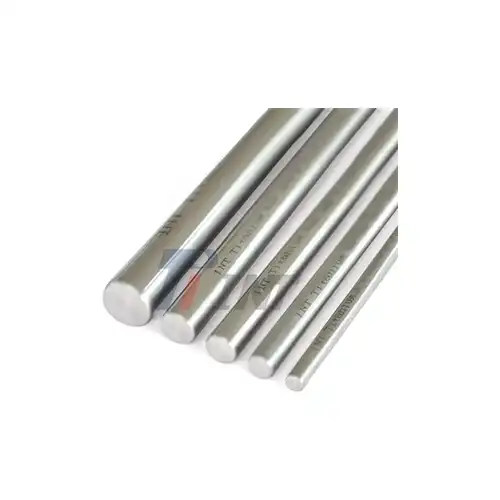
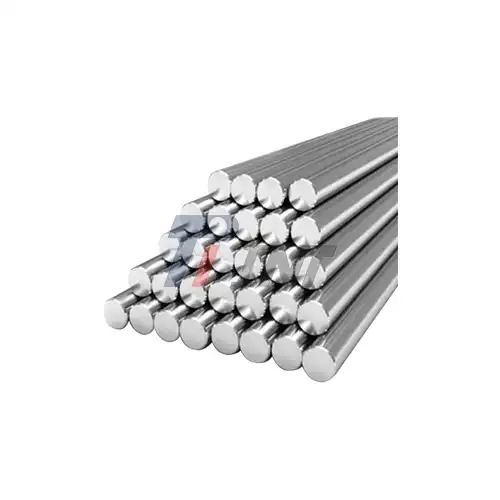
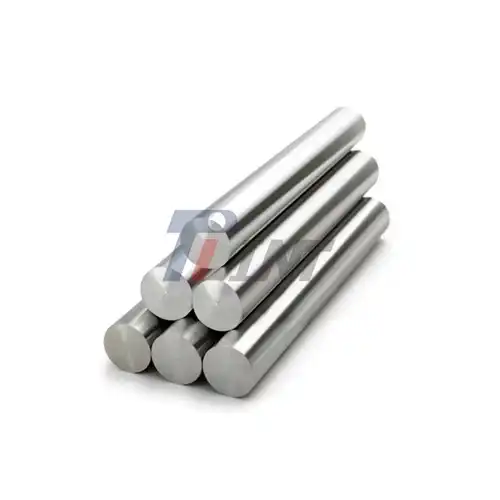
When sourcing titanium wire for medical implant manufacturing, the grade you select directly determines your downstream yield, compliance posture, and total cost per finished part. Among all available options, Gr5 titanium straight wire — the precision-straightened form of Ti-6Al-4V — stands apart from commercially pure grades and alternative alloys. With tensile strength ≥895 MPa, density of 4.43 g/cm³, and a diameter range of 0.5 mm–5 mm, it delivers the dimensional stability and mechanical consistency that OEM contract manufacturers demand for high-precision implant component production.
|
|
|
Understanding Gr5 Titanium Straight Wire and Titanium Alloy Wire
What Sets Ti-6Al-4V Apart from Other Grades?
The alpha-beta alloy Ti-6Al-4V has a dual-phase microstructure that is supported by aluminum (α-phase) and vanadium (β-phase). This gives it a tensile strength that commonly pure grades just can't match. For example, the highest stress level reached by Gr2 CP titanium is around 345 MPa. Ni-Ti (nitinol), on the other hand, is very flexible but not very rigid.
Ti-6Al-4V ELI lowers the amount of oxygen and iron in the interstitial space for applications where failure is likely, and Ti-Mo alloys are designed to have a low elastic modulus when they come into contact with bone. Each grade fills a specific need, and knowing that need is the first step in making smart buying choices.
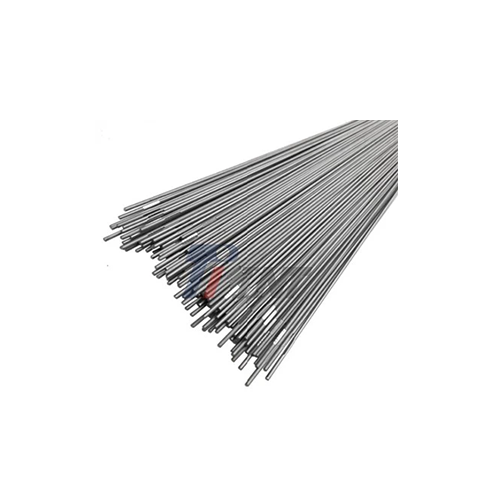
Precision bending is the step in the process that turns coiled Gr5 wire into an input that is ready to be used in production. A camber deviation of less than 1 mm per meter is achieved by cold drawing and then mechanically straightening. This stops coil memory and tool chatter in Swiss-type CNC lathes and automatic bar feeders, which is very important when your shop makes high-aspect-ratio bone screws or K-wires using Gr5 titanium straight wire.
Comparing Gr5 Titanium Straight Wire and Other Titanium Alloy Wires
At the machine and the inspection table, you can feel the changes in performance between wire types, and Gr5 titanium straight wire stands out as a key example of these differences. The main technical standards for Gr5 titanium straight wire are shown in the table below:
| Property | Gr5 Ti-6Al-4V | Gr2 CP Titanium | Ni-Ti Alloy |
|---|---|---|---|
| Tensile Strength | ≥930 MPa | ~400 MPa | ~800–1500 MPa |
| Yield Strength | ≥860 MPa | ~275 MPa | Variable |
| Elongation | ≥10% | ~20% | High |
| Density (g/cm³) | 4.43 | 4.51 | 6.45 |
| MRI Compatibility | Yes | Yes | Conditional |
Biocompatibility and Corrosion Behavior in Body Fluids
In physiological environments high in chloride, Gr5 titanium forms a stable, self-renewing TiO₂ oxide layer on its surface. This layer protects against corrosion better than surgical stainless steel and cobalt-chrome in long-term electrochemical stability studies. This passive film stops the release of ions, which is directly related to the response of the tissue around the implant and the patient's outcome. This is an important factor for OEM manufacturers who sell finished parts to branded device companies through the MDR or FDA 510(k) pathways.
When it comes to buying things, Gr5 wire has benefits that go beyond its performance numbers. When suppliers can give you lot-traceable material certifications, like a COA that is tied to the melt heat and billet number, it makes it easier to keep track of all the paperwork during FAI and SQE checks. This traceability is a requirement for procurement, not a nice-to-have feature.
Practical Applications of Ti-6Al-4V Wire in Medical Component Manufacturing
Ti-6Al-4V wire is used as a main feedstock by contract makers for a certain set of high-criticality medical parts, and Gr5 titanium straight wire is often specified alongside it for similar performance-critical applications. Knowing where this material works best helps buying teams make decisions about where to buy it that are in line with how production actually works.
Here are the main types of uses where this metal gives manufacturers real advantages:
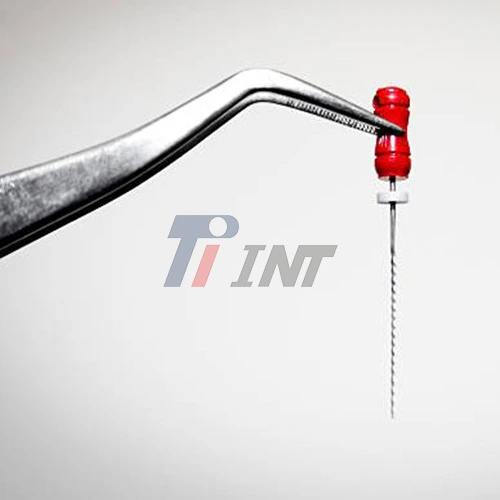
- Kirschner Wires and Fixation Pins: Ti-6Al-4V is stiff, so K-wires can go through cortical bone under controlled force without deflection. The material is also non-magnetic, so it stays compatible with MRI scans after insertion. Its elastic stiffness (about 114 GPa) is closer to that of cortical bone than that of stainless steel. This means that it will protect against stress better over the life of the implant.
- Bone Screw and Spinal Implant Blanks: These are made from straight wire stock and need a tight diameter tolerance (h7/h8 ISO limits, or ±0.01 mm on centerless-ground product) to keep the thread-form quality constant. Because surface flaws like laps, seams, or die marks can cause CNC tools to chatter and dimensional chains to break, a surface Ra of less than 0.8 µm is usually used for incoming inspection.
- Dental Prosthetic Components: Ti-6Al-4V wire is used to make precision-machined abutment flats and prosthesis sub-parts. Because it doesn't rust in mouth fluids and has a long clinical background, it is the most popular metal choice among dental CMOs.
- Trauma Fixation and Surgical Instrument Blanks: Straight wire stock is used to make plates, pins, and instrument parts that are both light and strong. It is fed into casting and machining lines where weight and wear life determine the design.
These benefits directly help OEM manufacturers with their yield problems: surface-defect-free wire lowers the number of rejects that happen after machining, and tight diameter consistency protects tooling life and keeps CNC setup differences between production batches to a minimum.
Selecting the Right Titanium Wire Grade for Your Production Line
There is a clear order in the way that OEM buying managers choose which options to use. Implant blocks that can hold weight and highly precise manufactured parts point to Ti-6Al-4V. When working with soft tissues or shaping things that need to be more flexible, CP grades may be better. Ni-Ti is needed for superelastic useful parts. There is no one grade that works for everyone, and choosing the wrong one upstream leads to extra work, waste, and compliance issues later on.
Key Quality Control Parameters to Specify in Your RFQ
When you send out an RFQ for medical-grade titanium wire, the following check items must be included for all approved suppliers: Gr5 titanium straight wire must be explicitly specified as a required material form, alongside any dimensional, mechanical, and surface finish criteria.
- Diameter tolerance and ovality checked by laser micrometer (h7–h9 ISO limits depending on application)
- Straightness variation less than 1 mm/m, proven for each batch
- Surface defect inspection via eddy current tests and visual analysis; Ra values are given in the drawing
- Chemical composition confirmed by ICP-OES, and the hydrogen amount was less than 0.015% to keep it from weakening
- Metallographic microstructure check confirmed that the alpha-beta phase balance was correct and that there were no alpha-cases
By making these factors clear in your buy order, you get rid of any doubts and give your SQE team a solid framework for accepting the goods during the incoming inspection.
Why Baoji INT Medical Titanium Is a Trusted Gr5 Wire Supplier
Baoji INT Medical Titanium Co., Ltd. was founded in 2003 by Mr. Zhan Wenge, who has more than 30 years of direct experience in the titanium industry. It has grown into a well-known leader in the production of medical titanium materials. The way the company makes Ti-6Al-4V wire includes hot rolling, precise cold drawing, mechanical bending, and ultrasound testing at every step of the way to make sure the Gr5 titanium straight wire is the right size and shape.
INT sends out Gr5 titanium wire with a full material certification that can be tracked back to the heat number and billet. This is the set of documents that your quality engineers need for FAI, lot release, and being ready for an audit. You can choose the thickness between 0.5 mm and 5 mm, and the wire can be cut to length.
This means that you get wire that is the right size for your production plan, which cuts down on prep time and material waste. All of our products are certified with ISO 9001:2015, ISO 13485:2016, and EU CE. This meets the basic requirements that device brand customers in the US, EU, and Japanese markets have. To see the full list of product specs, go to inttitanium.com.
Conclusion
Choosing between Ti-6Al-4V and other grades of titanium wire has direct effects on the yield of the machining process, compliance with regulations, and long-term implant performance. When it comes to load-bearing and high-precision machining, Gr5 titanium straight wire always does better than CP grades. It also has the biocompatibility and corrosion resistance that medical OEM clients need. The right provider will add to that material edge by giving you provable paperwork, tight control over dimensions, and order parameters that are flexible enough to fit your production plan.
FAQ
Why does Gr5 titanium wire offer higher strength than CP titanium grades?
Adding aluminum and vanadium to Ti-6Al-4V makes the dual alpha-beta phase lattice more stable, which CP grades don't have. The controlled hot rolling and heat treatment of this grain makes the tensile strength ≥895 MPa, which is more than twice as high as Gr2. This makes a Gr5 titanium straight wire that stays the same size even when it's being machined and stressed over and over again, which is common in the production of hip and spinal implants.
Can Ni-Ti wire replace Ti-6Al-4V for bone screw applications?
No, Ni-Ti is not good for rigid fixation parts like bone screws because it is too elastic. However, it is good for stents and orthodontic archwires. Because it is denser (about 6.45 g/cm³) and contains nickel, it is not as biocompatible, which makes it harder to get long-term implantable devices approved by regulators.
What are typical lead times and minimum order quantities for medical-grade titanium wire?
Lead times depend on the source and the specification, but well-known makers usually give 3–6 weeks for normal sizes, with faster choices for widths that are in stock. The minimum order quantity depends on the diameter and length of the cut. Reliable providers allow small test orders to help your FAI process before committing to volume releases.
What documentation should accompany each shipment?
A shipment that follows the rules should have a Certificate of Analysis (COA) that lists the melt heat number, chemical composition results, mechanical test data, a dimensional inspection report, and any necessary certifications (ISO 13485, EU CE).
Partner with Baoji INT Medical Titanium Co., Ltd. for Your Next Titanium Wire Order
The Baoji INT Medical Titanium Co., Ltd. sells approved Gr5 titanium straight wire to OEM makers in the US, Europe, and Japan. Their products are certified by ISO 13485:2016, ISO 9001:2015, and the EU CE. We make specialized Ti-6Al-4V wire and have been making medical-grade wire for over 20 years. We offer full lot tracking, custom cut lengths, and help for SQE audits. To get a sample and price quote, email your picture and specs to export@tiint.com or go to inttitanium.com.
References
1. Williams, D. F. (2008). On the mechanisms of biocompatibility. Biomaterials, 29(20), 2941–2953.
2. ASTM International. (2021). ASTM F136: Standard Specification for Wrought Titanium-6Aluminum-4Vanadium ELI Alloy for Surgical Implant Applications. ASTM International.
3. Niinomi, M. (2008). Mechanical biocompatibilities of titanium alloys for biomedical applications. Journal of the Mechanical Behavior of Biomedical Materials, 1(1), 30–42.
4. Geetha, M., Singh, A. K., Asokamani, R., & Gogia, A. K. (2009). Ti based biomaterials, the ultimate choice for orthopaedic implants – A review. Progress in Materials Science, 54(3), 397–425.
5. ISO. (2016). ISO 13485:2016 Medical devices — Quality management systems — Requirements for regulatory purposes. International Organization for Standardization.
6. Rack, H. J., & Qazi, J. I. (2006). Titanium alloys for biomedical applications. Materials Science and Engineering: C, 26(8), 1269–1277.