




How to Choose a Titanium Manufacturer for Medical Applications


 2026-10-29 08:56:41
Choosing the right titanium manufacturer for medical applications directly affects your production quality, delivery reliability, and bottom-line profitability. When sourcing a medical titanium bar — whether Pure Titanium Gr1–Gr4 or Ti6Al4V ELI — procurement managers must evaluate certifications, machining consistency, material traceability, and supply flexibility. With surgical instrument manufacturing margins razor-thin and customer audits growing stricter, partnering with the wrong supplier carries real operational risk. This guide breaks down every critical factor you need to assess before committing to a long-term titanium material supplier.
|
|
|


Understanding Medical Titanium Bars and Their Role in Surgical Instrument Manufacturing
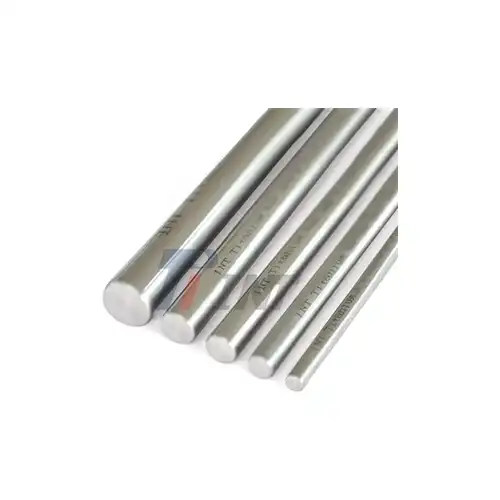
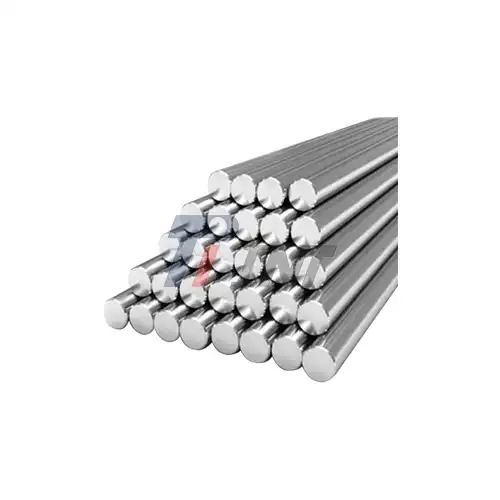
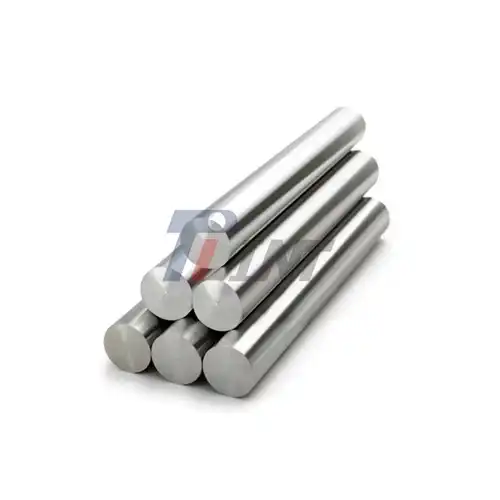
Medical-grade titanium rods are the main raw material used to make surgical instruments like forceps handles and retractor shafts. They are forged, CNC machined, and polished. Because of how well they work, they can't be replaced in this case.
Why Titanium Outperforms Competing Materials
Surgical tool makers still use a lot of stainless steel, but titanium has clear benefits. Its density is about 60% that of steel, which means that tools will be lighter and operators will not get as tired during long processes. More importantly, the natural TiO₂ oxide layer on titanium surfaces doesn't rust even after being sterilized many times in an autoclave. This is an important stability factor that stainless steel and cobalt-chrome can't match.
According to ASTM F67 and ASTM F136 standards, commercially pure titanium grades (Gr1–Gr4) and Ti6Al4V ELI can be used to make medical devices. Gr1 and Gr2 are better at being shaped to fit complicated instrument shapes. Gr4 and Ti6Al4V ELI, on the other hand, have higher tensile strengths — up to ≥895 MPa — for parts that hold weight, and these properties are equally critical when medical titanium bar is selected as the starting feedstock for machining such load-bearing implants and instruments.
Titanium Grades That Matter Most for Instrument Makers
Here are the grades that are most important for making medical instruments:
- Grade 1 (CP Ti): The most flexible and the easiest to shape and forge. It can be used for thin-walled parts and lightweight handle shapes.
- Grade 2 (CP Ti): The most useful grade. Strength and shapeability are balanced. It has the most standard instrument shafts in stock and the best prices.
- Grade 4 (CP Ti): The strongest among pure titanium grades. Preferred for working ends and jaw parts that need to be structurally strong.
- Ti6Al4V ELI (Grade 23): Premium alloy with a tensile strength of at least 895 MPa and an elongation of at least 10%. Used when the highest strength-to-weight ratio is important.
Knowing these differences helps purchasing managers match the right materials to the right instruments before they start working with sellers.
Core Criteria to Evaluate When Choosing a Titanium Manufacturer
Not every company that has "medical titanium" in their catalog actually makes material that meets the needs of a workshop for consistent CNC machining and polishing. The following factors are used to carefully sort reliable partners from unreliable ones.
Certifications and Proof of Traceability
Regulatory harmony can't be negotiated. For export compliance, a good maker should have EU CE approval, ISO 13485:2016 for medical device materials, and ISO 9001:2015 for general quality management. Check that the seller can send heat-number-traceable mill test reports (MTR) with every package, along with the certificates. If you're late getting these papers, it will throw off your whole shipping schedule because they are directly related to customer audits and export clearance.
Machining Performance Consistency
Material hardness that isn't the same across a batch causes differences in size during CNC turning and grinding, which increases the amount of scrap that you have to deal with and cuts into your profits. Ask the seller to confirm that they manage the microstructure using normal thermomechanical processes and, if necessary, vacuum arc remelting (VAR), especially when supplying medical titanium bar where uniformity is critical for machining stability. Find out about the different surface finishes that are available. For example, polished and sanded surfaces show that the provider knows what you need for processing later on.
Grade and Dimension Availability
Surgical tool workshops use a variety of production plans and work with rods of different diameters at the same time. Getting things from a supplier that has sizes ranging from 6 mm to 150 mm in diameter and 1000 mm to 3000 mm in length for Gr1, Gr2, Gr4, and Ti6Al4V ELI gives you real purchasing freedom. Check to see if popular specifications are kept in stock for quick delivery times and if the source allows split orders across multiple specifications without setting too high of a minimum order quantity.
Comparing Manufacturer Offerings: What Actually Drives Value
A structured framework is needed to compare prices from different suppliers. When there is inconsistent chemistry, slow paperwork, or unreliable delivery dates along with a lower per-kilogram rate, the costs that come after are much higher than the initial savings.
Here are the evaluation factors that always show the real value of a supplier:
- Material traceability: Can each rod that is shipped be linked to a specific melt lot? This keeps your regulatory position and ties with customers safe.
- Lead time reliability: For regular restocking orders, standard delivery within 3–4 weeks is the norm in the industry. When suppliers regularly miss this level, it slows down production.
- Documentation speed: MTRs, CE certificates, and letters of material compliance should come with the shipment, not weeks later.
- Flexible ordering: Instrument makers who make a lot of different products need to be able to accept orders with different specifications and no minimum order quantity (MOQ) requirements.
These things, not just the unit price, determine the real total cost of ownership for your titanium material supply chain.
Procurement Best Practices for Medical Titanium Bars
A structured process that minimizes trial and error with new suppliers is used by procurement managers with a lot of experience. The typical B2B cycle goes from the first inquiry and price comparison between multiple vendors to the request for a sample and confirmation of the machining process, to the trial order and then the rolling monthly replenishment, and this entire workflow applies equally when sourcing medical titanium bar, as its quality consistency directly affects every stage from sample evaluation to long-term production stability.
Building a Reliable Supplier Relationship
Give more weight to sellers who are open about scientific issues like the make-up of the materials, their processing history, and the availability of certificates. When you work directly with a factory, you don't have to pay markups to middlemen. You also have direct access to production schedules, which is helpful when you need to change order amounts to meet changing customer demand.
Long-term contracts or blanket order deals with supply schedules every three months will keep your input costs stable and protect you from short-term changes in the spot price of titanium. Setting up these deals with a single qualified supplier also cuts down on the work that goes into managing multiple vendor audits at the same time.
Real-World Example: What Reliable Sourcing Looks Like
A company that makes surgery instruments for European hospitals and has 80 employees working in CNC and forging operations to make forceps, clamps, and retractors needs 5 to 8 titanium rod specs every month. When they buy something, they need to make sure that every package has a traceable MTR, CE paperwork, and consistent dimensional error so that their grinding line can keep running without having to stop for adjustments.
When this company moved from a generic source to a certified medical titanium material producer with full paperwork and flexible split-order acceptance, their per-batch scrap rate went down significantly and their customer audit pass rate went up. The price per kilogram wasn't the cheapest on the market, but the total cost of buying was less than any other deal because there was less work to do and more paperwork to fill out.
Conclusion
When choosing a seller of titanium for making medical instruments, you need to look at a lot more than just price lists in a catalog. Certifications, traceability, consistent machining, a wide range of grades, and reliable delivery all play a role in figuring out whether a supplier helps or hurts your production process, and these factors are especially critical when the material in question is medical titanium bar, which serves as the primary feedstock for many implantable and surgical components.
Commercially pure titanium grades 1 through 4 and Ti6Al4V ELI are all used for different things in production, and the right provider will have all of them on hand with the right paperwork, whether in sheet, rod, or medical titanium bar form. If you take the time to do a structured review before your first trial sale, it will help your production quality and keep customers for a long time.
FAQ
What titanium grades are most suitable for surgical instrument manufacturing?
Because it is strong and easy to shape, Gr2 is the most common type for basic instrument shafts and handles. Gr4 is good for working ends that need a more rigid structure. Ti6Al4V ELI (Grade 23) is chosen when high tensile strength (≥895 MPa) and resistance to fatigue are needed in tough instrument applications.
How do I verify a supplier's material quality and biocompatibility compliance?
For each batch, ask for ISO 13485:2016 certification, EU CE paperwork, and heat-number-traceable mill test results. Make sure that the supplier checks the chemical composition according to ASTM F67 or ASTM F136 standards. These papers give your business the audit record they need.
What lead times should I expect for standard titanium rod orders?
Suppliers with a good reputation and a lot of popular specs in stock usually ship standard orders within 3–4 weeks. It could take 4–6 weeks for custom sizes or grades that aren't in stock. Before finishing your seller agreement, make sure that the goods you need are in stock and that the production schedule allows for them.
Can I order mixed specifications in small quantities?
Medical titanium material suppliers who are qualified can handle orders of different grades and diameters without requiring a minimum order quantity of just one type. Make sure you get this flexibility in writing during the first negotiations, as it will directly affect how well you can handle different production schedules.
Partner With Baoji INT Medical Titanium Co., Ltd. for Your Next Order
From 2003 to now, Baoji INT Medical Titanium Co., Ltd. has sold approved titanium rods and bars to companies in the US, Europe, and Asia that make surgery instruments. We are a direct medical titanium bar supplier with ISO 9001:2015, ISO 13485:2016, and EU CE certification. We ship Gr1–Gr4 and Ti6Al4V ELI in diameters from 6 mm to 150 mm with full paperwork that shows where the bars came from and how they were made. Visit inttitanium.com or email our team at export@tiint.com to get a sample or a competitive quote right away.
References
1. ASTM International. ASTM F136: Standard Specification for Wrought Titanium-6Aluminum-4Vanadium ELI Alloy for Surgical Implant Applications. 2013.
2. ASTM International. ASTM F67: Standard Specification for Unalloyed Titanium for Surgical Implant Applications. 2013.
3. ISO. ISO 5832-3: Implants for Surgery — Metallic Materials — Part 3: Wrought Titanium 6-Aluminium 4-Vanadium Alloy. 2021.
4. Rack, H.J., & Qazi, J.I. Titanium alloys for biomedical applications. Materials Science and Engineering: C, 26(8), 1269–1277. 2006.
5. Niinomi, M. Mechanical biocompatibilities of titanium alloys for biomedical applications. Journal of the Mechanical Behavior of Biomedical Materials, 1(1), 30–42. 2008.
6. Long, M., & Rack, H.J. Titanium alloys in total joint replacement — a materials science perspective. Biomaterials, 19(18), 1621–1639. 1998.