




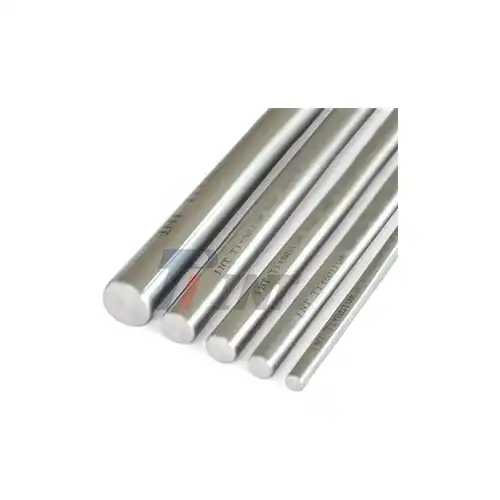
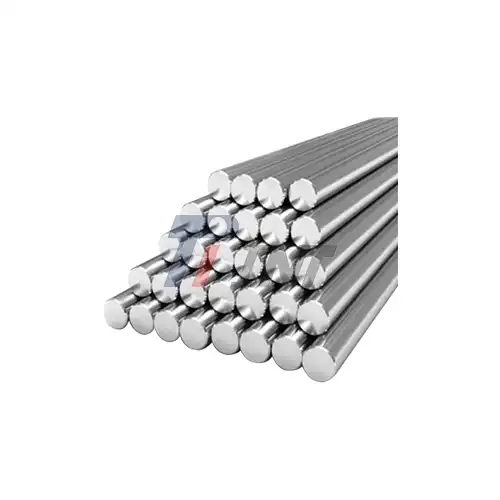
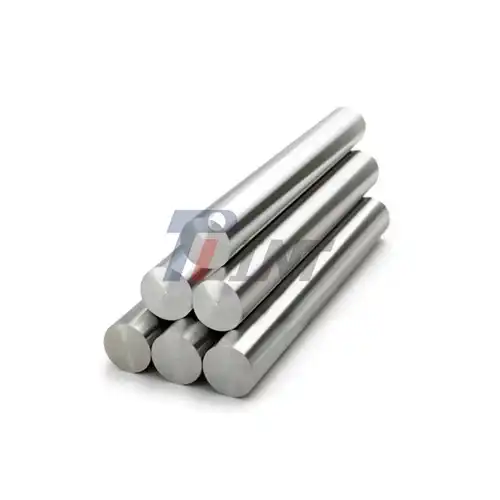
How to Import Ti6Al4V ELI Titanium Bar: Specs, Costs, and Tips


 2026-10-14 08:53:18
Importing a Ti6Al4V ELI titanium bar requires more than placing an order — it demands a clear understanding of material standards, documentation requirements, supplier qualifications, and landed cost structures. Grade 23 titanium (UNS R56407) is the implant-grade alloy of choice for orthopedic manufacturers worldwide, governed by ASTM F136 and ISO 5832-3. Whether you are building a dual-supply strategy or qualifying a new source, this guide walks you through every stage of the procurement cycle with practical, compliance-focused insight.
|
|
|
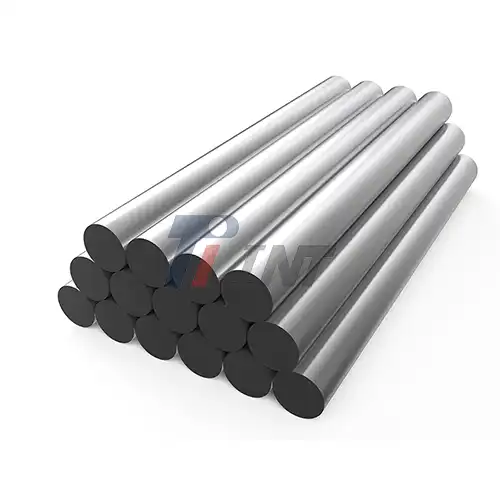
Understanding Ti6Al4V ELI Titanium Bar Specifications
Before you write a buy order, your technical and regulatory teams need to agree on what "ELI" really means in a measurable way.
Key Mechanical Properties
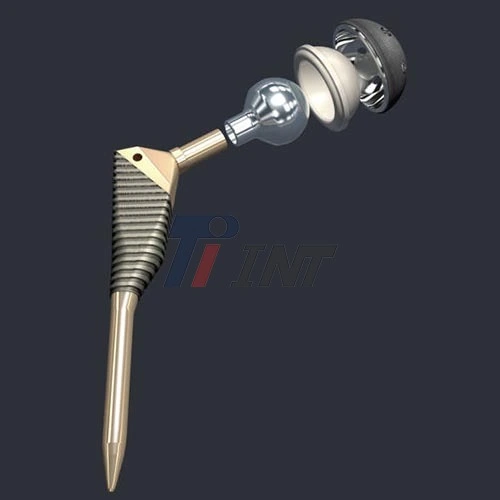
Ti6Al4V ELI (Extra Low Interstitial) has a minimum yield strength of 795 MPa, a maximum tensile strength of ≥860 MPa, and an extension value greater than 10%, which are all in line with ASTM F136 standards. When compared to normal Grade 5 (Ti6Al4V), the ELI variant gives up a small amount of strength but gains significantly better fatigue resistance and fracture toughness. This trade-off is not only okay, it is necessary for implant makers who make spine rods, trauma plates, and fixation screws that are used in high-cycle fatigue settings.
Chemical Composition and Interstitial Control
The interstitial element ceiling of ELI material is what makes it unique: oxygen ≤0.13%, nitrogen ≤0.05%, carbon ≤0.08%, and iron ≤0.25%. These limits are tighter than Grade 5 and directly lower the chance of brittle phase formation. They also make the material more biocompatible. The amount of aluminum (5.5–6.5%) and vanadium (3.5–4.5%) is about the same as in Grade 5.
The alpha-beta lattice that lets heat treatment work well is still there. The density is about 4.43 g/cm³, and the elastic modulus is about 113 GPa, which is much closer to cortical bone than either stainless steel or cobalt-chrome alloys. This means that stress shielding in load-bearing implants is less effective.
Comparing Ti6Al4V ELI with Alternative Materials
These comparisons show once again why orthopedic manufacturers in Europe and North America always use implant-grade titanium bar stock—such as Ti6Al4V ELI titanium bar—as their main raw material. The performance data for the material is not guesswork; it is written down in globally accepted standards that have been approved by the FDA, MDR, and PMDA.
- vs. Standard Ti6Al4V (Grade 5): Grade 5 offers slightly higher tensile strength but lower ductility and fracture toughness. For non-implant machined components, Grade 5 may suffice. For any load-bearing implant subject to regulatory scrutiny under ASTM F136 or ISO 5832-3, Grade 23 ELI is the only compliant option.
- vs. Commercially Pure Titanium (Grades 1–4): CP titanium offers superior corrosion resistance but lacks the mechanical strength required for structural implants. It is typically reserved for dental components and craniofacial mesh where strength demands are lower.
- vs. 316L Stainless Steel: Stainless steel carries a higher elastic modulus (~200 GPa), greater density, and nickel content that raises long-term biocompatibility questions. Grade 23 titanium outperforms it in corrosion resistance, MRI compatibility (non-ferromagnetic), and patient outcomes in long-term implantation scenarios.
These comparisons reinforce why orthopedic manufacturers across North America and Europe consistently specify implant-grade titanium bar stock as their primary raw material. The material's performance data is not speculative — it is codified in internationally recognized standards adopted by the FDA, MDR, and PMDA alike.
Practical Guide to Importing Ti6Al4V ELI Titanium Bar
Following the rules doesn't end with material qualification; it goes through the whole process of importing.
Documentation and Certification Requirements
A full shipment of materials should have a Mill Test Certificate (MTC) that meets EN 10204 3.1 standards, a Certificate of Analysis (COA) that can be tracked by heat and lot number, third-party chemical and mechanical test reports, and supporting documentation for a declaration of biocompatibility. For Ti6Al4V ELI titanium bar, a full shipment of materials should have a Mill Test Certificate (MTC) that meets EN 10204 3.1 standards, a Certificate of Analysis (COA) that can be tracked by heat and lot number, third-party chemical and mechanical test reports, and supporting documentation for a declaration of biocompatibility.
In order for FDA-registered manufacturers in the US to keep a Device History Record (DHR), they must always have raw material traceability documents ready for an audit. Any break in this chain, like a lost heat number or a COA that hasn't been checked, can stop a product registration application.
Lead Times, MOQ, and Cost Structure
As a general rule, Chinese companies that make medical titanium take 3 to 6 weeks to make stock diameters and 6 to 10 weeks to make custom dimensions. There are different minimum order quantities, but most reputable manufacturers can handle small development orders (as little as 10–20 kg per diameter) to help with the prototyping of new implants without needing full production commitments.
Cost-wise, medical-grade titanium bars from China are usually cheaper than those made in the West by companies like Carpenter Technology or ATI. When buyers figure out the total landing cost, they have to include freight (by air or sea), import taxes (HS Code 8108.20 for titanium bars, with U.S. MFN tariff rates being used), and any Section 301 tariff effects. A trustworthy supplier will give you a FOB price that breaks down the costs by specification, so you can get a good idea of the total cost before you commit.
Selecting and Evaluating Ti6Al4V ELI Titanium Bar Suppliers
Most of the risk in buying is either taken into account or not taken into account during the seller qualification stage.
Certification and Traceability as Non-Negotiables
A good seller of medical titanium bars needs to be certified in both ISO 9001 and ISO 13485:2016. This difference is important because ISO 13485 sets rules for quality control systems in the supply lines of medical devices, which includes suppliers of raw materials. In addition to certification, you should check to see if the supplier does its own melting and forging or just acts as a middleman. A company that has its own VAR (Vacuum Arc Remelting) or cold-drawing tools controls the whole production process. This means that the products are always the same from batch to batch and can be tracked easily.
Responding suppliers should also be looked at closely. During the qualification phase, ask for Ti6Al4V ELI titanium bar sample coupons in the diameter range you've given them, ask for a sample third-party test report, and watch how quickly and technically the supplier answers your questions about the specifications. At this point, answers that are slow or unclear are a sign of problems that will happen during production.
Tips and Best Practices for Successful Titanium Bar Procurement
Smart procurement is more than just finding a supplier. It also means setting up a system that keeps your production schedule and compliance in check.
Here are the main things that procurement heads with a lot of knowledge do:
- Align ordering cadence with production planning: Medical implant manufacturing runs on tight scheduling. Establish a rolling forecast (monthly or quarterly) with your supplier and communicate it proactively. Buffer stock of 4–6 weeks is a prudent baseline for critical diameters.
- Conduct incoming inspection with third-party validation: Upon receipt of each lot, submit samples to an accredited laboratory for chemical composition verification and mechanical testing. This is not redundant — it is your documented evidence of conformance for your QMS and any regulatory audit.
- Negotiate lot-specific documentation in your supply agreement: Specify in writing that every shipment must include a heat-number-matched COA, MTC, and the corresponding third-party report. Define acceptable interstitial limits by reference to ASTM F136 Table 1.
- Build a dual-supply structure deliberately: Qualifying a Chinese source alongside a domestic supplier creates competitive pressure that benefits pricing, and provides genuine supply continuity protection against geopolitical or logistics disruptions.
These steps not only lower the risk, but they also create the paper trail that supports your implant registration in the EU MDR Technical File, the FDA 510(k), and other regulatory frameworks. Putting money into supplier management is, in the end, putting money into getting your device on the market.
Conclusion
When buying medical-grade titanium bars, you have to follow a lot of rules, and cutting corners can have real legal and financial consequences. From making sure the chemistry makeup is correct to keeping records for EN 10204 3.1, every little thing is important—especially when the material in question is a Ti6Al4V ELI titanium bar, where compliance and traceability are non-negotiable.
FAQ
What is the difference between Ti6Al4V ELI (Grade 23) and standard Ti6Al4V (Grade 5)?
The main difference is the amount of interstitial elements present. Oxygen levels are capped at 0.13% in Grade 23 and iron levels are capped at 0.25%, down from 0.20% and 0.30% in Grade 5. According to ASTM F136 and ISO 5832-3, Grade 23 is the only option for human insertion because it has higher fracture hardness and better ductility.
What certifications should a supplier hold for implant-grade titanium bar?
At least ISO 13485:2016 and the ability to give EN 10204 3.1 Mill Certificates are needed. Suppliers should also be able to give chemistry and mechanical test records from a third party that can be linked to specific heat numbers.
What are typical lead times for custom-diameter ELI bar stock?
Within 3 to 6 weeks, standard sizes are usually ready to ship. Custom diameters or lengths may take 6–10 weeks, depending on the number of orders and the production schedule at the time.
Can small development batches be ordered?
Small orders of 10–20 kg per circle are usually accepted by qualified makers to help with prototypes and early stages of development, but this depends on the supplier's policy.
Partner with Baoji INT Medical Titanium Co., Ltd. for Your Next Order
Baoji INT Medical Titanium Co., Ltd. has been in business since 2003 and is ISO 13485:2016 approved. They are a reliable company that makes Ti6Al4V ELI titanium bars and sells them to orthopedic raw material makers all over the world. Full lot tracking, EN 10204 3.1 Mill Certificates, third-party test reports, and flexible small-batch sampling are all things we offer. You can email our technical team at export@tiint.com or go to inttitanium.com to get specifications, samples, or a competitive quote.
References
1. ASTM International. ASTM F136: Standard Specification for Wrought Titanium-6Aluminum-4Vanadium ELI Alloy for Surgical Implant Applications. 2023.
2. International Organization for Standardization. ISO 5832-3: Implants for Surgery — Metallic Materials — Part 3: Wrought Titanium 6-Aluminium 4-Vanadium Alloy. 2021.
3. Geetha, M., Singh, A. K., Asokamani, R., & Gogia, A. K. "Ti based biomaterials, the ultimate choice for orthopaedic implants." Progress in Materials Science. 2009.
4. Rack, H. J., & Qazi, J. I. "Titanium alloys for biomedical applications." Materials Science and Engineering: C. 2006.
5. Elias, C. N., Lima, J. H. C., Valiev, R., & Meyers, M. A. "Biomedical applications of titanium and its alloys." JOM — Journal of the Minerals, Metals and Materials Society. 2008.
6. International Organization for Standardization. ISO 13485: Medical Devices — Quality Management Systems — Requirements for Regulatory Purposes. 2016.