




ISO 5832-3 Ti6Al4V Titanium Bar vs ASTM F136: Comparison


 2026-11-11 10:20:21
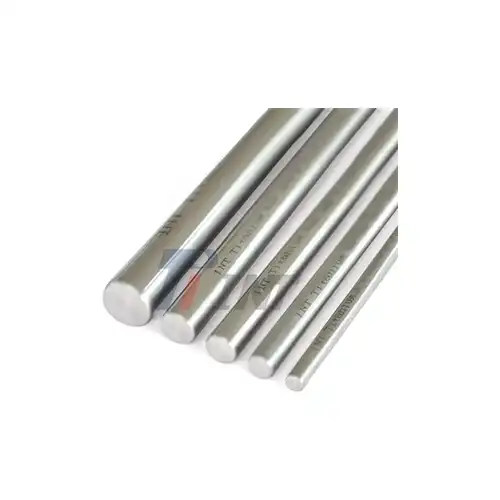
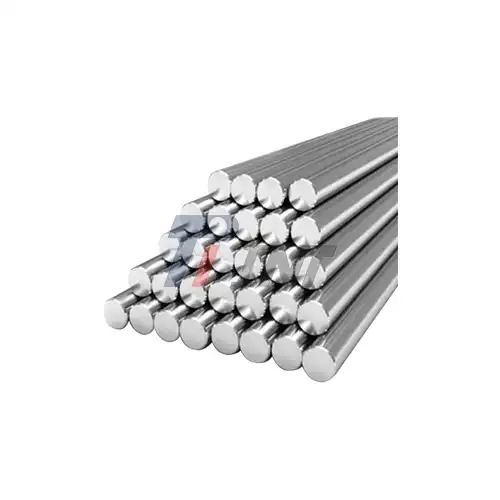
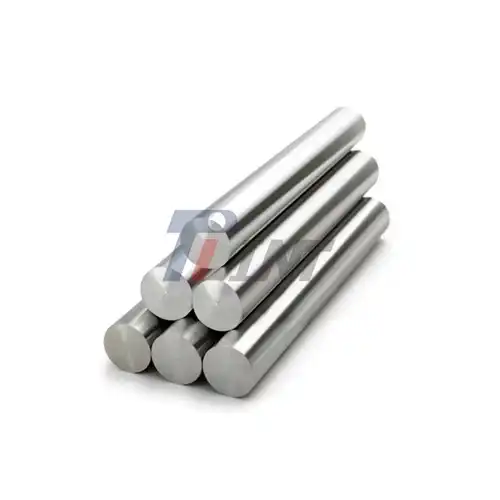
ISO 5832-3 and ASTM F136 both describe wrought Ti6Al4V for surgical implants, but they are not the same document. An ISO 5832-3 Ti6Al4V titanium bar follows the ISO chemistry and mechanical limits, while ASTM F136 covers the extra low interstitial (ELI) grade with a tighter oxygen limit of 0.13%. The two overlap closely on strength, yet each carries its own test rules and edition history. I recommend choosing the standard that your drawing, technical file, and target market name. Then confirm the supplier's mill test certificate against it. This guide shows how to compare them and how to buy with less risk.
|
|
|
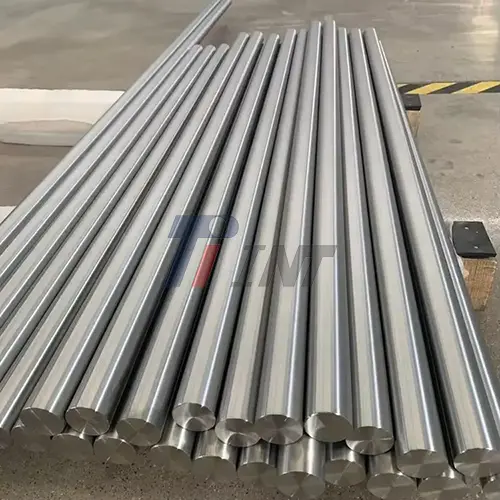
ISO 5832-3 vs ASTM F136: Standards Comparison
Scope and Product Form
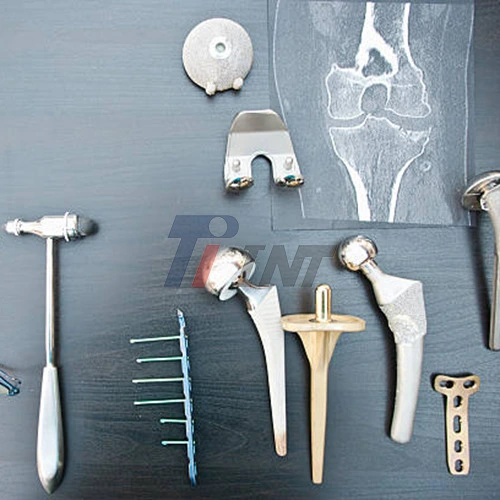
There are two different records that talk about medical implants made of cast Ti6Al4V. These are ISO 5832-3 and ASTM F136. There is then an ISO 5832-3 Ti6Al4V titanium bar that goes after the ISO chemistry and mechanical limits. The ASTM F136 grade takes in more oxygen (0.13%), and it includes the ELI grade for extra low interstitial. There are some good differences between the two, but both are pretty strong. I think you should choose the format that works best for your picture, technical file, and client name. After that, compare it to the mill test certificate that you got from the supplier. You can compare them and buy with less risk if you follow this plan.
That's all there is to it for now. The papers are what I want to talk about. ISO 5832-3 is named "Implants for surgery — Metallic materials — Part 3: Wrought titanium 6-aluminium 4-vanadium alloy." It is covered by ASTM F136 and is used to make medical devices. Its UNS number is R56401. Other than F1472, which is made by ASTM and is for the standard-interstitial version of the alloy, some US files use that one instead. It is the same that both an ISO 5832-3 Ti6Al4V titanium bar and an ASTM F136 titanium bar are made of cast titanium, but they are tested and approved in different ways. In the US, device files usually follow ASTM F136. In Europe, they follow ISO 5832-3. Every time someone asks for a price, I always ask the regulatory team to give me a list of the file names.
Chemical Composition Side by Side
The chemistry is the next thing to check after the view is clear. The table shows limits that are often used in weight percent. Please compare each figure to the edition that is written on your order.
| Element | ASTM F136 (ELI) | ISO 5832-3 |
|---|---|---|
| Aluminum | 5.5–6.5 | 5.5–6.75 |
| Vanadium | 3.5–4.5 | 3.5–4.5 |
| Iron, max | 0.25 | 0.30 |
| Oxygen, max | 0.13 | 0.20 |
| Carbon, max | 0.08 | 0.08 |
| Nitrogen, max | 0.03 | 0.05 |
| Hydrogen, max | 0.012 | 0.015 |
| Titanium | Balance | Balance |
Oxygen has the largest gap since F136 is the ELI grade. The F136 ranges are all within the ISO ranges for everything on the list. Even so, that doesn't mean one can be used instead of the other. The standards can still have different test methods, sampling rules, and certificate language. There still needs to be a writing review of ISO 5832-3 Ti6Al4V titanium bar.
Mechanical Properties and Testing Requirements
Let's look at strength next. Bar has a minimum tensile strength of 860 MPa and a minimum yield strength of 795 MPa. It can stretch 10% and lose 25% of its area. The lowest tensile strength required by ISO 5832-3 is 860 MPa, the lowest yield strength is 780 MPa, and the lowest stretch is 10%. The minimums are not all the same, even though the yield gap is small. You should also look at the microstructure. In ISO 20160, alpha-beta bar microstructures are put into groups, and many buyers ask for metallography to be done on them. I think you should read real mill test certificate numbers instead of theoretical Grade 5 data. Any old paper won't be able to prove that your specific heat meets the needs.
Material Properties and Quality Control for Medical Titanium Bar
Strength, Density, and Corrosion Behavior
Let's connect the rules to how things really work. It's about half as heavy as stainless steel, at 4.43 g/cm³. It also creates a thin, solid oxide film that human fluids and chlorides can't get through. It is used to make fracture plates, spine rods, and screws because of these traits. When it comes to life tiredness, on the other hand, it's not just the standard. Different factors like the part's shape, microstructure, surface condition, residual stress, and inclusions can change it. By ISO 10993, a material standard also can't be used instead of a biological review of the whole device. The property values should be right for your project before you freeze a design. Check with your engineering team to make sure.
Manufacturing Route: Melting, Hot Working, and Heat Treatment
The mill makes things. A vacuum arc remelting ingot is generally the first step in making a medical bar. This keeps the chemicals from mixing and makes the bar more regular. Next, the ingot is forged or hot rolled into an ISO 5832-3 Ti6Al4V titanium bar. It is then annealed, straightened, and the surface is either peeled off or ground to finish it. When the diameter is bigger, forged bar can give a structure that is smooth and even. Most of the time, hot-rolled bar is less expensive and works well for both long and short pieces. When metal is mill-hardened or otherwise treated in certain ways, it changes how hard it is and how it can be made. Make sure that the state is written on the purchase order. The alpha case is a layer of oxygen-rich skin that can make you less effective when you're tired. When you peel or grind, you get rid of it.
Inspection Methods That Reduce Risk
A number of checks are done to find issues before the cutting begins. Chemical analysis proves the levels of the alloy and the interstitial material. With tensile tests, you can see how strong and flexible something is. It checks for an alpha-beta structure, a large grain size, and the lack of an alpha case. Things with holes or other problems inside them can be found with ultrasound, and many buyers name AMS 2631 classes in the order. Some of the things that are checked for dimensions and surfaces are girth, straightness, roundness, and flaws that can be seen. Because the structure and hardness stay the same, the tool settings and scrap rates stay the same too. This means that the results will be the same from batch to batch. Check to see which tests the seller does and which ones they send to another lab.
Choosing the Right Standard, Bar Size, and Price Basis
Match the Standard to the Finished Device
Don't start with the bar, but with the wrapped item. Which standard is best depends on the drawing, the needs of the customer, the regulatory path, and the tested process. If the technical file or the people you want to sell to tell you to, pick ISO 5832-3. A model, a file for customer review, or a file for regulations should all say "ASTM F136." You should use that number. If they both show up, find out who is in charge. Different materials are needed for surgical tools because they need to be strong and not break easily. In any case, make sure everyone agrees with the most current version and all the records. In order to get a substitution accepted, you need to keep track of the product's chemistry, mechanical qualities, form, microstructure, tests, ability to be tracked, and governmental approval. Keep the written list of the things you need. This step takes some time at the start, but it will save you time later on when you have to do an audit.
Diameter, Tolerance, and Surface Condition
When you cut something to the right size, you waste less and keep costs the same. You should include the thickness, length, accuracy class, straightness, roundness, and surface finish when you ask for an ISO 5832-3 Ti6Al4V titanium bar. CNC lathes have a harder time taking off stock when the spec is tight, like h9. An alpha case-free surface is seen when the surface is ground or peeled. With stock numbers, things can be sent out faster and in smaller amounts, which is helpful for making implants and trials. When custom sizes are used, less material is turned into chips. This means that once the shape of the part is set, output can go up. Look at the price per finished part instead of the price per kilogram.
What Drives Price and How to Build a Comparable RFQ
Price per kg doesn't always show what's going on. As the size, quantity, tolerance, manufacturing route, heat treatment, surface finish, ultrasonic testing, third-party inspection, packaging, destination, lead time, and ultrasonic testing change, so does the price. Most of the time, the testing area and bar state tell you more about a price difference than the name alone. It is important to look at the total landed cost because things like rejected lots, extra machining allowance, uneven hardness, and late deliveries all cost money. Send each supplier the same edition and standard, as well as the same sizes, tolerances, testing scope, certificate type, quantity, delivery terms, and so on. This will make the comparison fair. After that, read each quote one line at a time.
Certification, Traceability, and Supplier Qualification
What a Complete Mill Test Certificate Contains
Written proof of what the bar is. There is an official signature, the name of the company that made the metal, the alloy, the standard and edition, the heat or lot number, the chemical analysis, the mechanical results, the measurements, the heat treatment, inspection records, and the name of the company that made the metal. The person who signs off on an EN 10204 type 3.1 certificate is an authorized inspection representative from the manufacturer who is not in charge of production. Check that the cert, the bar, and the packing list all have the same heat number. Also, make sure that the edition you bought matches the one you bought, since editions can have different limits. You should keep each certificate for as long as your quality system says.
ISO 13485, Traceability, and Sample Retesting
ISO 13485 tells companies that make medical devices how to handle quality. It is shown how to control the process, but that doesn't mean the material cannot be checked. When I judge a provider, I look at how they deal with changes, keep records, handle problems, and test their work by other people. You can find the stuff that went into making an implant by controlling the heat from melt to ship. Baoji INT Medical Titanium Co., Ltd. has been in business since 2003 and is certified by CE, ISO 9001:2015, and ISO 13485:2016. These papers can be looked at by buyers to make sure the business is real. The normal steps are to start with specifications and sample certificates, then move on to sample bars, a quality check, and your first batch. After that, each bar is checked on its own for metallography, chemistry, and tensile strength. As an extra safety measure, many makers also look at a second source. Before the samples come, decide what the standards of acceptance will be.
Purchasing Mistakes to Avoid
Most of the time, when people buy implant bars, they make three mistakes that can be prevented. Here they are and how to fix each one:
- Treating ISO 5832-3, ASTM F136, and generic Grade 5 as the same material: Assuming that Grade 5, ISO 5832-3, and ASTM F136 are all the same. Industrial Grade 5 specifications aren't meant to be used in implants, so a Grade 5 datasheet can't be used to back up a regulatory submission or a design history file entry. Make sure to write down the exact implant standard and number on every question and order.
- Comparing prices without comparing inspection scope: Comparing prices without looking at how thorough the inspection is. One price might include ultrasonic testing, metallography, and a type 3.1 certificate, while another might include a simple chemistry report. Ask every seller to list the tests that come with the item and how much they would cost separately. This is important because the cheaper offer might cost you more once the goods are checked out.
- Ordering without confirming condition, tolerance, and quantity by size: Putting in an order without first checking the state, tolerance, and amount by size. When an ISO 5832-3 Ti6Al4V titanium bar isn't straight, it wastes stock, spindle time, and tool life because it doesn't work with all machines. Make sure you get written confirmation from the supplier for every item so that lots don't get turned down. On the purchase order, write down the exact standard edition, condition, size, type of certificate, and requirements for acceptance.
If you have a specific buy order, most of these problems can be fixed before the steel leaves the mill. It also gives the people who come to inspect your home a clear standard to use.
Conclusion
Even though ISO 5832-3 and ASTM F136 both talk about surgical implants made of wrought Ti6Al4V, they are not the same thing. The grade of ELI is F136, and its oxygen limit is 0.13%, while the ISO science limit is 0.20%. The lowest yield strength is also a little different; it's 795 MPa instead of 780 MPa. In service, the performance is still based on the inspection, the composition, and the state of the surface. The name doesn't change that. Choose the right one based on the picture, the technical file, and the people you want to reach. Any changes must be backed up by writing them down. You can only compare prices if the ISO 5832-3 Ti6Al4V titanium bar settings, sizes, and measure areas are all the same. When quality teams see full mill test certificates, heat-number tracking, and samples that have been tested again, they have all the proof they need to accept a bar.
FAQ
Are ISO 5832-3 and ASTM F136 the same?
They're not the same, no. Cover cast Ti6Al4V for implants comes in two grades. F136 is the ELI grade, which has stricter rules for oxygen, iron, and hydrogen. The minimum yield strength is also different for each standard. Each standard has its own rules for tests and certificates.
Can one standard replace the other?
If the chemistry, mechanical properties, shape, testing, and effects on regulations are all written down and looked over, then the product can be sold. That group in charge of rules should agree with the change.
Is generic Grade 5 enough for implants?
Not at all. The requirements for Industrial Grade 5 don't cover the need for implants. Check that the bar you use meets the implant standard that is written in your file.
Which documents should come with the bar?
If you can, ask for a mill test certificate that is EN 10204 type 3.1 and lists the heat number, chemical, mechanical data, and standard edition. Metallography or ultrasonic records should be added if the buy order asks for them.
Request an ISO 5832-3 Ti6Al4V Titanium Bar Quote from Baoji INT Medical Titanium Co., Ltd.
Some of the titanium products that Baoji INT Medical Titanium Co., Ltd. sells are Ti6Al4V ELI rods. The founder of the company has worked with titanium for more than 30 years and has ISO 9001:2015, ISO 13485:2016, and CE certifications. If you need an ISO 5832-3 Ti6Al4V titanium bar provider, email export@tiint.com with your drawing, standard edition, diameter, number, and where the bars are going. Someone from our team will look over your wants and get back to you with advice.
References
1. ISO 5832-3: Implants for Surgery — Metallic Materials — Part 3: Wrought Titanium 6-Aluminium 4-Vanadium Alloy, 2016
2. ASTM F136: Standard Specification for Wrought Titanium-6Aluminum-4Vanadium ELI (Extra Low Interstitial) Alloy for Surgical Implant Applications (UNS R56401), 2013
3. ISO 20160: Implants for Surgery — Metallic Materials — Classification of Microstructures for Alpha+Beta Titanium Alloy Bars, 2006
4. ASTM F1472: Standard Specification for Wrought Titanium-6Aluminum-4Vanadium Alloy for Surgical Implant Applications (UNS R56400), 2014
5. Long, M. and Rack, H.J., Titanium Alloys in Total Joint Replacement — A Materials Science Perspective, Biomaterials, 1998
6. ISO 13485: Medical Devices — Quality Management Systems — Requirements for Regulatory Purposes, 2016