




Top 5 Benefits of Titanium Bar Surgery for Medical Device Buyers


 2026-11-24 08:46:45
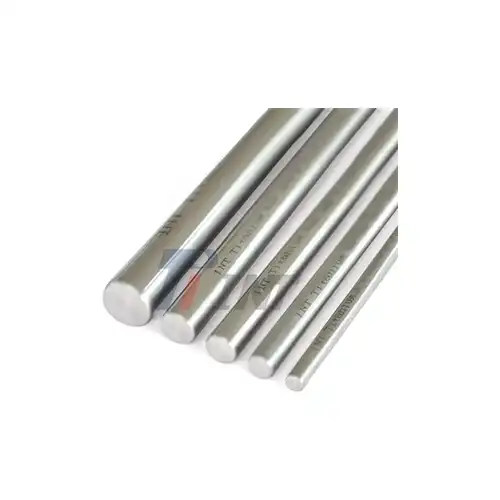
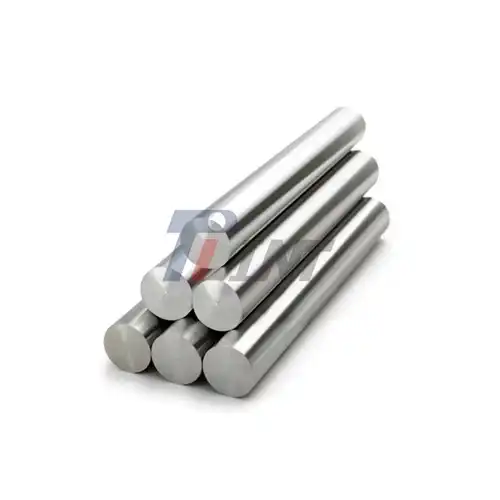
Titanium bar surgery has become a cornerstone of modern orthopedic and thoracic implant manufacturing. For medical device buyers sourcing Ti-6Al-4V ELI or Grade 23 titanium bar stock — particularly for intramedullary nail (IM nail) blanks and internal fixation systems — the material choice directly impacts regulatory compliance, CNC yield rates, and end-patient outcomes. This guide outlines the five most clinically and commercially significant advantages of titanium bar surgery applications, helping procurement teams at orthopedic implant manufacturers make confident, evidence-based sourcing decisions.
|
|
|
Superior Biocompatibility and Material Strength
Why Implant-Grade Titanium Outperforms Alternatives?
As soon as a titanium bar touches human flesh, a stable titanium dioxide (TiO₂) passive layer appears on its surface. This oxide film stops ions from getting into the tissue around the implant, which is what usually leads to metallosis. A review published in 2019 in Acta Biomaterialia says that titanium alloys are much less harmful to cells than cobalt-chromium and nickel-bearing alloys. This makes them the best material for long-term implantation.
The mechanical profile of Ti-6Al-4V ELI (ASTM F136) is very appealing to companies that make IM nail systems. The metal has an elastic value of about 110 GPa, which is closer to cortical bone than stainless steel's 200 GPa. Its minimum tensile strength is 860 MPa and its minimum yield strength is 795 MPa. This difference in stiffness makes stress buffering less effective, which is known to cause bone loss around implants and shorten the life of the fixation.
Here are the main benefits of the material that implant makers should know about:
- Corrosion resistance in physiological environments: The TiO₂ passive layer remains stable across the electrolytic, pH-variable environment of the human body, protecting both patient tissue and implant structural integrity over multi-year implantation periods.
- Non-ferromagnetic properties: Titanium bars are MRI-compatible, eliminating imaging artifacts that complicate postoperative monitoring — a decisive clinical advantage over ferrous alloy alternatives.
- Weight efficiency: At approximately 4.43 g/cm³, titanium is nearly 50% lighter than stainless steel, reducing soft tissue burden in load-bearing implants such as tibial or femoral nails.
These properties of titanium bar surgery are not just ideas. They directly lead to fewer product recalls, lower rates of implant revisions, and better regulatory dossiers. All of these things are needed for orthopedic device makers to keep getting access to markets controlled by the FDA, CE, and MDR.
Enhanced Patient Recovery Outcomes
How Material Choice Shapes Postoperative Performance?
The way an implant material acts at the point where it meets the bone is closely linked to how well the surgery goes. A lot of research has been done on titanium's osseointegration capacity, which means that it can bond directly with living bone without a fibrous layer in between. A study published in 2020 in the Journal of Orthopedic Research confirmed that titanium implants do a better job of attaching to bone than steel controls in models of long-bone fixation.
This is important for buyers because data on implant performance goes straight into 510(k) submissions, CE technical files, and PMCF reports (post-market clinical follow-up). You have to get titanium bar material that always meets the chemistry and engineering standards set by ASTM F136 or ISO 5832-3. This is not a choice; it's required by law and supports every clinical claim your product makes. Less problems with implants, like fewer infections, because titanium stops bacteria from sticking to it, shorten hospital stays and lower the cost of reoperations. These are big financial benefits for healthcare systems that buyers need to show more and more in health technology assessments (HTAs).
Versatility Across Various Surgical Procedures
One Material, Multiple High-Demand Applications
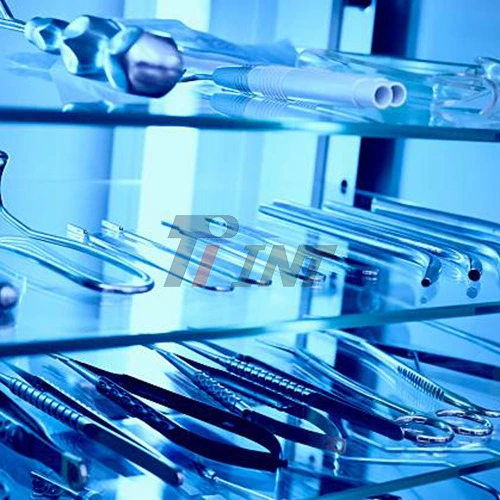
There are more and more types of surgical implants that are built on titanium bar stock for titanium bar surgery. Through careful downstream machining, the same implant-grade titanium alloy can meet a wide range of mechanical and geometrical needs, from wound fixation devices to spine equipment and craniomaxillofacial repair hardware. This flexibility is an asset for strategic procurement. Instead of keeping separate material approval processes for each line of products, companies can focus their approved supplier base on a single, well-known type of titanium alloy. This range can be seen in the following areas of use:
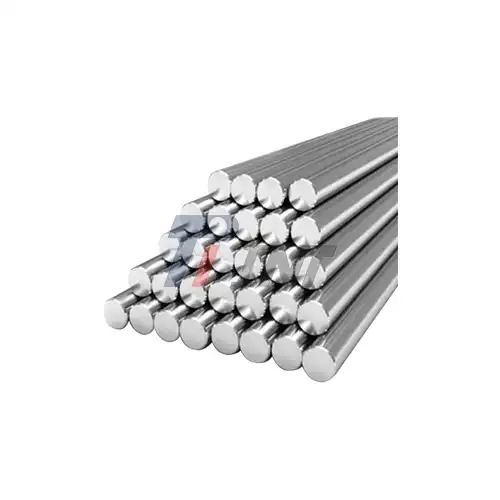
- Intramedullary nail blanks: Require exceptional straightness tolerances (typically ≤0.5 mm/m) and consistent grain structure to maintain dimensional stability through CNC turning and milling. Ti-6Al-4V ELI bar stock meeting ASTM F136 is the industry-standard substrate.
- Spinal rod preforms: Demand high fatigue life under cyclical flexion-extension loads. The alloy's resistance to plastic deformation under physiological stress cycles is well-documented in ISO 12189 fatigue testing protocols.
- Craniomaxillofacial plate blanks: Rely on commercially pure (CP) titanium, typically Grade 2 or Grade 4, for workability and corrosion resistance in the demanding intracranial environment.
Because titanium bars can be used in a variety of clinical settings, purchasing managers can combine volume with a qualified seller. This gives them more negotiating power when it comes to price, cuts down on the time it takes to qualify new products, and makes audits easier.
Cost-Effectiveness for Medical Device Buyers
Total Cost of Ownership Versus Unit Price
The price per unit of titanium bars is higher than those made of stainless steel or cobalt-chromium. But looking at the cost of materials by themselves gives a false picture of the real procurement economics. Total cost of ownership over the whole production and clinical lifecycle is the important measure. The life of CNC tools, the amount of scrap, and how often they need to be fixed are all directly related to how consistent batches are in their chemical makeup and mechanical properties. If a procurement manager buys titanium bar with a microstructure that isn't uniform, they will have to deal with higher cutting costs, higher non-conformance rates, and maybe even production line stoppages. All of these things eat away at margins much more than a small increase in the price of the raw material.
Getting implant-grade titanium bars for titanium bar surgery from a company that has strong lot tracking (heat number management, EN 10204 3.1 mill certificates, and full COA paperwork) lowers the chance that the products will be held up during regulatory checks. It also helps make the receiving inspection process more efficient because recorded material traceability gets rid of the need for extra testing to be done in-house. Working with a source that lets you do small-batch samples while you're developing a new product cuts sunk costs even more. Being able to test materials in prototype amounts before committing to annual framework volumes makes supplier economics more in line with how medical device development cycles work.
Proven Track Record and Industry Trust
Standards Compliance as the Foundation of Procurement Confidence
There is a grown set of international norms that control the titanium bar surgery field. These standards—ASTM F136 (Ti-6Al-4V ELI), ASTM F67 (commercially pure titanium), and the ISO 5832 series—set limits on chemical composition, mechanical property needs, and microstructural acceptance criteria. These standards have been proven to work through decades of clinical use.
People who want to buy titanium bars to make implants need to find suppliers whose quality systems are in line with ISO 13485:2016 and who can give them EN 10204 3.1 inspection certificates that can be tracked back to specific heats. Third-party validation, which includes independent chemistry analysis, mechanical testing, and metallographic study, adds another level of assurance that meets the needs of SQE audits and regulatory bodies. Manufacturers who have a history of giving implant-grade titanium bars to FDA-registered and CE-certified device makers have institutional knowledge that is very hard to copy. This track record lowers the approval risk for buyers who are looking to work with a new seller.
Conclusion
The chemistry, mechanics, and traceability of raw materials used in titanium bar surgery must be consistent. Implant-grade titanium bar is still the material of choice for orthopedic device makers around the world because it is biocompatible, helps with recovery, can be used in a variety of procedures, is cost-effective, and is trusted by regulators.
FAQ
Q1: Is titanium bar safe for all surgical implant applications?
A: A lot of testing has been done to make sure that implant-grade titanium alloys are biocompatible. This includes commercially pure grades (ASTM F67) and Ti-6Al-4V ELI (ASTM F136). The FDA, CE, and other governing groups agree that they can be used for a long time. Buyers need to make sure that the material papers they are looking at list the right grade and level for their use.
Q2: What alternatives exist, and when might they be preferred?
A: Cobalt-chromium metals are better for moving surfaces like femoral heads because they are harder. For temporary implants, stainless steel (316L) is still a good value. Titanium is the best material for long-term load-bearing fixation devices like IM nails and spine plates because it is biocompatible, doesn't wear down easily, and works with MRIs.
Q3: How do I verify that titanium bar stock meets implant-grade standards?
A: Ask for EN 10204 3.1 mill certificates that list ASTM F136 or ISO 5832-3, full chemical composition and mechanical test data, heat number traceability, and verification from a third-party lab. Do an arriving check that includes tensile tests for mechanical compliance and optical emission spectrometry (OES) for chemistry. Another sign of quality is if the supplier has ISO 13485 certification and is willing to go through SQE audits.
Partner With Baoji INT Medical Titanium Co., Ltd. for Implant-Grade Titanium Bar
Since 2003, Baoji INT Medical Titanium Co., Ltd. has sold approved implant-grade titanium bars to companies around the world that make medical devices. As a titanium bar surgery supplier, we can fully comply with ASTM F136/F67 and ISO 5832. We can also provide EN 10204 3.1 mill certificates, ISO 13485:2016 certification, and small-batch sampling that is easy to schedule. To get material specs and COA paperwork, email our scientific team at export@tiint.com.
References
1. Rack, H. J., & Qazi, J. I. (2006). Titanium alloys for biomedical applications. Materials Science and Engineering: C, 26(8), 1269–1277.
2. Niinomi, M. (2008). Mechanical biocompatibilities of titanium alloys for biomedical applications. Journal of the Mechanical Behavior of Biomedical Materials, 1(1), 30–42.
3. Geetha, M., Singh, A. K., Asokamani, R., & Gogia, A. K. (2009). Ti based biomaterials, the ultimate choice for orthopaedic implants. Progress in Materials Science, 54(3), 397–425.
4. Apostu, D., Lucaciu, O., Berce, C., Lucaciu, D., & Cosma, D. (2018). Current methods of preventing aseptic loosening and improving osseointegration of titanium implants in cementless total hip arthroplasty. Journal of International Medical Research, 46(6), 2104–2119.
5. Chen, Q., & Thouas, G. A. (2015). Metallic implant biomaterials. Materials Science and Engineering: R: Reports, 87, 1–57.
6. ASTM International. (2023). ASTM F136: Standard Specification for Wrought Titanium-6Aluminum-4Vanadium ELI Alloy for Surgical Implant Applications. ASTM International.