




Why Choose Ti6Al4V ELI Titanium Bar for Orthopedic Implants Today?


 2026-11-04 16:11:45
In orthopedics, Ti6Al4V ELI titanium bar is used because it is very strong and has very little oxygen, nitrogen, carbon, and iron. ASTM F136 says that the lowest yield strength is 795 MPa. Tensile strength must be at least 860 MPa, and elongation must be no less than 10%. It has about 114 GPa, which is a lot less than stainless steel or cobalt-chromium alloys. This means it is more like bone. It has been used in medicine for a long time and doesn't rust when it comes in contact with body fluids. CNC tools can be used to shape it. Read on to learn how to check the grade, standard, and paperwork before you buy.
|
|
|
Introduction: Why Orthopedic Implant Manufacturers Are Choosing Ti6Al4V ELI Titanium Bar
What Implant Makers Need From a Raw Material
Implants are produced from bar stock, so any imperfections appear in every cut. Manufacturers need biocompatibility, fatigue and corrosion resistance, dimension stability, and predictable machining behaviour. What happens as the bar cools? Tool wear, scrap, and validation figures. Like the U.S., regulatory teams expect everyone to connect to submission-supporting documentation. FDA regulates drugs. Writing down what they need helps people compare sources faster and with fewer surprises.
What the ELI Designation Means
ELI means "Extra Low Interstitial." Grade 24 Ti6Al4V ELI permits 0.13% oxygen through, whereas Grade 5 lets 0.20%. ASTM F136 additionally regulates hydrogen at 0.012%, carbon at 0.08%, nitrogen at 0.05%, and iron at 0.25%. Interstitial atoms make titanium tougher yet less flexible and breakable. Parts that must withstand harm should have lower limitations. It's cheaper and weaker than Grade 5. Remember that ASTM F136 and ASTM B348 use distinct metal designations. ASTM B348 calls Grade 23 UNS R56407, but ASTM F136 calls it R56401.
Where Ti6Al4V ELI Titanium Bar Is Used
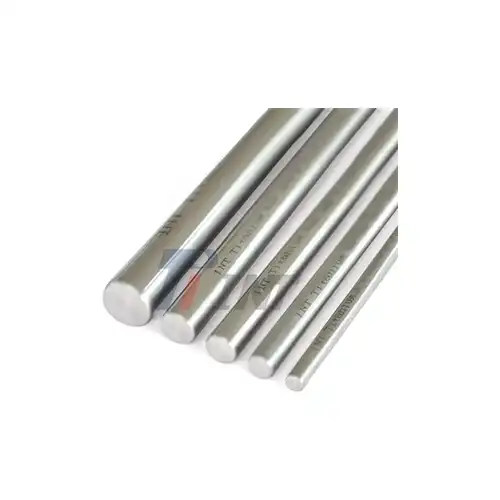
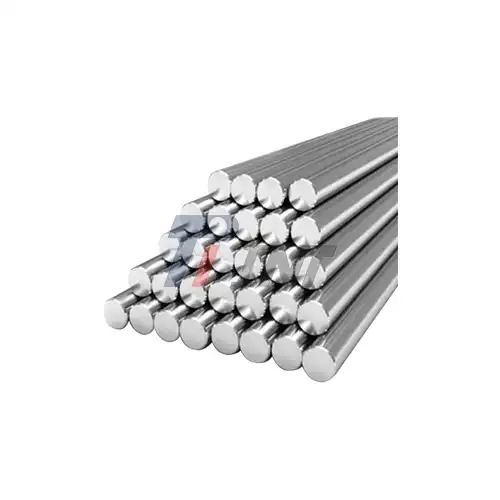
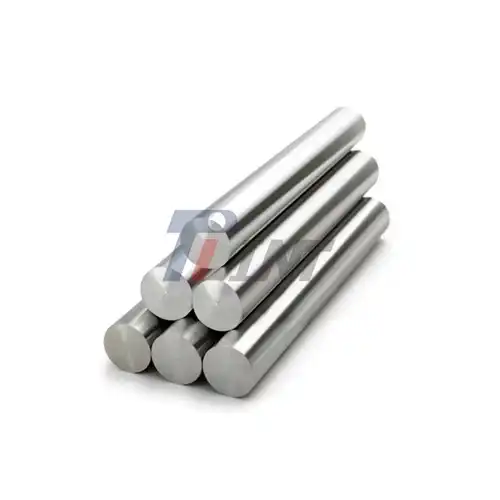
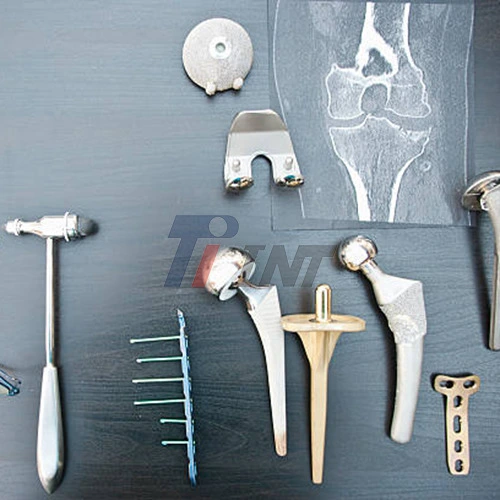
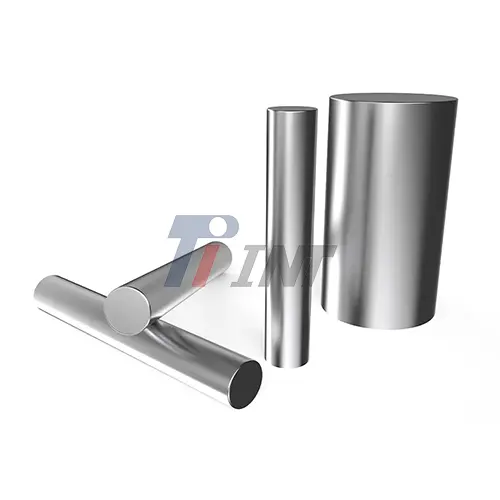
Surgical instruments, spinal fixation parts, bone screws, trauma plates, and intramedullary nails are made from Ti6Al4V ELI titanium bar that is shaped by a machine. A round bar is good for parts that have been turned, like screws and rods. A bar with a larger diameter is better for milling. This grade is also used for hardware and structures in space that are sent to very low temperatures because it stays strong. Because certification rules are different for each field, you can't use a specification for aerospace, like AMS 4930, instead of one for implants, like ASTM F136. Know the standard before you ask for a quote.
Ti6Al4V ELI Titanium Bar Properties for Orthopedic Implant Applications
Chemistry and Microstructure Control
What makes the alloy work is chemistry that can be tracked. The alpha phase is held together by aluminum (5.5% to 6.5%), the beta phase by vanadium (3.5 to 4.5%), and the material stays flexible thanks to its low interstitial limits. That which is made is an alpha-beta structure that is both strong and tough. The beta transus near 975°C tells us what temperatures to use for forging and heat treatment. If you want to be sure that your lot meets the rules, you should ask for chemistry at the heat number level instead of nominal values. That's not what a datasheet does. Values of oxygen, iron, and hydrogen that are close to the edge can show changes between heats.
Mechanical and Physical Properties
As per ASTM F136, Ti6Al4V ELI titanium bar has tensile strength of at least 860 MPa, yield strength of at least 795 MPa, area reduction of 25%, and elongation of 10%. It is more than 40% less dense than steel, at 4.43 g/cm³. Since the metal isn't magnetic, it can be used with MRI machines. A finished device, on the other hand, can't be marked until it's been tested. It doesn't break easily even at very low temperatures, which shows how well the low-interstitial chemistry works. Don't rely on averages; instead, look at the test results for each heat, such as the tensile, yield, elongation, and area loss.
Why It Suits Orthopedic Implants
When exposed to bodily fluids, titanium develops a persistent oxide coating that doesn't corrode. This metal has long been implanted. Its modulus is 114 GPa, lower than 316L stainless steel's 190 GPa and cobalt-chromium alloys' 200+ GPa. Low modulus reduces stress shielding. Stress shielding increases bone loss around rigid implants due to unequal stiffness. With less density, you may construct lighter designs. Its form, fixing, surface treatment, germ-freeness, and testing determine its effectiveness. Material decision, not outcome, is the beginning.
Ti6Al4V vs Ti6Al4V ELI Titanium Bar: Which Grade Should Medical Buyers Choose?
Ti6Al4V ELI vs Standard Grade 5
Grade 5 and Grade 23 both use the same base alloy. But ELI gives up some strength to be more flexible and less likely to break. When crack resistance is more important than a few extra megapascals, ELI is usually the best choice for critical implants. This is because it can handle less oxygen and iron. Grade 5 can be used for parts that aren't very important or for aerospace uses that are covered by other standards. You shouldn't use them together. Please check the grade on the certificate, the bar code, and the purchase order all at the same time. A Grade 5 certificate does not meet the ASTM F136 requirement.
Comparison With Stainless Steel and Cobalt-Chromium
Titanium costs more and is harder to work with, but stainless steel 316L is lighter and stiffer, and some people are allergic to nickel. A lot of bearing surfaces are made of cobalt-chromium alloys because they are hard and don't wear down quickly. They are more than 200 GPa stiff and about twice as dense as titanium. Titanium alloys are the lightest and strongest of the three. They also don't rust, which makes them good for long-term use. Set the alloy in order based on how it will be used, how much it will be worn, and its history with the government.
Building a Decision Matrix
Cost, ease of machineability, corrosion resistance, fatigue behaviour, and ability to be machined are all factors in a good selection matrix. Cost overall is more relevant than price per kilogram. Tests, certifications, goods, customs charges, batch variation scrap, and on-time delivery are crucial. Include FDA papers for US buyers. Standardising your file's information makes it easy to grasp. Start by ranking the criteria by product risk. Next, compare two or three providers on one page. A documented matrix helps quality and regulatory colleagues agree on the option faster.
Technical Standards and Specifications Buyers Should Verify
Core Standards for Implant-Grade Bar
Know the regulations before requesting quotations for Ti6Al4V ELI titanium bar. For medical implants, ASTM F136 mentions wrought Ti-6Al-4V ELI. ISO 5832-3 specifies wrought titanium 6-aluminium 4-vanadium alloy for foreign implants. Unalloyed titanium implants satisfy ASTM F67. Titanium ASTM B348 bars and billets are also suitable. The FDA prefers ASTM F136, thus American makers submit their work using it. Ask the supplier to put "compliance" on the certificate and seek EN 10204 3.1 heat number, chemical, and mechanical results documentation.
Heat Treatment Condition
Heat treatment alters strength, ductility, residual stress, and machining distortion. Check the bar for annealing, stress relief, or a different condition. If your quality system requires them, collect furnace records. Annealing is common for implant bars. A metallographic view of the microstructure shows a homogeneous alpha-beta structure with no continuous alpha network at the beta grain boundaries. Ensure there are no surface alpha instances. Heat creates an alpha case, a thin, oxygen-filled coating on metal. Pickling, grinding, or machining removes it.
Machinability and Tooling
Around 7 W/m·K of heat cannot pass through Ti6Al4V ELI, preventing heat transfer. Work is difficult with light feeds or rubbing instruments. This accelerates tool wear. Geometric tools, stable feeds, high-pressure coolant, and chip evacuation improve things. Surface straightness, ovality, or roughness affects fixtures and Swiss-type feeding. Write down settings from qualifying sample test cutting before production. This is because chemistry and hardness may vary tool settings. This procedure preserves yield on large, hard-to-work-with parts.
How to Buy Ti6Al4V ELI Titanium Bar for Orthopedic Implants
Write a Complete Purchase Specification
With a full specification, you don't have to guess what to do. Name the metal, the standard (like ASTM F136), the diameter, the length, the tolerance, the straightness, the surface finish, the material condition, the tests that need to be done, the packaging, and the heat number that can be used to keep track of it. Say that ultrasonic waves need to be used to check your process.
You can help the supplier figure out how much stock of Ti6Al4V ELI titanium bar to send you by giving them drawings and yearly demand. Test, certify, ship, and clear customs on top of the quotes you already have, then compare them the same way. Be sure to plan your samples too. A lot of quality teams send qualification samples to a third-party lab before the first order so that they can be checked for chemistry, quality, and metals.
What a Qualified Supplier Should Support
Find a source who tracks melting to shipment. Mill test certificates, chemical and mechanical data, inspection records, heat treatment information, and heat number tracking are included. For nearly 30 years, Zhan Wenge has been in the titanium industry. We offer rods, wires, plates, and forged products made from pure titanium, Ti6Al4V ELI, and titanium alloy. Our ISO 9001:2015, ISO 13485:2016, and EU CE certificates demonstrate our high standards. Our clientele have been with us for over 10 years.
Common Purchasing Risks and How to Avoid Them
People commonly confuse ELI and Grade 5, accept incomplete certificates, ignore small problems, and choose depending on price. Grades, interstitial limits, standards, heat values, test findings, and sizes vary by bar code, certificate, container, and purchase order. Compare these. Many manufacturers form agreements with two providers and arrange releases every year to ensure a consistent supply of certified programs. The fault is identified on the initial inspection and arriving testing before the machine shop. Add delivery, scrap and freight to the price per kilogram to get the total landed cost.
Conclusion
The low interstitial chemistry of the Ti6Al4V ELI titanium bar makes it a good choice for orthopedic implants. It also meets the minimum ASTM F136 requirements for yield strength (795 MPa) and tensile strength (860 MPa). Grade 5 ELI is less prone to fatigue failure and has suitable stiffness. It is good for designing implants because it is low in density, has a modulus of 114 GPa, and doesn't rust. Plus, it's stronger than stainless steel or cobalt-chromium by weight.
Buyers should look at the standard, heat treatment, microstructure, and heat-number certificates. They should also use qualification samples to see how easy it is to machine the metal. Then, how well the material works in production depends on the paperwork from the supplier, quality certifications, the ongoing supply, and the total cost when it arrived at the factory.
FAQ
Why choose ELI over Grade 5 for implants?
Oxygen stays at 0.13% and iron stays at 0.25% with ELI. This makes the material more bendable and tough to break. That level of damage tolerance is good for implants that carry a lot of weight.
Which standard applies to implant-grade bar?
Most of the time, ASTM F136 and ISO 5832-3 are used. Astm B348 talks about general titanium bars, so make sure the order says which implant standard it is for.
Which documents should a supplier provide?
When you ask the supplier for quality certifications and an EN 10204 3.1 certificate with the heat number, chemistry, and mechanical results, make sure you get them all.
Can the bar be CNC machined?
Yes. It is important to use stable feeds, sharp tools, and a lot of coolant. Setting up should be checked on qualification samples.
How is pricing set?
Prices are based on the diameter, the quantity, the standard, the testing, the surface finish, and where the goods are going. Send plans and drawings to get a correct quote.
Request a Ti6Al4V ELI Titanium Bar Quote from Baoji INT Medical Titanium Co., Ltd.
Ti6Al4V ELI titanium bars are sold by Baoji INT Medical Titanium Co., Ltd. It has been in the titanium business for more than 30 years and is ISO 13485:2016 certified. To export@tiint.com, send your standard, diameter, length, quantity, and where you want the goods to go. Our team will look at what you need and get back to you with samples and information on when they'll be coming in. At inttitanium.com, you can learn more about our titanium rods, wires, plates, and forged items.
References
1. ASTM International, 2013 – ASTM F136, Standard Specification for Wrought Titanium-6Aluminum-4Vanadium ELI (Extra Low Interstitial) Alloy for Surgical Implant Applications (UNS R56401)
2. International Organization for Standardization, 2021 – ISO 5832-3, Implants for Surgery: Metallic Materials, Part 3: Wrought Titanium 6-Aluminium 4-Vanadium Alloy
3. Progress in Materials Science, 2009 – Geetha et al., "Ti Based Biomaterials, the Ultimate Choice for Orthopaedic Implants: A Review"
4. Journal of the Mechanical Behavior of Biomedical Materials, 2008 – Niinomi, "Mechanical Biocompatibilities of Titanium Alloys for Biomedical Applications"
5. Materials Science and Engineering: C, 2006 – Rack and Qazi, "Titanium Alloys for Biomedical Applications"
6. ASM International, 1994 – Boyer, Welsch, and Collings, Materials Properties Handbook: Titanium Alloys