




Why Gr2 Titanium Wire Is Preferred for Medical Applications


 2026-11-25 10:05:07
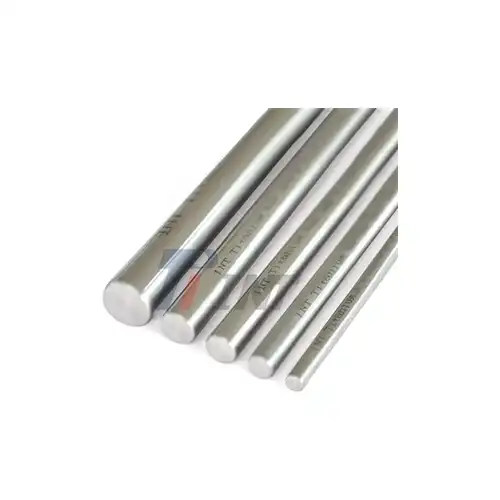
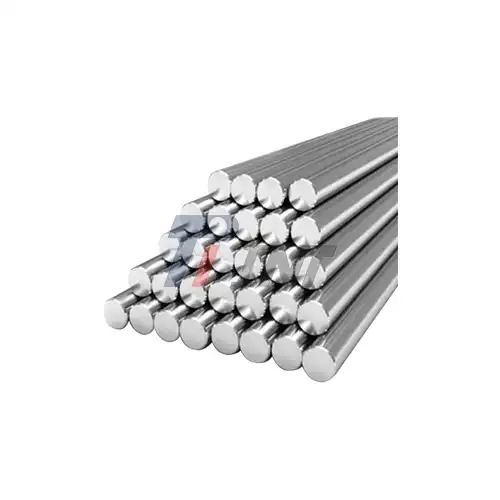
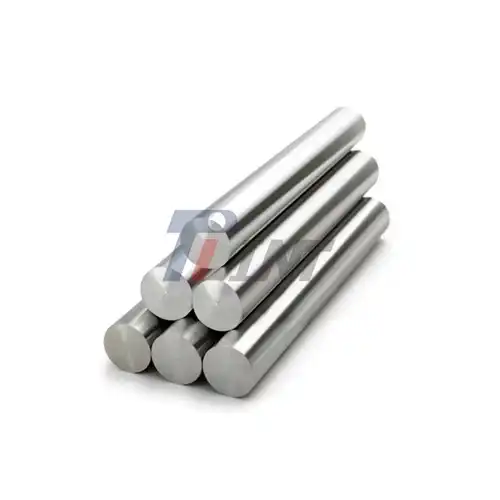
Gr2 titanium wire, classified under UNS R50400 and compliant with ASTM B863, has become the material of choice for contract manufacturers of medical devices worldwide. As a commercially pure (CP) alpha-phase titanium, it offers excellent biocompatibility, corrosion resistance, and mechanical reliability. With a tensile strength of ≥345 MPa and elongation of ≥20%, it is an ideal choice for medical-grade manufacturing. From orthopedic components to wire for surgical instruments, this material consistently meets the stringent requirements for traceability, surface quality, and dimensional tolerances in CMO/CDMO production environments.
Understanding Gr2 Titanium Wire and Its Composition
|
|
|
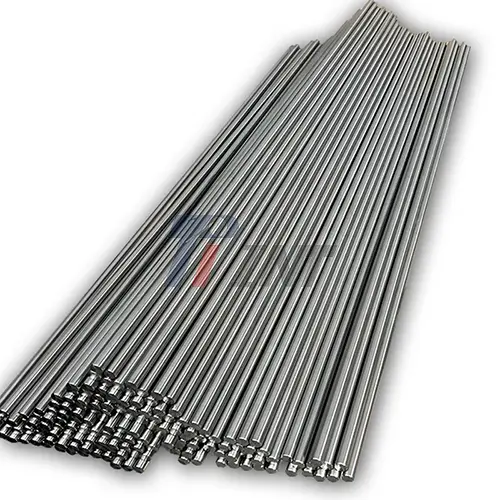
What makes Gr2 commercially pure titanium unique?
The commercially pure titanium series includes Gr2 titanium. This means it contains only trace amounts of alloying elements, primarily oxygen, nitrogen, iron, and carbon. This single-phase alpha microstructure distinguishes it from alloys such as Ti-6Al-4V (Grade 5), which contain vanadium, a material that has been linked to cell damage issues in long-term implant use. Gr2 titanium wire contains none of these alloying elements, making it non-toxic and non-magnetic. This means it is inherently safe for long-term contact with the human body and compatible with magnetic resonance imaging (MRI) environments.
Gr2 vs. Gr4 and Gr5: A Procurement-Focused Comparison
| Gr2 | Gr4 | Gr5(Ti-6Al-4V) | |
|---|---|---|---|
| Tensile Strength | ≥345MPa | ≥550MPa | ≥895MPa |
| Elongation | ≥20% | ≥15% | ≥10% |
| Cold Formability | Excellent | Moderate | Limited |
| Biocompatibility | Excellent | Excellent | Good |
| Cost | Lower | Moderate | Higher |
Because Gr4 has high strength but relatively poor ductility, it is more difficult to process by wire weaving and cold forming. Gr5 has higher mechanical strength, but annealing is required when processing complex shapes, which increases production costs. Gr2 can address this production bottleneck, offering a suitable combination of strength and excellent cold-forming performance, which is a major advantage for precision wire processing, weaving, and etching processes.
Compared to 316L stainless steel, Gr2 titanium wire doesn't have the same galvanic corrosion risks in biological environments that are high in chloride. This is a known way for steel-based implant parts to break down over time.
Core Advantages of Gr2 Titanium Wire in Medical Applications
Biocompatibility and Corrosion Resistance as Clinical Imperatives
What really makes this material stand out is how well it works with living things and chemicals. If you put Gr2 titanium wire in oxygen, it makes a solid, self-regenerating passive oxide layer of titanium dioxide (TiO₂). In body fluids like saline, blood, and enzyme-rich environments, this layer keeps the wire from breaking down, which would happen to many other materials over time. This trait is real, which is why titanium has been the standard for osseointegrating implant materials ever since Brånemark's groundbreaking work in the 1960s.
Because of its core performance traits, this wire is a preferred input material for people who make medical devices:
- Lightweight and structurally durable: At a density of 4.51 g/cm³, the wire is roughly 43% lighter than stainless steel, reducing instrument weight without sacrificing structural integrity across repeated sterilization cycles.
- High strength-to-weight ratio: The mechanical efficiency of Gr2 wire allows fabricators to maintain component geometry and dimensional tolerances even in thin-section wire forms, directly supporting etching and stamping yield rates.
- Excellent fatigue resistance: Components subject to cyclic mechanical loading — such as spring-form medical parts or woven mesh structures — retain integrity without crack initiation under repeated stress, a property validated across orthopedic applications.
- Outstanding weldability: Gr2 wire joins cleanly using TIG processes under inert gas shielding, producing weld zones that match base metal corrosion resistance and ductility — critical for precision medical assemblies.
- Customizable surface and geometry: The wire can be polished, straightened, or coated per customer specification, enabling integration into specialized device configurations without additional rework at the fabrication stage.
These benefits directly lead to measured output benefits, such as less work being done on grinding, less waste on etched parts, and fewer problems with dimensions during CNC machining.
Practical Use Cases of Gr2 Titanium Wire in the Medical Industry
Where This Material Performs in Real Production Environments
Companies that make medical devices use Gr2 pure titanium wire in a variety of difficult fabrication situations. Its job is to be a precise raw material, not a finished product. This means that the yield rates further down the line depend on its surface quality, stability in size, and ability to be tracked from batch to batch.
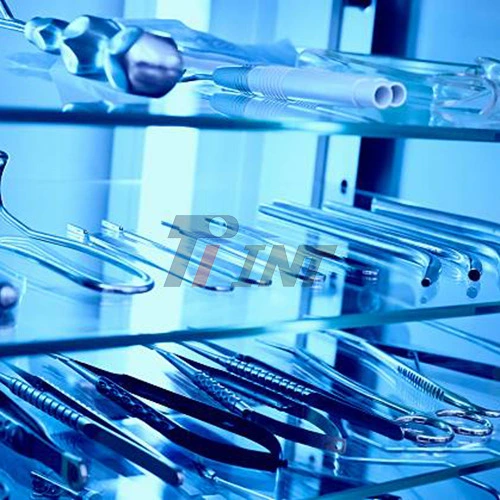
Procurement teams often ask for this grade of wire when making orthopedic implants, where it is used to make Kirschner wires (K-wires) and cerclage wire, which is used to fix bones. It is used as the base material for prosthetic framework wire parts in the making of dentistry devices. Its nonmagnetic shape makes it compatible with imaging during surgery, which is good for spinal surgery instruments. The cold-forming ability of the wire is used in braided surgical mesh structures to make sure that the weave geometry is always the same.
A real-life example of a buying situation: a European CMO that makes trauma fixing parts needed wire with a diameter range of ±0.05mm and no surface oxidation to keep the accuracy of laser cutting. A problem with rejecting batches was fixed by switching to a certified Gr2 titanium wire supplier with per-batch COA documentation and protective film packaging. This saved about 8–12% of the input material that was being wasted before each production run.
How to Choose and Procure Gr2 Titanium Wire for Medical Use?
Certification, Traceability, and Customization as Non-Negotiable Criteria
When procurement managers look at suppliers, they need to look at more than just price per kilogram. A low-risk, compliant supply relationship meets the following criteria:
- ISO 13485:2016 and ISO 9001:2015 certification: These quality management standards confirm that the supplier operates documented processes for medical device material production, including equipment verification and non-conformance management.
- Per-batch material traceability: Every shipment should carry a Certificate of Analysis (COA) traceable to a specific heat/lot number, enabling full traceability through the fabrication chain to meet FDA 21 CFR Part 820 and EU MDR documentation requirements.
- Dimensional customization: Diameter range (0.5mm–6mm), cut-to-length delivery, deburring, and protective film packaging reduce material handling steps at the receiving facility and minimize surface damage risk during transit.
- ASTM B863 compliance: This standard governs titanium wire product specifications including chemical composition limits, mechanical property minimums, and permissible diameter tolerances.
Compliance with ASTM B863 for Gr2 titanium wire sets the rules for titanium wire products, including the smallest possible thickness differences, chemical makeup limits, and mechanical property minimums.
Ensuring Long-Term Value with Gr2 Titanium Wire
Storage, Handling, and Market Trends Shaping Procurement Strategy
为确保钛丝从收货到生产过程中表面质量良好,必须遵循特定的处理规则。钛丝应存放在干燥、温度稳定的地方,远离含氯化学品或铁质金属,因为这些物质可能会导致铁颗粒嵌入其中,降低防锈效果。在供货阶段使用保护性纸质包装可以避免运输过程中大部分的表面损伤,从而防止蚀刻或冲压等产生的废料。
从更宏观的市场角度来看,医疗领域对商用纯钛丝的需求持续增长。这是因为微创手术需要更小、更精确的钛丝形状。预计到2030年,全球医用钛市场将持续增长。这是因为北美、欧洲和日本的人口预期寿命延长,使得这些地区成为植入式医疗器械部件的主要市场。可持续性也是采购决策的一个重要因素,因为越来越多的品牌客户要求供应商证明其采用负责任的材料采购和节能的生产方法。
结论
Gr2钛丝是用于医疗器械制造的最佳商业纯钛材料,因为它具有生物相容性、尺寸精确、不易生锈,并且可以采用多种加工方式。这种材料的优异性能直接提升了成品率,确保符合监管要求,并为生产植入体毛坯、手术线组件和精密冲压件的代工厂带来长期的客户满意度。如果与提供全程可追溯性、认证文件和定制服务的合格供应商合作,则可为医疗器械的大规模生产奠定坚实的基础。
常问问题
Q1:Gr2钛丝比Gr4或Gr5钛丝强度更高吗?
答:Gr2 钢丝的抗拉强度不如 Gr4 或 Gr5,但它更柔韧,在寒冷天气下也更容易成型。Gr2 钢丝无需退火即可进行弯曲、编织或复杂成型等应用场景,是最佳选择。
Q2:Gr2钛丝可以焊接用于医疗部件吗?
答:是的,Gr2焊丝可以很容易地用氩弧焊(TIG)和惰性气体保护焊(根据AWS A5.16标准,焊丝型号为ERTi-2)进行焊接。形成的焊缝区域能够保持母材的耐腐蚀性和柔韧性,这对于医疗系统至关重要。
Q3:合格的Gr2钛丝供应商应该具备哪些认证?
答:与医疗器械制造公司合作的供应商至少应具备 ISO 13485:2016 和 ISO 9001:2015 认证,提供可用于追踪热量的每批次 COA 文件,并满足 ASTM B863 的化学和尺寸要求。
Q4:可用于医疗应用的直径范围是多少?
答:标准医用级电线直径范围为 0.5 毫米至 6 毫米,合格的制造商可以将其切割成所需长度并提供公差选项。
Q5:表面质量如何影响下游加工良率?
答:在精密激光切割和化学蚀刻过程中,废品率直接来源于输入导线表面的划痕、轧痕或锈迹。通过指定使用带有保护膜且表面光洁度符合标准的导线,可以避免批量废品的发生。
与宝鸡英特医疗钛业有限公司合作,采购经认证的2级钛丝
自2003年以来,宝鸡英特医疗钛业有限公司一直致力于生产医用级钛产品。公司拥有超过20年的丰富经验,与全球多家合同生产商(CMO)和合同研发生产机构(CDMO)建立了稳固的合作关系。英特是公认的Gr2钛丝生产商,拥有ISO 13485:2016、ISO 9001:2015和欧盟CE认证。公司提供全程可追溯的定制钛丝,每批产品均配备COA文件和安全包装。如需索取样品或发送询价单,请发送电子邮件至export@tiint.com联系我们的技术团队。
参考
1. Brånemark, P.-I. 等人 —临床牙科中的骨整合,《修复牙科杂志》,1983 年。
2. ASTM International — ASTM B863:钛及钛合金丝标准规范,2022 年。
3. Black, J. & Hastings, G. —生物材料特性手册,Springer,1998 年。
4. Rack, HJ & Qazi, JI —用于生物医学应用的钛合金,材料科学与工程 C,2006 年。
5. Niinomi, M. —钛合金在生物医学应用中的机械生物相容性,生物医学材料力学行为杂志,2008 年。
6. ISO — ISO 13485:2016 医疗器械 — 质量管理体系 — 监管要求,国际标准化组织,2016 年。