




Gr9 Titanium Bar Dia 8mm vs Gr5 Titanium Bar for Medical Parts


 2026-11-25 10:05:06
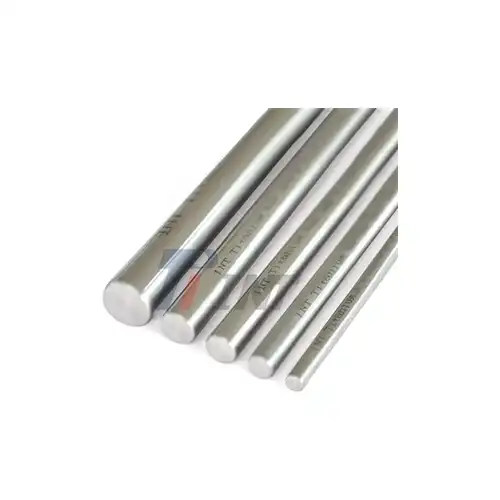
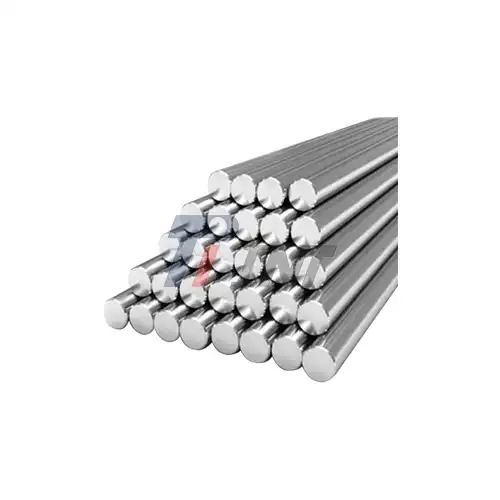
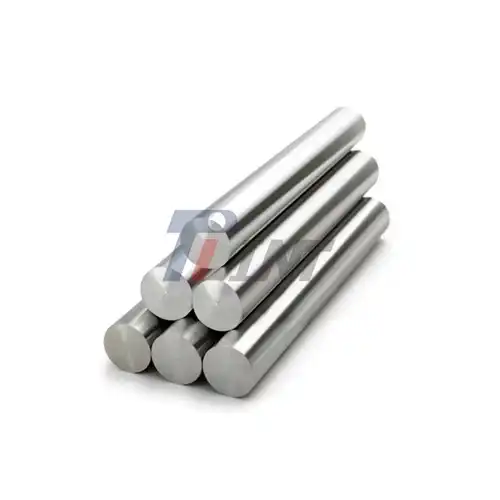
When surgical instrument manufacturers evaluate titanium bar stock, the choice between Gr9 and Gr5 carries real consequences for machining output, component longevity, and regulatory compliance. A Gr9 Titanium Bar Dia 8mm — composed of Ti-3Al-2.5V alloy — delivers a practical balance of fatigue resistance, cold-formability, and corrosion performance that suits instrument shaft components and handles. Gr5 (Ti-6Al-4V) offers higher tensile strength but demands more intensive machining and heat treatment. Understanding where each grade performs best helps procurement managers make faster, more confident sourcing decisions without over-spending on material properties they do not need.
|
|
|
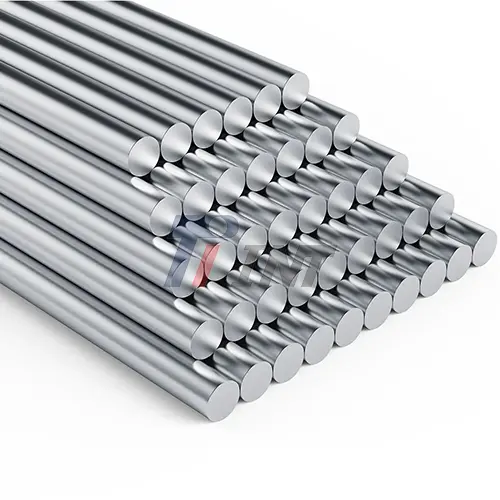
Understanding Gr9 Titanium Bar Dia 8mm: Properties and Medical Applications
Alloy Composition and Mechanical Profile
The mechanical properties of Gr9 titanium alloy, whose full name is Ti-3Al-2.5V, are between those of pure titanium and the high-strength Ti-6Al-4V. The 8mm diameter bar is great for CNC turning, centerless grinding, and polishing activities that are common in surgical instrument workshops. It has a density of 4.48 g/cm³, a typical tensile strength of 620–793 MPa, and great ductility. The fact that the material meets ASTM B348, ASTM F136, and ISO 5832-3 standards means that it can be easily added to regulated supply chains.
Suitability for Surgical Instrument Components
In the areas around Sialkot, Solingen, and others like them, people who make instruments use this metal for shaft parts, spring-action jaws, and thin grips where elastic recovery is important. Unlike fully annealed pure titanium grades, Gr9 still acts like a spring after being cold worked, which is precisely what a tissue retractor arm or scissor spring needs. Its passive oxide layer can withstand being exposed to saline and autoclave cycles without losing its surface, which means that instruments don't need to be replaced as often and can last longer between service intervals.
Comparing Gr9 and Gr5 Titanium Bar for Medical Parts
Titanium's main benefits are low density, biocompatibility, and resistance to corrosion. Both grades have these benefits, but their mechanical and manufacturing profiles are different in ways that matter on the shop floor for Gr9 Titanium Bar Dia 8mm. The tensile strength of Gr5 (Ti-6Al-4V) is over 895 MPa, and the yield strength is close to 828 MPa. These high strengths make it the standard for load-bearing structural implants like spine bars and femoral stems. But because it doesn't transfer heat well, heat builds up at the cutting edge during grinding, which speeds up tool wear, needs high-pressure coolant, and slows down cycle times. Almost always, heat treatment after forging is needed to get rid of any remaining stress before precision grinding.
Gr9, on the other hand, machines more freely. Its mild alloying lets it cut more quickly, leave cleaner surfaces, and use fewer tools, all of which directly lead to lower costs per piece in high-mix, low-volume instrument workshops. At 8mm diameters, cold heading can be done without cracking, so the hot-forging step that Gr5 usually needs for fastener-style parts is not needed.
The table below captures the core differentiation:
- Tensile Strength: Gr9 is between 620 and 793 MPa, and Gr5 is 895 MPa or more.
- Machinability: Gr9 is better for cold-forming and CNC work, while Gr5 needs slower feeds and more coolant pressure.
- Heat Treatment: Gr9 is usually sent out either cold-worked and stress-relieved (CW+SR) or annealed. More thermal cycles are usually needed for Gr5.
- Corrosion Resistance: Both have great corrosion resistance, but Gr9 is slightly better in chloride-rich sterilization conditions.
- Typical Application: Gr9 is used for instrument shafts, handles, and spring parts; Gr5 is used for high-load structural implants.
These differences make it clear that neither grade is always better than the other. The best option relies on the target component's mechanical needs, how it is made, and its regulatory route.
Decision Factors for Procuring Gr9 Titanium Bar Dia 8mm
In this group, choices about procurement depend on more than just publicly available material facts. A number of operational factors regularly affect how well instrument makers are able to source materials. Material traceability comes in first place. For export clearance and customer audits, you must have an EN 10204 3.1 Mill Test Certificate that shows the heat number, chemical composition, tensile and yield properties, and heat treatment conditions. When suppliers send this paperwork right away, instead of weeks after the shipment, it clears up a problem that keeps coming up in the order cycle.
Lead time and MOQ options for Gr9 Titanium Bar Dia 8mm are both very important for workshops that manage buying with multiple specifications. Standard shipping in three to four weeks and the freedom to split orders between Gr1, Gr2, Gr4, and Gr9 without strict minimums keep production lines running smoothly without having too much stock. For one order, you should be able to choose between polished, pickled, or centerless ground surface finishes. This way, you won't have to pay extra for outsourcing. The third point is matching of certification. When paired with EU CE compliance and ISO 9001:2015 and ISO 13485:2016 certification at the mill level, this meets most customer audit standards across European, North American, and South Asian export markets without adding to the supplier qualification load.
Advantages of Using Gr9 Titanium Bar Dia 8mm in Medical Parts Manufacturing
Picking the right raw material from the start cuts down on mistakes, guarantee claims, and delays in approval. These are the main reasons why this alloy is a good choice for parts used in instruments:
- Lightweight and Durable: At 4.48 g/cm³, the metal has a high specific strength. This means that the instruments are lighter without losing their structural integrity, which is a big plus for surgeons who have to do long treatments.
- Corrosion Resistance: The stable TiO₂ passive layer can handle being autoclaved with steam, chemical disinfectants, and saline without pitting or crevice corrosion, making it better than 316L stainless steel in places with a lot of chloride.
- High Strength-to-Weight Ratio: The Ti-3Al-2.5V mix is about 20% stronger than pure Gr4 titanium that is sold in stores, but it still has the flexibility needed for thin-section instrument parts.
- Fatigue Resistance: Cyclic loading, which happens in spring-jaw clamps, retractors, and knives, needs a material that doesn't start cracks easily. Gr9's wear performance over multiple flex cycles is better than that of pure titanium grades, which makes instruments last longer.
- Customizable Specifications: The length, diameter, and surface finish (polished, pickled, or custom) can be changed to fit the exact needs of the workshop, which cuts down on the time needed to prepare the parts in-house.
These benefits of Gr9 Titanium Bar Dia 8mm directly deal with the problems of rising costs and inconsistent quality that come up in competitive markets for making instruments. A material that is easy to machine, completely records, and works reliably over thousands of sterilization cycles lowers the total cost of ownership, even if it costs more per unit than lower-quality alternatives.
How to Choose the Best Titanium Bar for Medical Parts: Gr9 vs Gr5 — A Buyer's Guide
Once the application settings are set, the selection structure is easy to use. Gr5 is still the best choice when a tensile strength of more than 895 MPa is needed, like in load-bearing orthopedic implant structures, and when the production line can handle the slower speeds and more water that it needs. When it comes to machinability, fatigue resistance, spring-back behavior, and fast paperwork at a reasonable price, Gr9 is the best choice.
It is also important for procurement managers to make sure that the buyer meets ASTM B348 standards for general bar stock and ASTM F136 or ISO 5832-3 standards for medical uses. A standard step that lowers the risk of moving is to ask for a sample batch before agreeing to monthly replenishment orders. This lets you compare the performance of the machine to your own in-house tools and processes.
Conclusion
Gr9 Titanium Bar Dia 8mm and Gr5 titanium bars are used to make different kinds of medical parts. Because it is made up of Ti-3Al-2.5V, Gr9 is the better material for medical tool parts that need to be easy to machine, resistant to fatigue, and able to be cold-formed. Gr5 stays where it is when greatest tensile strength is the most important design condition. In competitive instrument markets, the best way to protect margins is to choose the right grade, which should be backed by full mill certification, a flexible minimum order quantity, and reliable lead times. Instead of always choosing the strongest material, it is always better for manufacturing and business to match the properties of the material to the needs of the application.
FAQ
Q1: Why do instrument manufacturers often prefer Gr9 over Gr5 for shaft components?
A: Gr9 can be machined more quickly, can be cold-formed without cracking at 8 mm diameters, and has better surface finishes with less tool wear. Its resistance to wear and ability to stretch back to its original shape are more important for shaft and spring-action parts than Gr5's higher tensile strength.
Q2: What certifications should accompany a shipment of Gr9 titanium bars?
A: It is necessary to have an EN 10204 3.1 Mill Test Certificate that confirms the heat number, chemical makeup, and mechanical qualities. ISO 9001:2015 and ISO 13485:2016 certifications at the supplier level, along with EU CE compliance, help with export clearance and customer audit standards.
Q3: How does Gr9 compare to 316L stainless steel in sterilization environments?
A: Gr9 is much better than 316L stainless steel at resisting pitting and crevice corrosion after being sterilized in an autoclave and chemically. This makes it a better long-term material for surgical instruments that will be used again and again.
Q4: What surface finishes are standard for 8mm titanium alloy bars?
A: Most of the time, surfaces are polished, pickled, or centerless ground. For CNC collet feeding and Swiss-type turning, centerless grinding with close diameter tolerances is best.
Q5: Is a minimum order quantity required for mixed-grade procurement?
A: Reliable suppliers that work with instrument makers offer flexible minimum order quantities and multi-grade split orders, which let manufacturers get Gr1, Gr2, Gr4, and Gr9 bars all in one shipment.
Partner with Baoji INT Medical Titanium Co., Ltd. for Reliable Gr9 Titanium Bar Supply
Since 2003, Baoji INT Medical Titanium Co., Ltd. has sold certified medical titanium materials to companies around the world that make instruments. We are a reliable provider of Gr9 Titanium Bar Dia 8mm. Our materials are in line with ASTM B348 and ISO 13485:2016, and we can send them in three to four weeks after receiving full mill approval. You can email our export team at export@tiint.com to get specs, samples, or a cheap price for your next purchase.
References
1. ASTM International. ASTM B348: Standard Specification for Titanium and Titanium Alloy Bars and Billets. ASTM International, 2019.
2. ASTM International. ASTM F136: Standard Specification for Wrought Titanium-6Aluminum-4Vanadium ELI Alloy for Surgical Implant Applications. ASTM International, 2013.
3. International Organization for Standardization. ISO 5832-3: Implants for Surgery — Metallic Materials — Part 3: Wrought Titanium 6-Aluminium 4-Vanadium Alloy. ISO, 2021.
4. Rack, H.J., & Qazi, J.I. "Titanium alloys for biomedical applications." Materials Science and Engineering: C, 26(8), 1269–1277, 2006.
5. Geetha, M., Singh, A.K., Asokamani, R., & Gogia, A.K. "Ti based biomaterials, the ultimate choice for orthopaedic implants — A review." Progress in Materials Science, 54(3), 397–425, 2009.
6. Niinomi, M. "Recent metallic materials for biomedical applications." Metallurgical and Materials Transactions A, 33(3), 477–486, 2002.