




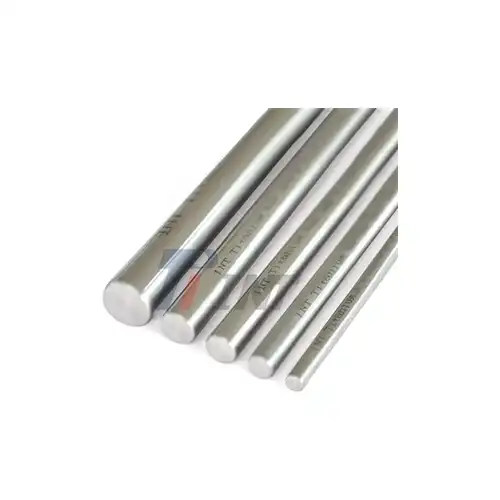
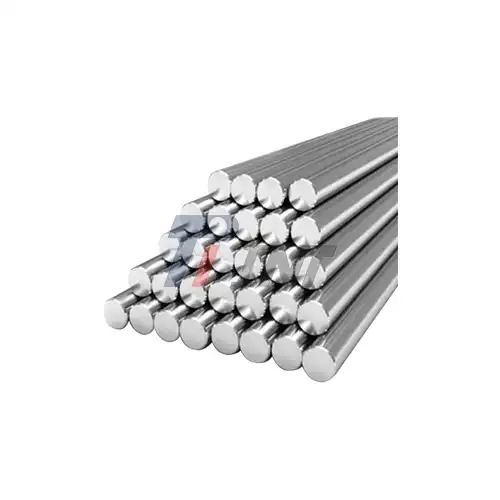
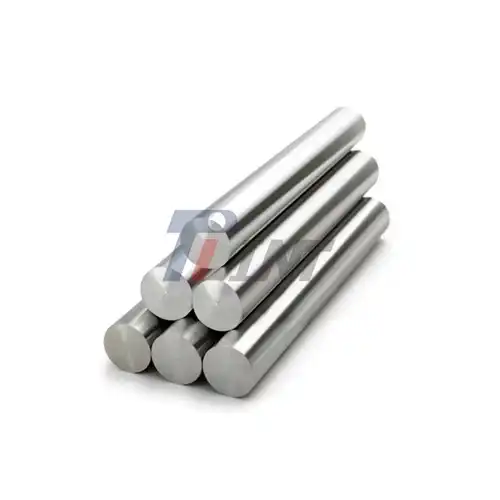
ASTM F136 Titanium Bar Supplier Selection Guide


 2026-10-29 08:56:37
Sourcing the right titanium material is one of the most consequential decisions an orthopedic implant manufacturer makes. This guide walks through everything you need to evaluate when selecting a supplier for ASTM F136 titanium round bar — from understanding the material's defining properties to auditing a supplier's compliance infrastructure. Whether you're building a dual-supply chain or qualifying a new vendor for a spinal fixation project, the criteria here will help you move from initial inquiry to annual framework agreement with confidence.
|
|
|
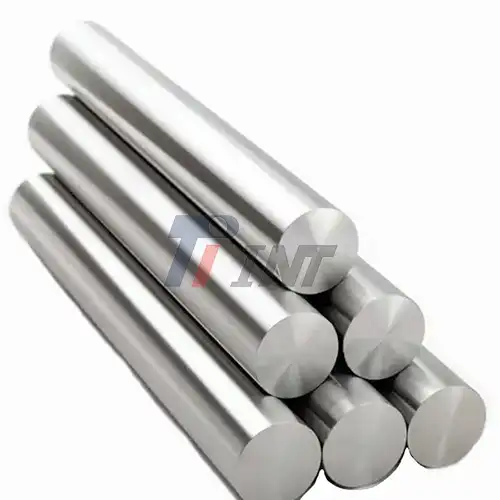
Understanding ASTM F136 Titanium Round Bar
For medical implants, ASTM F136 defines a wrought Ti-6Al-4V ELI (Extra Low Interstitial) metal. The important difference is the "ELI" label, which requires stricter limits on interstitial elements than normal Grade 5 titanium. These limits are oxygen ≤ 0.13%, iron ≤ 0.25%, and carbon ≤ 0.08%. These limits keep the alpha-beta microstructure's ability to bend and break even when it is subjected to repeated physiological loads.
Mechanical Properties That Matter in Implant Manufacturing
The bar has a minimum tensile strength of 860 MPa (125 ksi) and a minimum yield strength of 795 MPa (115 ksi). It can also stretch by up to 10%. It has an elasticity value of about 110 GPa, which is about half of what stainless steel or cobalt-chrome metals have. This lower stiffness lowers stress buffering around bone, which is a clinically important benefit that stops bone loss around implants over time. Also, the material is completely magnetic-free, which means it is safe for MRIs and doesn't show up on radiographs.
Primary Application Scenarios in B2B Manufacturing
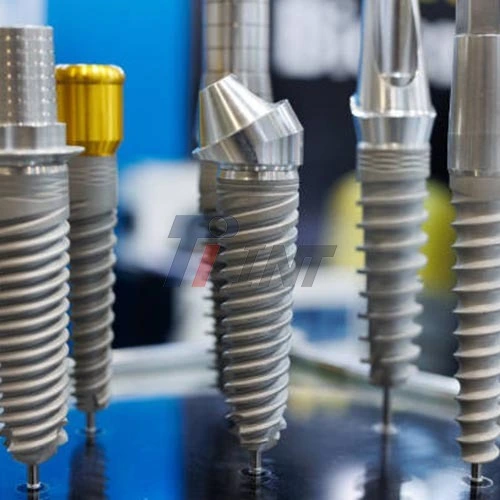
The ASTM F136 titanium round bar is used in three very important manufacturing processes. Parts used in orthopedic trauma and joint reconstruction need to be able to resist fatigue under heavy cyclic body weight loads. The alloy's surgical flexibility makes it possible for surgeons to shape spinal fixation hardware like rods, pedicle screws, and locking plates without the risk of breaking them. Craniomaxillofacial and thoracic fixation systems depend on the material's complete resistance to corrosion in physiologically salty conditions, where changes in pH would weaken lower grades.
Comparative Analysis to Guide Supplier and Product Selection
Knowing how ASTM F136 compares to other options keeps you from having to make expensive material changes in the middle of a job.
Here is a short list of the most common materials and how well they perform:
- ASTM F136 vs. ASTM F67 (CP Titanium): F67 covers commercially pure titanium grades (1–4). CP titanium offers superior corrosion resistance but lower strength (max ~550 MPa tensile for Grade 4). F136 is the correct specification wherever load-bearing structural performance is required alongside biocompatibility.
- ASTM F136 vs. ASTM B348 Grade 5: B348 Grade 5 is industrial-grade Ti-6Al-4V with oxygen permitted up to 0.20%. That 0.07% difference translates to measurably lower ductility and damage tolerance. For any implant subject to FDA 510(k) or CE MDR submission, regulators expect F136, not B348.
- ASTM F136 vs. 316L Stainless Steel: Stainless steel costs less per kilogram but carries roughly double the modulus of elasticity (~200 GPa), increasing stress shielding risk. Nickel ion release also poses long-term biocompatibility concerns absent in titanium.
These differences aren't just academic; giving the wrong grade during the design phase leads to re-qualification, re-testing, and late regulatory submissions. If you choose F136 from the start, that cycle of rework is never needed again.
Critical Criteria for Selecting ASTM F136 Titanium Bar Suppliers
When looking for an ASTM F136 titanium round bar provider, price is a factor that should be taken into account, but it should not be the most important one.
Certification and Traceability Infrastructure
A good source must be certified to ISO 13485:2016 and be able to show full heat-number tracking from the melt of the ingot to the finished bar. Each package should have an EN 10204 3.1 Mill Certificate, a Certificate of Analysis (COA) that lists the chemicals used and the results of any mechanical tests, and biocompatibility paperwork to back it up. Third-party test records from approved labs add an extra layer of independent proof that meets the needs of a SQE audit.
Batch Consistency and Dimensional Precision
Chemical and mechanical steadiness from batch to batch has a direct effect on how much CNC cutting can be done. When interstitial material changes between heats, cutting settings need to be reset, tools wear out unevenly, and the amount of scrap goes up. Suppliers with strong process controls, such as vacuum arc remelting (VAR) melting procedures, in-process hardness verification, and centerless ground or peeled bar finishes to h8/h9 circle standards, give machining lines the stability they need to keep going smoothly.
MOQ Flexibility and Lead Time Reliability
Before production volumes are confirmed, small-batch, multi-diameter sample runs are needed for new implant development cycles. A seller that requires large minimum orders during the testing phase slows things down just when speed is needed the most. Check to see if the seller offers prices for both prototypes and large quantities, and compare the lead times they say they offer with real customer references.
Leading ASTM F136 Titanium Bar Suppliers in the Market
In the global supply landscape, there are both manufacturers from the West and certified manufacturers in China.
In the military and medical fields, Western companies like ATI (Allegheny Technologies) and TIMET have a long history of reliability. It is easy to track where their materials come from, but wait times can be long, and their prices represent the costs of making things in the United States.
Russia's VSMPO-AVISMA makes the most titanium in the world by bulk and sells it to major aircraft OEMs. However, many procurement teams are trying to reduce their reliance on VSMPO-AVISMA because of geopolitical concerns.
Baoji INT Medical Titanium Co., Ltd. is the best manufacturer in China that makes medical titanium. Since its founding in 2003 by Mr. Zhan Wenge, who has more than 30 years of experience in the titanium business, INT has spent twenty years improving its ability to make medical titanium, including ASTM F136 titanium round bar. Both ISO 9001:2015 and ISO 13485:2016 are given to the company, and EU CE safety certification is given to all of its products.
INT offers a wide selection of medical titanium products, such as Ti-6Al-4V ELI rods, wires, and plates in a number of different sizes and specs. All of their orders come with full EN 10204 3.1 paperwork and a heat number that can be tracked. Their long-term ties with customers—many of which go back more than ten years—show that they can meet the needs of implant makers for batch consistency and audit readiness.
Before placing a production order, you should check out any potential supplier by looking at their documents, having a video or in-person audit done, and having a third party test samples again. This is true no matter where the material comes from.
Best Practices for a Successful Procurement Process
Your regulatory submissions and production schedule are both safe with a structured qualification process.
Before you contact suppliers, you should define your technical package. This includes the diameter range, length, surface finish (ground, peeled, or polished), applicable standard (ASTM F136), required certifications, and the annual volume you want to achieve. Specifications in writing help providers give you exact quotes and show you if their skills really match your needs.
Ask for all the paperwork up front, including the COA, the Mill Certificate, the ISO 13485 scope certificate, and any test reports from a third party. Send samples to a recognized, independent lab for testing on chemical makeup, mechanical qualities, and metallography. Allow two to four weeks for this part of verification; it is the most accurate way to lower risk that you can find.
Talk about the terms of the contract so that it includes responsibilities for batch-level tracking, clear delivery windows that are tied to your production schedule, and a way to handle quality deviations. Setting up a dual-supply system with one qualified domestic supplier and one qualified offshore seller protects your business from disruptions caused by a single source.
Conclusion
Choosing a qualified ASTM F136 titanium round bar supplier is a compliance-first choice that has direct effects on the quality of implants, the time it takes for regulatory approval, and the efficiency of production. The right provider has certified chemical and mechanical performance, thorough paperwork for traceability, consistent results from batch to batch, and the operating freedom to handle both small batches and large production runs. A strategic supply partnership is different from a direct buy because candidates are judged on these factors instead of just price.
FAQ
What is the difference between ASTM F136 and ASTM B348 Grade 5?
When it comes to medical implants, ASTM F136 is the ELI (Extra Low Interstitial) standard. It limits the amount of oxygen to 0.13%, while B348 Grade 5 limits it to 0.20%. Under cyclic loading, that stricter limit makes the material more flexible and harder to break. Regulatory bodies want F136 for devices that are implanted, and B348 for general industry and aircraft uses.
Is ASTM F136 titanium bar MRI-safe?
Yes. The substance isn't ferromagnetic, so it doesn't interact with magnets, change the images, or heat up during MRI scanning. This is a normal biocompatibility condition for gadgets that will be implanted for a long time.
What surface finishes are typically available?
Finishes like centerless ground (h8/h9 tolerance), peeled, and polished are common for B2B orders. Precision CNC machining can be done directly from stock with tighter diameter tolerances, without any extra preparation.
What traceability documents should I require?
Along with an EN 10204 3.1 Mill Certificate, a heat-number-linked COA showing the chemical make-up and mechanical test results, and supporting ISO 13485 certification paperwork, every order should have all of these things. Lab reports from a third party provide independent confirmation.
Can suppliers accommodate small prototype quantities?
Implant manufacturers should be able to get prototype-scale quantities from qualified suppliers. Make sure the MOQ is flexible before you start the approval process, because developing a new device needs low-volume sample runs with multiple specifications.
Partner with Baoji INT Medical Titanium Co., Ltd. for Certified Implant-Grade Titanium
From 2003 to now, Baoji INT Medical Titanium Co., Ltd. has sold approved ASTM F136 titanium round bar to orthopedic makers in North America, Europe, and Asia. INT is a well-known company that makes ASTM F136 titanium round bars. They are certified by ISO 13485:2016, have full EN 10204 3.1 traceability, and have a technical team ready to help you with the qualification process. To get a sample package and COA right away, email our team at export@tiint.com or go to inttitanium.com.
References
1. ASTM International. ASTM F136: Standard Specification for Wrought Titanium-6Aluminum-4Vanadium ELI Alloy for Surgical Implant Applications. ASTM International, 2023.
2. International Organization for Standardization. ISO 5832-3: Implants for Surgery — Metallic Materials — Part 3: Wrought Titanium 6-Aluminium 4-Vanadium Alloy. ISO, 2021.
3. Rack, H.J., and Qazi, J.I. "Titanium Alloys for Biomedical Applications." Materials Science and Engineering: C, Vol. 26, Issues 8–9, 2006.
4. Niinomi, M. "Mechanical Biocompatibilities of Titanium Alloys for Biomedical Applications." Journal of the Mechanical Behavior of Biomedical Materials, Vol. 1, Issue 1, 2008.
5. Long, M., and Rack, H.J. "Titanium Alloys in Total Joint Replacement — A Materials Science Perspective." Biomaterials, Vol. 19, Issues 18–19, 1998.
6. International Organization for Standardization. ISO 13485: Medical Devices — Quality Management Systems — Requirements for Regulatory Purposes. ISO, 2016.