




Gr1 Titanium Bar Uses in Medical Device Manufacturing


 2026-10-29 08:56:33
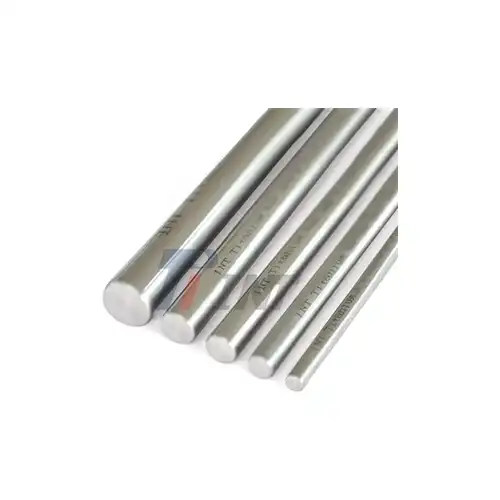
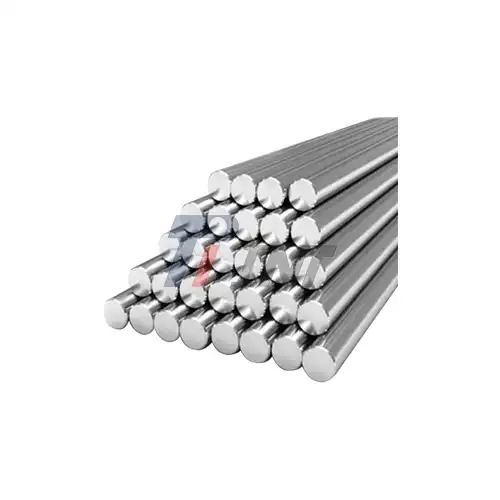
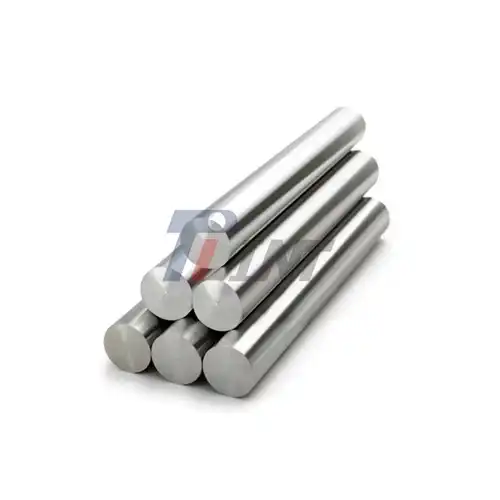
Gr1 medical titanium bar serves as one of the most trusted raw materials in medical device manufacturing today. Classified as commercially pure titanium (CP-Ti Grade 1) and governed by ASTM F67 and ISO 5832-2, it delivers a rare combination of exceptional biocompatibility, high corrosion resistance, and workable ductility. Procurement professionals and implant manufacturers across the United States source this material specifically for fabricating orthopedic implants, dental prosthetics, spinal fixation components, and surgical instruments — where material purity and batch consistency are non-negotiable.
|
|
|
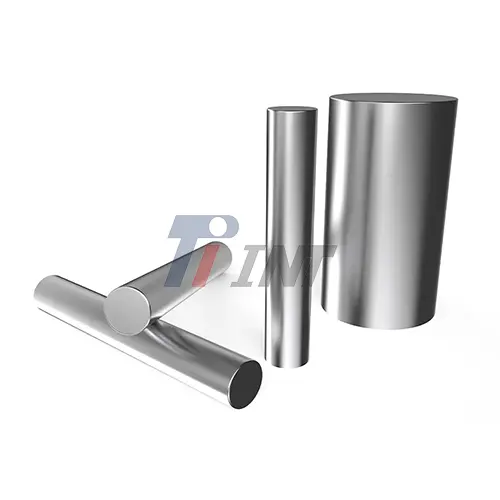
Understanding Gr1 Titanium Bar in Medical Device Manufacturing
Chemical Composition and Grade Differentiation
Gr1 is the softest and most malleable of the four types of pure titanium that are sold in stores. The chemical make-up of titanium balances out to have strict interstitial limits for oxygen at or below 0.18%, iron at or below 0.20%, nitrogen at or below 0.03%, carbon at or below 0.08%, and hydrogen at or below 0.015%. Toughness and fatigue behavior of the material are directly controlled by these strict rules. These are the long-term safety qualities of any implanted device.
Mechanical Properties That Matter in Medical Contexts
Pure titanium Grade 1 is very easy to shape when cold because it has a minimum yield strength of 170 MPa, a maximum tensile strength of 240 MPa, and an extension of more than 24%. It is about 43% lighter than stainless steel because its density is 4.51 g/cm³, and its naturally occurring TiO₂ passive oxide layer protects it from body fluid rusting. These features perfectly match the FDA and EU MDR requirements for implant-grade metal biomaterials. This makes it easy to provide compliance documentation, such as EN 10204 3.1 Mill Certificates.
Primary Uses and Applications of Gr1 Titanium Bar in Medical Devices
Medical manufacturing has a specific need for Gr1 medical titanium bar stock. It is the best material when resistance to corrosion, compatibility with MRIs, and ability to handle soft tissues are more important than having the highest tensile strength. These uses show why procurement engineers choose implant-grade pure titanium bar stock over options that don't meet the same standards. Choices made about materials during the raw material stage have a direct effect on how devices are registered and how safe they are for patients.
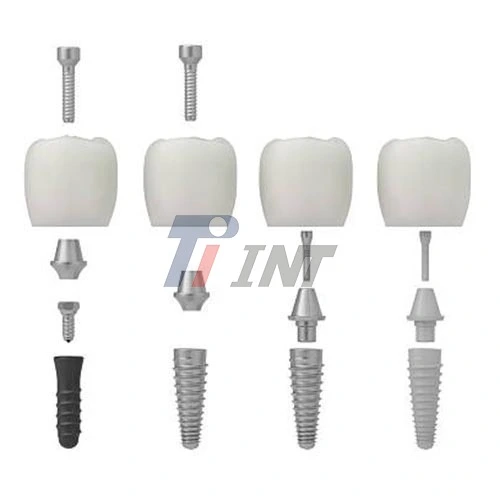
- Dental implants and abutments: The high ductility of Gr1 allows precise cold-forming and threading operations. Its oxide layer integrates favorably with osseointegration protocols, and its non-magnetic nature eliminates interference in dental imaging. Manufacturers routinely machine dental implant components directly from annealed bar stock.
- Cranial and maxillofacial plates: Thin plates and mesh components derived from CP-Ti bar require extensive cold working without fracture. Gr1's elongation of over 24% supports deep-drawing and bending operations that alloyed grades cannot withstand without intermediate annealing.
- Trauma fixation hardware and bone screws: Bone screws and fixation pins produced from pure titanium bar demonstrate predictable torque behavior during insertion. Anodization — particularly Type II or Type III — is commonly applied to color-code screws by size and reduce galling during surgical placement.
- Surgical instruments requiring non-magnetic properties: Instrument components that must remain MRI-safe — including retractors, probes, and guide wires — benefit from the non-magnetic characteristics inherent in all commercially pure titanium grades.
These application areas confirm why procurement engineers specify implant-grade pure titanium bar stock rather than substituting lower-compliance alternatives. Material selection at the raw-material stage directly governs downstream device registration and patient safety outcomes.
How Gr1 Titanium Bars Are Manufactured and Processed for Medical Use?
From Raw Sponge to Certified Bar Stock
The first step in the production process for Gr1 medical titanium bar is vacuum arc remelting (VAR) of high-purity titanium sponge to make it chemically uniform, as needed by ASTM F67. Hot rolling and forging make the billet stronger, and vacuum annealing, the last step in the process, relieves any remaining stress and creates the balanced alpha-phase grain structure that is important for fatigue resistance.
Surface Treatment and Quality Verification
Every bar that is going to be used in medicine goes through 100% volumetric ultrasonic testing according to AMS 2631 Class A1 to find any holes or other problems inside. Finishing the surface with centerless grinding to h6 or h7 tolerances, polishing to Ra ≤ 0.8 μm, and optional sandblasting gets rid of alpha-case and oxidation layers that could hurt the performance of machining and make the material less biocompatible. Inert gas fusion (IGF) research shows that the amount of hydrogen is below the 0.015% limit, which keeps the material from becoming weak while it's in use. Every lot of products made by Baoji INT Medical Titanium Co., Ltd. comes with a full Mill Certificate (EN 10204 3.1), a chemical makeup report, and mechanical test data. This information is used to support customers' device registration files.
Comparing Gr1 Titanium Bars with Other Materials for Medical Devices
Buying choices are rarely made by themselves. Managers in the supply chain often compare pure titanium to cobalt-chrome alloys, stainless steel, and titanium Grade 5 (Ti-6Al-4V). Stainless steel (316L) is cheaper per kilogram, but it gives off nickel and chromium ions that can be measured in living things. This raises long-term biocompatibility issues that many regulatory bodies carefully look over. Cobalt-chrome has a higher fatigue strength for load-bearing uses, but it is much heavier and harder to work with.
Titanium Grade 5 (Ti-6Al-4V ELI) has about twice the yield strength of Gr1 medical titanium bar. This is why hip stems and tibial plates are made with it. But it can't be cold-formed as easily because it's less flexible, and it doesn't anodize as evenly as commercially pure grades. When formability, resistance to corrosion, and maximum tissue tolerance are more important than raw mechanical strength, Gr1 is still the best choice. This is especially true for dental parts, skull hardware, and many trauma fixation products.
Procurement Considerations for Gr1 Titanium Bars in Medical Device Manufacturing
There is a lot more work that goes into finding implant-grade titanium bar stock than regular metal. The following points show what important things are to serious buying professionals:
- Certification and traceability: Suppliers must hold ISO 13485:2016 in addition to ISO 9001:2015. Every lot must carry traceable heat and lot numbers backed by EN 10204 3.1 documentation. Without this paper trail, device registration under FDA 21 CFR Part 820 or EU MDR 2017/745 stalls.
- Batch-to-batch consistency: Variation in oxygen content between heats shifts yield strength unpredictably, causing CNC tool parameters to drift and scrap rates to climb. Qualified suppliers demonstrate process control through statistical data across multiple production runs, not just single-lot certificates.
- Customization and MOQ flexibility: Development-phase manufacturers often need small trial quantities across multiple diameters. Suppliers who accommodate flexible MOQ and offer free samples reduce the financial risk of qualifying a new material source before committing to annual volume agreements.
- OEM support and downstream documentation: Medical device brand owners without in-house titanium processing rely on suppliers who provide complete material documentation packages compatible with their local regulatory submissions.
Certified and able to be tracked: Along with ISO 9001:2015, suppliers must also have ISO 13485:2016. Each lot needs to have a traceable heat number and EN 10204 3.1 paperwork to back it up. Device registration under FDA 21 CFR Part 820 or EU MDR 2017/745 can't happen without this paper trail.
Conclusion
Gr1 medical titanium bar is an important part of making medical devices that can't be replaced. Its high purity for implants, excellent corrosion resistance, ability to be cold-formed, and compatibility with MRI scans make it the ideal material for use in oral, cranial, and trauma fixation uses. When procurement experts decide where to buy something, they look at a lot of factors, not just the price per kilogram. These include tracking, batch consistency, legal paperwork, and the trust of the seller. Choosing a qualified, experienced maker protects both the quality of the product and the time it takes for the device to be registered and put on the market.
FAQ
Q1: Why is Gr1 preferred over other titanium grades for certain implants?
A: The amount of oxygen in Gr1 is kept at or below 0.18%, which makes it more flexible (elongation >24%) than CP grades with more oxygen. This makes it perfect for parts that need to be cold-formed, threaded, or bent without breaking. Its TiO₂ passive layer also protects against corrosion better than any other titanium grade, which is very important for the safety of long-term implants.
Q2: How do I verify that a supplier's bar stock genuinely meets ASTM F67?
A: Ask for the EN 10204 3.1 Mill Certificate. This must include the specific heat number and a list of all the interstitial element values. Check the levels of oxygen, hydrogen, iron, and nitrogen against the ASTM F67 Grade 1 standards. Final proof comes from retesting by an independent third-party lab using neutral gas fusion for hydrogen and ICP-OES for metallic impurities.
Q3: Can pure titanium bar be customized for specific device geometries?
A: Yes. It is possible to get diameters up to 100 mm and unique lengths. The surface can be finished in a variety of ways, such as centerless grinding, sanding, or sandblasting, depending on the needs of the order. Brand owners who are in charge of their own product lines can also get custom packing and OEM labels.
Partner With Baoji INT Medical Titanium Co., Ltd. for Your Titanium Sourcing Needs
Baoji INT Medical Titanium Co., Ltd. has been providing approved implant-grade titanium products to companies around the world and in the United States since 2003. We are a reliable company that makes Gr1 medical titanium bars and have ISO 9001:2015, ISO 13485:2016, and EU CE certifications. We offer full traceability, a flexible minimum order quantity, free samples, and full mill documentation. You can email our team at export@tiint.com to get more information or a price.
References
1. ASTM International. ASTM F67: Standard Specification for Unalloyed Titanium for Surgical Implant Applications. ASTM International, 2023.
2. ISO. ISO 5832-2: Implants for Surgery — Metallic Materials — Part 2: Unalloyed Titanium. International Organization for Standardization, 2018.
3. Niinomi, M. "Mechanical Biocompatibilities of Titanium Alloys for Biomedical Applications." Journal of the Mechanical Behavior of Biomedical Materials, 2008.
4. Rack, H.J., and Qazi, J.I. "Titanium Alloys for Biomedical Applications." Materials Science and Engineering: C, 2006.
5. Williams, D.F. "On the Mechanisms of Biocompatibility." Biomaterials, 2008.
6. Elias, C.N., et al. "Biomedical Applications of Titanium and Its Alloys." JOM: Journal of the Minerals, Metals and Materials Society, 2008.