




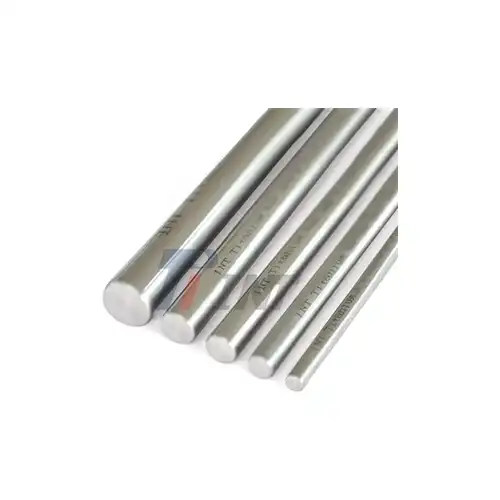
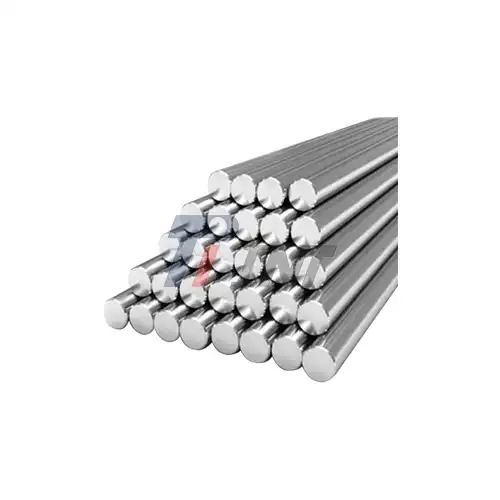
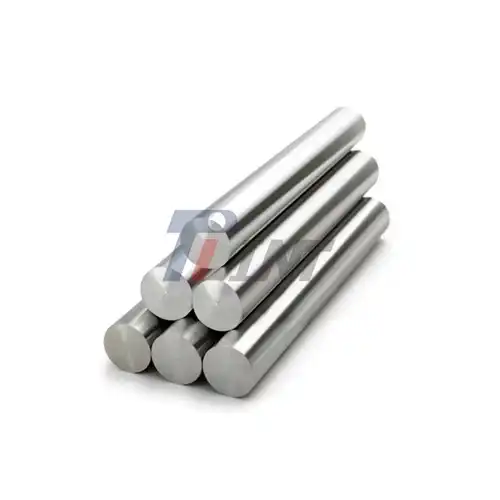
ASTM F136 Titanium Round Bar Import Guide for Medical Companies


 2026-10-21 14:56:39
Sourcing implant-grade titanium is one of the most compliance-sensitive decisions a medical device manufacturer makes. This guide focuses on ASTM F136 titanium round bar — the Ti-6Al-4V ELI alloy that serves as the entry-level material requirement for most U.S.-regulated orthopedic implant programs. Whether you are qualifying a new supplier, building a dual-source strategy, or navigating FDA/MDR documentation requirements, the sections below walk you through specifications, material comparisons, procurement logistics, and quality assurance checkpoints to help you make a well-informed sourcing decision.
|
|
|

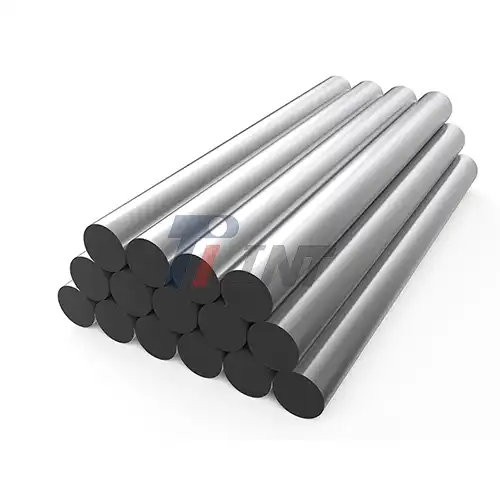
Understanding ASTM F136 Titanium Round Bar Specifications
What Makes F136 the Implant-Grade Standard?
For use in surgical implants, ASTM F136 specifies a wrought Ti-6Al-4V ELI (Extra Low Interstitial) alloy. The key difference is the "ELI" label, which limits the amount of oxygen to 0.13% (compared to 0.20% in normal Grade 5), the amount of iron to 0.25%, and the amount of carbon to 0.08%. These tighter interstitial limits keep the flexibility and fracture toughness even when the body loads and unloads it over and over again, which is exactly the type of failure that shortens the life of an implant.
Mechanical Properties That Matter in the Operating Room
The bar can stretch at least 10% and have a tensile strength of at least 860 MPa (125 ksi). It can also yield at least 795 MPa (115 ksi). It has an elasticity value of about 110 GPa, which is about half of what stainless steel or cobalt-chrome metals have. This lower stiffness immediately lowers stress buffering, which is a well-known way that peri-implant bone loss happens.
Because the material is completely non-ferromagnetic, all devices made from it are completely safe for MRIs. ASTM F136 and ASTM F67 (commercially pure titanium types) are mostly different in the amount of metal they contain and their strength. F67 is better for shaping, while F136 is the only option when load-bearing performance is essential.
Comparing ASTM F136 Titanium Round Bar with Alternative Materials
Three materials are usually at the top of the list when procurement teams look at implant-grade raw materials: 316L stainless steel, cobalt-chrome (CoCr) alloys, and Ti-6Al-4V ELI bar stock. Knowing how these materials are different in real life, not just on a data sheet, helps keep design mistakes from costing a lot of money during gadget development.
When making a purchase, these are the most important differences in performance that you should keep in mind:
To protect against corrosion, ASTM F136 titanium round bar made of Ti-6Al-4V ELI creates a strong, self-healing layer of titanium oxide (TiO₂) in body fluids. On the other hand, stainless steel has a measurable nickel ion release risk, which is something that regulatory bodies are looking more closely at under ISO 10993 biocompatibility testing.
- Corrosion resistance: Ti-6Al-4V ELI forms a stable, self-regenerating titanium oxide (TiO₂) passive layer in body fluids. Stainless steel, by comparison, carries measurable nickel ion release risk, which regulatory bodies increasingly scrutinize under ISO 10993 biocompatibility testing.
- Weight-to-strength ratio: Titanium is approximately 45% lighter than steel at equivalent strength levels, a clinically meaningful advantage in spinal and trauma implant design where bulk reduction aids patient recovery.
- Stress shielding: CoCr alloys have a modulus near 210–230 GPa — roughly double that of F136 titanium — intensifying bone resorption risk around long-term load-bearing implants.
- Lifecycle cost: Titanium's superior corrosion resistance reduces revision surgery rates, a factor that shifts total cost-of-ownership calculations significantly in favor of the material despite higher raw material pricing versus stainless steel.
Because of these differences, the FDA and most other notified bodies accept Ti-6Al-4V ELI as a standard for Class II and Class III orthopedic implants, without needing separate biocompatibility proof, as long as it comes from ASTM F136.
Procurement Considerations for Importing ASTM F136 Titanium Round Bars
Supplier Qualification Criteria
As a rule, a supplier must be certified to ISO 13485:2016 and be willing to give you their quality management paperwork for your supplier qualification file. It is impossible to get rid of the mill certificate (EN 10204 Type 3.1), which confirms the chemical composition and mechanical testing results according to ASTM F136. It also traces the material back to the ingot heat number. For every shipment, ask for a Certificate of Conformance (COC) and a Certificate of Analysis (COA).
Order Logistics and Lead Times
In orthopedic CNC cutting, the standard range of diameters is from Ø6 mm to Ø200 mm, and finishes can be centerless-ground or peeled to h8/h9 specs. For stock diameters, wait times from well-known Chinese suppliers of ASTM F136 titanium round bar are usually between 3 and 6 weeks. Before you sign a basic agreement with your provider, make it clear that you can negotiate small-batch sample orders. These are often necessary when developing a new implant.
Import Compliance for U.S. Buyers
In terms of U.S. customs, raw titanium bar stock usually falls under HTS code 8108.90. Most of the time, import taxes are low, but your seller needs to give you a business invoice, a packing list, and material certifications that meet FDA 21 CFR Part 820 supplier control standards. For your Device History Record (DHR) and any 510(k) or PMA submission, you must keep these records.
Ensuring Quality and Compliance of ASTM F136 Titanium Round Bars
Testing Protocols That Protect Your Production Line
Consistency from batch to batch saves your CNC machining return. When you get a new batch, you should always do an arriving inspection that includes optical emission spectrometry (OES) to check the chemicals, Rockwell B/C hardness testing, and a microstructural review using metallographic cross-section to make sure the alpha-beta phase structure meets ASTM F136 requirements. Even though fatigue test results aren't always sent with bar stock, they should be in the supplier's qualification records.
If your suppliers keep track of heat numbers from the ingot to the finished bar and give you full 3.1 mill certificates, your regulatory affairs team will have the chain of proof they need for both MDR submissions in Europe and FDA quality system audits in the US. This is especially critical when sourcing ASTM F136 titanium round bar, where traceability from the ingot to the finished bar is a key regulatory expectation.
Keep an eye out for red flags like certificates that don't have a heat number that can be read, mechanical qualities that are listed without a test method reference, or COAs that only show the nominal composition without the real heat chemistry. These breaks are often signs of problems with the paperwork that can slow down the registration of a product.
Applications and Advantages of ASTM F136 Titanium Round Bars in Medical Manufacturing
Ti-6Al-4V ELI round bar is the main raw material used to make a number of different types of high-volume orthopedic implants. In trauma fixation, locking plates, intramedullary nails, and screws are made from bar stock. Tensile and wear strength are very important in these applications. In spinal systems, the material's flexibility lets the rod be shaped during surgery without the risk of breaking, which is something that standard Grade 5 bar can't do. The material is better than metal options in craniomaxillofacial reconstruction because it is radiolucent and has a low artifact profile on CT images.
OEMs can get certified implant-grade bar from a company with ISO 13485 and a documented design-to-delivery traceability system. This lowers audit findings, speeds up the qualification process for new products, and helps them make a stronger regulatory submission. These aren't small benefits; they're moves in the supply chain that have a direct effect on time-to-market.
Conclusion
Finding implant-grade titanium bar stock is a controlled process that needs more than just a good price. When you take into account scrap, registration delays, and revision risk, the real cost drivers are ASTM F136 compliance, batch tracking, reliable testing paperwork, and a provider ready to help your audit process. If you need medical titanium materials, Baoji INT Medical Titanium Co., Ltd. has been in business since 2003, is ISO 13485:2016 certified, and includes full EN 10204 3.1 paperwork with every package of ASTM F136 titanium round bar. Visit inttitanium.com to see our full line of products.
FAQ
What distinguishes ASTM F136 from standard Grade 5 titanium?
A type of Ti-6Al-4V called ASTM F136 is called ELI, which stands for "Extra Low Interstitial." It has 0.25% iron and 0.13% oxygen, which is 10% less than industrial Grade 5. This makes it easier to shape, harder to break, and less likely to crack from stress rust under repeated metabolic loads.
How do I verify that a supplier's bar stock genuinely meets ASTM F136?
Ask for the EN 10204 3.1 mill certificate that lists the real heat number and the chemicals that were tested. Check the oxygen and iron levels that were given against ASTM F136 Table 1. If this is the first requirement, send a sample to a separate lab for OES chemistry analysis and mechanical confirmation.
What surface finish should I specify for CNC machining of orthopedic components?
For precise CNC machining of implant blanks, the standard is to use centerless-ground bar to a h8 or h9 tolerance. This finish makes sure that all of the parts in a production run are the same size and shape, and it also speeds up the setup time on multi-axis machining centers.
What is a realistic lead time for importing F136 titanium bar to the United States?
Standard diameter sizes usually take 3–6 weeks to get from a reputable source who keeps stock. Lead times may go up to 8–10 weeks if you need custom diameters or lengths that aren't in stock. Before committing to a work plan, make sure that there is enough stock.
Partner with Baoji INT Medical Titanium Co., Ltd. for Certified Implant-Grade Titanium
In 2003, Baoji INT Medical Titanium Co., Ltd. became a reliable source of ASTM F136 titanium round bars for orthopedic manufacturers in North America, Europe, and Asia. Our production is ISO 13485:2016-certified, comes with full EN 10204 3.1 documentation, and has a flexible small-batch sampling program that is based on your production and regulatory needs. To get a sample or price quote, email our technology team at export@tiint.com or go to inttitanium.com.
References
1. ASTM International. ASTM F136: Standard Specification for Wrought Titanium-6Aluminum-4Vanadium ELI Alloy for Surgical Implant Applications. ASTM International, 2023.
2. Niinomi, M. "Mechanical biocompatibilities of titanium alloys for biomedical applications." Journal of the Mechanical Behavior of Biomedical Materials, 2008.
3. Rack, H.J., and Qazi, J.I. "Titanium alloys for biomedical applications." Materials Science and Engineering: C, 2006.
4. U.S. Food and Drug Administration. Use of International Standard ISO 10993-1: Biological Evaluation of Medical Devices. FDA Guidance Document, 2020.
5. ISO. ISO 5832-3: Implants for Surgery — Metallic Materials — Part 3: Wrought Titanium 6-Aluminium 4-Vanadium Alloy. International Organization for Standardization, 2021.
6. Long, M., and Rack, H.J. "Titanium alloys in total joint replacement — a materials science perspective." Biomaterials, 1998.