




Gr4 Titanium Welding Wire for Medical Equipment: Buyer Guide


 2026-10-21 14:57:12
If you manufacture surgical instruments and need a reliable filler metal for load-bearing assemblies, Gr4 titanium welding wire deserves serious consideration. Classified as ERTi-4 under AWS A5.16, Grade 4 is the strongest commercially pure titanium grade available, delivering tensile strength ≥ 485 MPa and yield strength ≥ 345 MPa.
Its elevated oxygen and iron content act as interstitial strengtheners without sacrificing the corrosion resistance that medical fabrication demands. For procurement managers sourcing titanium welding materials, this guide covers specifications, welding practice, grade comparisons, supplier evaluation, and compliance requirements.
|
|
|
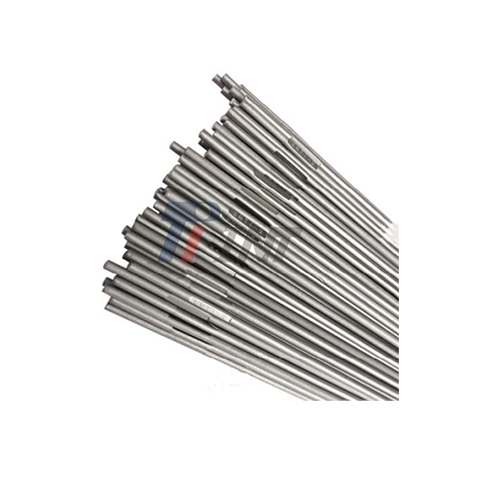
Understanding Gr4 Titanium Welding Wire for Medical Applications
What Sets Grade 4 Apart from Lower CP Grades
In terms of how pure it is, Gr4 titanium welding wire is the purest commercially pure grade. Unlike Gr1 or Gr2, it has higher levels of oxygen (up to 0.40%) and iron (up to 0.50%), which make it much harder and better at mechanical performance while still having the corrosion-resistance that unalloyed titanium is known for. This balance makes it a good choice for welding load-bearing parts of surgical tools. These are parts that need to be able to withstand repeated sterilization processes, mechanical stress, and long-term touch with biological fluids without breaking down.
The wire meets the ASTM F67 and ASTM B863 standards, which are the industry norms for medical grade titanium that isn't alloyed. Gr4 titanium welding wire is therefore suitable for welding unalloyed medical-grade titanium components. Its strength profile and density of 4.51 g/cm³ give it a strength-to-weight ratio that heavier metals like stainless steel can't match.
Before placing an order, buyers should make sure of the following core material specs:
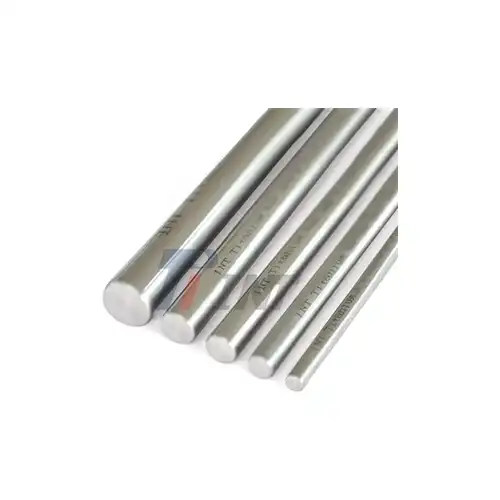
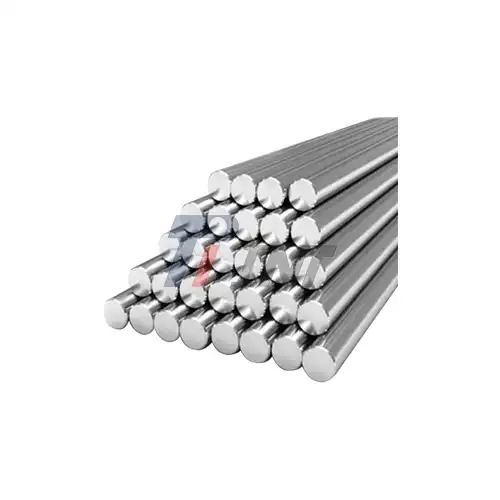
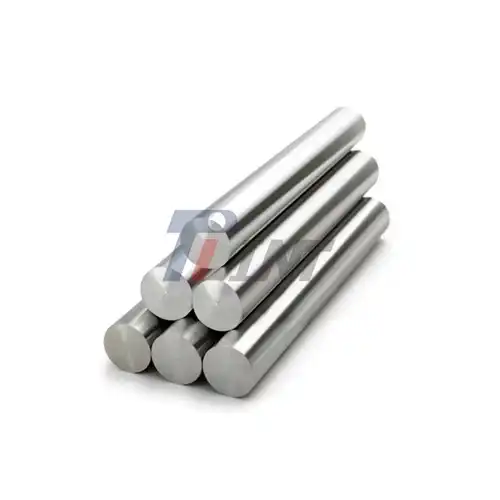
- Diameter range: 0.5 mm to 5.0 mm, suitable for TIG filler and automatic feeding uses
- Tensile strength: at least 485 MPa; yield strength: at least 345 MPa; elongation: at least 20%
- Surface finish: bright or pickled, without drawing oils to keep the weld from porosity
- Certifications: ISO 9001:2015, ISO 13485:2016, and EU CE certifications.
When purchasing managers and production supervisors compare prices from different suppliers, these standards give them a clear list to use.
How to Weld with Gr4 Titanium Welding Wire in Medical Equipment Fabrication
Controlling Contamination Is the Most Critical Variable
TIG (GTAW) welding is the standard way to make precision parts for instruments. The heat-affected zone, the weld pool, and the metal that is cooling must be kept safe by 99.999% pure argon or a mix of argon and helium until the surface temperature drops below 427°C.
When welding Gr4 titanium welding wire, it is highly suggested to use a trailing shield attachment because the higher strength comes with a little less ductility. This is because any oxygen or nitrogen that is taken in at high temperatures weakens the alpha-case, which makes the joint less stable.
The color of the weld bead is a good way to tell right away how good the quality is. A silver bead means that the shielding is clean, a light straw is fine, and dark blue, purple, or white powder means that there is serious oxidation. Any welds that aren't looking good must be ground out and re-done before the instrument assembly can move on.
Managing the heat supply is also important. Too much heat can warp thin-walled instrument shafts, which then need more work to be done on them. Gr4 titanium welding wire helps control heat input during welding. Using a burst TIG current and keeping the temperatures between passes low help keep the dimensions that CNC-finished parts need.
Comparing Gr4 Titanium Welding Wire with Other Grades and Alternatives
Choosing the Right Grade Protects Both Performance and Budget
Knowing where Gr4 titanium welding wire stands in comparison to other options helps purchasing managers avoid spending too much on alloy grades or putting up with poor performance from softer CP grades.
Gr2 vs. Gr4: Gr2 (ERTi-2) is more flexible and easier to shape, so it's good for parts of instruments that aren't meant to be strong. When weld joints need to be strong enough to handle repeated mechanical loads, like on ratchet handles or retractor arms, Gr4 is the best choice because it consistently delivers the extra strength that is needed.
Gr4 vs. Gr5 (Ti-6Al-4V): Ti-6Al-4V ELI wire is stronger than Gr4 wire, but it costs a lot more per kilogram. In some chemical cleaning conditions, Gr5 can also crack due to stress corrosion. When equal metal strength isn't necessary and keeping costs down is important, Gr4 is often the practical choice.
Gr4 vs. Stainless Steel: Stainless steel tools are about twice as heavy as their equivalently strong counterparts, and chloride-based sterilants leave pits on their surfaces after long-term use. Pure titanium wire deposits naturally don't react with oxidizing environments like nitric acid, chromic acid, and hypochlorite solutions, which are used every day to sterilize surgical instruments.
These differences have a direct effect on the total cost of ownership, not just the price of the material itself.
Procurement Considerations for Gr4 Titanium Welding Wire in Medical Equipment
Supplier Evaluation Criteria That Protect Your Production Schedule
For companies that make instruments and order once a month, supply stability is just as important as price. Gr4 titanium welding wire suppliers must therefore be able to meet consistent lead times. If a seller can't ship within 3–4 weeks or give traceable mill test results within 48 hours, it causes problems further down the line, like orders being late, customer audits being held up, and production lines being stopped.
Suppliers of reliable Gr4 titanium welding wire should be able to do the following without being asked:
- Heat-traceable material certifications that list the lot and heat number for export customs and factory audits by the end customer.
- Flexible MOQ and multi-specification splitting, allowing orders with different wire diameters to be split and shipped together.
- Custom packaging options that keep the surface clean—sealed with desiccants and clearly marked with the heat number and diameter.
- OEM support for buyers who need specific spool forms or coil weights.
These features bridge the gap between a seller who can give you a price and one who can actually keep up a monthly replenishment relationship.
Ensuring Quality and Compliance in Gr4 Titanium Welding Wire Usage
Traceability and Testing Are Non-Negotiable in Medical Supply Chains
When buying medical-grade Gr4 titanium welding wire, quality control is more than just a certificate on a packing list. Interstitial gas analysis, which measures oxygen, nitrogen, and hydrogen using neutral gas fusion, is needed to make sure that the makeup of the wire stays within the limits set by ASTM F67. Hydrogen levels above a certain point cause finished welds to crack when they get cold, which can't be seen with the naked eye.
During production, ultrasonic testing finds any internal seams or other problems with the wire before it gets to the customer's workshop. Laser micrometer diameter tolerance checks, which are usually limited to ±0.05 mm, make sure that automated TIG setups always feed wires in the same way. This protects the consistency of throughput on the production floor.
It is just as important that the documentation is full. When buying things for OEM-certified medical device companies, procurement managers need clear paper trails that go from the heat number to the tensile test report to the dimensional inspection record to the shipping document. Customer plant checks go smoothly when this chain is whole.
Conclusion
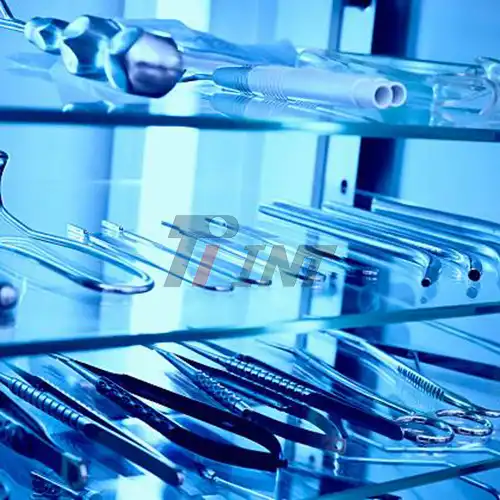
Gr4 titanium welding wire has a clear place in the manufacturing of medical instruments. It is the strongest CP titanium filler that is available, is fully biocompatible, doesn't rust through sterilization cycles, and meets ASTM F67 and ASTM B863 standards. It gives makers of forceps, retractors, clamps, and other load-bearing parts performance that softer grades can't match at a price that Ti-6Al-4V cannot beat. A reliable supplier with traceable certifications, a flexible MOQ, and regular lead times is what sets apart a long-term buying relationship from a one-time deal.
FAQ
How does Gr4 differ from Gr2 titanium welding wire in terms of weldability?
Due to its higher interstitial oxygen level, Gr4 is stronger but not quite as flexible. Weldability is about the same, but Gr4 needs a tighter following shield coverage to keep the heat-affected zone from getting too hard and cracking.
What shielding gas is required when welding with Grade 4 wire?
Welding requires argon that is 99.999% pure. For better penetration, a mix of argon and helium is fine. To stop hydrogen from taking in, the dew point should stay at -60°F or lower.
Can Gr4 wire weld Grade 5 (Ti-6Al-4V) base metal?
Yes, Gr4 titanium welding wire is sometimes used on Gr5 base metal in non-structural areas to make the weld more flexible. However, matched Gr5 wire is still required for structural strength.
How should Grade 4 titanium wire be stored to prevent contamination?
Keep in a climate-controlled area in the original, sealed package that contains desiccants. Wearing clean, lint-free gloves is the only way to keep oil from moving from your skin to the wire surface, which can cause holes when welding.
What certifications should accompany each shipment?
There should be a heat-traceable mill test report with the lot number, dimensional inspection data, and statements that the shipment meets ASTM F67 and any relevant ISO standards.
Partner with Baoji INT Medical Titanium Co., Ltd. for Your Next Order
Since 2003, Baoji INT Medical Titanium Co., Ltd. has sold medical titanium materials that are certified by ISO 9001:2015, ISO 13485:2016, and EU CE. As a reliable provider of Gr4 titanium welding wire, we offer diameters ranging from 0.5 mm to 5.0 mm, heat-traceable mill certificates with every shipment, a customizable MOQ that can be met in a number of ways, and normal wait times of 3–4 weeks. To get a quote right away, email your requirements to export@tiint.com or go to inttitanium.com.
References
1. American Welding Society. AWS A5.16/A5.16M: Specification for Titanium and Titanium-Alloy Welding Electrodes and Rods. AWS, 2021.
2. ASTM International. ASTM F67: Standard Specification for Unalloyed Titanium for Surgical Implant Applications. ASTM International, 2017.
3. Donachie, M. J. Titanium: A Technical Guide. 2nd ed. ASM International, 2000.
4. Rack, H. J., and Qazi, J. I. "Titanium alloys for biomedical applications." Materials Science and Engineering: C, vol. 26, no. 8, 2006, pp. 1269–1277.
5. Lutjering, G., and Williams, J. C. Titanium. 2nd ed. Springer, 2007.
6. Boyer, R., Welsch, G., and Collings, E. W. Materials Properties Handbook: Titanium Alloys. ASM International, 1994.