




Top Benefits of Gr1 Titanium Disc for Medical Processing


 2026-10-21 14:56:32
When medical device engineers and procurement professionals evaluate raw materials for implants, surgical instruments, or precision components, purity and reliability are non-negotiable. The Gr1 titanium disc stands at the top of that conversation. As the softest and most ductile grade within the commercially pure (CP) titanium family, Grade 1 titanium delivers exceptional biocompatibility, corrosion immunity, and cold formability — qualities that make it a trusted feedstock material across demanding medical manufacturing environments. This article breaks down everything you need to know about why this material belongs in your supply chain.
|
|
|
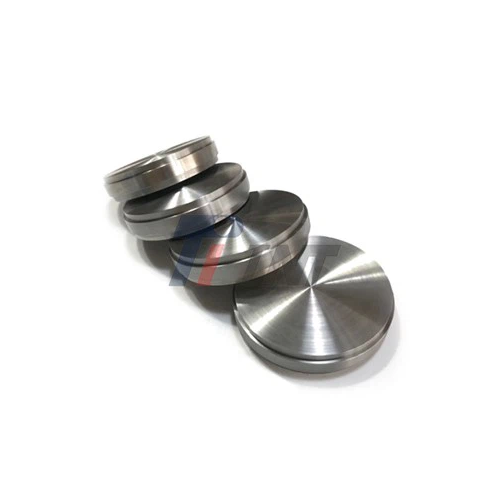
Understanding GR1 Titanium Disc: Properties and Manufacturing Process
What Makes Grade 1 Titanium Chemically Distinct
According to ASTM B265 and ASTM B381 norms, grade 1 titanium has the lowest amount of intermediate elements. It is mostly made up of titanium, with iron making up about 0.20%, oxygen making up about 0.18%, carbon making up about 0.08%, nitrogen making up about 0.03%, and hydrogen making up about 0.015%. These close limits keep the maximum flexibility and resistance to rust. It has a tensile strength of at least 240 MPa, a yield strength of between 170 and 310 MPa, and an elongation of at least 24%, which is the highest of all CP titanium grades.
How Manufacturing Consistency Supports Medical-Grade Quality
Precision rolling and controlled heat treatment processes get rid of internal stress clusters and make sure that the material is the same all the way through each blank when medical-grade titanium disks are being made. In medical machining, where irregular grain structure can make standards less accurate, this process is very important.
Companies that make things for the medical field usually follow ISO 13485 quality management standards and have ASTM certifications to make sure that every batch of their products is safe. This level of process discipline makes sure that the structure of the Gr1 titanium disc stays strong so that the next steps of machining and shaping can happen.
Top 5 Benefits of Using GR1 Titanium Discs in Medical Processing
The best raw material for making medical parts is grade 1 titanium. This isn't because of clever marketing, but because it consistently performs well. This material is often chosen by buying teams and experts because of the following main benefits:
- Outstanding biocompatibility: Grade 1 titanium is non-toxic and non-allergenic, making it one of the most body-compatible metallic materials available. Its osseointegration properties have been well-documented in peer-reviewed literature, and it carries a long history of safe use in human-facing medical applications. This directly supports patient safety in components fabricated from the disc blank.
- Corrosion resistance in aggressive environments: The material spontaneously forms a stable TiO₂ oxide layer upon oxygen exposure. This passive film resists body fluids, sterilization chemicals including autoclaving agents, and oxidizing acids. Unlike 316L stainless steel, which may experience chloride-induced pitting under repeated sterilization cycles, Grade 1 titanium maintains surface integrity over extended service life.
- Superior cold formability for complex geometries: With elongation ≥ 24% and behavior comparable to soft copper, Grade 1 titanium discs support deep drawing, spinning, and complex stamping operations without stress-relief annealing between steps. This reduces manufacturing lead time and tooling wear for custom component fabricators.
- Favorable strength-to-weight ratio: Titanium's density is approximately 4.51 g/cm³, roughly 43% lighter than stainless steel. For machined components used in surgical instruments or device housings, this translates to reduced mass without sacrificing structural performance — a practical advantage in instrument ergonomics.
- Machinability and surface finish compatibility: Grade 1 titanium machines cleanly under appropriate cutting parameters. Its high purity minimizes tool wear caused by hard secondary phase particles, and its surface accepts anodizing, PVD coating, and passivation treatments consistently — all relevant for medical component finishing workflows.
The Gr1 titanium disc is a flexible and reliable raw material that can be used at many stages of the production of medical parts thanks to these combined qualities.
Comparing GR1 Titanium Discs with Alternative Materials for Medical Use
GR1 vs. GR2 Titanium: When Purity Outweighs Strength
Grade 2 titanium has a higher yield strength (about 275 MPa vs. about 170 MPa for Grade 1), but it is less flexible and less resistant to rust because it has a little more iron and oxygen in it. Grade 1 is still the best choice for fabricators who need deep-drawn disk blanks or inner parts where the purity of the form is very important. Grade 2 is good for structural parts that don't need to be shaped very much.
GR1 Titanium vs. Stainless Steel
Stainless steel (usually 316L) is still used a lot in medicine, but it has real problems because it is dense (about 8 grams per cubic centimeter) and easily cracks when exposed to chloride stress corrosion. Grade 1 titanium disks are lighter and less likely to rust than stainless steel disks, especially when they are sterilized with steam or chemicals over and over again. A study in the Journal of Biomedical Materials Research confirmed that titanium works better than austenitic stainless steels in artificial physiological environments.
Higher Titanium Grades and Other Metals
Grade 5 titanium (Ti-6Al-4V) is stronger mechanically, but its alloying elements make it less biocompatible, so it needs to be looked at more carefully in uses near implants. Some patients may become more sensitive to nickel-based alloys, and aluminum alloys don't stay stable against rust in places that need to be sterilized a lot. Grade 1 is still the best choice for uses where formability and biological inertness are more important than tensile strength.
Procurement Guide: How to Source GR1 Titanium Discs for Medical Processing
When looking for medical-grade Gr1 titanium disc blanks, you need to pay more than just price attention to the qualifications of the supplier. A good Gr1 titanium disc maker should have material certifications according to ASTM B265 and B381, follow a quality system that is in line with ISO 13485, and give full material test reports (MTRs) that can be linked to each output lot.
Prices change based on the market cycles for raw materials, the size of the disk, the surface finish needed, and the volume. Custom sizes, such as non-standard diameters, thicknesses, and square forms, usually require more wait time but work better with OEM-specific cutting processes than standard stock. To avoid having to go through revision processes, procurement teams should be clear from the start about tolerance grades, surface state (annealed vs. as-rolled), and packing needs.
Working directly with an experienced Gr1 titanium disc supplier who is familiar with medical manufacturing constraints significantly lowers the risk of sourcing. Checking certificates, looking at past performance records, and being clear about when things will be delivered are all useful actions that help keep project deadlines.
Why Global Medical OEMs Prefer GR1 Titanium Discs: Real-World Applications
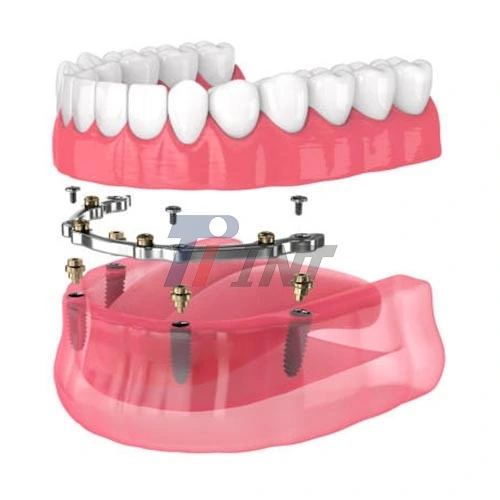
High-precision medical OEMs get Grade 1 titanium disk blanks for a lot of different types of work. When making medical instruments, the cold-formability of the material makes it possible to make thin-walled parts and curved shapes that would break in harder alloys. When making implantable devices, the material's biocompatibility and resistance to corrosion lower the risks of complications that can happen after the implant.
Grade 1 titanium is hard to replace because it is lightweight, compatible with a wide range of surface finishes, and doesn't react badly with body fluids. It is also being used as a substrate blank for worn biosensors and as a home for minimally invasive tools. These real-world deployment patterns show a material that has been used in medicine for decades and has been shown to work, not just theoretically.
Conclusion
Grade 1 titanium disks have a unique mix of chemical purity, mechanical formability, and biological inertness that is hard to find in other medical production raw materials. The Gr1 titanium disc provides steady, measurable performance whether you are making custom device housings, machining parts for surgery instruments, or testing feedstock for the next wave of wearable medical platforms. For procurement teams that are building solid supply lines, it's a long-term investment in things that can be seen to work.
FAQ
Why is Grade 1 titanium preferred over Grade 2 for medical disc blanks?
Grade 1 is the most flexible of the CP titanium grades, which is why it is the best material to use when forming is part of the manufacturing process. Its lower iron and oxygen content also gives it slightly better corrosion resistance, which is important in medical settings that use a lot of sterilization.
How does GR1 titanium disc corrosion resistance compare to stainless steel under sterilization?
Titanium grade 1 creates a passive TiO₂ coat that heals itself and can withstand multiple autoclave cycles, oxidizing sterilants, and chloride-based disinfectants without cracking. Chloride stress corrosion can happen to stainless steel, even 316L, after being sterilized for a long time. This shortens its useful life in harsh medical processing environments.
Can Grade 1 titanium discs be customized for specific OEM machining requirements?
Yes, reputable Gr1 titanium disc suppliers can make them in any size, thickness, surface condition (annealed or as-rolled), or non-standard shape, such as a square, to fit the needs of downstream machining.
What certifications should a medical-grade titanium disc supplier hold?
When it comes to the medical supply chain, suppliers should have quality processes that are in line with ISO 13485 and provide ASTM B265 or B381 material certifications and full material test records (MTRs).
Partner With Baoji INT Medical Titanium Co., Ltd. for Your Gr1 Titanium Disc Supply
For medical production uses, Baoji INT Medical Titanium Co., Ltd. offers certified Gr1 titanium disc blanks that adhere to ASTM B265/B381 standards. We provide custom dimensions, full MTRs, and quick support to B2B procurement teams around the world as a reputable Gr1 titanium disc manufacturer with extensive technical know-how. To get a standard sheet or custom quote, email us at export@tiint.com or visit inttitanium.com right now.
References
1. Rack, H. J., & Qazi, J. I. (2006). Titanium alloys for biomedical applications. Materials Science and Engineering: C, 26(8), 1269–1277.
2. Niinomi, M. (2008). Mechanical biocompatibilities of titanium alloys for biomedical applications. Journal of the Mechanical Behavior of Biomedical Materials, 1(1), 30–42.
3. ASTM International. (2021). ASTM B265: Standard Specification for Titanium and Titanium Alloy Strip, Sheet, and Plate. ASTM International.
4. Steinemann, S. G. (1996). Titanium — the material of choice? Periodontology 2000, 17(1), 7–21.
5. Long, M., & Rack, H. J. (1998). Titanium alloys in total joint replacement — a materials science perspective. Biomaterials, 19(18), 1621–1639.
6. Elias, C. N., Lima, J. H. C., Valiev, R., & Meyers, M. A. (2008). Biomedical applications of titanium and its alloys. JOM: Journal of the Minerals, Metals and Materials Society, 60(3), 46–49.