




Best Gr5 Titanium Disc Specifications for Medical Machining


 2026-10-22 09:22:06
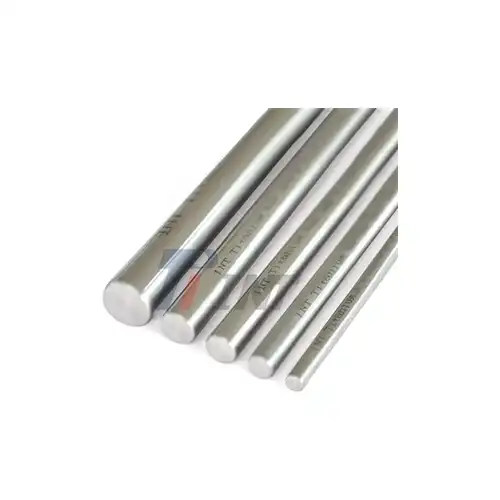
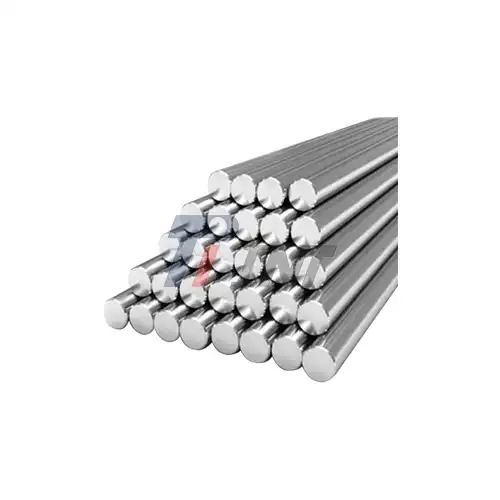
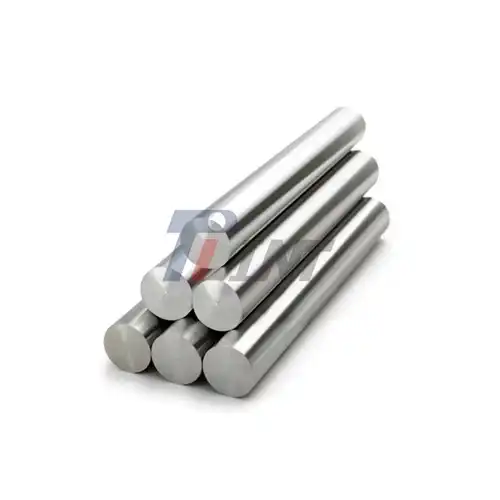
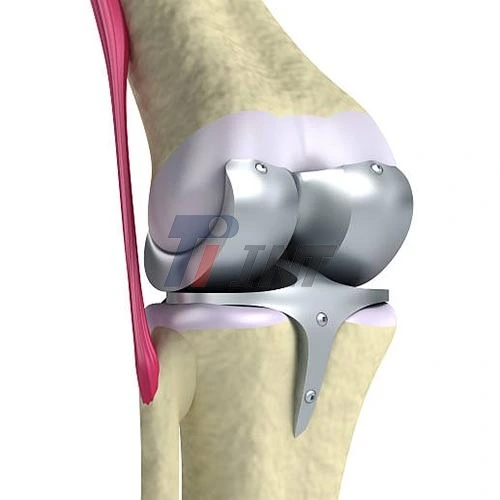
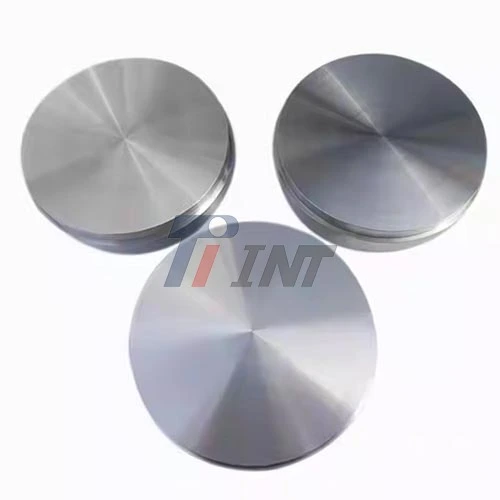
When sourcing billet material for orthopedic forging, the Gr5 titanium disc remains the industry benchmark. Composed of Ti-6Al-4V (6% aluminum, 4% vanadium), this alpha-beta alloy delivers tensile strength ≥ 895 MPa at a density of just 4.43 g/cm³ — roughly 60% lighter than steel at comparable strength. For manufacturers producing femoral stems, acetabular cups, and joint heads, the metallurgical quality of the billet directly governs grain flow, fatigue life, and post-forge ultrasonic inspection results. Choosing the right disc specification is not merely a procurement decision — it is an engineering one.
|
|
|
Understanding Gr5 Titanium Discs — Properties and Specifications
Ti-6Al-4V is governed by ASTM B381 (forgings), AMS 4928, and ISO 5832-3 (surgical implants). These standards describe not only chemistry but also acceptable grain structure and mechanical performance — all of which matter when a forging shop approves a new billet source.
Chemical Composition and Mechanical Benchmarks
The nominal chemistry of Grade 5 titanium: Ti (balance), Al (5.5–6.75%), V (3.5–4.5%), Fe (max 0.40%), O (max 0.20%), C (max 0.08%). In the annealed state, minimum mechanical values are: Tensile Strength ≥ 895 MPa, Yield Strength ≥ 830 MPa, Elongation ≥ 10%, Reduction of Area ≥ 25%. When Solution Treated and Aged (STA), tensile strength can reach up to 1,100 MPa — important for high-stress implant geometries.
Standard Disc Dimensions Available from INT
Baoji INT Medical Titanium Co., Ltd. supplies Gr5 titanium disc in the following configurations:
| Attribute | Details |
|---|---|
| Material | Grade 5 Titanium (Ti-6Al-4V) |
| Diameter Range | 10 mm – 300 mm (customizable) |
| Thickness | 0.5 mm – 50 mm |
| Tolerance | ±0.01 mm |
| Surface Finish | Polished, Sandblasted |
| Certifications | ISO 9001:2015, ISO 13485:2016, EU CE |
Tight dimensional standards at ±0.01 mm directly reduce die setup time and material loss on the forging line — a meaningful cost factor when titanium is paid by the kilogram.
Why Gr5 Titanium Discs Are Ideal for Medical Machining
Procurement engineers frequently ask why Ti-6Al-4V continues to rule orthopedic block selection when newer alloys exist. The answer lies in a mix of proven clinical history, mechanical dependability, and processor flexibility that no single option fully duplicates.
Here are some of the core material benefits that make this metal the best choice for making joint implants:
- Exceptional strength-to-weight ratio: At 4.43 g/cm³, the alloy provides steel-class tensile performance while keeping implant weight minimal — critical for patient mobility and long-term comfort following joint replacement surgery.
- Outstanding fatigue resistance: Under the cyclical loading of a hip or knee joint (millions of load cycles annually), Ti-6Al-4V retains structural integrity where lower-grade alloys crack or deform over time.
- Confirmed biocompatibility: Titanium develops a stable, passive TiO₂ oxide layer that prevents ion release into surrounding tissue. This is validated under ISO 10993 biological evaluation protocols for implantable devices.
- Thermal stability up to 400°C: The alloy maintains dimensional stability throughout forging heat cycles and annealing without compromising microstructure — important for consistent grain flow in finished forgings.
"Extremely high strength-to-weight ratio": At 4.43 g/cm³, the alloy has steel-class tensile strength while keeping the weight of the implant as low as possible. This is important for patients' long-term comfort and mobility after joint replacement surgery.
Comparing Gr5 Titanium Disc to Alternative Materials
Not all types of titanium or metal can be used to make orthopedic forging billets. Getting to know the trade-offs helps buying teams make choices about where to get things that they can defend.
Gr5 vs. Grade 23 (Ti-6Al-4V ELI)
There are stricter limits on oxygen (max 0.13%) and iron (max 0.25%) in Grade 23, which is the Extra Low Interstitial type. This makes it more resistant to breaking and more flexible, so ASTM F136 says it should be used for all load-bearing implants. Standard Gr5 titanium disc is good when a little more strength is needed but ELI-level ductility is not required by the design of the device.
Gr5 vs. Grade 2 Pure Titanium
Grade 2 is very good at resisting rust and being able to be shaped, but its tensile strength (≥ 345 MPa) is too low for solid implant parts like femoral stems. It can still be used for things that don't need to hold weight, like tooth abutments or thin bone plates.
Gr5 vs. 316L Stainless Steel
Even though stainless steel is less expensive and easier to work with, it is not the best material for long-term implants because it is dense (7.9 g/cm³) and easily corrodes in chloride environments. Several peer-reviewed comparative studies have shown that Ti-6Al-4V has a longer fatigue life than 316L when subjected to physiological loading.
Procurement Guide for B2B Buyers: Sourcing Gr5 Titanium Discs
There's more to choosing a new metal provider than just comparing prices per kilogram. The full range of due diligence that forging engineers and supply chain managers usually do is shown in the following checklist.
Documentation Requirements
A full package of materials should have the following: a Mill Test Certificate (MTC) according to EN 10204 3.1; an ultrasonic inspection report (AVG/DAC curve according to AMS 2631 or an equivalent); an evaluation of grain size according to ASTM E112; and a full chemical analysis certificate that can be linked to the heat/lot number. Surface quality must be checked to make sure there are no laps, seams, or scale inclusions. These are flaws that can move into the casting and cause NDT fails after the fact.
Customization and MOQ Considerations
Ordering near-net-shape billet disks that are the right size to fit forging die envelopes is one of the best ways to cut costs. By getting rid of extra stock, makers cut down on titanium scrap, which saves them money directly because titanium is expensive. INT offers unique sizes that are flexible and easy to meet minimum order quantities (MOQs) to help with the early stages of introducing new products. This lowers the cost of qualifying suppliers.
Supplier Qualification Criteria
A reliable supplier of Gr5 titanium disc for orthopedic uses should be ISO 13485:2016 certified (medical device quality management), keep track of lots, and show that the process is the same across multiple heats. During supplier re-qualification checks, stability across batches is the most commonly mentioned worry. Variations in chemistry or grain structure between lots make it harder for forging customers to get their credentials renewed.
Best Practices for Utilizing Gr5 Titanium Discs in Medical Machining
Not getting good billets is only half of the problem. It depends on how the disk is handled, stored, and machined to see if its properties can be used to make a conforming forging.
Incoming Inspection Protocol
As soon as the disks are received, they should be checked against the buy standard for size, the surface should be looked at for scale or mechanical damage, and the surfaces should be dye penetrant tested (PT) according to ASTM E1417. Remember to keep the MTC in the batch traveler because you will need it for your internal audit and customer qualification review.
Machining and Tooling Guidance
Ti-6Al-4V quickly becomes hard to work with when cutting conditions are not right. To keep heat from building up, use sharp carbide or PCD tools that have enough cooling flow. Most of the time, low cutting speeds with high feed rates leave the surface more intact than high-speed shallow passes. If you interrupt a cut without changing the parameters, thermal shock at the cutting interface speeds up tool wear and can cause residual surface stress.
Storage and Contamination Control
Keep disks away from heavy objects and in a clean, dry place. Iron bits can get into the titanium surface and start galvanic corrosion, which is a quiet flaw that might not show up until after the shaping process. ISO 13485-compliant facilities always store things separately and use special tools for handling non-ferrous materials.
Conclusion
Picking the right Ti-6Al-4V billet specification is a quality choice made upstream that affects the dependability of every forged orthopedic implant made downstream. Manufacturers of hip, knee, and spinal devices must meet strict requirements for dimensional accuracy, metal consistency, and documentation that can be tracked. Baoji INT Medical Titanium Co., Ltd. has been in business since 2003 and has over 20 years of experience working with medical-grade titanium products.
They are certified by ISO 9001:2015, ISO 13485:2016, and the EU CE. INT helps forging manufacturers at every step of the supply chain by letting them change the size of the Gr5 titanium disc, offering tolerances of ±0.01 mm, and testing each batch thoroughly with ultrasound.
FAQ
What is the difference between a standard Gr5 disc and a Gr5 ELI disc?
Standard Gr5 (Ti-6Al-4V) and ELI (Extra Low Interstitial, ASTM F136) are mostly different in how much oxygen and iron they contain. ELI is the best standard for load-bearing implants because it has better fracture hardness and ductility. Standard Gr5 can be used in situations where maximum tensile strength is important.
Can the disc be supplied in STA (Solution Treated and Aged) condition?
Yes. Most forging billets are sent to you already annealed so they are easy to work with. However, INT can talk to you about the exact heat treatment conditions you need based on your forging process and final mechanical property goals.
How do you verify internal quality of the billet?
Every disk is tested with ultrasonic waves according to AMS 2631 or a similar standard, and the AVG/DAC curve is shown. This proves that there are no holes, inclusions, or delamination inside the metal that could cause post-forge NDT fails.
What is the minimum order quantity for custom-sized discs?
INT keeps its MOQ policies open so that new products can go through evaluation runs. Email the team at export@tiint.com to talk about your exact diameter, thickness, and number needs.
Partner with Baoji INT Medical Titanium Co., Ltd. for Certified Ti-6Al-4V Billet
With more than 20 years of experience working with medical-grade titanium materials, Baoji INT Medical Titanium Co., Ltd. is a reputable Gr5 titanium disc supplier. Our disks are made according to ISO 13485:2016 quality management standards. They come with full MTC paperwork and an ultrasonic check. Our team is ready to help you get qualified, whether you need standard-sized billets or billets with custom dimensions for your orthopedic forging line. To get a price right away, send your forging plan and billet needs to export@tiint.com or go to inttitanium.com.
References
1. ASTM International. ASTM B381: Standard Specification for Titanium and Titanium Alloy Forgings. ASTM International, 2023.
2. ASTM International. ASTM F136: Standard Specification for Wrought Titanium-6Aluminum-4Vanadium ELI Alloy for Surgical Implant Applications. ASTM International, 2022.
3. International Organization for Standardization. ISO 5832-3: Implants for Surgery — Metallic Materials — Part 3: Wrought Titanium 6-Aluminium 4-Vanadium Alloy. ISO, 2021.
4. Rack, H.J., & Qazi, J.I. "Titanium alloys for biomedical applications." Materials Science and Engineering: C, 2006.
5. Geetha, M., Singh, A.K., Asokamani, R., & Gogia, A.K. "Ti based biomaterials, the ultimate choice for orthopaedic implants — A review." Progress in Materials Science, 2009.
6. SAE International. AMS 4928: Titanium Alloy Bars, Billets, and Rings, 6Al-4V, Annealed. SAE International, 2020.