




Gr9 Titanium Bar Dia 8mm: Uses in Medical Device Manufacturing


 2026-10-22 09:22:02
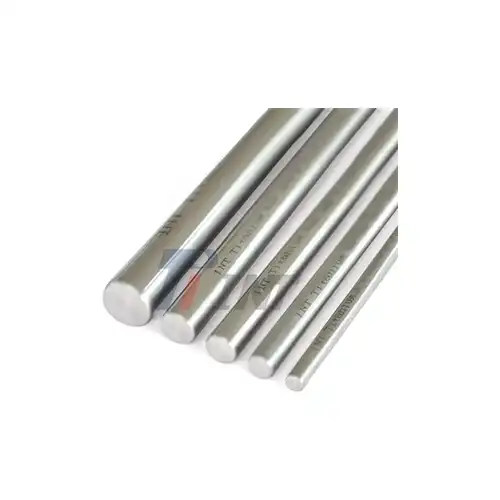
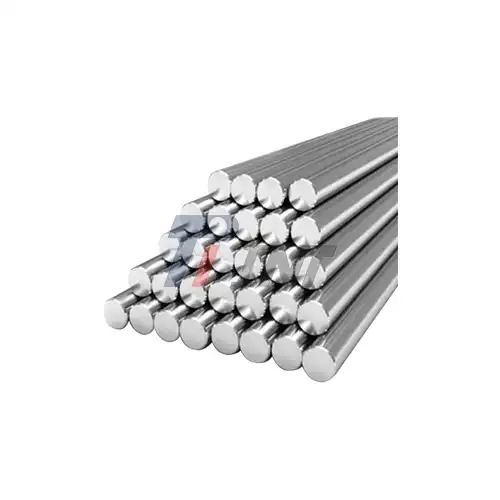
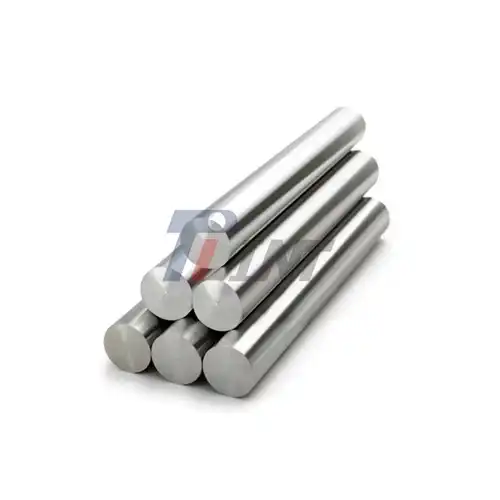
When surgical instrument manufacturers evaluate raw titanium stock for shaft components and instrument handles, the Gr9 Titanium Bar Dia 8mm consistently emerges as a technically sound choice. Composed of Ti-3Al-2.5V, this 8mm-diameter bar delivers a compelling balance of strength, cold-formability, and corrosion resistance that pure titanium grades cannot match. With a density of just 4.48 g/cm³ and compliance with ASTM B348, ASTM F136, and ISO 5832-3, it serves as reliable feedstock for CNC machining and forging operations across the surgical instrument supply chain.
|
|
|
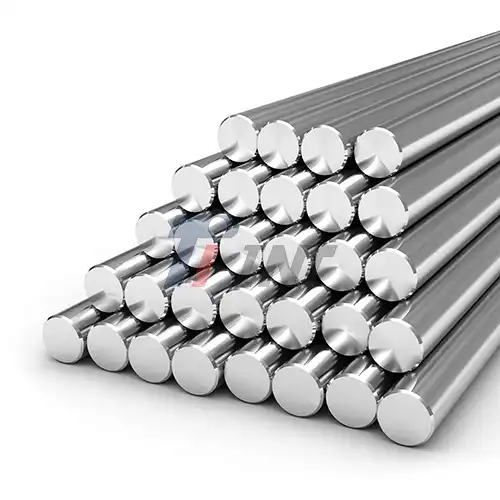
Understanding Gr9 Titanium Bar Dia 8mm: Composition and Mechanical Properties
What Makes Ti-3Al-2.5V Mechanically Distinct
In terms of strength, the Ti-3Al-2.5V alloy is in the middle of commercially pure titanium and the stronger Ti-6Al-4V alloy. Its tensile strength is usually between 620 and 690 MPa, its yield strength is around 520 MPa, and its stretch is about 15%. These numbers directly lead to a material that doesn't change shape permanently when loaded and unloaded many times. This is a very important property for parts of instrument shafts that bend back and forth during surgery. The finished instrument is noticeably lighter than any stainless steel version thanks to its density of 4.48 g/cm³. This is achieved without losing its structural integrity.
Corrosion Resistance in Clinical Environments
When damaged, Gr9's passive oxide layer grows back quickly. This makes it much more resistant to pitting and crevice corrosion than 316L stainless steel in places with a lot of chloride. This quality makes surgery tools last longer and keep their surfaces from wearing down when they are repeatedly autoclaved and come into touch with saline or bodily fluids. Independent testing in ASTM G48 immersion conditions proves that Ti-3Al-2.5V doesn't lose any mass that can be measured. Stainless steel can't safely meet this standard in the same conditions.
Applications of Gr9 Titanium Bar Dia 8mm in Medical Device Manufacturing
For a long time, surgical tool makers in Sialkot, Solingen, and northern Italy have used titanium rod stock to make the handles for needle drivers, forceps, and retractor arms. The Gr9 Titanium Bar Dia 8mm width is a great stock size because it works with both Swiss-type CNC turning centers and regular collet-fed lathes without needing any extra work to be done first.
Here are the primary manufacturing applications where this material adds measurable value:
- Instrument shaft blanks: Because the diameter and grain structure of Gr9 bar stock are all the same, machinists can keep the dimensions close along the whole length of the shaft. The alloy's low elastic modulus (105 GPa compared to 193 GPa) makes spring-back behavior in shaft parts possible, which is important for self-retaining retractor and scissor blades. This allows for controlled bending without lasting set.
- Forged working ends: Drop-forging Gr9 bar stock at high temperatures makes working-end blanks for clamps and graspers that are thick and have fine grains. Post-forge annealing at 700–750°C lowers leftover stress while keeping tensile strength. This gives the finished part a long life that can withstand thousands of sterilization processes without breaking down.
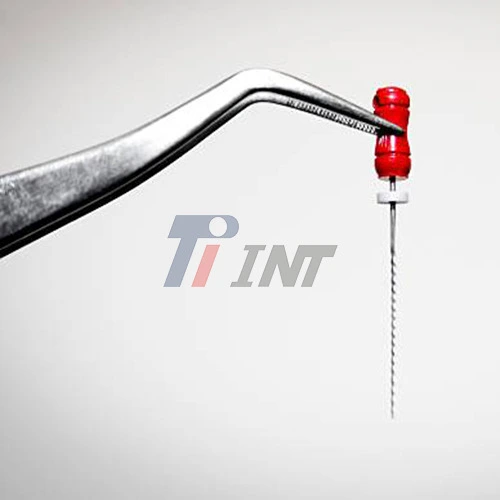
- Dental and orthopedic sub-components: According to ISO 5832-3, Gr9 is not an implantable alloy for load-bearing bone implants. However, it is commonly used for instrument structural parts like drill guide rods, depth-stop sleeves, and handle cores where biocompatibility and sterilization resistance are important but don't need implant-grade ELI certification.
Because of these traits, Gr9 bar stock is a flexible feedstock option that cuts down on material waste during CNC operations and supports the fast cycle times that instrument makers who focus on export need.
Comparing Gr9 Titanium Bar 8mm with Other Materials for Medical Use
Gr9 vs. Gr5 (Ti-6Al-4V) for Instrument Components
Gr5 has a higher tensile strength (usually above 895 MPa), but it is much less easy to shape when cold. Gr9 is the better choice for 8mm parts that need to be cold headed or moderately bent without cracking. Gr5 also needs more aggressive cutting parameters and speeds up tool wear, which makes each unit more expensive for instrument shops that make a lot of them. If the product only needs structural strength and doesn't need to be shaped, Gr5 is the right choice. If machinability and cold workability are more important, Gr9 is the best choice.
Gr9 vs. Stainless Steel 316L
Due to its low cost, stainless steel is still often used to make instruments, but its density of 7.99 g/cm³ makes it almost twice as heavy as a Gr9 Titanium Bar Dia 8mm component of the same size. For tools that are sensitive to ergonomics, like long retractors and microsurgical handles, that difference in weight is important to both the operator and the end product specification.
Gr9 is also better than 316L at resisting chloride corrosion, so there is no longer a chance of pitting that can leave spaces where bacteria can grow after sterilization. Titanium's higher cost as a raw material is partly made up for by the fact that it needs smaller billets and less time to smooth the surface to a medical-grade level.
Procuring Gr9 Titanium Bar Dia 8mm: What B2B Buyers Need to Know
For companies that make instruments and restock every month, price and supply stability are the two most important factors when buying things. A trustworthy Gr9 Titanium Bar Dia 8mm provider must offer heat-traceable mill test records, preferably to the EN 10204 3.1 standard, that show the chemical make-up, tensile and yield strengths, and heat treatment conditions for each batch. Customers who sell goods in the EU and US can't finish their incoming inspection records or customer audit files without these papers.
Flexible MOQ structures are just as important. Instrument workshops usually work on six to twelve diameter standards at the same time. If a seller requires buyers to place a minimum order of a single grade, they have to keep extras of sizes that don't move as quickly in stock. Manufacturers of reputable Gr9 titanium bars that work with medical instruments know this and can handle orders of different sizes at prices that are competitive per kilogram.
For ex-stock sizes, the standard shipping window in the business is three to four weeks. When mill schedules are busy, production-to-order lead times often go beyond six weeks, so buyers should make sure that their supplier keeps 8mm diameter inventory on hand instead of making to order.
Ensuring Quality and Compliance in Medical Device Manufacturing with Gr9 Titanium Bars
Certification and Traceability Requirements
Every batch of medical-grade titanium bar stock that comes into a controlled instrument workshop has to be accompanied by paperwork that can withstand an audit by a third party. The package must have at least EU CE marking, ISO 13485:2016 medical device quality management certification, and ISO 9001:2015 quality system certification from the mill.
Chemical testing should show that the chemical limits set by ASTM B348 and ASTM F136 are being met. Full recall is possible because the heat number can be tracked from the ingot to the finished Gr9 Titanium Bar Dia 8mm. This is a must for any supplier that works with companies that export to FDA- or MDR-regulated markets.
Testing Protocols and Post-Sale Support
In addition to the mill certificate, dependable providers check the hardness, measure the dimensions to h8 or smaller tolerances, and look at the surface condition for any seams, laps, or inclusions that could weaken the integrity of the machined part. People who are buying should ask the seller if they do ultrasonic testing on bar stock that is bigger than a certain diameter. Technical support after the sale, such as help with suggested cutting speeds, tool geometry, and annealing parameters for Gr9, is what sets a real manufacturing partner apart from a generic reseller.
Conclusion
Gr9 Titanium Bar Dia 8mm diameter is a practical and well-documented material choice for companies that make surgery instruments and need uniform machinability, reliable spring-back behavior, and paperwork that is ready for an audit. Its Ti-3Al-2.5V mix fills the gap between commercially pure titanium and the stronger Gr5 alloy. It gives current instrument production the cold workability, wear resistance, and corrosion durability that they need. When technical performance and supply chain reliability are both important, the material standard and the relationship with the seller are given equal weight in the sourcing choice.
FAQ
What standard governs Gr9 titanium bar for medical device applications?
Both ASTM B348 and ASTM F136 cover bar and wire products made of Ti-3Al-2.5V. The European standard that is agreed upon is ISO 5832-3. Before placing an order, make sure you know which standard your customer's audit needs because the compositional tolerances are a little different between documents.
Is Gr9 suitable for implantable components?
ISO 5832-3 does not list Gr9 as an implantable metal for permanent bone inserts that hold weight. However, it is generally accepted for structural parts of surgical instruments, tool handles, and parts of non-implanted devices that touch the body briefly during treatments.
What documentation should accompany each batch?
A minimum of an EN 10204 3.1 Mill Test Certificate is required by the industry. This certificate must confirm the heat number, chemical composition, mechanical properties, and heat treatment conditions. As part of the quality system needed for controlled market checks, ISO 13485:2016 and CE certification from the provider are added.
How does Gr9 machine compared to stainless steel?
Because it doesn't transfer heat as well as 316L steel, Gr9 needs to be cut at slower speeds. It is suggested that you use high-pressure water and sharp steel tools. Once the machining parameters are set just right, the surface finish is great and stays the same all the way along the bar.
What surface finishes are available for 8mm Gr9 bar?
Finishes like polished, pickled, or centerless-ground are standard. Surface solutions can be made to order based on the needs of the next step in the process.
Source Your Gr9 Titanium Bar Dia 8mm from a Certified Manufacturer
Since 2003, Baoji INT Medical Titanium Co., Ltd. has sold medical-grade titanium materials. They have ISO 9001:2015, ISO 13485:2016, and EU CE certification to back them up. Our company is a reliable source for Gr9 Titanium Bar Dia 8mm. We offer flexible minimum order quantities, heat-traceable mill certificates, and standard delivery in 3–4 weeks for sizes that are in stock. Visit inttitanium.com or email our team at export@tiint.com to get a price or a sample of the material right away.
References
1. ASTM International. ASTM B348: Standard Specification for Titanium and Titanium Alloy Bars and Billets. ASTM International, 2019.
2. ASTM International. ASTM F136: Standard Specification for Wrought Titanium-6Aluminum-4Vanadium ELI Alloy for Surgical Implant Applications. ASTM International, 2013.
3. International Organization for Standardization. ISO 5832-3: Implants for Surgery — Metallic Materials — Part 3: Wrought Titanium 6-Aluminium 4-Vanadium Alloy. ISO, 2021.
4. Donachie, Matthew J. Titanium: A Technical Guide. 2nd ed. ASM International, 2000.
5. Rack, H.J., and J.I. Qazi. "Titanium Alloys for Biomedical Applications." Materials Science and Engineering: C, vol. 26, no. 8, 2006, pp. 1269–1277.
6. Long, Marc, and H.J. Rack. "Titanium Alloys in Total Joint Replacement—A Materials Science Perspective." Biomaterials, vol. 19, no. 18, 1998, pp. 1621–1639.