




Best Medical Titanium Materials for Orthopedic Device Makers


 2026-10-22 09:21:53
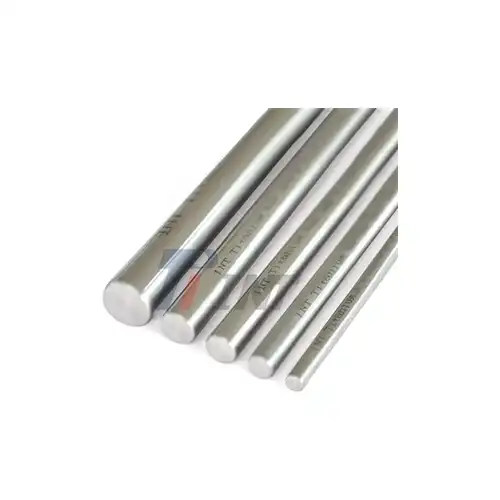
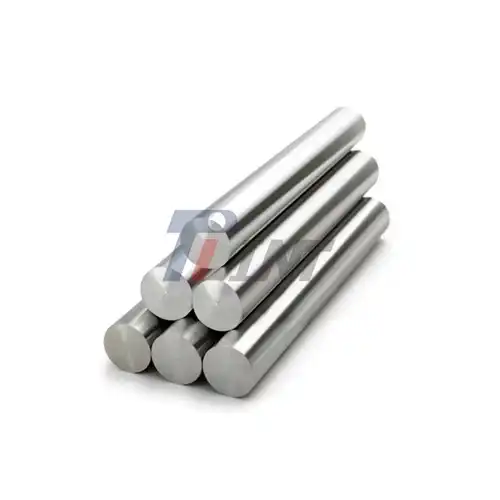
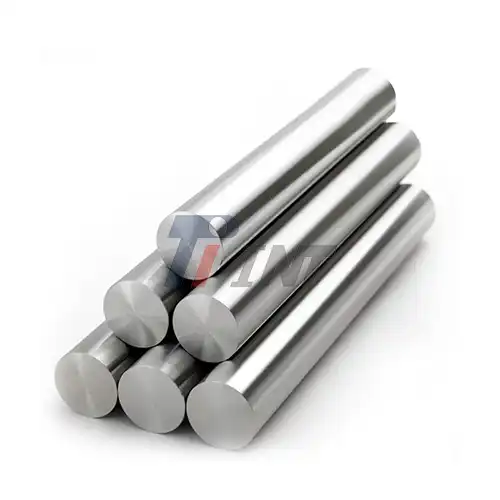
When it comes to sourcing raw materials for surgical instrument manufacturing, choosing the right medical titanium bar makes a measurable difference in production quality, machining efficiency, and downstream compliance. Pure titanium grades (Gr1–Gr4) and Ti6Al4V ELI alloy rods deliver the biocompatibility, corrosion resistance, and machinability that orthopedic device makers depend on daily. At Baoji INT Medical Titanium Co., Ltd., we have supplied precision titanium bar stock to instrument manufacturers across the U.S., Europe, and Asia since 2003—and this guide shares what we have learned about selecting the right material.
|
|
|
Understanding Medical Titanium Bars for Orthopedic Applications
What Makes a Titanium Bar "Medical Grade"?
It's not just industrial titanium cut to length that medical-grade titanium bar stock is made of. It goes through vacuum arc remelting (VAR) and carefully managed thermomechanical processing to create a uniform microstructure with strict limits on the intermediate elements—oxygen, nitrogen, and carbon—that determine how tough it is to break. Before they can be used to make medical instruments or implants, commercially pure grades (Gr1–Gr4) and Ti-6Al-4V ELI (Grade 23) have to meet standards like ASTM F67, ASTM F136, and ISO 5832-3.
Grade Overview for Instrument Manufacturers
Manufacturers usually work with three types of titanium, each of which is best for different parts of instruments:
- Commercially Pure Gr1 / Gr2 — Lowest strength, highest ductility and cold-formability. Ideal for instrument handles, lightweight shaft components, and parts requiring deep drawing or complex bending.
- Commercially Pure Gr4 — Highest strength among CP grades (tensile strength ≥ 550 MPa). Preferred for forceps jaws, retractor shafts, and working-end blanks where moderate hardness matters.
- Ti6Al4V ELI (Grade 23) — Tensile strength ≥ 895 MPa with elongation ≥ 10%. The workhorse alloy for high-stress instrument bodies that demand both rigidity and fatigue resistance under repeated autoclave cycling.
Knowing these differences before placing an order keeps the shop floor from having to do expensive remachining and waste materials.
Why Medical Titanium Bars Outperform Other Materials in Orthopedics
Surgical instruments have mostly been made of stainless steel for decades, but medical titanium bar stock is slowly replacing it in precision instrument lines. The reason is simple: titanium's elastic modulus (~110 GPa) is much lower than stainless steel's (~200 GPa), making it more like cortical bone (~15–25 GPa). This lowers stress shielding in load-bearing uses and increases the service life of instruments when they are loaded and unloaded many times.
Here are the main performance benefits that instrument makers always point out:
- High Strength-to-Weight Ratio — Ti6Al4V ELI rods weigh roughly 56% less than comparable steel stock while maintaining superior tensile performance. Lighter instrument blanks reduce fatigue on CNC spindles and lower per-piece machining time.
- Exceptional Fatigue Resistance — Under repeated sterilization cycles and mechanical stress, titanium resists micro-crack propagation far better than cobalt-chrome or stainless alternatives, extending the service intervals of finished instruments.
- Low Elastic Modulus — This property, approximately 110 GPa, distributes mechanical stress more evenly across the implant-bone interface, promoting osseointegration and reducing bone resorption around load-bearing components.
- Inherent Biocompatibility — Titanium spontaneously forms a stable TiO₂ oxide layer that eliminates cytotoxic ion release, a documented advantage over nickel-containing stainless steel alloys that can trigger hypersensitivity responses.
These benefits give instrument makers in regulated markets like North America and Western Europe a clear edge over their competitors. This is because end-customer audit requirements get tighter every year.
The cleaning of the surface is also important. Polished surfaces make it easier to clean and lessen the stickiness of bacteria, while sandblasted finishes make it easier to hold on to instrument handles. Our basic product line has both of these surface choices.
Procurement Considerations for Medical Titanium Bars
To efficiently source medical titanium bar stock, you need more than a low unit price. Instrument makers who get orders with a mix of specifications, like different diameters, grades, and small monthly amounts, need a supply structure that can handle that without putting too many restrictions on MOQ or making lead times too long.
Key Supplier Qualification Criteria
When purchasing managers look at a medical titanium bar seller, they should make sure:
- Certifications on file: ISO 9001:2015 and ISO 13485:2016 are the baseline. EU CE certification is essential for manufacturers exporting to European markets.
- Traceability documentation: Heat-number-traceable mill certificates shipped with each order allow instrument makers to satisfy customer factory audits and customs clearance requirements without chasing paperwork.
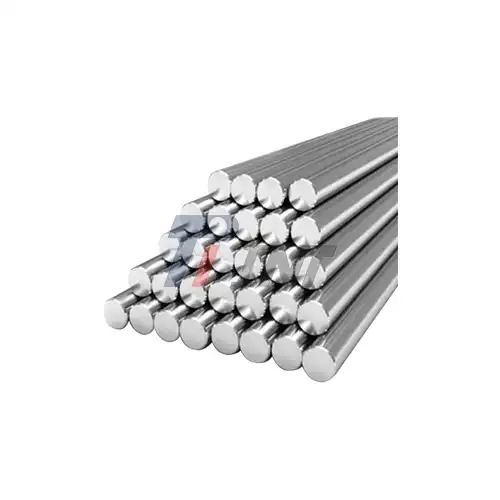
- Diameter and length coverage: A capable supplier should offer bar diameters from 6 mm to 150 mm and lengths from 1,000 mm to 3,000 mm across Gr1, Gr2, Gr4, Ti6Al4V, and Ti6Al4V ELI—all from inventory or short-lead production.
- Flexible MOQ: Instrument manufacturing generates mixed-size orders. A supplier willing to split shipments across grades and diameters preserves cash flow without forcing unnecessary overstock.
- Lead time reliability: Consistent 3–4 week lead times allow monthly replenishment planning. Variability here disrupts production schedules and erodes customer trust downstream.
In terms of certifications, ISO 9001:2015 and ISO 13485:2016 are the most important ones. Manufacturers who want to sell their goods in Europe must have EU CE approval.
Manufacturing Process and Quality Assurance of Medical Titanium Bars
From Raw Sponge to Finished Bar Stock
Smelting titanium is the first step in making a final titanium bar that is strong. At Baoji INT, raw titanium sponge is remelted twice using a double vacuum arc to get rid of segregation and porosity. The ingot that is made goes through multiple passes of casting and rolling at exact temperatures to make a microstructure that is regular and evenly distributed. Before it is released, each production batch is put through ultrasonic testing, measurement checks, and a chemical makeup analysis.
Making sure the quality doesn't end at the medical titanium bar. Every shipment that leaves our facility comes with a full material test report (MTR) that is linked to the specific heat lot. This makes it possible to fully track the shipment all the way to the end user. Our customers keep ISO 13485 compliance reports, CE technical files, and FDA 510(k) submissions for their finished tools, and this paperwork package helps them with all of them.
This method has been used continuously for 20 years, and it has helped INT form agreements with instrument makers on four continents. Many of these companies have been INT's suppliers for more than ten years.
Future Trends in Medical Titanium Materials for Orthopedic Devices
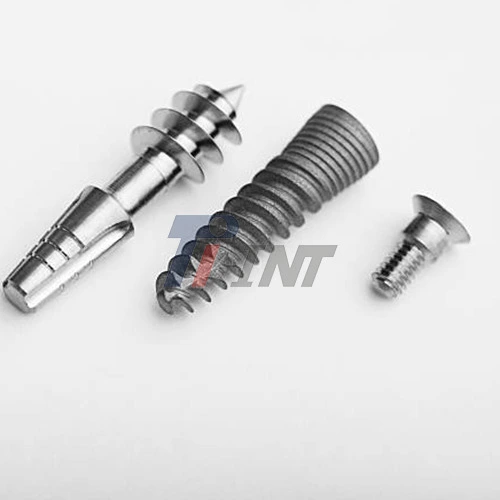
Beta-phase titanium alloys with even smaller elastic moduli are being tested in humans and could help bone implants share load better than regular Ti6Al4V. Selective laser melting is a type of additive manufacturing that is allowing new design geometries for instrument and implant blanks that can't be done with standard bar stock alone. However, bar stock is still the main input for CNC-intensive instrument production lines.
Also, regulatory bodies in the EU and the US are making it harder to track goods using UDI frameworks. This means that heat-lot documentation is no longer just a nice-to-have, it's a legal requirement. Purchasing plans that focus on approved and well-documented material chains will be better able to handle these changes in regulations without any problems.
Conclusion
Choosing the correct medical titanium bar stock—whether it's commercially pure grades for making light instrument handles or Ti6Al4V ELI for making high-stress parts—has a direct effect on the quality of the finished product, the yield of the cutting process, and the readiness for compliance. It's easy to see what makes the decision: grade coverage, traceability paperwork, consistent wait times, and the ability to change the amount of an order. This is exactly how Baoji INT Medical Titanium Co., Ltd. built its supply model. It helps instrument makers who can't afford material instability in foreign markets that are very competitive.
FAQ
How long does a titanium instrument blank typically last in service?
Titanium instrument parts made from Ti6Al4V ELI can usually go through thousands of autoclave cleaning cycles without any rust or changes in size. Service life depends a lot on how the instrument is made and how often it is used, but the material doesn't break down when it's sterilized in a hospital.
How does titanium's biocompatibility compare to stainless steel?
Some types of stainless steel that contain nickel can give off ions that make some people more sensitive over time. Titanium forms a quiet TiO2 oxide layer that is chemically neutral in living things, so that risk is gone. This is the reason why controlled markets are using titanium more and more for tools that are close to implants.
Can titanium bar stock be supplied in custom diameters or lengths?
Yes. Standard diameters range from 6 mm to 150 mm, and standard lengths range from 1,000 mm to 3,000 mm. These sizes are good for most instrument uses. You can talk to our technical team directly about specifications that aren't standard.
What certifications accompany each shipment?
Each order comes with a mill certificate that can be linked to the production heat lot. This certificate confirms the chemical make-up, mechanical qualities, and agreement with ASTM F67, ASTM F136, or ISO 5832-3 standards. You can get documents for ISO 13485 and CE if you ask for it.
Partner with Baoji INT Medical Titanium Co., Ltd. for Reliable Titanium Bar Supply
Baoji INT Medical Titanium Co., Ltd. is a reliable company that supplies medical titanium bars. They are ISO 13485:2016 and EU CE certified, and their stock includes Gr1–Gr4 and Ti6Al4V ELI bars with widths ranging from 6 mm to 150 mm. They also include heat-traceable MTRs with every shipment, and they have a flexible MOQ for orders that have more than one standard. Visit inttitanium.com or email our team at export@tiint.com right now to get a quote or a sample.
References
1. ASTM International. ASTM F136: Standard Specification for Wrought Titanium-6Aluminum-4Vanadium ELI Alloy for Surgical Implant Applications. 2013.
2. International Organization for Standardization. ISO 5832-3: Implants for Surgery — Metallic Materials — Part 3: Wrought Titanium 6-Aluminium 4-Vanadium Alloy. 2021.
3. Niinomi, M. "Mechanical biocompatibilities of titanium alloys for biomedical applications." Journal of the Mechanical Behavior of Biomedical Materials, 2008.
4. Geetha, M., et al. "Ti based biomaterials, the ultimate choice for orthopaedic implants." Progress in Materials Science, 2009.
5. Long, M., & Rack, H. J. "Titanium alloys in total joint replacement—a materials science perspective." Biomaterials, 1998.
6. U.S. Food and Drug Administration. Guidance for Industry: Biocompatibility of Medical Devices (ISO 10993-1). FDA, 2020.