




Top Uses of Gr2 Titanium Wire in Healthcare Manufacturing


 2026-10-21 14:57:39
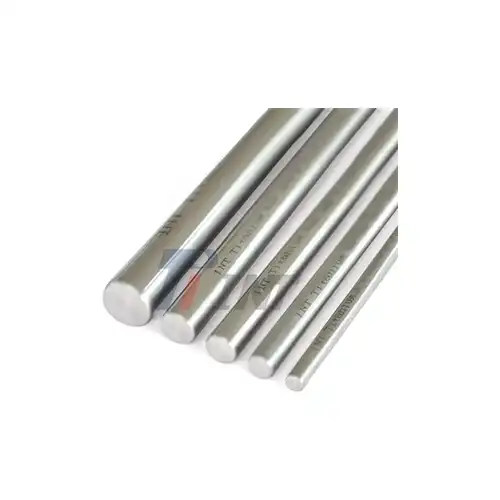
Gr2 titanium wire — commercially pure titanium classified under ASTM B863 and UNS R50400 — has become one of the most specified raw materials in medical device contract manufacturing. Its tensile strength of ≥345 MPa, combined with a density roughly 45% lower than stainless steel, makes it a practical choice for OEM facilities producing implant blanks, fixation components, and braided mesh assemblies. When surface quality and dimensional consistency directly govern downstream yield rates, the material grade chosen at the sourcing stage carries real production consequences.
|
|
|
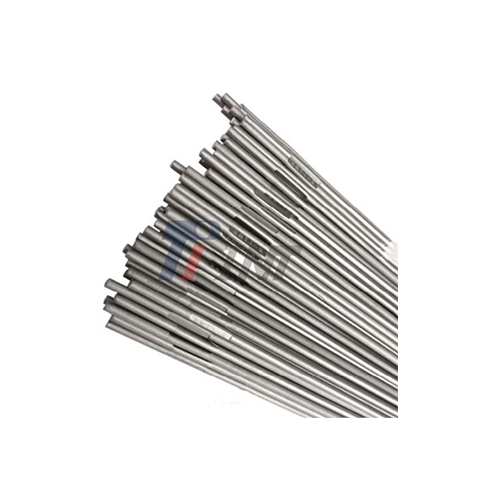
Understanding Gr2 Titanium Wire and Its Key Properties
Titanium that is commercially pure at Grade 2 has a specific place in the material order. It has good mechanical properties without the vanadium or aluminum additions found in Ti-6Al-4V ELI (Gr23). This means you don't have to worry about harmful alloying elements when it comes to long-term biological contact.
Mechanical and Chemical Profile
Baoji INT Medical Titanium Co., Ltd. sells Gr2 titanium wire that has been checked to have the following qualities:
Its grade is Gr2 (commercially pure titanium), and its diameter range is 0.5 mm to 6 mm. Its tensile strength is ≥ 345 MPa, and its yield strength is ≥ 275 MPa. It can stretch by up to 20%, and it doesn't rust or corrode when exposed to body fluids. It is certified by ISO 9001:2015, ISO 13485:2016, and EU CE.
| Property | Value |
|---|---|
| Grade | Gr2 (Commercially Pure Titanium) |
| Diameter Range | 0.5 mm – 6 mm |
| Tensile Strength | ≥ 345 MPa |
| Yield Strength | ≥ 275 MPa |
| Elongation | ≥ 20% |
| Corrosion Resistance | Excellent (resistant to body fluids) |
| Certification | ISO 9001:2015, ISO 13485:2016, EU CE |
The extension of ≥20% is especially important for wire-drawing and braiding: materials that can't handle cold bending without cracking cause more waste and slow down production. Gr2 titanium wire consistently handles these steps of forming.
Why Gr2 Outperforms Stainless Steel in Medical Contexts
For long periods of time, stainless steel wire corrodes in chloride-rich settings, such as body fluids. Gr2 titanium creates a steady passive oxide layer called TiO₂ that fixes itself even after being scratched on the surface. This is a material property that can't be changed for contract makers whose clients need proven biocompatibility under ISO 10993. In addition to protecting against corrosion, the high strength-to-weight ratio makes finished assemblies lighter without sacrificing their structural integrity. This is important for parts of portable surgical instruments and minimally invasive devices.
Top Uses of Gr2 Titanium Wire in Healthcare Manufacturing
Commercially pure titanium wire is used in a wider range of medical device OEMs and CMOs uses than many buying teams first think. All of them need a material that can handle both mechanical stress and biological contact at the same time.
The main places where this grade of wire consistently does its job are listed below:
- Orthopedic fixation components: Wire is drawn, cut, and formed into Kirschner wires (K-wires), cerclage wire, and tension band constructs used in fracture stabilization. The fatigue resistance of Gr2 — critical when the component flexes repeatedly under physiological load — prevents premature failure that could require revision surgery.
- Spinal stabilization assemblies: Braided or twisted wire constructs provide supplemental fixation in posterior spinal fusion procedures. The non-magnetic profile of commercially pure titanium ensures MRI compatibility post-implantation, a requirement that stainless steel cannot consistently meet.
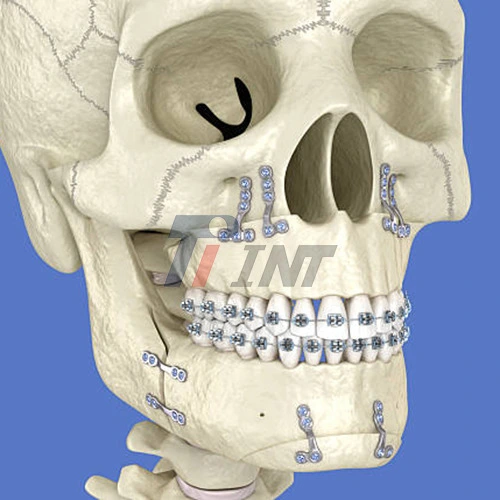
- Dental and maxillofacial wire components: Orthodontic archwire blanks and craniofacial mesh preforms rely on precise diameter tolerances and surface cleanliness. Any oxidation tint or roller mark on the wire surface affects bonding chemistry and anodizing outcome.
- Surgical instrument subcomponents: Lightweight wire springs and actuation elements in endoscopic tools and forceps demand both corrosion resistance during autoclave cycles and dimensional repeatability across production batches.
- Braided medical mesh and textile structures: Gr2 wire with diameters from 0.5 mm down is woven into braided stent preforms and reinforcement mesh. Consistent diameter tolerance across the spool is mandatory to maintain uniform mesh porosity.
As part of orthopedic fixation, wire is drawn, cut, and shaped into Kirschner wires (K-wires), cerclage wires, and tension band structures that are used to stabilize fractures. Gr2 titanium wire's wear resistance is very important when the part bends over and over again under physiological load. It keeps the part from failing too soon, which could mean having to have surgery again.
Comparing Gr2 Titanium Wire with Alternatives for Healthcare Procurement
A lot of the time, procurement engineers compare Gr2 to Gr4 (which is stronger but less flexible), Gr5/Ti-6Al-4V ELI, Nitinol, and medical-grade stainless steel.
Where Gr2 Holds a Clear Advantage
Each material covers a different range of ability.
Even though Gr4 has a higher tensile strength, it can't be cold shaped like braiding and fine drawing do. Vanadium is present in Gr5 (Ti-6Al-4V), which raises concerns about its ability to damage cells when used in permanent implants in some regulatory areas. Nitinol has shape memory and superelasticity, but it costs a lot more than other materials and needs special tools to be processed. Even though it's still cheaper, stainless steel isn't as good at resisting rust or working with MRI machines.
Procurement Insights: Sourcing High-Quality Gr2 Titanium Wire
Where you get your medical-grade titanium wire has effects on quality that go beyond the price per unit. If one batch has surface roll marks or a diameter difference of more than ±0.05 mm, it can ruin an entire etching or stamping run, and the costs of scrap are much higher than any savings from buying from a cheaper supplier.
Key Supplier Qualification Criteria
The following should be the top priorities for the sourcing and SQE teams when looking for a Gr2 titanium wire manufacturer:
- Lot-traceable material documentation: Each batch should ship with a Certificate of Analysis (COA) traceable to melt heat number, covering chemical composition, mechanical test results, and dimensional inspection data.
- Surface quality standards: Wire supplied for precision medical applications must arrive free of oxidation discoloration, roller impressions, and handling scratches. Protective film packaging and dedicated handling protocols during slitting and coiling are non-negotiable.
- Custom diameter capability: Production lines optimized for specific component geometries require wire cut or drawn to precise diameters. A supplier offering diameter customization from 0.5 mm to 6 mm with h7/h8/h9 tolerance classes eliminates the waste associated with in-house secondary processing.
- Compliance infrastructure: ISO 13485:2016 certification, combined with a willingness to support supplier audits and First Article Inspection (FAI) documentation packages, signals that the manufacturer operates within a quality management framework compatible with medical device supply chains.
As a company started in 2003 by Mr. Zhan Wenge, who has more than 30 years of experience making Gr2 titanium wire products, Baoji INT Medical Titanium Co., Ltd. has built its quality system around the needs of original equipment manufacturers (OEMs) of medical devices. Ultrasonic testing and multistage dimensional inspection are used to make sure that every product that leaves the facility has ISO 9001:2015, ISO 13485:2016, and EU CE certification.
Best Practices for Using Gr2 Titanium Wire in Healthcare Manufacturing
How well a material works in service depends on how it is handled and how well it is integrated into the process as on its own qualities. By following a few rules, contract makers can protect the money they spend on good raw materials.
Before the wire goes into production, it should be inspected to make sure that the diameter and surface condition match the COA. Even approved materials can get damaged in shipping. Finding a surface flaw before they get to a laser cutting or etching station stops scrap from building up.
It is well known that autoclaving (steam at 134 °C), gamma irradiation, and ethylene oxide can all sterilize Gr2 titanium without any problems. Wire used in subassemblies that will be terminally sterilized doesn't need any special care, but passivation records should be kept so that regulators can track it.
When adding wire to soldered parts, ERTi-2 filler wire (which is another name for Gr2) makes sure that the weld zone has the same corrosion protection and flexibility as the base metal. When filler grades don't match, galvanic differences happen that can cause localized rusting at the joint contact.
Conclusion
For orthopedic stabilization, spinal surgery, dentistry uses, and the creation of braided medical mesh, Gr2 titanium wire is the main raw material. Its biocompatibility, wear resistance, resistance to rust, and ability to be cold-formed meet the main performance needs of medical device contract manufacturing. If procurement managers and quality engineers are building a supply chain that can be defended, choosing a recognized, lot-traceable source that can do custom dimensioning will directly lead to higher yield rates and easier regulatory submissions.
FAQ
Why is Gr2 titanium wire preferred over stainless steel for implantable components?
Gr2 titanium is non-magnetic, non-toxic, and will never corrode from body fluids. In biological environments, chloride can cause pitting in stainless steel over time. For medical devices that need to work with MRIs or be implanted for a long time, Gr2 is the better option that can be defended by regulators.
What diameter tolerances are achievable for medical applications?
Manufacturers you can trust offer Gr2 titanium wire with tolerance classes h7, h8, and h9, and in sizes ranging from 0.5 mm to 6 mm in diameter. For braiding and precision-formed implant blocks, where differences in size have a direct effect on the shape of the final part, tight tolerances are necessary.
What documentation should accompany each shipment?
For each lot, there should be a Certificate of Analysis with a melt heat number that shows the chemical makeup according to ASTM B863, as well as records of measurement inspections and mechanical test results (tensile, yield, and elongation). Suppliers who are ISO 13485:2016 qualified can also provide audit-support materials for OEM quality systems.
Can small-batch orders be accommodated?
Yes, suppliers with flexible production infrastructure can handle small-batch RFQs with the same set of paperwork as large orders. This lets them support the FAI and material validation stages without having to meet a minimum order quantity, which slows down the development process.
Partner with Baoji INT Medical Titanium Co., Ltd. for Your Next Project
It has been since 2003 that Baoji INT Medical Titanium Co., Ltd. has sold approved medical titanium materials to OEM makers in the US, Europe, and Japan. As a certified provider of Gr2 titanium wire, we offer lot-traceable wire with full ISO 13485:2016 and EU CE paperwork, custom diameters from 0.5 mm to 6 mm, and protective packing made for places where precision is needed. You can email our team at export@tiint.com or go to inttitanium.com to ask for a sample, send an RFQ, or get our product detail sheet.
References
1. ASTM International. ASTM B863: Standard Specification for Titanium and Titanium Alloy Wire. ASTM International, 2023.
2. ISO. ISO 5832-2: Implants for Surgery — Metallic Materials — Part 2: Unalloyed Titanium. International Organization for Standardization, 2018.
3. Geetha, M., et al. "Ti Based Biomaterials, the Ultimate Choice for Orthopaedic Implants." Progress in Materials Science, 2009.
4. ISO. ISO 13485: Medical Devices — Quality Management Systems — Requirements for Regulatory Purposes. International Organization for Standardization, 2016.
5. Niinomi, M. "Mechanical Biocompatibilities of Titanium Alloys for Biomedical Applications." Journal of the Mechanical Behavior of Biomedical Materials, 2008.
6. Black, J., and Hastings, G. Handbook of Biomaterial Properties. Chapman & Hall, 1998.