




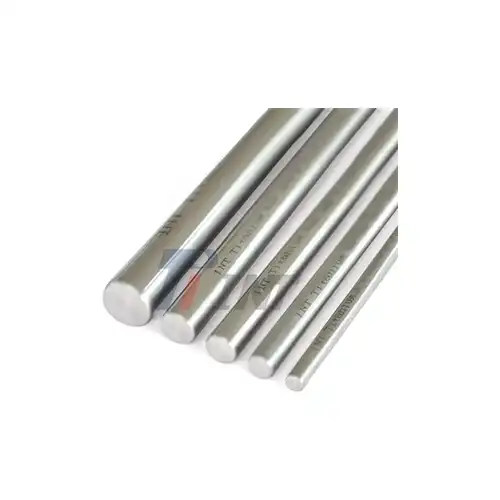
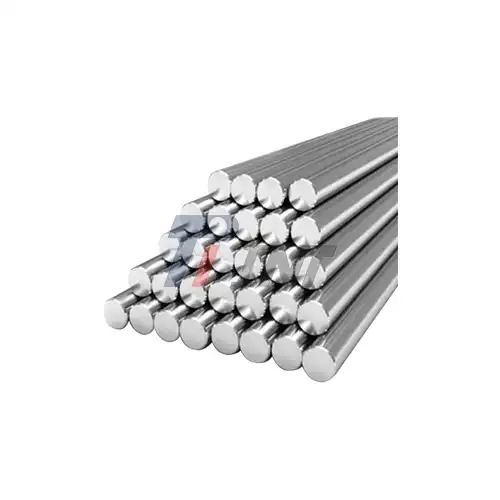
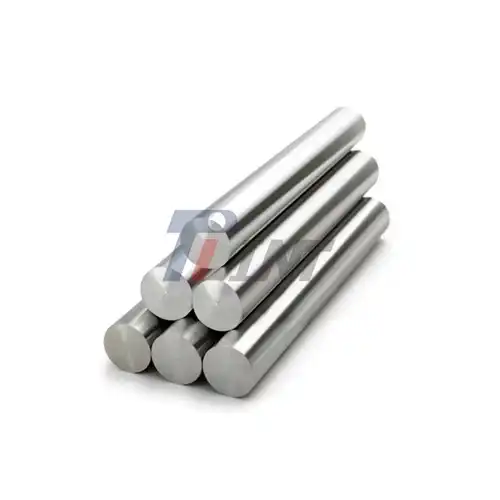
Gr5 Titanium Straight Wire for Advanced Medical Applications


 2026-10-22 09:21:58
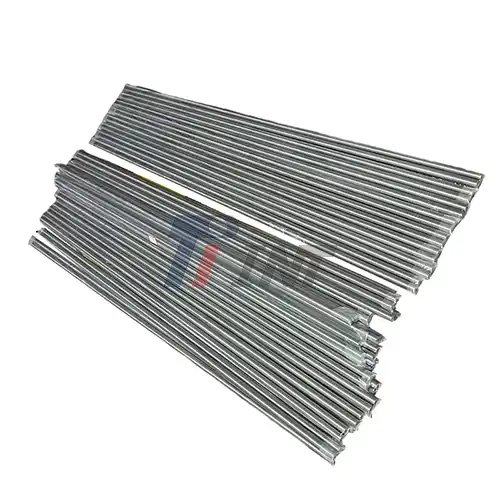
Gr5 titanium straight wire — technically designated Ti-6Al-4V (UNS R56400) — has become the material of choice for contract medical device manufacturers who demand precision, traceability, and zero-compromise mechanical performance. Composed of approximately 90% titanium, 6% aluminum, and 4% vanadium, this alpha-beta alloy delivers tensile strength ≥895 MPa alongside a density of just 4.43 g/cm³. For procurement engineers sourcing feedstock for orthopedic implant blanks, spinal fixation components, and surgical instrument parts, selecting the right Ti-6Al-4V wire directly determines downstream yield rates and compliance outcomes.
|
|
|
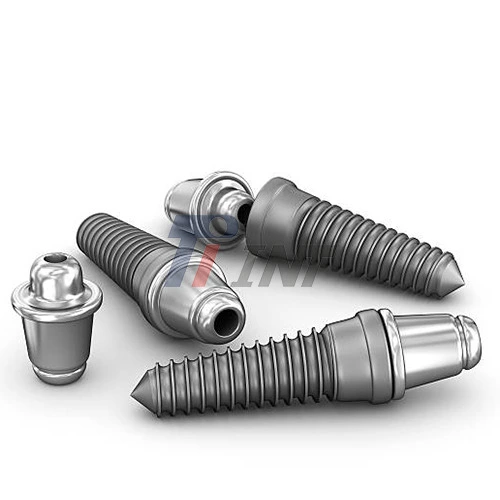
Understanding Gr5 Titanium Straight Wire and Its Key Properties
Material Composition and Mechanical Specifications
Gr5 titanium straight wire achieves its exceptional performance through a controlled alpha-beta microstructure refined during hot rolling, forging, and precision straightening. The straightening process eliminates coil memory (camber), delivering geometric linearity below 1 mm/m — a specification critical for CNC Swiss-lathe feeding and automated machining. Verified mechanical data confirms tensile strength ≥895 MPa, yield strength ≥825 MPa, and elongation ≥10%, meeting ASTM B265 and AMS 4928 benchmarks widely recognized in medical manufacturing.
Biocompatibility and Corrosion Resistance
Gr5 titanium straight wire forms a stable passive oxide layer (TiO₂) that resists degradation in chloride-rich biological environments, outperforming 316L stainless steel in long-term implant scenarios. Its elastic modulus (~114 GPa) more closely approximates cortical bone than steel, reducing stress-shielding — a clinically documented cause of peri-implant bone resorption. ISO 10993 biocompatibility evaluations consistently confirm Ti-6Al-4V's suitability for long-term sub-dermal contact.
How Gr5 Compares to Other Titanium Grades
| Grade | Tensile Strength | Key Use Case | Notes |
|---|---|---|---|
| Gr2 (CP) | ~400 MPa | Sheet metal, non-load-bearing | Lower strength |
| Gr4 (CP) | ~580 MPa | Dental abutments | Moderate strength |
| Gr5 (Ti-6Al-4V) | ≥830 MPa | Implant blanks, fixation wire | Optimal strength/weight |
| Gr23 (ELI) | ≥860 MPa | Fatigue-critical implants | Lower interstitials |
Gr23 (ELI) reduces oxygen and iron content for superior fatigue life, making it the preference for dynamic loading scenarios. Standard Gr5 titanium straight wire remains cost-competitive for structural blanks and instrument components where ELI-grade interstitial control is not mandated.
Comparing Gr5 Titanium Wire with Other Alloys in Medical Applications
Gr5 Titanium vs. Stainless Steel and Nitinol
Stainless steel (316L) costs less upfront but introduces long-term corrosion risk in saline environments and presents MRI compatibility concerns. Gr5 titanium straight wire offers a balanced alternative, combining good corrosion resistance with MRI compatibility at a moderate cost. Nitinol offers superelastic properties valuable in stent applications yet requires significantly more complex processing and carries a higher raw material cost.
Gr5 titanium straight wire occupies a practical middle ground — it combines structural rigidity with a weight roughly 45% lower than steel, excellent fatigue resistance under cyclic loading, and full MRI compatibility. For CMO/CDMO operations producing orthopedic trauma plates, Kirschner wires, and spinal rod blanks, this profile reduces both clinical risk and manufacturing complexity simultaneously.
Strength-to-Weight Advantage in Production
Medical device contract manufacturers consistently report that switching from stainless steel wire feedstock to Gr5 titanium straight wire reduces component mass by 40–45% without sacrificing load-bearing capacity. This weight reduction matters not only in the finished implant but also in the precision machining phase — lighter workpieces generate less vibration during high-speed CNC operations, improving surface finish consistency and reducing tool wear rates.
Optimizing Procurement: How to Source Ti-6Al-4V Wire for Medical Manufacturing
Sourcing Gr5 titanium straight wire for regulated medical production demands more than competitive pricing. Procurement managers in CMO environments typically structure their supplier qualification around six non-negotiable criteria. Here are the core evaluation parameters that protect both yield rates and regulatory standing:
- Dimensional precision: Diameter tolerance within h7/h8 ISO limits (as tight as ±0.01 mm for centerless-ground wire) directly controls CNC tool engagement and prevents chatter-induced surface defects. Ovality must also be verified by laser micrometer inspection.
- Straightness specification: Straightness deviation below 0.5–1.0 mm per meter ensures smooth bar feeding in Swiss-style CNC lathes and eliminates the whipping effect that causes machine jams and scrap cycles. Gr5 titanium straight wire meets this precision requirement, making it a reliable choice for such demanding machining operations.
- Surface integrity: Wire surfaces must be free of seams, die marks, laps, and oxidation discoloration. Ra values for polished wire typically require Ra < 0.8 µm to eliminate the grinding re-work that consumes downstream labor hours.
- Batch-level chemical certification: Each lot requires a Certificate of Analysis (COA) traceable to heat/lot number, confirming Al, V, Fe, O, N, H, and C concentrations. Hydrogen content must stay below 150 ppm to prevent embrittlement.
- Microstructural verification: Metallographic examination per ASTM E407 confirms alpha-beta phase balance and the absence of surface alpha-case — a brittle layer that, if undetected, propagates fatigue cracks in load-bearing implants.
- Compliance documentation: ISO 13485:2016 and ISO 9001:2015 certificates from the wire supplier must be current and audit-ready, supporting the CMO's own regulatory submissions to FDA 510(k) or EU MDR pathways.
Aligning these criteria with your RFQ template from the start reduces the supplier qualification cycle from the typical 2–4 months to a focused, evidence-based evaluation. Suppliers who can deliver cut-to-length wire with deburring, film protection packaging, and complete MTR documentation on first inquiry demonstrate the operational maturity that supports low-MOQ prototype runs as naturally as volume blanket orders.
Successfully Integrating Ti-6Al-4V Wire into Medical Manufacturing
Production Process and Quality Verification
At Baoji INT Medical Titanium Co., Ltd., Gr5 titanium straight wire undergoes hot rolling and forging to establish the target alpha-beta microstructure, followed by cold drawing and precision mechanical straightening. Every production batch passes ultrasonic testing to detect subsurface flaws before shipment. The diameter range of 0.5 mm to 5 mm accommodates applications from fine Kirschner wire blanks to heavier structural rod precursors, with length customization available to match individual production line specifications.
Surface Quality and Packaging for Zero-Defect Manufacturing
Surface quality at intake determines the downstream rejection rate on laser-etched and precision-stamped components. Gr5 titanium straight wire delivered with roller marks or oxidation requires additional grinding cycles that increase labor cost and introduce dimensional variability. Protective film packaging and anti-scratch separation layers between wire lengths are standard at INT, reflecting an understanding that the material's condition at goods receipt directly affects the CMO's own customer delivery commitments.
Conclusion
Gr5 titanium straight wire is not a commodity purchase — it is a precision input whose dimensional, chemical, and surface attributes cascade directly into finished-device quality and regulatory compliance. For CMO and CDMO operations producing orthopedic, spinal, dental, and trauma-related medical components, the wire's specification traceability, geometric consistency, and certified material documentation are non-negotiable. Partnering with a supplier who holds ISO 13485:2016 certification, maintains heat-traceable COA documentation, and offers cut-to-size flexibility compresses qualification timelines and protects production yield from the first sample batch through high-volume delivery cycles.
FAQ
Is Gr5 titanium wire biocompatible for long-term implant use?
Gr5 titanium straight wire has demonstrated biocompatibility in accordance with ISO 10993 testing protocols. Its TiO₂ passive layer resists degradation in physiological chloride environments, and its non-magnetic properties ensure MRI compatibility — both critical requirements for sub-dermal, long-term orthopedic and spinal applications.
What diameter tolerances are achievable for precision machining?
Centerless-ground Gr5 titanium straight wire achieves diameter tolerances as tight as ±0.01 mm with ovality control verified by laser micrometer. These tolerances are compatible with Swiss-style CNC lathe bar-feeding requirements and prevent the tool chatter and dimensional chain failures associated with out-of-tolerance feedstock.
Can wire be supplied in custom cut lengths with documentation?
Cut-to-length supply of Gr5 titanium straight wire with deburring and protective packaging is available from qualified suppliers. Each batch should be accompanied by a full material test report (MTR/COA) traceable to heat number, covering chemical composition, mechanical properties, and applicable standard compliance (ASTM B265, AMS 4928, ISO 13485:2016).
How does Gr5 differ from ELI grade (Gr23)?
Gr23 (Ti-6Al-4V ELI) specifies tighter limits on oxygen, iron, and carbon interstitials, improving fatigue life and fracture toughness under cyclic loading. Standard Gr5 titanium straight wire is cost-appropriate for structural blanks and instrument components where ELI-level interstitial control is not a client-mandated requirement.
Partner with Baoji INT Medical Titanium Co., Ltd. for Certified Ti-6Al-4V Wire Supply
Baoji INT Medical Titanium Co., Ltd. — a certified Gr5 titanium straight wire supplier since 2003 — provides ISO 13485:2016 and ISO 9001:2015 compliant Ti-6Al-4V straight wire with heat-traceable COA documentation, diameter customization from 0.5 mm to 5 mm, and cut-to-length precision. Request your material sample or RFQ today at export@tiint.com or visit inttitanium.com to advance your next medical manufacturing project with confidence.
References
1. ASTM International. ASTM B265: Standard Specification for Titanium and Titanium Alloy Strip, Sheet, and Plate. ASTM International, 2020.
2. Niinomi, M. "Mechanical biocompatibilities of titanium alloys for biomedical applications." Journal of the Mechanical Behavior of Biomedical Materials, 2008.
3. International Organization for Standardization. ISO 13485:2016 — Medical Devices: Quality Management Systems. ISO, 2016.
4. Rack, H.J., and Qazi, J.I. "Titanium alloys for biomedical applications." Materials Science and Engineering: C, Vol. 26, 2006.
5. International Organization for Standardization. ISO 10993-1:2018 — Biological Evaluation of Medical Devices. ISO, 2018.
6. Long, M., and Rack, H.J. "Titanium alloys in total joint replacement — a materials science perspective." Biomaterials, Vol. 19, 1998.