




Can Titanium Bar Dental Implants Improve Chewing and Smile Function?


 2026-11-20 13:19:59
Yes, in suitable cases, titanium bar dental implants can improve chewing and smile function. A titanium bar connects several implants and holds an overdenture or full-arch prosthesis firmly in place, which limits rocking and lifting during meals. Patients often report greater biting confidence and steadier speech, and the denture teeth stay in the planned position, which supports a natural smile. Results depend on bone quality, implant placement, passive fit, and regular maintenance, so a clinician must confirm suitability. In this article, I explain how the bar works, what the research says, and what manufacturers should check when they source titanium bar stock.
|
|
|
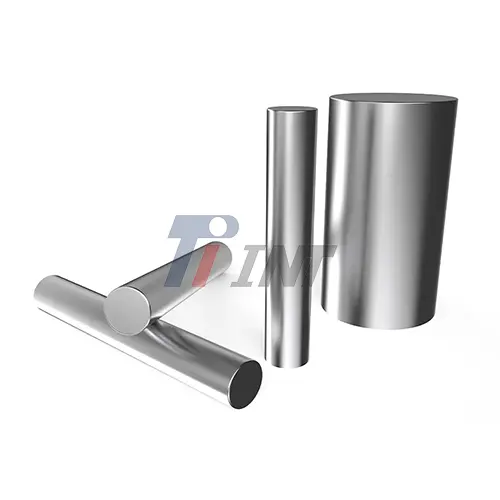
What Titanium Bar Dental Implants Are and How They Work
Definition and Clinical Purpose
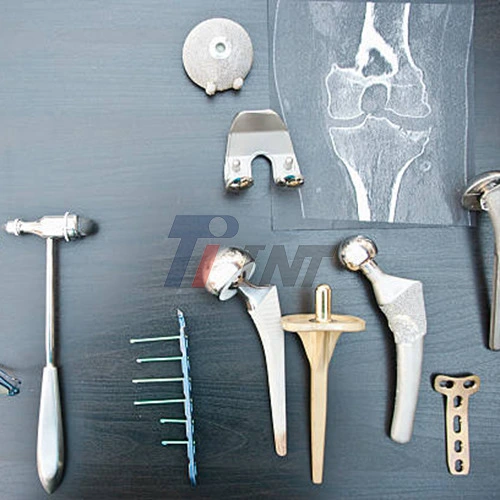
A titanium bar dental implants system uses a custom-made metal piece that holds several dental implants together. It can hold an overdenture that can be taken out or a fixed full-arch prosthesis sometimes. The stiff bar holds them all together, and they screw into the jaw. The tooth is then held in place with clips, housings, or other similar tools. People who don't have any teeth left and want a denture that stays in place better than a normal one usually choose this style. An agreement made at McGill in 2002 says that a traditional denture is not the best first-choice treatment for a mandible that is missing teeth. In the 2009 York agreement statement, it said the same thing. In this case, a lot of doctors agree that implants are the best way to hold down false teeth.
Bar, Fixture, Abutment: Getting the Terms Right
It's helpful to have clear terms because people who buy and people who treat can mix them up. A post that looks like a screw is put into the bone to hold it in place. Parts that are made up of more than one unit link the device to the fix. The bar goes between the implants and sits on top of them. The bar keeps the fake teeth and denture base in place. "Titanium bar for dental implants" can also mean the round rod that is used to make bar substructures, fittings, and abutments when someone is making something. What do you call this? I think the reason for each question and picture should be put at the top because they all need different things.
How the Bar Distributes Chewing Force
A false tooth that has bars loads all of its implants at once instead of one at a time when you chew. Cross-arch splinting makes it tough for the fake tooth to move. Titanium is a good metal for this job since it doesn't weigh much (4.4 g/cm³). It's okay, the base will stay light. At about 114 GPa, its elastic modulus is also smaller than that of cobalt-chromium metals. But the person who made it still has to think about how far apart the implants are, how long they are, and what angle they are at. So the cantilever is kept as short as the case will allow. If it is too long, it puts more stress on the end implants.
Chewing and Smile Function: What Patients Can Expect
Effects on Chewing Function
A titanium bar dental implants overdenture can help you feel better about your ability to chew because it keeps your teeth in place while you eat. When you put weight on some types of teeth, they move because they are on soft tissue. A bar holds the false teeth in place when implants are used. These people say they can chew harder things better and their speech is more stable after this. Something with bars might help you cut and keep your teeth in place better than something with tissues. I can't promise that you'll always be able to chew better. The dentist has to look at each patient individually to see how passive fit, implant spacing, bar geometry, and occlusal adjustment affect the end result.
Effects on Smile and Appearance
The bar changes the smile in a roundabout way because it is mostly hidden inside the prosthesis. A stable denture keeps the teeth in place while you talk and laugh. It also keeps the lips in place and the face in shape. People often feel better when they're with other people when they don't have to worry about their teeth moving around. But the bar doesn't decide how it looks in the end. Along with the color and shape of the teeth, the middle line, the smile line, the occlusal plane, and the vertical dimension are also very important. Dr. Smith, the labs, and the milling teams can all agree on where to put implants before they are made thanks to digital images, CBCT data, and CAD plans. This makes it look and work better.
Factors That Limit Results
There are some things that could make the benefits less strong. Problems are more likely to happen when copies or scans are bad, attachments are worn out, there is too much cantilever, someone grinds their teeth, or the area is not clean. The bar doesn't fit right, which means something is wrong. An in-depth study by Katsoulis and colleagues in 2017 looked at how clinicians describe and rate misfit and how that affects clinical outcomes. This is why it's important to get the right fit. First, the bar stock is checked to make sure it is of good quality. If you want to keep your CNC machine safe, make sure the whole area is clean and the same size. This makes less waste.
From Planning to Maintenance: Procedure, Alternatives, and Care
The Workflow from Planning to Delivery
As a first step, pictures and analysis of the patient are used to decide what kind of implant system to use. This is how a dentist or doctor finds the implant, as well as the soft tissue, the bite, and the height. They do this by taking impressions or intraoral scans. This is done after the implant has been put in place and the bone has grown around it. The bar is then shaped with CAD software to make sure screws can reach it, decide where to attach things, and leave room for cleaning. The lab grinds or casts the part, and then the nurse or doctor puts it in. You can change the shape of the grind and keep track of it online. To cast, though, you need to pay close attention to fit and quality. As part of the delivery process, the inactive fit is checked, the teeth are attached, the bite is adjusted, and the person talks and smiles.
Comparing Bars with Other Implant Solutions
One choice is a titanium bar. Most of the time, Locator, ball, and magnetic attachments cost less and require less work in the lab. This means they work well most of the time when the implants are spaced out enough. Designs made of titanium are stiffer than designs made of acrylic. Zirconia is great for fixes that need to last and look good. But a set full-arch bridge is harder to clean than a bar overdenture that floats over the teeth. A set full-arch bridge feels the most like real teeth. The cross-arch is held in place by a titanium bar. This is helpful when it's not clear where to put the implants. What's best depends on the person's body, the amount of space they have to heal, how it looks, their budget, and what the doctor says.
Benefits, Limitations, and Long-Term Care
This method is great because it improves retention, keeps the device in place better, can be changed to fit titanium bar dental implants that are hard to place, and can be used with digital production. It's limited by things like more difficult procedures, higher start-up costs, the need for precise fabrication, and the need for good implant support. There are parts of the bar that get worn out and need to be replaced. It's still true even if the bar can be used. The bar and prosthesis should be cleaned every day. So that they stay clean, they should also do what their doctor tells them and keep going to reviews. You can't say for sure how long a tooth will last because it depends on things like how well it fits, how well it aligns, the quality of the material, the health of the implant, and how well you control bruxism.
Titanium Bar Material and Sourcing for Manufacturers
Why Ti-6Al-4V and ELI Grade 23 Suit Dental Work
Stems and other parts of implants are made from Ti-6Al-4V (Grade 5) and Ti-6Al-4V ELI (Grade 23). These are the least amounts of tensile strength and yield strength that surgical implants must have. The strength to pull apart is 860 MPa, and the strength to stretch is 795 MPa. Grade 23 has extra-low interstitial elements that make it more flexible and less likely to break in hospitals. Titanium can also form a solid oxide layer that keeps it from rusting in the mouth, which is wet. Niinomi wrote a paper in 1998 that was published in Materials Science and Engineering A that talks about how organic titanium alloys behave physically. The work that Brånemark and his partners did in 1977 on osseointegration is related to the titanium devices that are used today.
Material Advantages from Baoji INT Medical Titanium Co., Ltd.
These are some of the useful ways that our titanium alloy bars can help people who make implants:
- Strong biocompatibility: Titanium is bioinert, which means it doesn't reject the body and stays connected to bone and muscle over time. Things we make out of Ti-6Al-4V and Ti-6Al-4V ELI can be used in medicine for a long time after we make them. There are things like tooth implants that can stay in place in bone and gum tissue for years.
- Strength with low weight: The metal is strong for how light it is, so the parts that are made from it are strong but light. It's also not easy to break down, so it can be used for a long time on things that are stressed over and over, like when you chew.
- Corrosion resistance and customization: The metal can be customized and doesn't rust when it gets wet. It also stays strong over time. You can also get bars of different shapes and sizes to fit the needs of your surgery. Clients just need to explain what they need, and we'll check into it.
Having stable titanium bar dental implants material behavior, parts that last a long time, and the ability to change specifications are all benefitted by these advantages.
Company Background, Certifications, and Packaging
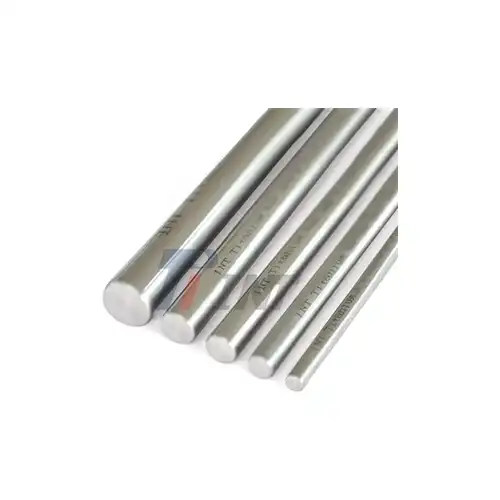
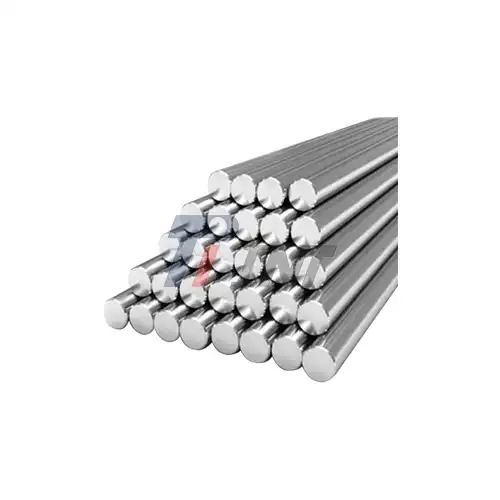
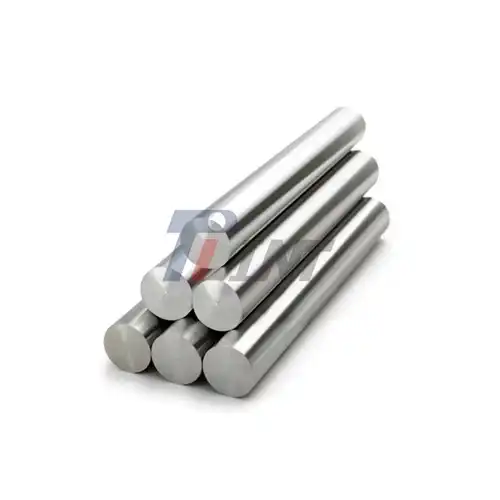
Baoji INT Medical Titanium Co., Ltd. was founded in 2003 by Mr. Zhan Wenge. He's worked with metal for more than 30 years. Bars, lines, plates, and formed items made of pure titanium, Ti-6Al-4V ELI, and titanium bar dental implants alloy come in a variety of shapes and sizes. Surgical tools, implants for bones and teeth, and implants for teeth are some of the ways it is used. Each item has been checked by ISO 9001:2015, ISO 13485:2016, and the EU CE to make sure it is safe. That way, the things we send to you will be safe. We only sell raw titanium parts; we don't sell medical parts that are already made.
How to Choose a Titanium Bar Supplier?
What to Evaluate in a Supplier?
Start with paper. When your quality team asks for them, include records of inspections and ultrasonic tests. These should say what kind of metal it is and what standard it must meet, like ASTM F136 or ISO 5832-3 for Ti-6Al-4V ELI. Metal scale, cracks, and other flaws on the surface can lead to scrap after cutting. Most of the time, the trash costs more than the stuff it's made of. You should be able to see the whole process, from the raw supplies to the shipping. Also, check the records of the sizes and shapes to make sure the things are correct. Ask about boxes that will keep the bar ends safe if you need to send them. Last, see how well the supplier can answer questions about technical matters. This is important because it takes more than one talk to get approved the first time.
Cost and Quotation Considerations
A titanium bar stock costs different amounts and prices depend on its grade, diameter, length, amount, surface state, need for checking, shipping, and packing. People in the US who want to buy something should also think about how much it will cost and how long it will take to ship. The real cost per finished part changes depending on how much waste there is and how much work needs to be done again. So, don't just look at the price per kilogram. Look at the total cost as well. The quote is clear and includes the weight, size, number of items, test reports, packaging, and terms of delivery. Before moving on to repeat or rolling orders, you should get examples and measure and ultrasound check them. After that, you need to place a test order. People who want to buy something but only need a few of many things should say so right away.
Is a Titanium Bar the Right Choice?
Another great thing about a titanium bar is that it is easy to clean and can be taken off and put back on. It also has cross-arch stabilization and a strong but light substructure. If the person only needs one piece of cosmetic work or a feel that is completely fixed, there may be a better option. This is also true when lab work needs to be kept simple or when there isn't a lot of room to put implants or fix teeth. Both the clinical and procurement teams should make sure that the implant is the right one for the job, that it fits passively, that the source is compatible, that new parts are available, that there is enough paperwork, and that the budget is met before making a decision. These things are less likely to go wrong when they are written down on a list.
Conclusion
If titanium bar dental implants are used to hold dentures in place, it might be easier to chew and speak. This smile still looks good even though there is a bar there. This is because of the way the teeth are arranged, the gums' shape, and how the face is supported. What happens depends on how healthy the bone is, where the implant is put in, how well it fits, and how well it is taken care of. Parts of the clinical process are imaging and CAD modeling, milling or casting, and the final proof. Some clamps are better at supporting the cross-arch than bars, but bars cost more and take longer to set up. Ti-6Al-4V and Ti-6Al-4V ELI can be used for these parts because they are strong, light, and don't rust. When you choose a service provider, you should think about things like the quality of the surface, the certificates of materials, and the follow-up.
FAQ
Can a titanium bar improve chewing?
Your teeth will stay in place better, which will make you feel better while you eat. Nothing a doctor or nurse can promise will work as long as bones are fit, healthy, and well taken care of.
Is a bar overdenture removable?
Most of the time, yes. The person takes it off to clean it. A set full-arch replacement, on the other hand, stays in place until the doctor takes it off.
What is the difference between milled and cast bars?
One thing you can change is its shape. Another thing you can do is make it the same and save a digital copy of it. For some lab work, casting works well as long as the team keeps a close eye on the fit and quality.
What should I send when I ask for titanium bar stock?
Send the number, location, grade of metal, standard, diameter, length, number, and any test results that are needed. When you have a list, it's faster to quote something.
Request a Quote for Titanium Bar Dental Implants Material
Dental implant companies can find titanium bar dental implants material at Baoji INT Medical Titanium Co., Ltd. We've been making metal bars for over 30 years. Our Ti-6Al-4V and Ti-6Al-4V ELI bars are approved by the EU CE, ISO 9001:2015, and ISO 13485:2016. To place an order, email export@tiint.com with the grade, size list, and number of bars you need.
References
1. The McGill Consensus Statement on Overdentures, International Journal of Oral & Maxillofacial Implants, 2002
2. The York Consensus Statement on Implant-Supported Overdentures, European Journal of Prosthodontics and Restorative Dentistry, 2009
3. Misfit of Implant Prostheses and Its Impact on Clinical Outcomes: Definition, Assessment and a Systematic Review of the Literature, European Journal of Oral Implantology, 2017
4. Mechanical Properties of Biomedical Titanium Alloys, Materials Science and Engineering A, 1998
5. ASTM F136, Standard Specification for Wrought Titanium-6Aluminum-4Vanadium ELI Alloy for Surgical Implant Applications, ASTM International, 2013
6. Osseointegrated Implants in the Treatment of the Edentulous Jaw, Scandinavian Journal of Plastic and Reconstructive Surgery, 1977