




Top 7 Titanium Bar Grades for Medical Device Manufacturing Needs


 2026-11-20 13:20:01
When sourcing titanium bar for medical use, selecting the right grade is one of the most consequential decisions a procurement manager makes. The wrong grade wastes machining hours, triggers audit failures, and delays shipments. This guide breaks down the seven grades that matter most to surgical instrument manufacturers — covering mechanical properties, machinability, compliance documentation, and real-world applications — so your next sourcing decision is grounded in evidence, not guesswork.
|
|
|
Understanding Titanium Bars for Medical Use
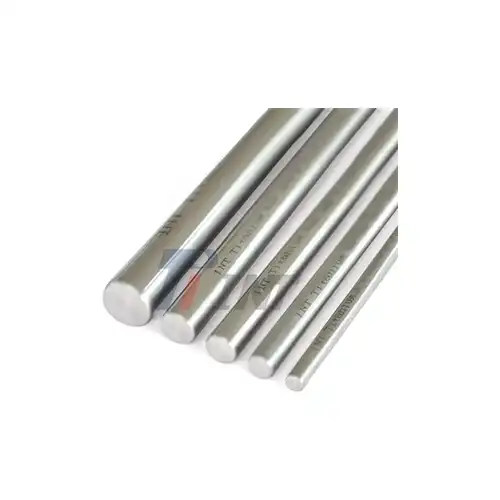
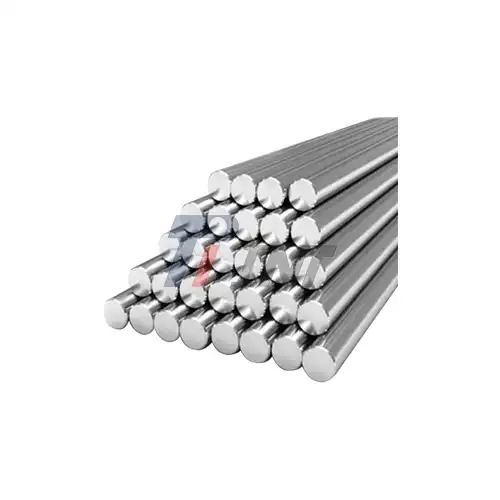
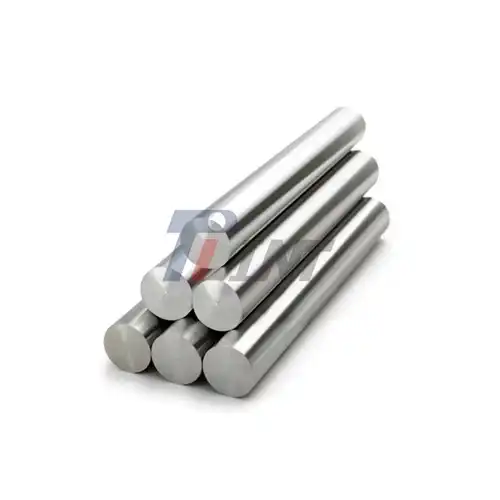
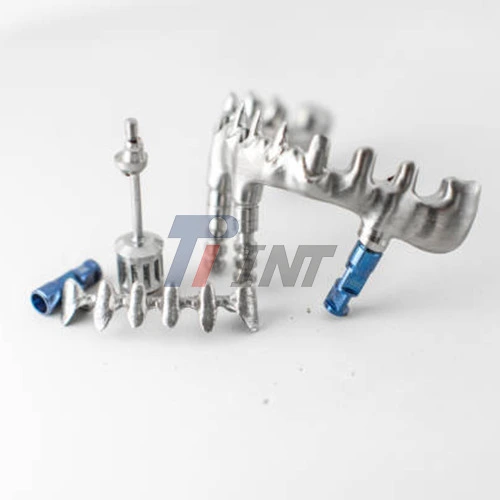
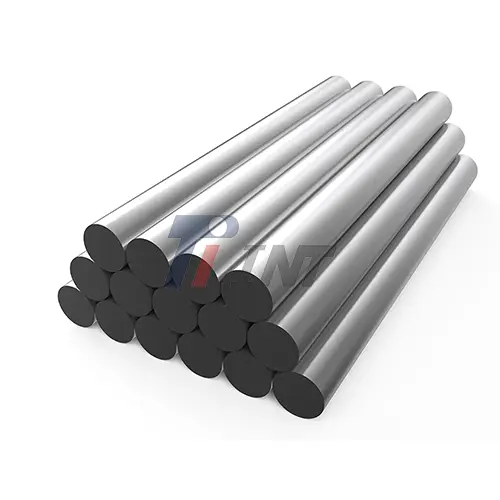
Precision-engineered circular stock called titanium bars for medical use is used as the main material for surgery tools, implant parts, and orthopedic devices. They are very different from industrial-grade materials because they are put through vacuum arc remelting (VAR) to get rid of high-density spots, and their microstructure can't have any brittle "alpha case" surface layers that could cause micro-cracks when they are loaded and unloaded repeatedly.
Why Grade Selection Drives Manufacturing Outcomes?
There are three things that tell you what grade goes in your workshop:
- Biocompatibility — means that the material shouldn't cause immune responses in human flesh. This is a condition backed up by ASTM F136 and ISO 5832. For CNC lathes, Swiss-type machines, and grinding lines to work properly, the diameter limits must be constant (ISO h7/h8/h9), and the surface must be rougher than 0.8 µm to stop chatter and tool wear.
- Machinability — CNC lathes, Swiss-type machines, and grinding lines each demand consistent diameter tolerances (ISO h7/h8/h9) and surface roughness below Ra 0.8 µm to prevent chatter and tool wear.
- Certification traceability — Every bar you ship must have a Mill Test Certificate (EN 10204 3.1) that lists the heat number, chemical composition, and mechanical test results. This is necessary because your customers will check it.
Regulatory frameworks like FDA 21 CFR Part 820 and ISO 13485:2016 need material tracking to be recorded from raw materials to finished devices. It is a basic condition for buying that you choose a supplier that provides heat-traceable material certificates.
Top 7 Titanium Bar Grades Used in Medical Device Manufacturing
If you know what each grade offers, you can avoid expensive changes in the middle of production. Here is a list of the grades that are most important to companies that make surgical instruments and implants.
Grade 1 (CP Ti, Lowest Strength) is the lightest and most malleable titanium bar for medical use that can be bought. It doesn't rust and can be cold-formed easily, so it can be used for non-load-bearing instrument parts and thin-walled tubing that needs to be flexible.
Grade 2 (CP Ti, Workhorse Grade) is the commercially pure grade that surgical instrument workshops buy the most of. It has a good resistance to corrosion and a moderate tensile strength (~345 MPa UTS). It also cuts easily on CNC machines. Grade 2 is often the main material used to make forceps, retractor handles, and tool shafts.
Grade 3 (CP Ti, Mid-Strength) is slightly stronger than Grade 2 but is still biocompatible. It fills a need for parts that need more strength than Grade 2 can give them without going up to an alloy grade.
Grade 4 (CP Ti, Highest CP Strength) has the most strength (UTS ~550 MPa) of all the widely pure grades. It is good at resisting corrosion and strong enough to handle entry pressure, which makes it useful for dental implant bodies and trauma fixation pins.
Grade 5 (Ti-6Al-4V) is the most common titanium alloy in the world, and its UTS is usually higher than 895 MPa. It is the standard material for rods and plates in spinal implants, bone plates, and joint replacement parts that need to be strong and light at the same time. The fact that it is about four times stronger than Grade 2 while only slightly heavier makes it the standard choice for load-bearing implant uses.
Grade 7 (Ti-0.15Pd) incorporates palladium to make it the most corrosion-resistant grade of titanium, even in reducing acid conditions. It works well for specific surgical tools that are used in places with strong chemicals used for sterilization, but it costs a lot more than regular grades.
Grade 23 (Ti-6Al-4V ELI) is the Extra Low Interstitial form of Grade 5. It has less than 0.13% oxygen and less than 0.25% iron. These stricter limits make Grade 23 the industry standard for fracture-critical implants like hip stems, femur nails, and anything else that is loaded and unloaded inside the body for a long time. This grade is governed by ASTM F136 and is only used for medical implants.
These seven grades cover almost every type of application in the manufacturing of surgical instruments and implants. If you know which grade your specific part needs, you won't over-specify (and spend too much) or under-specify (and have problems in the field).
Titanium Bars vs. Other Metals in Medical Applications
Stainless steel (316L) and cobalt-chromium alloys have been used to make surgical instruments for a long time, but titanium bar for medical use is becoming more popular for good reasons.
Titanium has a modulus of elasticity of about 110 GPa, which is about half of stainless steel's (200 GPa) and a lot less than cobalt-chromium's (230 GPa). This closeness to the flexibility of cortical bone (about 10–30 GPa) makes stress absorption in load-bearing implants less effective, which has been shown to lead to bone loss around prosthetics. Titanium is also not magnetic, which is important for medical devices that can be used with MRIs.
Titanium is about 45% lighter than stainless steel at the same amount of strength, which is useful in a workshop. This is a real way for companies that make instrument sets to set their products apart from others in a way that people will notice. Standard stainless steel doesn't resist corrosion as well in body fluids that are high in chloride. This lowers the risk of ion release over the lifetime of an implant.
The cost of the raw materials is the trade-off: titanium bars for medical use cost more than 316L stainless steel bars. But there is no good alternative for producers whose customers need titanium in particular, which is now the case in many foreign markets.
Procurement Guide for Medical Grade Titanium Bars
To find the best titanium bar for medical use, you need to do more than just find the cheapest ones. The following points show how instrument makers actually buy things when they're in competitive export markets.
Here are the practical things that procurement managers with a lot of experience look for in a supplier:
- Certification package — Make sure your supplier has ISO 9001:2015, ISO 13485:2016, and EU CE certification. These are the bare minimum of documents that your customers further down the line will ask for during audits. If a provider can't give you heat-traceable MTCs (EN 10204 3.1), it will take longer for your audit to be cleared.
- Grade and size inventory depth — Gr1, Gr2, Gr4, and Gr5/Gr23 should be in stock soon in a number of different diameters. Placing orders for multiple grades and diameters with a single approved source simplifies operations and lowers the cost of each shipment.
- Dimensional tolerance — Make sure the bars are ground to a h8 or h7 tolerance with Ra ≤ 0.8 µm. This level of accuracy is needed for Swiss-type lathes that make instrument shafts and thin implant parts to stay straight and keep guide bushings from wearing out.
- MOQ flexibility — Manufacturers of small to medium-sized instruments often need mixed-grade, mixed-diameter orders in smaller amounts than what large mills can handle. It is useful to have a supplier that can handle split-grade orders without affecting unit pricing.
- Lead time reliability — Reliable shipping windows of three to four weeks let you plan your production. Line stoppages are less likely to happen if suppliers show stable inventory and clear stock status.
When applied consistently to all possible sellers, these factors help procurement teams tell the difference between real partners and speculative traders. After checking a supplier against these standards, a trial order that shows how the machine actually works (chip formation, surface finish after grinding, and consistency of dimensions) is the only way to be sure that the datasheet is accurate in real life.
Ensuring Quality and Compliance in Medical Titanium Bars
Titanium bar for medical use quality control is not a simple "check the box" exercise. The following testing procedures keep implants from failing because of flaws in the raw materials:
Ultrasonic testing according to AMS 2631 Class A1 is the required volumetric inspection method for finding cracks, holes, and inclusions inside the material that can't be seen with the human eye. Inert gas fusion testing to check the chemical composition shows that the levels of hydrogen, nitrogen, and oxygen in the interstitial spaces are still within the ranges set by ASTM F136 (for Grade 23) or ASTM B348 (for CP grades). A 100x–500x microscope study of the structure proves the lack of alpha case and verifies the grain size against ASTM E112 standards, which say that implant-grade stock should be #5 or finer.
Before being sent out, every batch of titanium bar for medical use stock at Baoji INT Medical Titanium Co., Ltd. goes through these steps. INT has been making medical titanium materials since 2003 and has more than 20 years of experience. All of its products are certified by ISO 9001:2015, ISO 13485:2016, and EU CE.
Conclusion
Choosing the right grade of titanium is both a scientific and a business choice that has direct effects on the quality of the product, the amount of titanium bar for medical use that can be used, and the compliance with regulations. Grades 1–4 are used in commercially pure situations where a range of strength levels are needed. Grades 5 and 23 are used for load-bearing and fracture-critical implant needs, and Grade 7 is used for specific corrosion-resistance situations. When you choose a provider and make sure they can provide traceable paperwork, consistent standards, and flexible order structures, you protect both the continuity of production and your ability to pass an audit. The safest way to make sure that sourcing is stable and legal is to base purchasing decisions on verified material standards like ASTM F136, ISO 5832, and EN 10204 3.1.
FAQ
Q1: Why do titanium bars outperform stainless steel in implant applications?
A: Titanium bars for medical use stiffness of flexibility (about 110 GPa) is more like human bone than stainless steel's (about 200 GPa), which means it doesn't protect against stress as well. Titanium is also not magnetic, about 45% lighter, and less likely to rust in body fluids that are high in chloride. All of these qualities make long-term implants better for patients and make the devices last longer.
Q2: What is the practical difference between Grade 5 and Grade 23?
A: Grade 23 is like Grade 5 but with extra low interstitial. Because Grade 23 has stricter limits on oxygen and iron, it is more flexible and less likely to break. This is why ASTM F136 makes it the standard for implants that are likely to break. Grade 5 is still good for structural parts where maximum flexibility is not very important.
Q3: Which documentation must accompany a medical titanium bar shipment?
A: As per EN 10204 3.1, you must have a Mill Test Certificate. It needs to show what chemicals were used, the results of any mechanical tests, the heat number, and that it meets the requirements of the standard (ASTM B348, ASTM F136, or ISO 5832). ISO 13485:2016 and EU CE supplier certifications should be sent with the first order and updated every time the supplier is audited.
Q4: What tolerance should I specify for Swiss CNC machining?
A: For Swiss-type lathes, it is best to have an ISO h8 or h7 diameter tolerance and a surface roughness Ra of less than 0.8 µm. To keep narrow instrument shafts concentrically aligned and vibration-free while they are being machined, guide bushing systems need tight diameter uniformity.
Partner With Baoji INT Medical Titanium Co., Ltd. for Certified Titanium Bar Supply
Baoji INT Medical Titanium Co., Ltd. sells titanium bars for medical use that are ISO 13485:2016 and EU CE certified to companies around the world that make things for medical use. From Gr1 to Gr23, INT has what instrument shops in North America, Europe, and Asia need. They offer a flexible minimum order quantity (MOQ) for a range of specifications, EN 10204 3.1 MTCs on all shipments, and a standard lead time of 3–4 weeks. Email our team at export@tiint.com right now to ask for grade-specific examples or a reasonable quote.
References
1. ASTM International. ASTM F136: Standard Specification for Wrought Titanium-6Aluminum-4Vanadium ELI Alloy for Surgical Implant Applications. ASTM International, 2023.
2. International Organization for Standardization. ISO 5832-3: Implants for Surgery — Metallic Materials — Part 3: Wrought Titanium 6-Aluminium 4-Vanadium Alloy. ISO, 2021.
3. Geetha, M., et al. "Ti Based Biomaterials, the Ultimate Choice for Orthopaedic Implants." Progress in Materials Science, 2009.
4. Rack, H. J., and Qazi, J. I. "Titanium Alloys for Biomedical Applications." Materials Science and Engineering: C, 2006.
5. International Organization for Standardization. ISO 13485:2016: Medical Devices — Quality Management Systems — Requirements for Regulatory Purposes. ISO, 2016.
6. Niinomi, M. "Mechanical Biocompatibilities of Titanium Alloys for Biomedical Applications." Journal of the Mechanical Behavior of Biomedical Materials, 2008.