




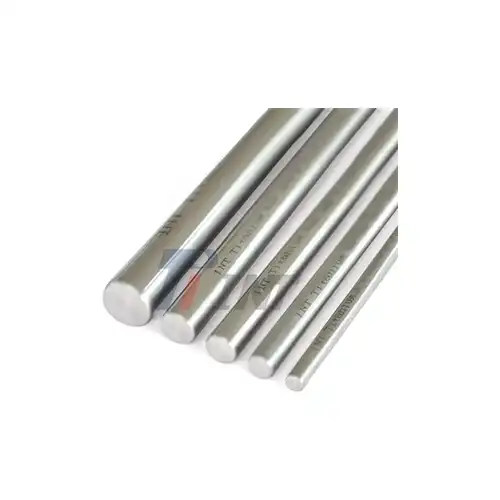
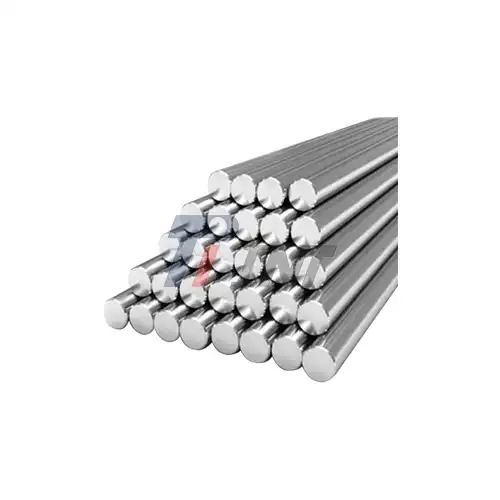
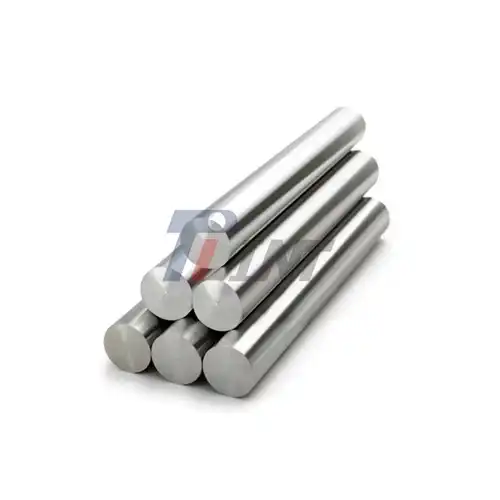
Why ERTi Titanium Welding Wire Matters in Medical Production


 2026-10-29 08:56:29
When surgical instrument manufacturers ask which filler metal delivers consistent weld quality, biocompatibility, and traceability in a single product, ERTi titanium welding wire keeps rising to the top. Classified under AWS A5.16, this high-purity titanium filler metal is engineered specifically for demanding clinical production environments. Its self-healing TiO₂ oxide layer resists chloride corrosion, its low density (~4.51 g/cm³) reduces component weight without sacrificing strength, and its chemistry is tightly controlled to prevent hydrogen embrittlement — three qualities that stainless steel wire simply cannot replicate in regulated medical manufacturing.
|
|
|
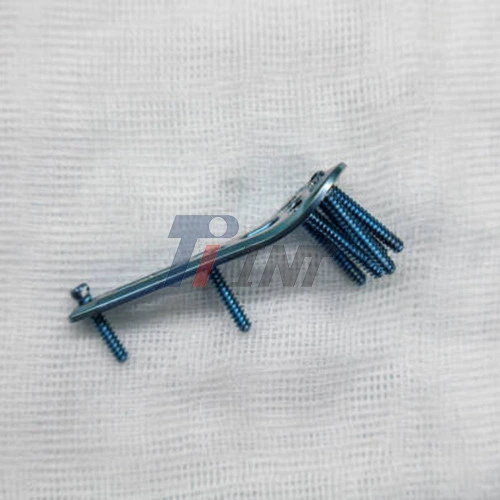
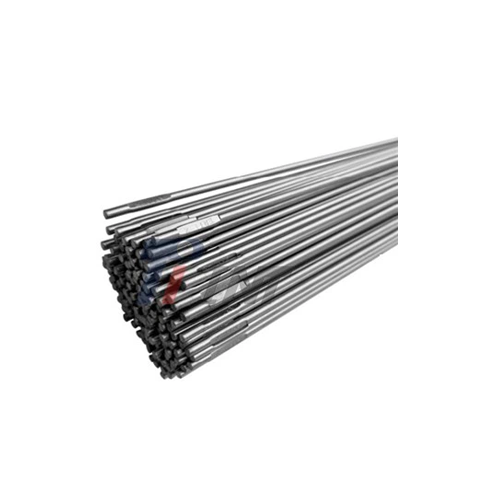
Understanding ERTi Titanium Welding Wire and Its Critical Properties
Composition and Grade Selection
Titanium filler metals are broken down by the AWS A5.16 specification into grades that are commercially pure (ERTi-1 through ERTi-4) and grades that are alloys (ERTi-5 and ERTi-23). The most common things that are put together in the Sialkot and Solingen workshops are medical tool shaft tubes and handles. ERTi-2 (Grade 2) is the best choice for these jobs. It has a tensile strength of about 345 MPa, is very flexible, and is very resistant to cleaning media like autoclave steam, EtO gas, and hydrogen peroxide plasma. ERTi-5 (Ti-6Al-4V) can hit more than 825 MPa and is good for load-bearing assemblies. The ELI version, on the other hand, limits oxygen to ≤0.13%, which makes fracture-critical parts stronger.
Biocompatibility and Corrosion Performance
Titanium's inactive oxide film forms in milliseconds after the surface is exposed and can fix itself. This means that even small surface wear during instrument polishing doesn't affect the metal's ability to resist corrosion in the long run. Independent studies published in Biomaterials confirm that commercially pure titanium does not cause any detectable cell death when it comes into contact with human tissue. Any filler metal used in instruments that go into the sterile field has to have this property.
Welding Techniques for ERTi Titanium Wire in Medical Production
TIG Welding Protocol and Shielding Gas Requirements
Gas Tungsten Arc Welding (GTAW/TIG) is still the best way to put together titanium instrument systems with ERTi titanium welding wire because the user can precisely control how much heat is put in. Anything less than 99.999% pure argon is dangerous because it could cause oxidation. The color of the post-weld bead tells you the most about the quality: a silver or light straw bead means the protection is good, while a blue or gray bead means alpha-case formation, which is a brittle oxygen-rich surface layer that needs to be ground down and re-welded. In workshops that follow the rules, it is common to use trailing shields and back-purging on hollow tube sections.
Handling and Contamination Prevention
Titanium fiercely takes in hydrogen, nitrogen, and oxygen above 500°C. All wire needs to be kept in a dry place in sealed plastic bags with silica desiccant. Clean nitrile gloves should be worn by operators when they touch wire. Cleaning the weld area with acetone right before welding gets rid of the drawing oils that add carbon to the weld pool. You have to follow these handling rules, because they make the difference between a weld that passes x-ray testing and one that doesn't.
Advantages of ERTi Titanium Welding Wire Over Alternatives
Purchasing managers often look at options to titanium filler metal, like ER308L or ER70S-6, which are made of stainless steel. There are three clear areas where the similarity is clear.
These are the main differences in results that matter on the factory floor:
- Corrosion resistance in sterilization cycles: ERTi Grade 2 wire produces welds that withstand repeated autoclave cycles at 134°C and aggressive chemical disinfectants without pitting. ER308L stainless welds show measurable chloride-induced crevice corrosion under identical conditions, documented in Journal of Materials Science: Materials in Medicine research.
- Biocompatibility traceability: Each spool of medical-grade titanium filler carries a Mill Test Certificate (MTC) per EN 10204 3.1 with traceable heat numbers, enabling full material traceability from raw melt to finished instrument — a requirement in FDA 21 CFR Part 820 and ISO 13485:2016 audits.
- Weight-to-strength efficiency: The high strength-to-weight ratio of titanium alloy welds reduces the finished instrument's overall mass, which directly improves surgeon ergonomics during extended procedures — a selling point that instrument OEMs can communicate to hospital procurement committees.
When end-customers do supplier checks on ERTi titanium welding wire, these benefits directly lead to fewer rejected instruments, better audit trails, and more defensible material paperwork. For companies that want to sell and compete on both price and quality, the lack of paperwork about titanium and stainless steel filler metals is getting harder to ignore.
Applications of ERTi Titanium Welding Wire in Medical Production
Surgical Instrument Assembly and Repair
Titanium welding wire is mostly used in CNC and forge-based instrument shops to join shaft assemblies with more than one part, like laparoscopic instrument shafts where an inner tube is welded to an outer housing, and to fix small flaws found in titanium parts during final inspection. From small needle-holder tip repairs to combining structural tubes, the wire diameter range of 0.8 mm to 6.0 mm, which can be bought from specialized sources, covers it all. A polished surface finish on the wire gets rid of surface oxides that would otherwise make the wire porous.
Implant-Adjacent Tooling and Jig Fabrication
Titanium filler metal is used for more than just the tool itself. It is also used to make surgery guide jigs and positioning fixtures, where there is a known risk of material contamination at the operating site. When you use the same grade wire as the base material, there is no galvanic rust risk at the weld joint. This is something that ISO 13485-certified quality management systems point out more and more during internal checks.
How to Procure High-Quality ERTi Titanium Welding Wire for Medical Production?
There's more to picking the right titanium welding wire provider than just comparing prices per kilogram. The supplier's ability to handle certifications, speed with paperwork, and willingness to split orders with multiple specifications are all important factors.
The following requirements should be met by a trustworthy company that makes ERTi titanium welding wire:
- Dual certification: ISO 9001:2015 and ISO 13485:2016 certification are the baseline. EU CE marking on the material further supports export clearance to European end-customers.
- Full MTC documentation: Heat-traceable mill certificates issued at shipment — not after request — prevent delays at customs and during customer audits.
- Flexible MOQ: Medical instrument shops rarely order a single diameter. A supplier who accepts multi-specification split orders with short lead times (3–4 weeks standard) protects monthly production schedules.
- Sealed vacuum packaging: Each spool or coil must be vacuum-sealed to prevent moisture absorption during ocean freight, which can span 3–6 weeks depending on destination port.
Full MTC documentation: Heat-traceable mill certificates are given out at shipping, not after a request. This keeps customs and customer checks from taking too long.
Conclusion
ERTi titanium welding wire is not a common item; it is an important process material whose grade, purity, and paperwork have a direct effect on the quality of instruments, compliance with audits, and customer trust. Surgical instrument makers need biocompatibility, corrosion resistance, and consistent welds in order to compete in regulated export markets. Commercially pure ERTi Grade 2 wire meets these needs. The biggest supply chain risk in making titanium instruments can be eliminated by choosing a certified supplier with clear paperwork that can be tracked and flexible order fulfillment. Everything that leaves the workshop is shaped by the materials that were chosen at the purchase stage.
FAQ
Q1: What grades of ERTi wire are most relevant for surgical instrument manufacturing?
A: ERTi-2 (Grade 2) is the standard for putting together and fixing instrument shafts because it has the right amount of flexibility, resistance to rust, and accuracy in the weld. ERTi-5 (Ti-6Al-4V) is good for structural or load-bearing joints that need a stronger tensile strength. For a good weld bond, make sure the filler grade is always the same as the base material.
Q2: Why does weld bead color matter during titanium TIG welding?
A: The color of the beads shows exactly how well the shielding gas is working. An unoxidized silver bead shows that the fusion is clean. A blue or gray bead means that alpha-case formation has begun. Alpha-case is a thin, oxygen-rich layer that weakens the structure and needs to be removed before it can be re-welded.
Q3: How should titanium welding wire be stored to prevent contamination?
A: Keep wire in a dry place by putting it in sealed plastic bags with desiccant. When there is moisture in the weld pool, hydrogen is released, which creates holes that can't be seen with an x-ray. Do not leave open spools overnight in a damp workshop.
Q4: What documentation should accompany each shipment?
A: For ISO 13485 compliance and export customs clearance, you need a Mill Test Certificate (MTC) according to EN 10204 3.1 with heat numbers that can be tracked. During customer supplier audits, certificates that confirm ISO 9001:2015, ISO 13485:2016, and CE marking give customers even more peace of mind.
Partner with Baoji INT Medical Titanium Co., Ltd. for Your ERTi Wire Supply
Since 2003, Baoji INT Medical Titanium Co., Ltd. has sold approved medical titanium products to instrument makers around the world. Because we are a reliable source for ERTi titanium welding wire, we offer Grade 2 and Grade 5 wire from 0.8 mm to 6.0 mm, full MTC paperwork, vacuum-sealed packaging, and flexible multi-specification orders that are shipped in 3–4 weeks. To get a quote or a sample of our material, please email our export team at export@tiint.com right now.
References
1. Biomaterials — Titanium and Titanium Alloys: Fundamentals and Clinical Applications, Elsevier, 2003.
2. Journal of Materials Science: Materials in Medicine — Corrosion Behavior of Titanium and Its Alloys in Biomedical Environments, Springer, 2012.
3. American Welding Society — AWS A5.16/A5.16M: Specification for Titanium and Titanium Alloy Welding Electrodes and Rods, AWS, 2021.
4. ASTM International — ASTM B863: Standard Specification for Titanium and Titanium Alloy Wire, ASTM, 2020.
5. International Organization for Standardization — ISO 13485:2016: Medical Devices — Quality Management Systems, ISO, 2016.
6. Journal of Biomedical Materials Research — Biocompatibility Assessment of Commercially Pure Titanium in Surgical Instrument Applications, Wiley, 2018.