




Gr1 Titanium Square Disc Benefits for Aerospace and Medical Parts


 2026-11-23 10:33:33
A Gr1 titanium square disc offers low density, strong corrosion resistance, high ductility, and nonmagnetic behavior, which suit selected aerospace and medical parts. Grade 1 is the softest commercially pure titanium, so it forms and machines more easily than stronger grades. At about 4.51 g/cm³, it is roughly 40% lighter than common stainless steel. Its stable oxide film protects against moisture, saline solutions, and many chemicals. It fits non-structural aerospace hardware, laboratory equipment, and medical applications where biocompatibility and cleanability matter more than peak strength. Below, I cover the definition, benefits, material comparisons, specifications, and sourcing steps.
|
|
|
What Is a Gr1 Titanium Square Disc and Why Does It Matter?
Definition and Shape Options
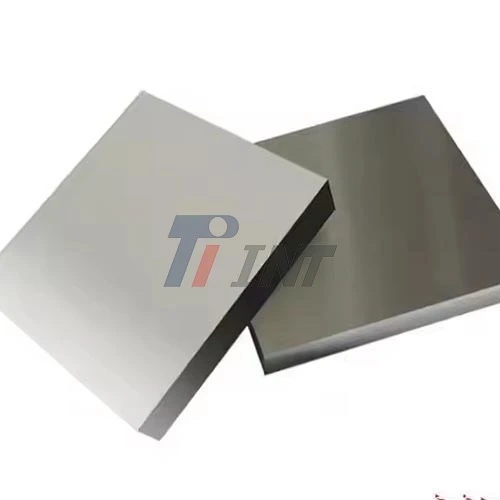
There is no universally accepted Gr1 titanium square disc. This term can mean a flat blank, a square-cut plate, or a molded form with holes, slots, chamfers, or stepped pieces. It is made of Grade 1 commercially pure titanium, which is also called UNS R50250. Because the shape changes from project to project, suppliers may quote different things that have the same name. If you want to be sure, write down the length, width, thickness, corner radius, flatness, and edge state. You don't have to guess; a drawing shows you whether you need a simple blank to work on later or a more complicated shape.
Composition and Core Properties
Grade 1 is the least oxygen- and iron-safe grade of all the grades of unalloyed titanium. ASTM B265 says that 0.18% oxygen, 0.20% iron, 0.08% carbon, 0.03% nitrogen, and 0.015% hydrogen are the most common amounts. The low amount of impurities in the grade makes it easy to shape. The ASTM guidelines say that the tensile strength must be at least 240 MPa and the stretch must be at least 24%. It's 4.51 g/cm³ dense, and it melts at about 1670°C. When it's in the air, it forms a solid film of titanium dioxide. Our product data lists high purity as a key feature, along with uniform composition and fine grain structure.
Why Standards and Drawings Come First
Before you place your order, name the standard that applies. It talks about titanium plate, sheet, and strip in ASTM B265 and ASTM F67. It also talks about medical devices made of pure titanium. Your choice will depend on what you want to use it for and how good the device is. Besides the standard, there should be a drawing, rules for inspection, and a delivery condition, such as annealed. Ask for heat or lot numbers and mill test certificates at the start to make sure you can track the goods. We have ISO9001:2015, ISO13485:2016, and the EU CE mark on all of our goods. Titanium materials are also for sale to people who test their own devices. You can avoid extra work and delays by taking care of these details early on.
Key Benefits for Aerospace and Medical Parts
Aerospace Advantages
When it comes to test equipment, fixtures, brackets, and sensor housings, even small weight savings can add up quick. A Gr1 titanium square disc is perfect for these non-structural jobs because it has a density of about 4.51 g/cm³, as opposed to about 7.9 g/cm³ for standard stainless steel. Water and salt don't hurt the oxide film, and since it's not magnetic, it can be used near instruments that are easily broken. Because it is so flexible, the material can also be cut and shaped while it is still cold. Aside from strong fixtures, you need sharp tools, heat that can be controlled, and firm fixturing. Because Grade 1 titanium isn't as strong as alloyed titanium, it needs a separate review for buildings that need to be safe.
Medical Advantages
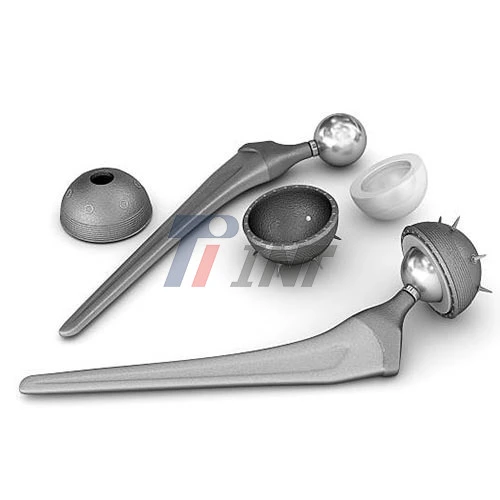
Grade 1 is often used for dental, medical, lab, and diagnostic work. Commercially pure titanium is biocompatible; Elias and colleagues wrote about this in JOM (2008). Once the whole plan is approved, it will last a long time because it is resistant to water, salt, and cleaning products. Make sure the surface is clean, that there are no burrs on it, and check to see if the lot can be tracked. For implants that hold weight, stronger alloys are usually used. Grade 1 is best for things that need to be able to be shaped, like craniofacial plates and mesh. An item certificate isn't enough to prove that a device is legal. Review by regulators and biologists are still up to the company that makes the device.
Durability and Fatigue Considerations
A lot of people want to know how long the gadget will last. From what we know about the product, it has a fine grain structure and can handle being stressed over and over again for a long time. The elastic modulus of about 103 GPa is roughly half that of stainless steel at around 193 GPa, which gives useful flexibility. The least strong grade of titanium is Grade 1, but its strength-to-weight ratio is about the same as that of hot austenitic stainless steel. For this reason, it works better for designs with low loads and corrosion than for ones with high loads. Engineers should test the end design because the surface state, the notches, and the way it was treated can also change the results of fatigue tests. The best place to start is with a blank that is clean and has no mistakes.
Gr1 Titanium Square Disc vs. Other Materials
Versus Grade 2 Titanium
The next level up is Grade 2. Tensile strength is at least 345 MPa, while Grade 1's is only 240 MPa. It can hold up to 0.25% oxygen. Grade 1 is better at being cold-shaped and tough, which makes it better for deep drawing and tight turns. Grade 2 is often the best choice when a design needs to be stiffer or stronger. This grade makes it less likely that the part will break when it needs to be bent very hard. First the grade should be matched to the minimum yield strength on the drawing, then the material. That's how it should be done.
Versus Stainless Steel
You can still find a lot of parts made of stainless steel. It is more rigid, cheaper, and easy to work with. Titanium earns its price in places where it needs to be strong, light, and resistant to corrosion. It weighs 4.51 g/cm³, which is about 40% less than stainless steel. Also, chloride doesn't damage titanium's oxide film like it can some types of stainless steel in salty water. Titanium isn't magnetic either, so it can be used in things that are near strong magnetic fields. Weigh not only the price per kilogram, but also the total cost. For the extra money spent on the materials, they are worth it because they are lighter, last longer, and need fewer repairs.
Versus Ti-6Al-4V
It takes about 895 MPa of force to pull apart Grade 5 Ti-6Al-4V. This is four times the minimum strength for Grade 1. People who buy forgings usually ask for alloy billets like Ti-6Al-4V ELI for work that needs to hold weight because they are strong enough for structural aircraft parts. It costs more, is less flexible, and is harder to machine because of this. There are also various acceptable ways to do things. If you need to shape, weld, or corrode Gr1 titanium square disc parts, Grade 1 is still the best choice. If someone wants to make a choice, they can look at both pure titanium and Ti-6Al-4V ELI titanium from the same place. For design and certification purposes, make sure that any replacement meets the terms.
Gr1 Titanium Square Disc Specifications, Customization, and Applications
Specifications to Define
It is clear what the length, width, thickness, holes, corner radius, flatness, squareness, edge condition, and surface finish are after reading the specification. It's easy to figure out how much something weighs: just multiply its length, width, and thickness. A 100 mm x 100 mm x 10 mm disc has a volume of 100 cm³ and weighs about 451 g at 4.51 g/cm³. Compare the number with what the seller says. You need to include the standard, such as ASTM B265 or ASTM F67, as well as the conditions of delivery and the inspection's scope. It is very important that the disc feeds cutting or making lines that have very tight tolerances and consistent sizes.
Customization and Processing
When custom sizes are used, less waste is made because the blank is made closer to how it will be used. Some common ways to get things done are to saw cut, laser cut, waterjet cut, CNC machine, grind, clean, and deburr. Each one changes the tolerance, the sharpness of the edge, the scrap, and the wait time. The edge may need to be cleaned after using a laser to cut. The edge doesn't get hot when you use a waterjet to cut, but it might need to be finished. Titanium works with oxygen when it's very hot, so it's important to keep the process under control to get a good surface. We can make our products in a number of different sizes and styles. Before we start making them, we look at your drawing and think of all the ways we can make them.
Where These Discs Are Used
Heavy-duty bolts, study clamps, sensor gear, and fixing parts that aren't structural are made of Grade 1. As long as the material and processing are right, it can be used in dental and surgical tools, instrument parts, and diagnostic tools in the lab and in the medical field. It is used in chemical processing equipment, heat exchanger parts, vacuum systems, and marine plates because it doesn't rust in salt water. Most of the time, constant service is a good idea up to about 425°C (800°F). It also matters how heavy something is, how concentrated the chemicals are, how well it is sterilized, how smooth the surface is, and how it reacts when it comes into contact with other metals.
How to Select a Supplier and Prepare Your RFQ
Evaluating a Supplier
Ask for approved Grade 1 material, heat or lot numbers, mill test certificates, chemical and mechanical test results, measurement reports, and certificates of conformity. Find out which steps are done in-house and which are done by people from outside the company. This changes the grade and makes it harder to keep track of them. Formed by Mr. Zhan Wenge in 2003, Baoji INT Medical Titanium Co., Ltd. has more than 30 years of experience in the metal business. We sell pure titanium, Ti-6Al-4V ELI, bars, wires, plates, and Gr1 titanium square disc things that can be forged. We've had some customers for more than 10 years, and our products are approved by ISO9001:2015, ISO13485:2016, and EU CE.
Building a Complete RFQ
It takes less time to quote when you make a full request. Explain the product's grade, standard, shape, size, tolerances, flatness, surface finish, edge treatment, quantity, annual demand, certification needs, packaging, and where it will be sent. When you see holes, slots, or shapes, add a plan or CAD file. Find out what sizes and thicknesses can be made, what the lead time is, what the inspection documents are, and how much experience the company has working with medical or aerospace customers. Write down the Incoterms and the payment terms as well. If the package is going to the US, write down the address or port of delivery. A detailed RFQ cuts down on the number of times you have to explain things and the chance that the specs will change after production starts.
Is Gr1 the Right Choice?
Gr1 titanium square disc is light, won't rust, shapes well, isn't magnetic, and can be cut to size. It is a good choice. The benefits make it worth the cost for parts used in the lab, in medicine, in business, and in non-structural aircraft. You should pick a different grade if the design needs a higher tensile or yield strength, better resistance to wear, more structural load capacity, stability at high temperatures, or certain fatigue properties. Before giving the go-ahead for a switch, you should check its load, safety factors, temperature, chemical exposure, joining, machining, legal papers, and customer qualification requirements. We'll look at your drawing and let you know which grade is better.
Conclusion
A Gr1 titanium square disc is a piece of flat or polished commercially pure titanium. It's useful because it's not dense, doesn't rust, can be shaped, and isn't magnetic. As long as the full design is okay, these properties can be used for non-structural parts in spacecraft, lab gear, and some medical uses. Which material is best is based on the weight, the weather, the needs of the project, and the total cost. Grade 1 titanium isn't as strong as Grade 2 or Ti-6Al-4V, and stainless steel costs less at first. When there are clear specifications, the right ASTM standard, records of traceability, and a full RFQ, quotes are more likely to be correct. If you want to use them for anything safety-critical or managed, they need to be approved by the maker individually.
FAQ
What is the density of a Gr1 titanium square disc?
Density is about 4.51 g/cm³. Use this number to get a rough idea of how much it weighs. Once you have the number, compare it to the material data from the supplier and the final drawing dimensions.
Is Grade 1 titanium suitable for aerospace and medical parts?
It can be used for some hospital chores, lab tools, and some non-structural aerospace parts. For designs that need to carry weight or be safe, stronger alloys or more tests are needed. It is still up to the person who makes the device to get license from the government.
Can I order custom sizes?
Yes. Our goods come in many different sizes and shapes. We will go over the specifics with you once you send us your drawing along with the sizes, tolerances, surface finish, and number of items you need.
What affects price and lead time?
It's important to think about things like size, amount, licensing needs, tolerances, handling steps, and where the goods will be sent. Telling us what you need each year helps us make plans. We can give you an exact price and a fair shipping time if you send us a full RFQ.
Request a Gr1 Titanium Square Disc Quotation from Baoji INT Medical Titanium Co., Ltd.
Looking for a Gr1 titanium square disc supplier who understands the requirements of aerospace and medical materials? Baoji INT Medical Titanium Co., Ltd. is certified by ISO9001:2015, ISO13485:2016, and the EU CE. They sell titanium products in different sizes and shapes. Send an email to export@tiint.com with your drawing, grade, standard, measurements, tolerances, and yearly demand to get a material review, price, MOQ, and ship-by date estimate.
References
1. ASTM International, ASTM B265 Standard Specification for Titanium and Titanium Alloy Strip, Sheet, and Plate, 2020
2. ASTM International, ASTM F67 Standard Specification for Unalloyed Titanium, for Surgical Implant Applications, 2013
3. ASM International, Materials Properties Handbook: Titanium Alloys, 1994
4. ASM International, Titanium: A Technical Guide, 2nd Edition, 2000
5. Wiley-VCH, Titanium and Titanium Alloys: Fundamentals and Applications, 2003
6. JOM, Biomedical Applications of Titanium and Its Alloys, 2008