




Gr3 Titanium Wire vs Grade 5: Which Is Best for Your Project?


 2026-10-14 08:52:39
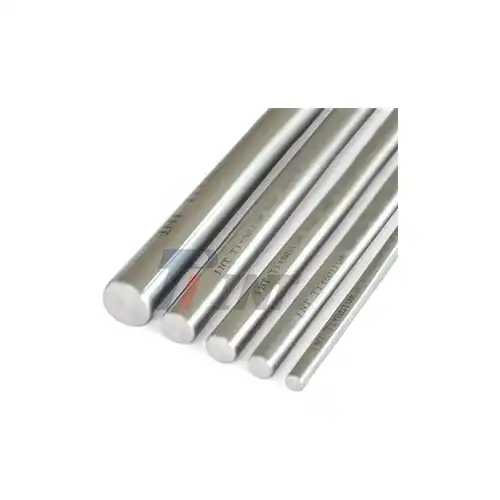
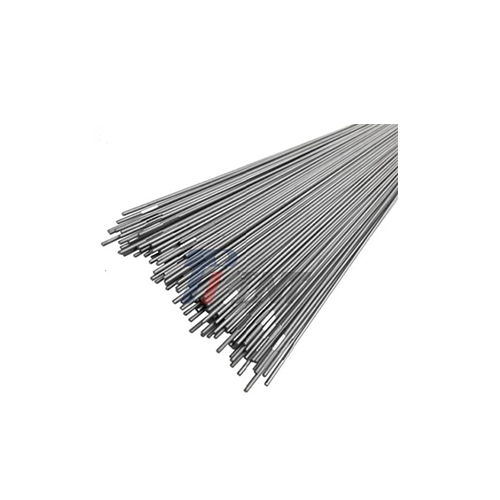
When surgical instrument manufacturers evaluate titanium wire for suture wire blanks, orthodontic preforms, or elastic instrument components, the grade selection directly shapes machinability, certification compliance, and margin. Gr3 titanium wire — commercially pure, ASTM B863-classified, UNS R50550 — delivers a minimum tensile strength of 450 MPa alongside exceptional corrosion resistance and full biocompatibility. Grade 5 (Ti-6Al-4V) pushes tensile strength beyond 900 MPa through its aluminum-vanadium alloying. Neither grade is universally superior; the right answer depends on your production environment, end-use regulatory pathway, and cost structure.
|
|
|
Understanding Gr3 and Grade 5 Titanium Wires
Composition and Core Mechanical Differences
Gr3 is the purest type of titanium that can be bought in stores. A higher interstitial oxygen content of up to 0.35 wt% according to ASTM B863 makes its yield strength much higher than Gr1 and Gr2. It also keeps the single-phase alpha microstructure that makes CP titanium so resistant to rust. This makes a wire that can stand up to oxidizing acids, wet chlorine environments, and the chemistry of body fluids without losing its surface.
Grade 5, which is called Ti-6Al-4V, is an alpha-beta alloy with two phases. The 6% aluminum keeps the alpha phase stable, and the 4% vanadium keeps a beta-phase part. Together, they raise the minimum tensile strength above 895 MPa, which is about twice as high as Gr3. However, this comes at a cost to the ability to cold-form and the cost of the raw materials.
Diameter Range and Sizing Flexibility
It is common for CP Grade 3 wire to be drawn to diameters ranging from 0.1 mm to 6.0 mm. This means that it can be used for suture wire blanks, orthodontic archwire stock, and fine instrument spring elements. Grade 5 wire comes in a similar range of diameters, but it needs to be annealed more quickly so that it stays flexible enough to be used in later shaping steps.
Practical Applications: When to Choose Gr3 vs Grade 5 Titanium Wire
Where CP Grade 3 Excels
Manufacturers of instruments in Sialkot, Solingen, and other places often choose CP Grade 3 wire for ligature wire, suture wire blanks, and elastic parts because it meets the biocompatibility requirements of ISO 10993 without needing any extra alloy-content declarations. Gr3 titanium wire is also favored for these applications. Because it can be welded as an ERTi-3 filler according to AWS A5.16, it is also good for thin-section instrument systems that need to keep metal contamination to a minimum.
Here are the main situations in which Gr3 is the best option:
- Surgical suture wire and ligature stock — ISO 5832-2 compliance, full biocompatibility, and smooth draw surface combine to meet OEM audit requirements without supplemental material justification.
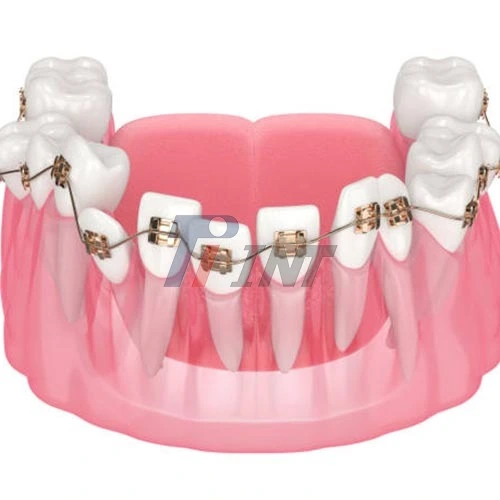
- Orthodontic archwire preforms — The moderate elastic modulus (~103 GPa) and bright-finish surface accept subsequent cold-drawing and straightening without micro-cracking.
- Instrument elastic elements — Spring-tension components in retractors and clip appliers benefit from the grade's fatigue resistance in a corrosive sterilization environment.
Because of these qualities, Gr3 wire is very appealing to manufacturers whose customers need certified, traceable CP titanium paperwork with every shipment.
Where Grade 5 Takes Priority
When it comes to high-load structural wire forms like orthopedic cable systems, aircraft fastener stock, and high-cycle fatigue uses, Grade 5 wire has clear benefits over CP grades because it is stronger. It is the standard for wire rope assemblies in load-bearing implant systems because it doesn't wear easily and doesn't worry. That being said, Grade 5 costs more per kilogram, needs ELI (Extra Low Interstitial) qualification for many implant pathways, and is harder to cold-form and polish afterward.
Comparative Analysis: Gr3 Titanium Wire vs Other Wire Materials
Knowing where Gr3 stands in comparison to other materials helps buying managers make decisions that they can back up. When buying surgical instruments, the table below shows the main trade-offs between different grades and material families. The table shows the minimum tensile strength, biocompatibility, cold-formability, and relative cost for each grade and material family.
For example, Gr3 titanium wire is one of the CP grades under discussion: Gr2 CP Titanium has a tensile strength of 345 MPa, which means it is excellent, good, moderate, or low. Gr3 CP Titanium has a tensile strength of 450 MPa, which means it is excellent, moderate, or moderate. Grade 4 CP Titanium has a tensile strength of 550 MPa, which means it is excellent, moderate, or low. Grade 5 (Ti-6Al-4V) has a tensile strength of 895 MPa, which means it is good (ELI for implants).
| Material | Min. Tensile Strength | Biocompatibility | Cold-Formability | Relative Cost |
|---|---|---|---|---|
| Gr2 CP Titanium | 345 MPa | Excellent | High | Low |
| Gr3 CP Titanium | 450 MPa | Excellent | Good | Moderate |
| Gr4 CP Titanium | 550 MPa | Excellent | Moderate | Moderate |
| Grade 5 (Ti-6Al-4V) | 895 MPa | Good (ELI for implants) | Lower | Higher |
| 316L Stainless Steel | 485 MPa | Acceptable | High | Low |
Stainless steel is cheaper as a raw material, but it has a risk of nickel ions leaking out when sterilized for a long time, which is becoming a bigger problem for CE-marked instruments. Gr2 wire is cheap for low-stress uses, but it often doesn't meet the minimum yield targets for spring and elastic parts. Gr3 fills in that gap without the forming problems or higher price of Grade 5. It is therefore the best grade for buying instrument wire when biocompatibility documentation is a must.
Procuring Gr3 Titanium Wire: Tips for B2B Buyers
Supplier Qualification Checklist
When you buy CP Grade 3 wire from a supplier that hasn't been thoroughly screened, you leave gaps in the chain of custody that become clear during factory audits by customers or reviews of CE technical files. Before agreeing to work with a supplier, buyers should make sure of the following:
- Heat-traceable mill certificates — Every lot must carry a certificate of compliance referencing the specific heat number, chemical analysis per ASTM B863, and mechanical test data per ASTM E8.
- ISO 13485 quality management certification — Confirms the supplier operates under a medical-device-grade quality system, not merely ISO 9001.
- Surface condition declaration — Specify bright/polished or acid-pickled finish upfront; surface condition directly affects downstream machinability and eddy-current test outcomes.
- MOQ flexibility — Multi-specification orders with small per-SKU quantities are standard in instrument manufacturing. Confirm the supplier accepts split-lot orders without surcharges that erode already thin margins.
Every lot needs to have a heat-traceable mill certificate that lists the specific heat number, chemistry analysis according to ASTM B863, and mechanical test results according to ASTM E8, particularly for Gr3 titanium wire. ISO 13485 quality management certification—This proves that the supplier uses a quality system for medical devices in addition to ISO 9001.
Lead Time and Logistics Considerations
Qualified suppliers also confirm the wire's oxygen and nitrogen content through inert gas fusion testing. This gives customers peace of mind that the wire won't break when it's being spooled or formed on a CNC machine.
Making the Right Choice: Which Titanium Wire Grade Suits Your Project?
The choice of who to hire comes down to three separate evaluations. Mechanical load: Grade 5 is the best choice if the application needs a tensile strength of more than 600 MPa. What about biocompatibility and the regulatory path? CP titanium grades, like Gr3, are easier to confirm when ISO 10993 or ISO 5832-2 compliance is required without alloy-element statements. Budget and ability to be machined: Grade 3 gives consistent cutting, grinding, and finishing results across normal CNC toolpaths, while Grade 5 needs different feeds, speeds, and coolant strategies that make the processing more expensive.
For most medical tool wire uses, like elastic parts, suture blanks, and orthodontic stock, Gr3 offers the best mix of strength, biocompatibility, machinability, and quality that can be proven, all at a price that keeps production profits high.
Conclusion
Choosing between Gr3 titanium wire and Grade 5 titanium wire depends on the specific balance of strength, biocompatibility, formability, certification, and production cost. Gr3 offers reliable mechanical performance, excellent corrosion resistance, and strong compatibility with medical and surgical applications, while Grade 5 is better suited to high-load applications requiring greater tensile strength. For B2B buyers, reviewing material standards, traceability, surface condition, quality certifications, and supplier capabilities is essential to ensure the selected titanium wire meets both technical and regulatory requirements.
FAQ
How does Gr3 differ from Gr2 titanium wire mechanically?
Gr3 contains higher interstitial oxygen — up to 0.35 wt% versus 0.25 wt% for Gr2 — which raises minimum tensile strength from 345 MPa to 450 MPa. Gr2 retains slightly higher elongation, making it better for deep-draw forming, while Gr3 suits applications needing greater yield rigidity, such as instrument spring elements.
Is CP Grade 3 wire weldable?
Yes. Classified as ERTi-3 filler under AWS A5.16, it welds reliably to CP titanium base metals using TIG or plasma processes under full inert-gas shielding. Joint strength is consistent and suitable for thin-section instrument assemblies.
What certifications should accompany a titanium wire shipment for instrument manufacturing?
Buyers should receive a heat-traceable mill certificate (ASTM B863 chemical and mechanical compliance), an ISO 13485-backed quality declaration, and, where applicable, a CE material certificate to support customer factory audits.
Why is Grade 5 not always the default choice despite its higher strength?
Higher raw material cost, reduced cold-formability, and the requirement for ELI qualification in direct-contact implant pathways make Grade 5 unsuitable for many instrument wire applications where moderate strength and clean biocompatibility documentation are the governing criteria.
Can small-batch, multi-specification orders be accommodated?
Reputable certified suppliers support split-lot, multi-diameter orders with individual heat-traceable certificates per SKU, which is essential for instrument manufacturers running mixed-specification production lines.
Source Your Gr3 Titanium Wire from a Certified Manufacturer
Since 2003, Baoji INT Medical Titanium Co., Ltd. has sold certified CP and alloy titanium wire to instrument makers around the world. We are a Gr3 titanium wire provider that can work with diameters from 0.1 mm to 6.0 mm. Every package comes with full ISO 13485 and CE paperwork. Standard lead times of 3–4 weeks and flexible MOQs will keep your production schedule safe. You can email our team at export@tiint.com or go to inttitanium.com to get a sample material license or a quote.
References
1. ASTM International. ASTM B863: Standard Specification for Titanium and Titanium Alloy Wire. ASTM International, 2023.
2. American Welding Society. AWS A5.16/A5.16M: Specification for Titanium and Titanium Alloy Welding Electrodes and Rods. AWS, 2020.
3. International Organization for Standardization. ISO 5832-2: Implants for Surgery — Metallic Materials — Part 2: Unalloyed Titanium. ISO, 2018.
4. Donachie, M. J. Titanium: A Technical Guide, 2nd ed. ASM International, 2000.
5. International Organization for Standardization. ISO 10993-1: Biological Evaluation of Medical Devices — Part 1: Evaluation and Testing within a Risk Management Process. ISO, 2018.
6. Lutjering, G., & Williams, J. C. Titanium, 2nd ed. Springer, 2007.