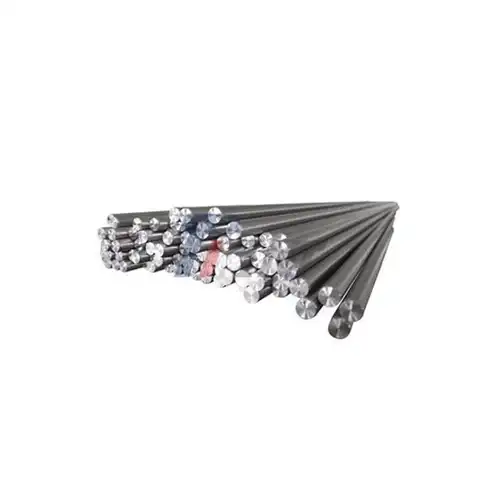

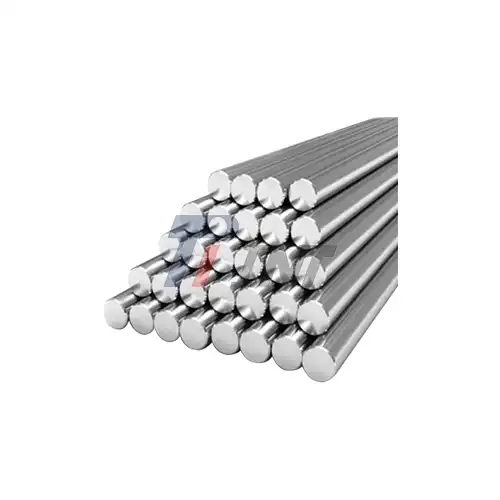
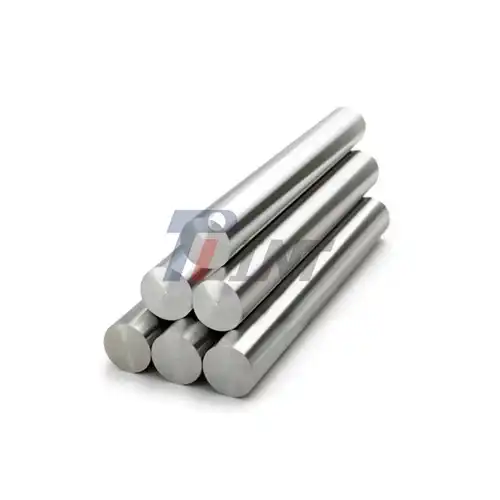
OEM Medical Titanium Bar Solutions for Implant Makers


 2026-10-13 09:20:03
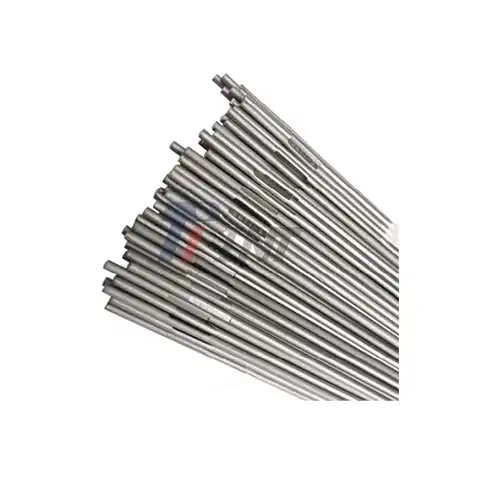
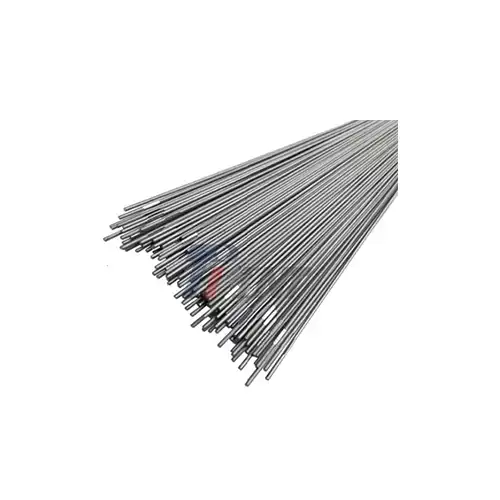
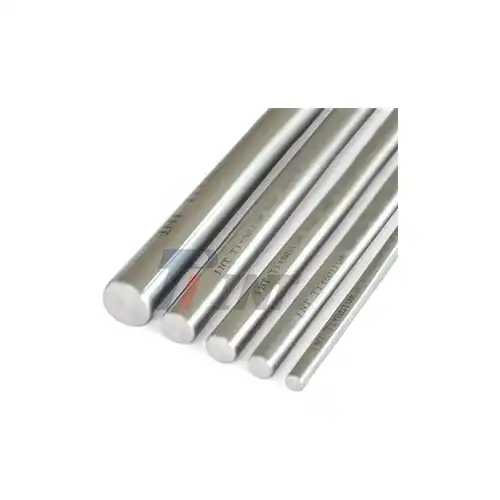
If you manufacture implants and need a reliable raw material source, understanding your options for commercially pure titanium bar stock is non-negotiable. At Baoji INT Medical Titanium Co., Ltd., we supply Gr1 medical titanium bar and related titanium mill products to implant makers across the United States and beyond. Grade 1 titanium holds a minimum titanium content of ≥99.5%, governed by ASTM F67, and it delivers the biocompatibility, corrosion immunity, and cold formability that precision implant machining demands. This guide walks through everything procurement professionals need to know before placing an order.
|
|
|
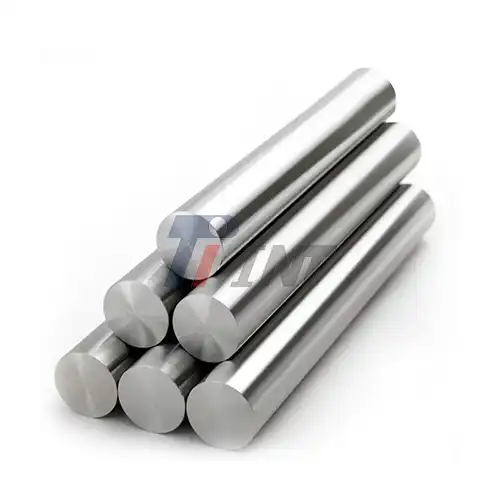
Understanding Medical Titanium Bars for Implant Makers
What Makes Grade 1 Titanium Bar the Industry Benchmark
Commercially pure Grade 1 titanium is the least stiff and most flexible of the four grades. Its chemical make-up must not have more than 0.18% oxygen, 0.20% iron, 0.0150% hydrogen, or 0.03% nitrogen, according to ASTM F67. These tight interstitial controls directly control how the machine works. The material yields at least 170 MPa, has an ultimate tensile strength of 240 MPa, and can stretch more than 24%. This makes it very easy to work with and prevents cracking when cold forming or stamping.
The fact that a passive TiO2 oxide film forms on the surface on its own is a big plus that buying teams like. If this layer is damaged, it grows back right away. This protects the bar from body fluid rusting and keeps metals ions from getting into nearby tissue. Grade 1 titanium bar always meets the strictest biocompatibility requirements because it is nonmagnetic, which is important for MRI-safe implant parts.
Certifications and Standards That Matter
Medical-grade titanium bars must have certification that can be tracked. ASTM F67 is the main standard for medical implants made of unalloyed titanium. The international structure that is the same is ISO 5832-2. When bars are used in precision machining, they usually come centerless ground to h6 or h7 tolerances, with a surface roughness of Ra ≤0.8 μm. This makes sure that they feed smoothly into automatic CNC bar feeders and keeps tool wear to a minimum during high-speed machining runs.
Comparing Medical Titanium Bars to Alternative Implant Materials
Titanium vs. Stainless Steel and Cobalt-Chromium Alloys
When purchasing professionals look at raw materials for making implants, titanium that hasn't been alloyed, stainless steel (usually 316L), and cobalt-chromium metals are at the top of the list. Stainless steel is cheaper and can be machined easily, but over time it releases nickel and chromium ions that have been linked to hypersensitive responses in patients. Cobalt-chromium alloys are very hard and don't wear down easily, which makes them useful for articulating joint surfaces. However, their elastic modulus (~210 GPa) is much higher than that of cortical bone (~20 GPa), which helps with stress shielding.
Titanium that is sold in stores has a stiffness of about 105 GPa, which is closer to bone than either stainless steel or cobalt-chromium. This biomechanical compatibility lowers the difference in load between the implant and the host tissue, which helps the integration process go more smoothly. Titanium is also more resistant to corrosion in living settings that are high in chloride than either of the competing material groups, and Gr1 medical titanium bar is a prime example of this.
Gr1 vs. Gr5 (Ti-6Al-4V): Choosing the Right Grade
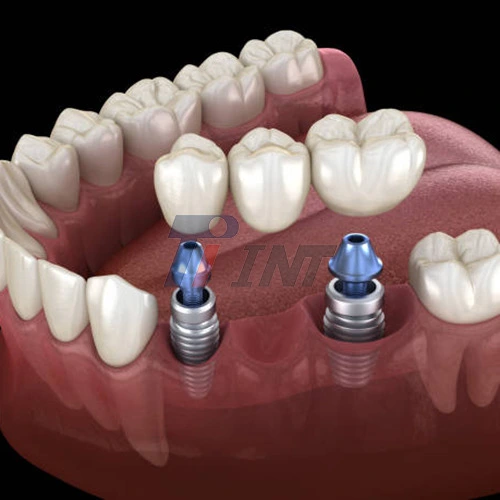
Grade 5 titanium (Ti-6Al-4V, ASTM F136 in its ELI form) has a tensile strength of more than 860 MPa, which makes it the best choice for orthopedic parts that have to hold weight, like femoral stems. But because it can only stretch about 10%, it can't be cold-formed. Grade 1 bar is great for parts that need to be shaped rather than having high tensile strength, like dental pins, soft-tissue anchors, and thin-walled structural components. It can also be anodized to change colors.
How to Choose the Right OEM Medical Titanium Bar Supplier
When it comes to medical titanium, choosing a supplier is more important than when buying things for other industries. A provider that isn't aligned properly can bring differences in materials that put implant safety and the accuracy of the FDA filing at risk. Here are the main standards that every company that makes implants should use:
- Certification compliance: Verify that the supplier holds ISO 13485 quality management certification and can furnish material test reports (MTRs) traceable to ASTM F67 or the applicable ISO standard. Every batch should include chemical composition data and mechanical test results.
- Inspection rigor: Reputable suppliers conduct 100% ultrasonic testing per AMS 2631 Class A1 to detect internal voids, and they perform inert gas fusion (IGF) analysis to measure hydrogen and oxygen content with precision. Microstructure evaluation per ASTM E112 confirms a uniform equiaxed alpha-phase grain structure free from alpha-case contamination.
- Dimensional capability: Medical machining environments require tight tolerances. Confirm that the supplier delivers centerless ground bar stock within h6/h7 tolerance bands and can accommodate custom diameters, lengths, and surface finish specifications.
- Sample availability and lead time transparency: Before committing to volume orders, request certified samples. Reliable OEM partners accommodate this without friction and provide realistic, binding delivery schedules.
These requirements make sure that your production line doesn't get interrupted by problems with raw materials and that all of the Gr1 medical titanium bar stock that comes into your plant meets the same high standard.
Optimizing Procurement of Custom OEM Medical Titanium Bars
Aligning Specifications to Clinical Application
The design step is where procurement optimization starts. A company that makes tooth abutment pins with small diameters, like 8 mm bar stock, has different needs than a company that makes spine fixation parts. Matching the bar's thickness, length, and surface state to the way it will be used cuts down on waste and setup time. When OEM providers let you customize these factors, you can see measured gains in efficiency across a large scale.
In controlled production, traceability is a must. There should be proof that each bar shipment is linked to the original records of the mill's heat, chemical analysis, and mechanical testing. This chain of control helps make sure that FDA 21 CFR Part 820 rules are followed and makes internal checks easier.
Building Long-Term Supplier Partnerships
As a relationship with a supplier grows, it becomes possible to use volume price structures and get better shipping terms. When implant makers combine their titanium bar sourcing with a single qualified OEM partner, they can usually get better unit economics and get first dibs on production slots when the market is tight.
Setting up a vendor qualification agreement that spells out testing methods, specification requirements, and non-conformance steps protects everyone involved and keeps the supply chain stable, particularly when sourcing a Gr1 medical titanium bar that must meet strict implant-grade standards.
Innovations and Future Trends in Medical Titanium Bar Solutions
There are a lot of ways that the medical titanium bar market is growing. Powder metallurgy and new casting methods are making it possible to better control the microstructure, which lowers the risk of inclusions and raises the wear performance. New ways of treating the surface, like micro-arc oxidation and hydroxyapatite coating put directly on parts made from bars, are making commercially pure titanium more useful. Buying goals are also changing because of concerns about sustainability. Buyers are asking for more information about recycled content and the carbon effect of the whole titanium supply chain.
In the EU and the US, rules about material tracking and biocompatibility approval are getting stricter all the time. If procurement teams invest in strong supplier relationships now that include lots of paperwork and the ability to come up with new ideas, their supply lines will be better prepared for future compliance requirements.
Conclusion
One of the most important choices an implant maker has to make is picking the right Gr1 medical titanium bar stock. As per ASTM F67, commercially pure Grade 1 titanium has properties like biocompatibility, corrosion resistance, and the ability to be cold shaped that can't be fully matched by any other material of the same purity level. When you combine high-quality materials with a provider that provides certified, traceable, precision-ground bar stock and allows large-scale customization, you build a purchasing base that ensures the quality of every production run.
FAQ
What standard governs Gr1 medical titanium bar for surgical implants?
Grade 1 commercially pure titanium bar must meet ASTM F67. This is distinct from ASTM F136, which applies to Ti-6Al-4V ELI (Grade 23). Implant makers should confirm the correct standard appears on the material test report before accepting any shipment.
Why is surface finish important for medical titanium bar machining?
Centerless ground bar stock with Ra ≤0.8 μm feeds smoothly through automatic bar feeders and reduces cutting tool wear. Surface oxidation or tool marks on bar stock can harbor contaminants and serve as fatigue crack initiation sites in finished implant components.
Can Grade 1 titanium bar be anodized?
Yes. Grade 1 anodizes exceptionally well. Implant manufacturers commonly apply Type II or Type III anodization to color-code components by size or to reduce galling during assembly. The process does not compromise the material's biocompatibility.
How should I prevent galling when machining Grade 1 bar?
Grade 1 titanium is notably ductile and prone to material buildup on cutting edges. Sharp carbide tooling, high-pressure coolant delivery, and feeds/speeds calibrated specifically for soft CP titanium grades effectively control this tendency.
Partner With Baoji INT Medical Titanium Co., Ltd. for Your Titanium Bar Supply
For implant makers who want stable quality, full traceability, and quick OEM support, Baoji INT Medical Titanium Co., Ltd. provides approved Gr1 medical titanium bar manufacturer-grade material. Our bar stock is made to meet ASTM F67 and ISO 5832-2 standards. It is shipped centerless ground to exact specifications and comes with full proof of all material tests. You can get custom sizes and programs for bulk orders. You can email our team at export@tiint.com or go to inttitanium.com to get samples or a quote on buy.
References
1. ASTM International. ASTM F67: Standard Specification for Unalloyed Titanium for Surgical Implant Applications. ASTM International, 2023.
2. ISO. ISO 5832-2: Implants for Surgery — Metallic Materials — Part 2: Unalloyed Titanium. International Organization for Standardization, 2018.
3. Niinomi, M. "Mechanical Biocompatibilities of Titanium Alloys for Biomedical Applications." Journal of the Mechanical Behavior of Biomedical Materials, Vol. 1, No. 1, 2008.
4. Rack, H. J., and Qazi, J. I. "Titanium Alloys for Biomedical Applications." Materials Science and Engineering: C, Vol. 26, No. 8, 2006.
5. Geetha, M., et al. "Ti Based Biomaterials, the Ultimate Choice for Orthopaedic Implants." Progress in Materials Science, Vol. 54, No. 3, 2009.
6. U.S. Food and Drug Administration. Use of International Standard ISO 10993-1: Biological Evaluation of Medical Devices. FDA Guidance Document, 2020.
_1750663253486.webp)