
Gr5 Titanium Straight Wire vs Stainless Steel: Which Is Best?


 2026-10-13 09:19:49
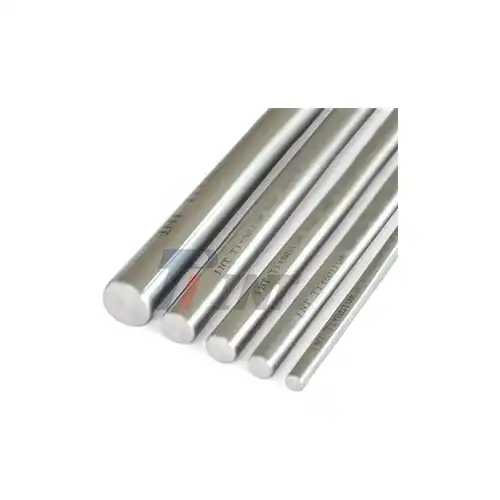
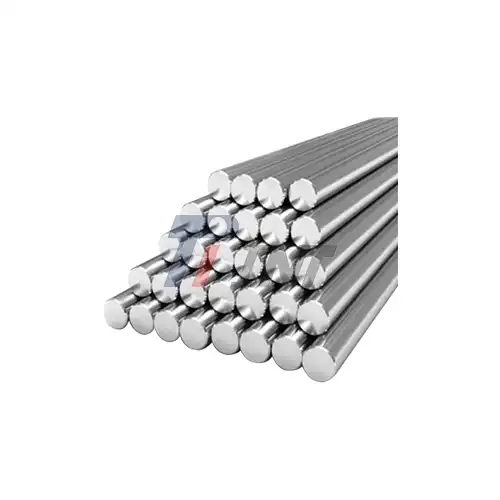
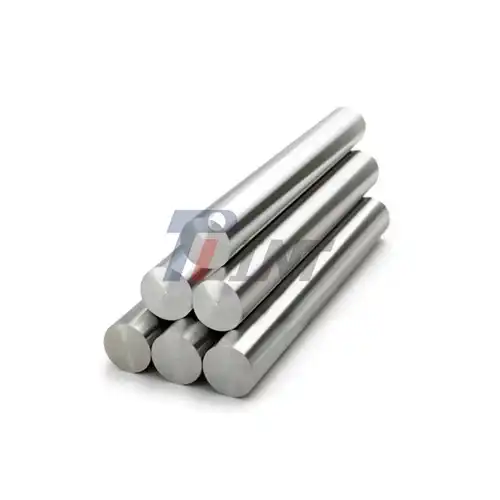
When it comes to high-precision medical component manufacturing, material selection is not a minor detail — it directly determines yield rate, downstream fabrication cost, and regulatory compliance. Between Ti-6Al-4V (Grade 5 titanium) straight wire and stainless steel wire, the right answer depends entirely on your application environment, mechanical requirements, and quality standards. In short, Gr5 titanium straight wire outperforms stainless steel in biocompatibility, corrosion resistance, and strength-to-weight ratio, making it the preferred feedstock for medical-grade OEM manufacturing. Stainless steel retains cost advantages in non-implant and structural applications.
|
|
|
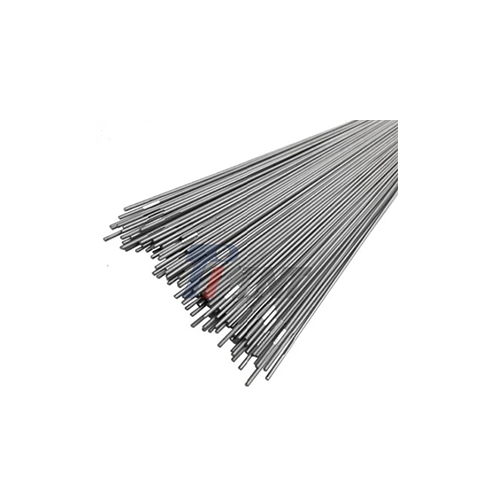
Understanding the Core Properties of Gr5 Titanium and Stainless Steel Wires
Chemical Composition and Mechanical Benchmarks
Ti-6Al-4V is an alpha-beta alloy that is mostly made up of titanium (90%), aluminum (6%), and vanadium (4%). This mix has a tensile strength of at least 895 MPa, a yield strength of at least 825 MPa, and a stretch of at least 10%, which are all important levels for load-bearing implant material. Its density is only 4.43 g/cm³, which is about 45% less than stainless steel's density of 7.9 g/cm³. 304L and 316L stainless steel types have tensile strengths between 485 and 690 MPa for annealed wire. 316L is the medical-grade standard because it contains molybdenum, which makes it less likely to pit in chloride conditions.
Fatigue Resistance and Geometric Precision
In cyclic-load applications like spinal fixation and bone screw production, fatigue performance is very important. Ti-6Al-4V has a wear limit of about 500 MPa at 10⁷ cycles, while 316L stainless steel wire of the same thickness has a limit of about 300 MPa. In addition to tiredness, physical linearity, or straightness, is also very important. The camber variation of premium Gr5 titanium straight wire stays below 1 mm per meter. This lets Swiss-style CNC lathes and automatic bar feeders feed the wire smoothly without the "whipping" effect that happens with coiled wire or stronger steel bar stock.
Performance and Application Comparison: Gr5 Titanium vs Stainless Steel
When these two materials are used in situations where the human body is present, the difference in performance is most clear. Ti-6Al-4V, commonly supplied as Gr5 titanium straight wire, has been shown to be biocompatible under ISO 10993 and ASTM F136 standards, which means it can blend in with nearby tissue without causing galvanic rust or ion release, which are failure modes seen in stainless steel implants that are exposed to body fluids for a long time.
Here are the main areas of use where each material does its best:
- Orthopedic and spinal implant feedstock: Gr5 titanium straight wire is used to make Kirschner wires (K-wires), fixing pins, and bone screw blanks. Its elastic modulus (about 114 GPa) is much lower than stainless steel's (about 200 GPa), which means it doesn't protect against stress as well as stainless steel does, which slows down bone loss around implants. This benefit has been shown to work in clinical trials and is written about in peer-reviewed medical research.
- Dental component production: Wire pulled from Ti-6Al-4V is often used as feedstock for milling tooth prosthetic parts. Its resistance to salivary corrosion is better than 316L steel over longer periods of time.
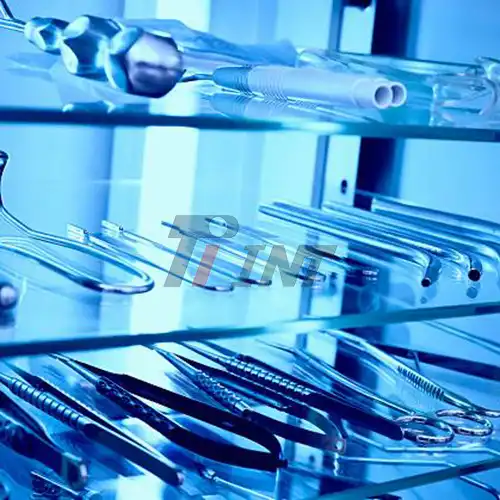
- Surgical instrument components: Titanium alloy wire is used by contract manufacturers to make spring elements and precision subcomponents that need to be resistant to wear cycle and sterilization. It is also very light but has a strong structure.
- Stainless steel in structural and non-implant parts: 316L wire is still the most cost-effective choice for non-load-bearing fixtures, external surgical tools, and parts that won't be in contact with the body for a long time.
These differences make it clear why medical CMO procurement engineers usually choose Ti-6Al-4V for cutting lines that are close to implants and 316L for other parts. When the two materials are mixed up during the sourcing stage, extra work needs to be done.
Cost and Supply Chain Factors in Bulk Procurement
The cost of raw materials for Ti-6Al-4V wire, commonly supplied as Gr5 titanium straight wire, is about 5–8 times higher per kilogram than for 316L stainless steel wire. This is because the process of drawing and bending the wire requires a lot of precision and energy. There is a different story for OEM makers when it comes to total cost of ownership.
Titanium's tight tolerances pay off when the amount of scrap it makes goes down. Centerless grinding keeps the wire diameter tolerance at ±0.01–0.02 mm. This means that downstream CNC operations have fewer tool crashes and dimensional rejections. For a production line that makes more than 10,000 bone screw blanks every month, a 2% increase in yield due to tighter new material standards can more than make up for the higher material cost.
Planning how to use lead time is a different issue. For standard orders from qualified mills, it takes 4–8 weeks to get certified medical-grade Ti-6Al-4V wire with heat number traceability and COA documentation that can be tracked. Most medical-grade stainless steel wire ships in two to four weeks. This is something that CMOs who are in charge of just-in-time production schedules should plan for when they plan their backup stock, especially when they have European brand clients who need OTT delivery.
Customization options, such as cut-to-length, circle limit selection, and surface finish specification, cut down on waste and get rid of the need for extra work. Suppliers who offer deburring and protective film packaging add value that comes afterward that comes from pure commodity sources don't.
Making the Right Choice: Decision Criteria for B2B Procurement
Three things help OEM procurement managers make decisions: the application setting, the mechanical design, and the paperwork chain.
Ti-6Al-4V is the specification that can be defended if the end part comes into contact with bone, tissue, or bodily fluids for more than 30 days. For brand clients whose design files use ASTM F136 or ISO 5832-3, titanium is required and not a choice. If the part is outside, can be used again, or isn't inserted, 316L stainless steel wire works well enough at a lower cost.
It's also not an option to have good documents. Every batch of wire that goes into the production line for medical devices has to have a Certificate of Analysis (COA) that can be traced back to the melt number. The chemical composition must be checked using ICP-OES analysis, and the hydrogen content must be less than 150 ppm to keep the wire from becoming weak. ISO 13485-certified producers are at risk of being audited if their suppliers can't provide this paperwork per lot.
Under the surface, there is a hidden yield driver. Wire with roller lines, die seams, or oxidation coloring creates surface breaks that spread during precision etching, pressing, and CNC finishing. For Gr5 titanium straight wire, a roughness level of Ra ≤ 0.8 µm on the arriving wire surface is a good starting point for making precision parts.
Trusted Suppliers: Finding Certified Ti-6Al-4V Wire for Medical OEM Use
What Distinguishes a Qualified Medical Titanium Wire Supplier
A good provider of medical-grade Ti-6Al-4V wire has ISO 13485:2016 and ISO 9001:2015 certifications, keeps full records from the raw material to the finished wire, and lets customers do checks without any problems. EU CE certification of the process of supplying materials adds another level of compliance that is important for OEMs in the European market.
Production technology is important. At the ingot stage, hot rolling and forging create the alpha-beta microstructure. At the finished wire stage, ultrasonic testing finds internal flaws before the wire goes into customer production lines. You have to do these steps in order to tell the difference between a licensed medical mill and a general-industrial wire source.
Baoji INT Medical Titanium Co., Ltd. has been in business since 2003 and has over 30 years of experience in the process. They make Ti-6Al-4V straight wire with diameters from 0.5 mm to 5 mm and cut lengths that can be customized. When you buy INT's wire, it comes with a per-batch COA that can be tracked back to the heat number and meets the compositional requirements of ASTM F136 and ISO 5832-3. The business is certified by ISO 9001:2015, ISO 13485:2016, and the EU CE mark. It also helps OEM clients with source qualification checks.
Conclusion
Straight Ti-6Al-4V wire and 316L stainless steel both have their place in the supply chains for medical devices, but they can't be switched out. When biocompatibility, wear resistance, and MRI compatibility are important, Gr5 titanium straight wire is the right choice. Stainless steel is still a good choice when cost-effectiveness and non-implant usefulness are the main factors. When it comes to CMOs that supply brand clients with strict material documentation needs, the infrastructure for tracking and certifying a qualified titanium wire source is just as important as the alloy itself.
FAQ
Is Gr5 titanium wire MRI-compatible?
Yes, Ti-6Al-4V is nonmagnetic and doesn't interact with MRI fields. This means it can be used for implant parts that patients may keep in place during imaging. Depending on the grade and how it is processed, stainless steel can have mild ferromagnetism that can make images look funny or put patients at risk.
What diameter tolerances are achievable in medical-grade Ti-6Al-4V wire?
With centerless grinding, it is possible to get diameter limits as small as ±0.01 mm. This level of accuracy is needed for Swiss-style CNC bar feeding and makes sure that the dimensions stay the same during long production runs.
How does hydrogen content affect titanium wire quality?
Hydrogen levels above 150 ppm increase the risk of embrittlement, a type of failure that shows up as a surprise crack when the structure is loaded. Qualified mills check for hydrogen using inert gas fusion analysis and sign off on compliance for each batch.
What documentation should accompany each shipment of medical titanium wire?
The chemical make-up, mechanical test results, heat number, measurement inspection report, and standard compliance statement (e.g., ASTM F136 or ISO 5832-3) should all be written on the certificate of analysis (COA) for each lot.
Can Ti-6Al-4V wire be supplied in custom cut lengths?
Yes, reputable medical titanium wire providers offer a cut-to-length service that includes deburring and protective film packing to keep the surface from getting damaged while it's being shipped and handled.
Partner with Baoji INT Medical Titanium Co., Ltd. — Your Gr5 Titanium Wire Supplier
Baoji INT Medical Titanium Co., Ltd. supplies certified Ti-6Al-4V straight wire with full COA documentation, ISO 13485:2016 compliance, and cut-to-length customization from 0.5 mm to 5 mm diameter. Our process traceability and audit-ready quality system support your medical OEM qualification workflow. Contact our team at export@tiint.com or visit inttitanium.com to request samples, review material certifications, or discuss your project specifications.
References
1. Niinomi, M. (2008). Mechanical biocompatibilities of titanium alloys for biomedical applications. Journal of the Mechanical Behavior of Biomedical Materials, 1(1), 30–42.
2. ASTM International. (2021). ASTM F136: Standard Specification for Wrought Titanium-6Aluminum-4Vanadium ELI Alloy for Surgical Implant Applications. ASTM International.
3. ISO. (2016). ISO 5832-3: Implants for Surgery — Metallic Materials — Part 3: Wrought Titanium 6-Aluminium 4-Vanadium Alloy. International Organization for Standardization.
4. Rack, H. J., & Qazi, J. I. (2006). Titanium alloys for biomedical applications. Materials Science and Engineering: C, 26(8), 1269–1277.
5. Geetha, M., Singh, A. K., Asokamani, R., & Gogia, A. K. (2009). Ti based biomaterials, the ultimate choice for orthopaedic implants — A review. Progress in Materials Science, 54(3), 397–425.
6. Black, J., & Hastings, G. (Eds.). (1998). Handbook of Biomaterial Properties. Chapman & Hall.
_1752819172472.webp)
_1751957234428.webp)
_1750662961697.webp)