




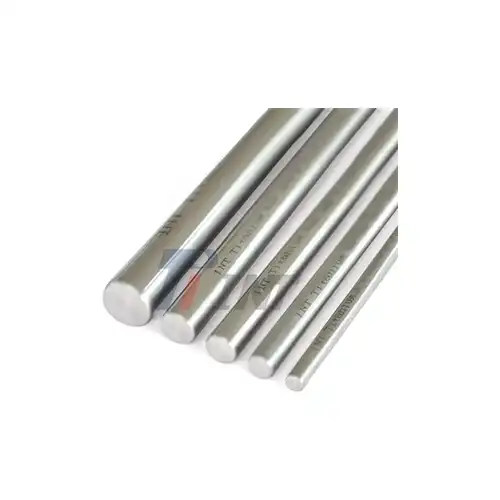
Gr7 Titanium Tube vs Standard Titanium Tube Comparison


 2026-10-23 10:04:04
When sourcing titanium tubing for medical device manufacturing, chemical processing equipment, or desalination systems, understanding material grade distinctions becomes paramount for procurement success. Gr7 Welded Titanium Tube stands apart from conventional titanium grades through its strategic palladium addition—specifically 0.12% to 0.25%—which transforms electrochemical behavior in aggressive environments.
While standard grades like Grade 2 offer acceptable corrosion resistance in neutral or oxidizing conditions, the palladium-enhanced Gr7 exhibits immunity to crevice corrosion in hot chlorides and reducing acids, making it irreplaceable where material failure carries catastrophic consequences for production timelines and regulatory compliance.
|
|
|
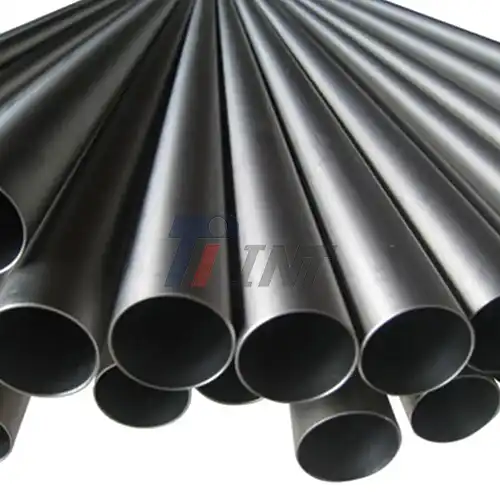
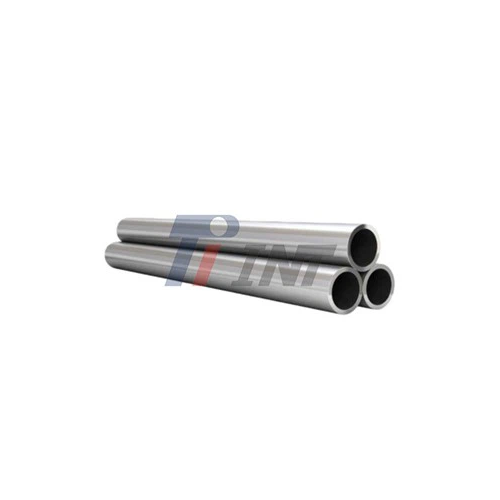
Understanding Gr7 Titanium Tube and Standard Titanium Tubes
What Makes Gr7 Welded Titanium Tube Distinctive?
Gr7 Welded Titanium Tube (UNS R52400) is a more advanced form of economically pure titanium. Made from titanium alloy strip using TIG or plasma arc welding, this material has the same basic properties as Grade 2 titanium but has a limited amount of palladium added, which is usually between 0.12% and 0.25%. This small addition changes the material's electrochemical response in corrosive media in a fundamental way. The palladium acts as a cathodic depolarizer, moving the alloy's corrosion potential into the passive region. This happens even when the conditions are reducing, which is when unalloyed titanium would be attacked locally.
As per ASTM B338 (for heat exchanger uses) and ASTM B862 (for general service), Baoji INT Medical Titanium Co., Ltd. carefully controls the chemical makeup during the manufacturing process. Chemical research shows that titanium is balanced, with an iron content below 0.30% and an oxygen content below 0.25%. This means that it keeps its flexibility and ability to be welded, which are important for complex manufacturing needs.
Standard Titanium Grades: Grade 2 and Grade 5 Overview
Grade 2 (commercially pure titanium that hasn't been alloyed) and Grade 5 (Ti-6Al-4V alloy) are the most common types of titanium that are sold. Grade 2 is very good at resisting corrosion in oxidizing environments. It is moderately strong (345 MPa tensile minimum) and easy to shape. It has been widely used because it is cheap and can be used in situations with seawater, chlorine production, and contact to the air.
Grade 5 is an alpha-beta alloy with 6% aluminum and 4% vanadium. It has a much higher mechanical strength (895 MPa tensile minimum), but it is not as resistant to corrosion as commercially pure grades. Medical device makers like Grade 5 ELI (Extra Low Interstitial) versions for hip implants because they are better at integrating with the body and are less likely to break.
Manufacturing Process and Quality Assurance
When it comes to Gr7 specifications, welded tube production is clearly better than seamless tube production. The process starts with carefully cutting annealed titanium strip into thin strips. Next, automatic TIG or plasma systems are used for constant shaping and welding. This method makes the wall thickness more uniform, which is important for heat transfer efficiency in heat exchangers, and it also makes it possible to make bigger sizes more cheaply.
Some of the quality assurance protocols we use are:
- Positive Material Identification (PMI): Non-destructive analysis shows that the amount of palladium is within the required range. This is because not enough alloying makes the material less resistant to corrosion.
- Eddy Current Testing (ET): A full inspection along the length of the seam finds problems with the weld, holes in the skin, or inclusion chains that could spread when the load is applied and removed repeatedly.
- Mechanical Qualification: ASTM B338 flattening and flare tests show that the heat-affected zone has the same flexibility as the base material, which keeps cracks from forming when the tube expands into tubesheets.
- Hydrostatic Pressure Testing: Checking at 1.5 times the design pressure makes sure the structure is strong enough for pressure vessel service.
When you combine these strict controls with ISO 13485:2016 medical device quality management certification, you get the traceability paperwork that is needed for regulatory audits and material verification protocols.
Comparative Performance Analysis: Gr7 vs Standard Titanium Tubes
Corrosion Resistance in Aggressive Environments
The main benefit of palladium-alloyed Gr7 shows up in lowering acidic conditions and chloride solutions at high temperatures. Gr7 Welded Titanium Tube offers enhanced resistance in such environments, but standard Grade 2 titanium stays inert when it is exposed to oxidizing conditions, yet it can corrode in cracks when it is exposed to hot water above 80°C or low amounts of sulfuric acid. This targeted attack starts in places that are blocked, like tube-to-tubesheet cracks, flange faces, or under deposits, where oxygen levels are low and reducing conditions are present.
This weakness is lessened by Gr7's palladium content, which keeps cathodic protection even when oxygen levels are low. Field performance data from desalination plants working with brine temperatures of 105°C shows that there were no cases of crevice corrosion over 15 years of service, but Grade 2 sites needed new tube bundles every 3 to 5 years. In chemical processing with diluted hydrochloric acid (1–10% concentration), Gr7 has corrosion rates below 0.025 mm/year, while Grade 2 has faster attack rates that cause perforation failures.
Mechanical Properties and Structural Performance
Mechanically, Gr7 meets the same requirements as Grade 2: it must have a minimum tensile strength of 345 MPa, a minimum yield strength of 275 MPa, and an extension greater than 20%. This flexibility makes it easier to work with in the field, where it can be bent, flared, and expanded hydraulically without cracking. The density of 4.51 g/cm³ keeps the good strength-to-weight ratio that titanium metals are known for.
Gr7 Welded Titanium Tube is not as strong as Grade 5, which has a tensile strength of 895 MPa. Instead, it has better resistance to rust. When making a procurement decision, matrices should consider whether the needs of the application put structural loading or environmental durability first. For example, heat exchanger tubing works with small pressure differences, so Gr7's moderate strength is enough. Its resistance to corrosion also keeps expensive unplanned maintenance from having to be done.
Thermal Stability and Operating Temperature Limits
Up to 260°C in chloride-containing liquids, Gr7 keeps its mechanical qualities and resistance to corrosion. At this temperature, unalloyed titanium's passive film becomes less stable. This thermal ability lets it work in high-pressure brine heaters, geothermal energy systems, and hydrometallurgical autoclaves, where the temperature and corrosivity of the metals destroy other materials.
The melting point, which is around 1660°C, gives a lot of safety margins for welding and possible overheating situations. The thermal conductivity (about 17 W/m·K) is still lower than that of copper-nickel alloys, which are usually used in heat exchangers. This means that the design needs to be changed to make up for it by adding more surface area or improving the layout of the tubes.
Lifecycle Cost Analysis
Due to the spot price of palladium and the unique processing needs, the initial material costs for Gr7 are 200 to 400% higher than those for Grade 2. This extra needs to be carefully explained from an economic point of view by figuring out the total cost of ownership. In acidic service, the equation changes a lot. For example, a chemical plant heat exchanger with Grade 2 tubes might need to be completely retubed every four years, which would cost $250,000 plus the cost of the downtime. The same unit built with Gr7 tubing has been used for more than 20 years without a single tube failure, saving a lot of money on repairs and production losses.
When purchasing managers look at proposals, they should ask for lifecycle analyzes that include differences in material costs, expected service intervals, replacement labor, and ways to make money from production downtime. Gr7 Welded Titanium Tube is a critical component in such evaluations, and industries that have to pay a lot for downtime, like pharmaceutical manufacturing, offshore platforms, or constant process operations, get their money back on their Gr7 investments within two to three working years.
Applications and Use Cases of Gr7 Welded Titanium Tubes
Chemical Processing and Acid Handling Systems
The most difficult test of a material's performance is in chemical industrial settings. Gr7 tubing works great in shell-and-tube heat exchanges that work with reducing acids like sulfuric acid or weak hydrochloric acid. The rough surface where process fluids and cooling water meet makes it possible for standard materials to leak in places that shut down the whole production line. After switching from Grade 2 to Gr7 tube bundles eight years ago, a North American chlor-alkali producer said that none of the 12 installations had any exchanger failures. This was because they no longer had to do annual maintenance cycles.
In acid dissolving autoclaves and transfer pipes, Gr7 is used in hydrometallurgical extraction processes, especially for recovering nickel, cobalt, and gold. These systems use high temperatures (180-230°C), high pressures (2-4 MPa), and acidic slurries that break down titanium or stainless steel very quickly. Failures in choosing the right materials for this application have effects that go beyond the cost of repair. These effects include risks to the environment and to people's safety.
Desalination and High-Salinity Water Treatment
Multistage flash distillation plants and thermal vapor compression units work in a setting that may have the highest concentration of chlorides of any industry. When brine heaters work above 80°C and have total dissolved solids above 70,000 ppm, they make the perfect conditions for crevice corrosion to start. At tube-to-tubesheet joints and growth transition zones, Gr7 stops the faster attack that usually happens.
A desalination plant in the Middle East with a 50 MIGD capacity wrote down the performance difference: their original Grade 2 tube bundles needed some replacement tubes every 30 to 36 months because of corrosion in the cracks at the rolled joints. After switching to Gr7 material in six evaporator steps, test data after 10 years showed that there was no corrosion to be found. The expected service life is longer than 25 years. This durability has a direct effect on the costs of making water and on measures for plant availability that are important for city supply contracts.
Medical Device Manufacturing Supply Chain
Medical device makers who need biocompatible, corrosion-resistant tubes for making parts find that Gr7 meets their strict standards for purity and tracking. Finished implanted devices usually call for Grade 5 ELI for their skeletal parts. However, Gr7 is better for support systems like sterilization equipment, chemical vapor deposition reactors, and cleanroom environmental controls because it can handle sterilant chemicals and high-purity water systems.
With our ISO 13485:2016 certification, we can provide medical-grade titanium materials along with full mill test results, heat tracking, and chemical analysis paperwork that is needed for regulatory applications. R&D engineers working on next-generation devices can use our technical consultation services to get help choosing materials that meet FDA biocompatibility standards and long-term stability needs.
Procurement Insights for B2B Buyers: How to Source Gr7 Titanium Tubes
Supplier Qualification and Certification Verification
When looking for medical-grade or critical-service titanium materials, you need to do more than just compare prices. You need to carefully evaluate each supplier. Manufacturers who are qualified should show that they have ISO 9001:2015 quality management certification and, for medical uses, ISO 13485:2016 certification with audit records of ongoing monitoring. Ask for proof that the product meets the ASTM standards, preferably ASTM B338 for heat exchanger tubes or ASTM B862 for structural uses.
Material traceability is a must: every tube lot should have mill test certificates that list the heat number, chemical composition (with certified palladium content), mechanical test results, and NDT documentation. From receiving the raw materials to the final inspection, our production systems keep full records. This lets us respond quickly to customer audits or regulatory inquiries.
Pricing Structures and Volume Considerations
The price of Gr7 is affected by a number of factors, including the cost of palladium (usually $30 to $80 an ounce), specialized welding supplies, and strict quality control procedures. Standard lead times are 8 to 12 weeks for stock sizes and 14 to 18 weeks for custom sizes or large orders that need their own production campaigns.
By making production schedules more efficient and buying raw materials ahead of time, volume commitments allow prices to be optimized. When purchasing managers plan their yearly needs, they can arrange framework deals that set stable prices and ensured allocation during times of limited supply, particularly for key products such as Gr7 Welded Titanium Tube. Our team works with buying departments to make deals that balance the costs of keeping goods with the stability of material prices and on-time delivery.
Technical Support and Custom Fabrication Capabilities
For complex projects, engineering teamwork is often needed in addition to the sale of common materials. We offer expert advice on choosing the right materials for certain corrosive settings, making suggestions on how to make things, and checking to see if they can be welded. Our 30 years of experience in the titanium industry, especially Mr. Zhan Wenge's direct work in medical titanium research and development, lets us give you useful advice that keeps you from making costly specification mistakes.
Precision cutting to length, end preparation for welding (beveling, facing), and intermediate heating to improve formability are all part of custom manufacturing services. These extra services make things easier for customers and speed up project timelines. Production managers like that we can make samples quickly, so they can test the quality of the materials before committing to full-scale purchase.
Making the Right Choice: When to Opt for Gr7 Titanium Tube
Decision Framework for Material Selection
When deciding between Gr7 and normal titanium grades, it's important to look at the working environment, performance needs, and cost factors. There are four areas we think should be evaluated:
- Corrosion Environment Severity: If the temperature is above 80°C and the chloride concentration is above 500 ppm, or if the material is exposed to reducing acids (HCl, H2SO4) below a 40% concentration, Gr7 is the standard that is used. Standard Grade 2 is good enough for seawater, chlorine production, or exposure to the air.
- Costs of Criticality and Downtime: In situations where a material failure causes production losses of more than $10,000 per hour, Gr7's higher cost is justified by lowering the risk. Compare the extra money spent on materials to the cost of a single unscheduled shutdown.
- Safety and regulatory issues: Businesses that make medical devices, drugs, or food processing items can be fined by the government for contamination that goes beyond the cost of replacing the contaminated items. Material choice is no longer just based on economics; it's also a matter of compliance.
- Service Life Expectations: Projects with a design life of 15 to 20 years that will be used in conditions that are close to corrosive should specify Gr7 to make sure they have performance margins at the end of their life. Because the material is stable, it doesn't break down slowly over time, which would lower safety standards.
Gr7 vs Grade 5 and Stainless Steel Alternatives
Grade 5 titanium alloy is much stronger than Gr7, but it doesn't resist corrosion as well. This means it can be used for structural purposes in moderately harsh environments. Its tensile strength of 895 MPa allows for thinner walls in situations where saving weight is worth the cost of the material, but heat exchangers can't use it because it can corrode in cracks when exposed to hot chlorides.
Titanium is more expensive than stainless steel alternatives, especially super-duplex grades like UNS S32760, which are good at resisting corrosion in many seawater applications. But stainless steels can still crack when exposed to chloride stress corrosion above 60°C and get pitted when they are not moving. Gr7 Welded Titanium Tube gets rid of these failure modes and offers complete resistance to corrosion, which is why it costs more in mission-critical installations.
Conclusion
Choosing between Gr7 and normal titanium grades has a big effect on how reliable equipment is, how much it costs to maintain, and how safe it is to use in a wide range of hard industrial settings. Because palladium makes Gr7 Welded Titanium Tube more resistant to corrosion, it can last much longer in hot chloride conditions, reducing acids, and high-salinity process streams, where other materials would break down quickly.
Even though the initial costs of procurement are 200–400% higher than standard grades, lifecycle economic analysis always shows ROI through fewer replacement cycles, less downtime, and safer processes. Instead of just looking at the initial price, people who are in charge of buying things should compare the specifications of the materials to specific corrosive conditions, criticality factors, and long-term operational costs.
Partnering with certified makers that offer full technical support, strict quality systems, and proven medical-grade material knowledge ensures that specifications are met and the supply chain is reliable, which are both important for a project's success.
FAQ
What Chemical Differences Distinguish Gr7 from Grade 5 Titanium?
Grade 7 is economically pure titanium combined with 0.1 to 0.25% palladium, like Grade 2. Grade 5 alpha-beta alloy has 6% aluminium, 4% vanadium, and no palladium. Electrochemical stabilisation renders Gr7's palladium resistant to reducing acids and heated chlorides. However, Grade 5's alloying elements increase mechanical strength (895 MPa vs. 345 MPa tensile) but decrease corrosion resistance. Grade 5 ELI is utilised in medical implant designs that demand strength, whereas Grade 7 is preferable for corrosive fluids where durability is more critical than mechanical performance.
Can Gr7 Welded Tubes Meet Medical Device Manufacturing Standards?
Gr7 material is biocompatible and meets medical cleanliness requirements when created according to ISO 13485:2016 norms and with the correct documentation. Medical device companies employ Gr7 tubes for processing equipment, sterilisation systems, and cleanroom infrastructure, however implanted devices need Grade 2 or Grade 5 ELI for structural elements. Certified medicinal supplies may be traced and supported by regulatory filings. Device manufacturers must validate biocompatibility and get regulatory certification for end-use appropriateness.
How Does Gr7 Compare to Stainless Steel in Corrosion Resistance?
Pitting, crevice corrosion, and stress corrosion cracking are impossible in chloride-containing conditions above 60°C for Gr7 titanium. Even super-duplex stainless steels like UNS S32750 can't tolerate these failures. Stainless steels use chromium oxide inactive films that break down under reducing circumstances or chloride cells. Palladium in Gr7 maintains cathodic protection without oxygen. This fundamental difference makes Gr7 the sole material that may be utilised in hot brine over 90°C or concentrated chloride process streams, where stainless steel soon breaks down. When comparing pricing, consider that stainless steel wears out quicker and has to be replaced more frequently in tough environments.
Partner with a Certified Gr7 Welded Titanium Tube Manufacturer
Baoji INT Medical Titanium Co., Ltd. has been making medical-grade titanium materials for more than 20 years and has the ISO 13485:2016 and CE certifications that are needed in regulated industries. Our full quality control systems make sure that every batch of Gr7 Welded Titanium Tube has the chemical analysis that proves the palladium content, the mechanical test results, and the NDT documentation that is needed for important uses.
Purchasing managers and R&D engineers can use our technical consulting services to get the best material standards for certain acidic settings. This lowers the risks of specification errors that cause products to fail early. We keep stock of common sizes and offer custom fabrication services like precision cutting, end preparation, and intermediate processing that shorten project timelines and make your work easier.
Get in touch with our export@tiint.com team to talk about your Gr7 welded titanium tube needs, ask for mill test certificate samples, or set up material qualification testing. Visit inttitanium.com to see our full selection of medical and industrial titanium products. We have been a leader in the industry for 30 years and are dedicated to quality, traceability, and on-time delivery, which is why global makers trust us.
References
1. Boyer, R., Welsch, G., & Collings, E.W. (1994). Materials Properties Handbook: Titanium Alloys. ASM International, Materials Park, Ohio.
2. Schutz, R.W. & Thomas, D.E. (1987). "Corrosion of Titanium and Titanium Alloys," Metals Handbook, 9th Edition, Volume 13: Corrosion, ASM International.
3. ASTM International. (2021). ASTM B338-21: Standard Specification for Seamless and Welded Titanium and Titanium Alloy Tubes for Condensers and Heat Exchangers. West Conshohocken, Pennsylvania.
4. Covington, L.C. (1979). "The Influence of Surface Condition and Environment on the Hydriding of Titanium," Corrosion, Volume 35, Issue 7, NACE International.
5. Sedriks, A.J. (1996). Corrosion of Stainless Steels, 2nd Edition. John Wiley & Sons, New York.
6. Titanium Information Group. (2010). Titanium for Desalination and Industrial Heat Exchangers: Selection and Application Guidelines. Technical Publication Series, London, United Kingdom.