




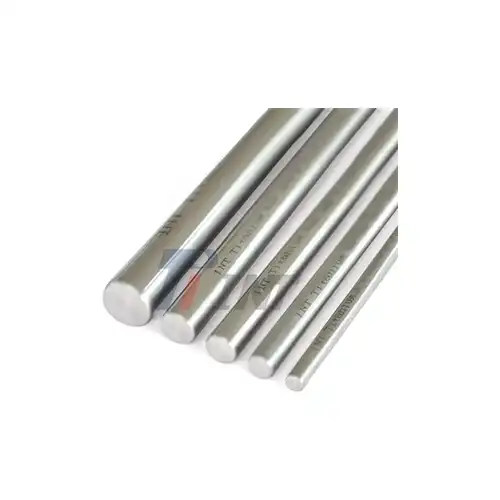
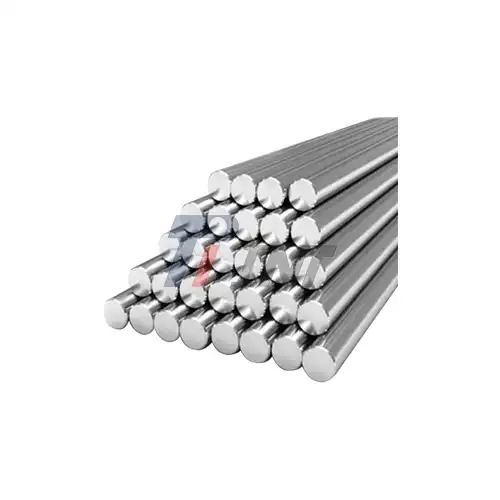
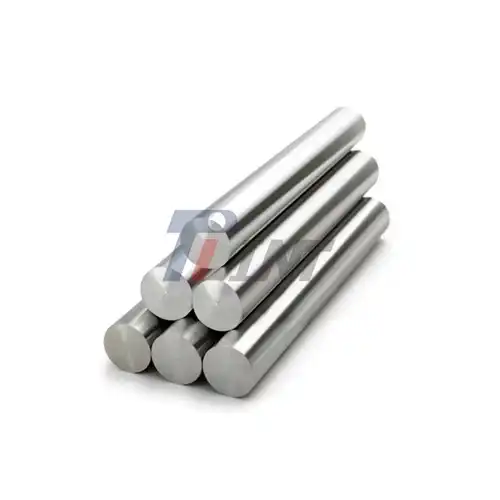
Ti6Al4V Titanium Bar 8mm vs Stainless Steel: Which Is Best for Parts


 2026-11-25 10:05:05
When Viktor's workshop needs to choose between a Ti6Al4V titanium bar 8mm and a stainless steel bar for surgical instrument components, the decision carries real financial and operational weight. Both materials serve precision manufacturing, but their performance profiles diverge significantly. Ti6Al4V (Grade 5) delivers tensile strength ≥ 895 MPa at just 4.43 g/cm³ density — roughly 43% lighter than 316L stainless steel at comparable strength. For forging blanks, CNC-machined handles, and instrument shafts, that weight-to-strength gap is not trivial.
|
|
|
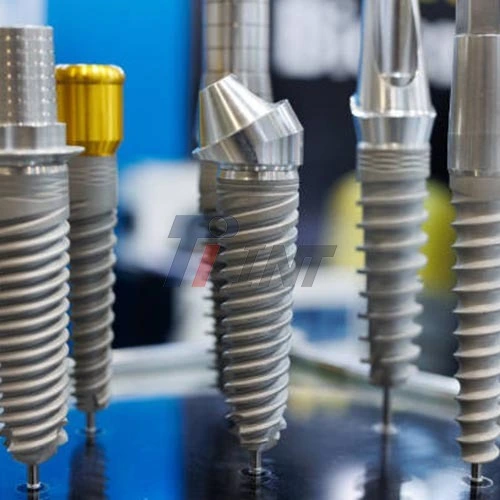
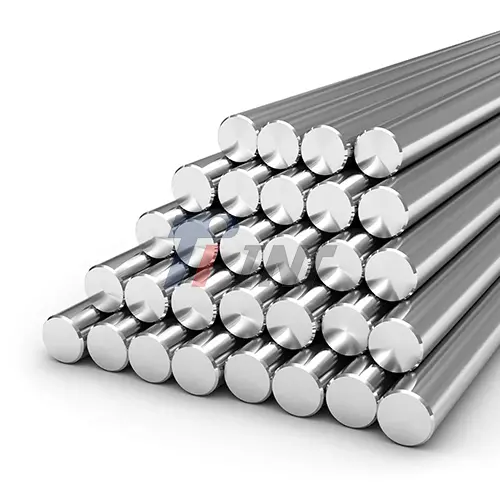
Understanding Key Properties of Ti6Al4V Titanium Bar 8mm
Mechanical Strength That Performs Under Real Workshop Conditions
The alloy's make-up—6% aluminum and 4% vanadium—creates a dual alpha-beta lattice that strikes a good balance between stiffness and flexibility. An 8mm Grade 5 bar that meets ASTM B348 and ISO 5832-3 standards has a yield strength of at least 825 MPa and an elongation of at least 10%. This means that the material will bend as expected before it breaks, rather than breaking without notice. This behavior is important on the forging floor because the quality of the blank affects the CNC yield further down the line.
Corrosion Resistance Across Aggressive Environments
On top of Ti6Al4V, a stable titanium oxide film that heals itself forms. Stainless steel relies on chromium passivation, which can break down in chloride- or acidic-rich cleaning conditions. Grade 5 titanium, on the other hand, always has an oxide layer. This means that tools that have been sterilized in an autoclave more than once will last longer and have fewer surface-quality rejects during customer audits.
Heat Treatment and Surface Finish Flexibility
Solution treatment and aging can make the tensile strength of Ti6Al4V titanium bar 8mm higher than 1,000 MPa when needed. With options for polished, sandblasted, or custom surface finishes, manufacturers can make the bar's output surface fit their grinding and buffing processes, which saves time and abrasive.
Comparative Analysis: Ti6Al4V Titanium Bar vs Stainless Steel Bar (8mm)
It's not usually just one thing that makes you choose between these two materials. The following comparison looks at the most important measurements for companies that make precision parts:
- Density: Ti6Al4V sits at 4.43 g/cm³ versus 316L stainless steel at approximately 7.99 g/cm³. For instrument handles and retractor shafts where ergonomics affect surgeon fatigue, this gap has direct clinical relevance.
- Tensile Strength: Both materials can exceed 800 MPa in optimized conditions, but Ti6Al4V achieves this at nearly half the mass, offering a strength-to-weight ratio roughly twice that of 316L.
- Fatigue Resistance: Grade 5 titanium demonstrates superior fatigue performance under cyclic loading — a critical property for instruments subjected to repeated sterilization and mechanical stress cycles.
- Corrosion Behavior: Ti6Al4V outperforms stainless steel in saline and oxidizing acid environments. Stainless steel remains prone to crevice corrosion in tight joint interfaces, a risk point in complex instrument geometries.
- Machinability: Stainless steel is generally easier to machine with standard tooling. Ti6Al4V requires controlled cutting parameters and appropriate coolant strategy, but with modern CNC setups this is manageable and the dimensional stability is excellent.
- Cost per kg: Stainless steel bars carry a lower upfront material price. However, when total cost of ownership includes reduced rejection rates, longer tool life cycles, and compliance documentation value, the titanium premium often narrows substantially.
Stainless steel remains a practical choice for high-volume, lower-specification components where corrosion exposure is limited and weight is not a constraint. Where regulatory scrutiny, biocompatibility requirements, and long-term durability are primary drivers, Ti6Al4V titanium bar 8mm holds a clear structural advantage.
Procurement Insights for Ti6Al4V Titanium Bar 8mm
What B2B Buyers Should Verify Before Placing an Order?
When purchasing Grade 5 titanium bars, procurement teams should make sure that the supplier has both ISO 9001:2015 and ISO 13485:2016 certifications. ISO 9001:2015 covers general quality management, while ISO 13485:2016 is specific to medical device supply chains and is being asked for more and more by OEM customers during factory audits. Having EU CE paperwork with each batch makes it much easier to get goods through customs when they are exported to European markets. Traceability can't be negotiated. There should be a mill certificate for each bar lot that has a heat number that can be used to match chemical composition and mechanical test data. This chain of paperwork helps your customers meet their new inspection needs.
Managing MOQ, Lead Time, and Specification Breadth
Instrument makers often place orders with a mix of specifications, such as a lot of 8mm bars along with Gr2 tubes and Gr1 sheet. If a supplier can't combine orders of different grades onto a single shipment, it adds extra work to the logistics process that isn't needed. With confirmed wait times of 3–4 weeks for standard sizes and the ability to split small batches across grades, you can directly lower the cost of keeping inventory and the risk to your working capital.
Why Ti6Al4V Is an Optimal Choice for Precision Instrument Parts?
Long-Term Value Beyond the Purchase Price
Ti6Al4V titanium bar 8mm has a low elastic modulus of about 113 GPa, which is an important property that goes beyond implant uses. This modulus means that the instrument rods and working ends are more flexible, which means that they don't crack as easily when they go through repeated heat rounds of sterilization. Because stainless steel has a higher modulus (about 193 GPa), it is stiffer, which can speed up fatigue at stress concentration points in complicated shapes.
Titanium providers who are approved under ISO 13485 can help manufacturers who want to hold CE-marked instrument lines by making it easier to track the materials they use. This paperwork helps with both product certification and the customer factory audit process, which is useful when trying to get contracts with European hospital procurement bodies.
Case Study: Ti6Al4V Bar in Surgical Instrument Manufacturing
For their high-end products, a company that makes medical instruments like forceps, retractor handles, and needle holds switched from using 316L stainless steel to Grade 5 titanium bar stock. The main reason for the change was demand from foreign markets. Buyers in Germany and the US wanted proof of biocompatibility and material tracking that met ISO 5832-3 standards.
After the change, the maker reported three results that could be measured. The weight of the parts went down by about 40%, which made the functional scores for end users better. Rejection rates at final inspection went down because the titanium bar stock was more stable in terms of its dimensions, which stopped tool wear from causing tolerance drift. The number of times customers passed audits went up because mill certificates with traceable heat numbers met paperwork needs that stainless steel providers weren't always meeting. These results are in line with what has already been written about how Ti6Al4V works in settings used for precision manufacturing, and they also match what instrument makers in the Sialkot and Solingen clusters have seen.
Conclusion
The choice between Ti6Al4V titanium bar 8mm and stainless steel is not black and white; it depends on the needs of the application, the rules in place, and the total cost of procurement. For companies that make goods for export markets that have clear quality requirements, Grade 5 titanium bar always meets those requirements in terms of resistance to corrosion, strength-to-weight performance, and compliance documentation. Stainless steel stays where it belongs when cost and standard requirements are important. An 8mm Ti6Al4V bar is the right choice for the rising number of precision instruments that are being made for certified foreign markets.
FAQ
Q1: What is the core difference between Ti6Al4V and stainless steel for instrument parts?
A: Ti6Al4V (Grade 5) has about twice the strength-to-weight ratio of 316L stainless steel. It also has better corrosion resistance in chloride-rich environments and is biocompatible according to ISO 5832-3. Stainless steel costs less per kilogram at first, but its surface is more likely to break down over time in harsh cleaning processes.
Q2: Can Ti6Al4V bars be customized to non-standard lengths and surface finishes?
A: Yes, grade 5 titanium bars can be cut to the length you need and have the surface cleaned, sandblasted, or given a different finish based on the purpose. This adaptability is especially helpful for companies that make a lot of different kinds of instruments that need to be made in different sizes.
Q3: How quickly can certified mill documents be provided with each shipment?
A: Reliable suppliers who are ISO 13485:2016 certified send traceable mill certificates with every shipment. These certificates include the heat number, chemical composition, and mechanical test results. This paperwork can be used for both export customs clearance and factory audits by end customers, and it doesn't take any extra time.
Q4: What certifications should I require from a titanium bar supplier?
A: Need at least EU CE certification, ISO 9001:2015 certification, and ISO 13485:2016 certification. Make sure that for each batch, the supplier gives out heat-traceable mill certificates that meet ASTM B348 and ISO 5832-3 standards.
Request a Quote from Baoji INT Medical Titanium Co., Ltd.
Since 2003, Baoji INT Medical Titanium Co., Ltd. has sold approved titanium bars to companies that make precise instruments in the US, Europe, and South Asia. We have Grade 5 bars in standard and custom sizes and are a trusted supplier of Ti6Al4V titanium bar 8mm. Our bars are certified by ISO 9001:2015, ISO 13485:2016, and EU CE. Every package comes with mill papers that can be tracked. To get prices and examples, email our team at export@tiint.com.
References
1. ASTM International. ASTM B348: Standard Specification for Titanium and Titanium Alloy Bars and Billets. ASTM International, 2019.
2. International Organization for Standardization. ISO 5832-3: Implants for Surgery — Metallic Materials — Part 3: Wrought Titanium 6-Aluminium 4-Vanadium Alloy. ISO, 2021.
3. Donachie, Matthew J. Titanium: A Technical Guide. 2nd ed. ASM International, 2000.
4. Rack, H.J., and J.I. Qazi. "Titanium Alloys for Biomedical Applications." Materials Science and Engineering: C, vol. 26, no. 8, 2006, pp. 1269–1277.
5. Niinomi, Mitsuo. "Mechanical Biocompatibilities of Titanium Alloys for Biomedical Applications." Journal of the Mechanical Behavior of Biomedical Materials, vol. 1, no. 1, 2008, pp. 30–42.
6. Peters, Manfred, and Christoph Leyens, eds. Titanium and Titanium Alloys: Fundamentals and Applications. Wiley-VCH, 2003.