




How Gr5 Titanium Wire Improves Medical Device Performance


 2026-10-28 09:18:14
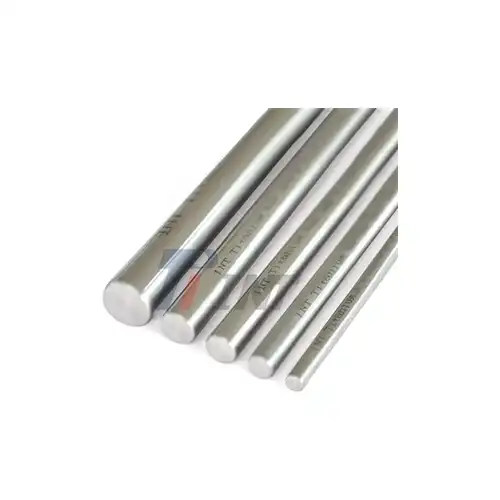
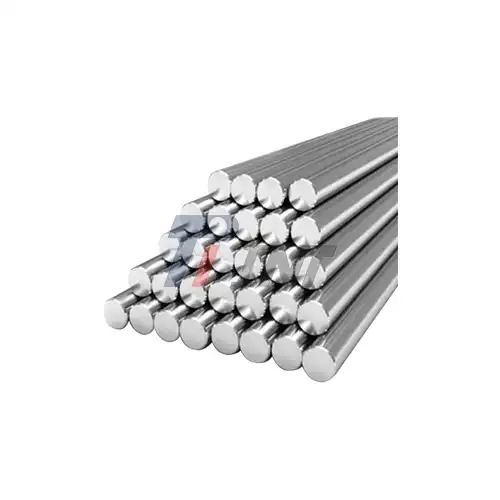
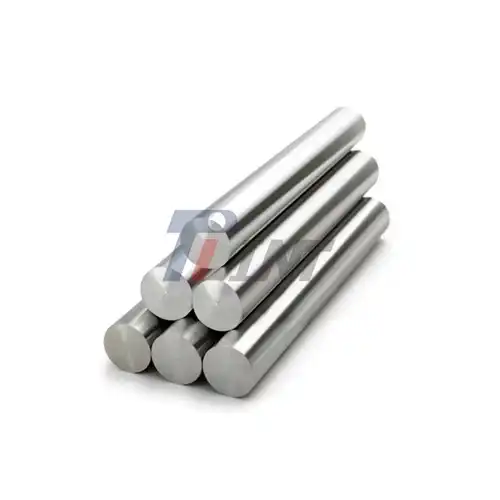
When procurement managers and process engineers evaluate raw materials for high-precision medical components, material performance is never a secondary consideration. Gr5 titanium straight wire — the straightened, precision-drawn form of Ti-6Al-4V alloy — has become a foundational input material for OEM contract manufacturers producing orthopedic implant blanks, spinal fixation components, and surgical instrument parts. Its tensile strength of ≥895 MPa, combined with a density of just 4.43 g/cm³, gives fabricators a distinct processing advantage over heavier alternatives. This guide examines exactly why Ti-6Al-4V wire outperforms competing materials and how to source it with confidence.
|
|
|
Understanding Gr5 Titanium Wire and Its Core Properties
What Makes Ti-6Al-4V Different from Other Titanium Grades?
Grade 5 Titanium is an alpha-beta alloy made up of 90% titanium, 6% aluminium and 4% vanadium. Gr5 has much better yield strength (>=825 MPa) and fatigue resistance than commercially pure Grade 2 titanium which has softer mechanical qualities suitable for simple formed parts. This difference in mechanical performance is crucial for precision manufacturing; Gr5 titanium straight wire stock will retain dimensional stability during thermal cycling when thin portions are laser cut or etched, something Grade 2 titanium cannot do. Its elongation of ≥10% enables the alloy to absorb manufacturing stress without brittle fracture, decreasing CNC tool breakage and dimensional chain failure, both important cost drivers in high-volume OEM production.
Beyond mechanical data, Gr5 titanium straight wire carries certified biocompatibility. Baoji INT Medical Titanium Co., Ltd. produces ISO 9001:2015, ISO 13485:2016 and EU CE certified products and provides the audit-ready paperwork quality engineers need when qualifying a new material source. Material traceability criteria are inherent in the MDR 2017/745 and FDA 21 CFR Part 820 supplier certification regimes. All manufacturing batches are sent with a complete Certificate of Analysis (COA) traceable to the heat number.
Comparing Gr5 Titanium Wire to Other Medical Wire Materials
Stainless Steel, NiTi, and Cobalt-Chromium: Where Each Falls Short?
In a medical OEM context, the alloy selection for wire incorporates cost modelling, downstream processing yield and regulatory paperwork. There is a performance ceiling in competition for every material.
Stainless steel (316L) is still the cheapest choice, but its density (~7.9 g/cm3) is roughly double that of Ti-6Al-4V. Heavier feed stock = more material cost per item and less tool life for stamping and etching processes. Also , galvanic corrosion in physiological fluids is a worry for long term implant applications . NiTi (nickel-titanium) wire provides superelasticity for certain guidewire applications, but its nickel presence presents biocompatibility challenges in the EU and US markets. Cobalt-chromium alloys are durable, but much less machinable than titanium, which increases cycle times in CNC and Swiss-lathe settings.
Gr5 titanium straight wire alone is: around 45% lighter than steel, MRI-friendly, and shown to be chloride corrosion resistant in physiological conditions. These features translate into quantifiable production improvement and less post-processing rework for precision fabrication companies making bone screw blanks, Kirschner wire feedstock, and spinal rod pre-forms.
Practical Applications of Gr5 Titanium Wire in Medical Device Manufacturing
Where Ti-6Al-4V Wire Performs in a Production Environment?
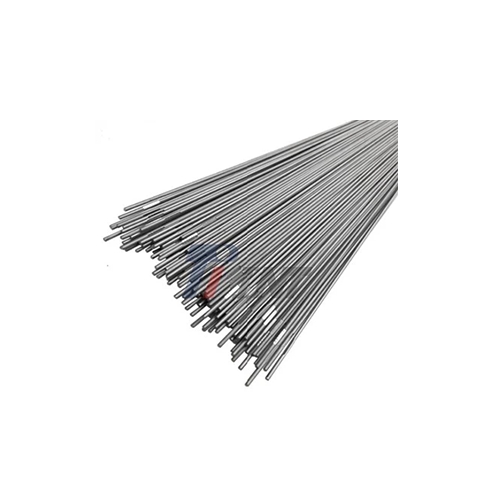
The straightened, precision-drawn format of Gr5 titanium straight wire is engineered to solve specific production constraints. Standard coiled wire carries residual curvature that causes feeding inconsistency and vibration in high-RPM Swiss CNC lathes and automatic bar feeders. Straight wire with a camber deviation below 1 mm/m eliminates this variable, enabling consistent part geometry across long production runs.
Here are the primary application areas where Ti-6Al-4V wire delivers measurable manufacturing value:
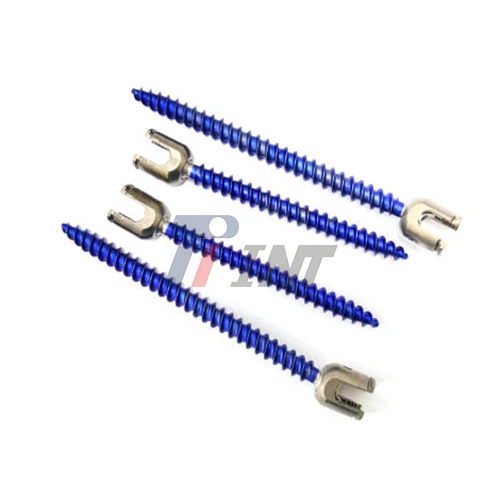
- Orthopedic implant blanks and K-wires: Ti-6Al-4V's stiffness-to-weight ratio allows Kirschner wires and fixation pins to penetrate cortical bone without deflection while remaining MRI-safe. Research published in the Journal of Biomedical Materials Research confirms that Ti-6Al-4V implants demonstrate osseointegration performance superior to stainless steel equivalents in long-term in vivo studies.
- Spinal fixation rod pre-forms: Spinal rod fabrication requires consistent diameter tolerance — typically h8 or tighter — across the full cut length. INT's production process incorporates hot rolling, forging, and ultrasonic flaw detection to ensure 100% structural integrity before material ships to the fabrication facility.
- Dental and surgical instrument components: Lightweight yet structurally rigid, Ti-6Al-4V wire serves as feedstock for components used in precision instruments. Its corrosion resistance in sterilization environments (autoclave, gamma, EO) extends instrument service life.
- Trauma fixation component blanks: Plates and pins produced from well-characterized Ti-6Al-4V feedstock carry predictable fatigue performance, reducing late-stage failure risk in trauma fixation scenarios.
Fabricators who source wire with poor surface finish — visible roller marks, oxidation discoloration, or micro-scratches — absorb the cost in grinding labor and etching defect rates.
Procurement Insights: How to Source High-Quality Gr5 Titanium Straight Wire?
Procurement qualification for medical Gr5 titanium straight wire involves more than price-per-kilogram comparison. The following criteria separate a supply partner capable of supporting an FDA or MDR-regulated production line from one that merely ships compliant raw material.
Dimensional precision is non-negotiable. Diameter tolerances in the h7–h9 range, verified by laser micrometer at production, must be documented in the dimensional inspection report. For etching and stamping operations, surface roughness (Ra) values below 0.8 µm minimize post-processing labor.
Chemical composition traceability protects downstream quality. ICP-OES analysis confirming aluminum, vanadium, and interstitial content — particularly hydrogen below 150 ppm to prevent embrittlement — must accompany each lot. INT provides full heat-traceable COAs with every shipment.
Customization flexibility directly affects production economics. INT supplies wire in diameter ranges from 0.5 mm to 5 mm with customizable cut lengths, deburring, and protective film packaging. This reduces raw material waste and eliminates the need for in-house slitting or re-cutting operations.
Audit readiness means the supplier can respond to an SQE audit request with production records, equipment calibration data, and system certifications. INT holds ISO 9001:2015 and ISO 13485:2016 certifications and supports customer audit visits.
Making the Smart Choice: Why Gr5 Titanium Wire Elevates Your Medical Devices?
The cost-benefit case for Gr5 titanium straight wire is grounded in yield data, not marketing language. First pass yield is improved if a precision etching line is operated on wire with a regulated surface quality and tight diameter tolerance. Supplier qualification audits may occur without delays, since every lot ships with a traceable COA. Cut-to-size delivery fits the dimensions of the manufacturing line to increase material utilisation and decrease scrap cost. These are not incremental gains -- at a contract manufacturing facility of 100 to 500 people making implant components for brand clients, they signify significant profit recovery.
Established in 2003 by Mr. Zhan Wenge, who has more than 30 years of experience in the titanium industry, Baoji INT Medical Titanium Co., Ltd. has become a well-known standard for the manufacture and R&D of medical titanium materials. INT’s manufacturing process comprises hot rolling, precision forging, ultrasonic testing and multi-stage quality inspection – all of which reliably produce wire that meets the dimensions and surface requirements expected by medical OEM fabricators.
Conclusion
Gr5 titanium straight wire delivers a combination of mechanical strength, corrosion stability, biocompatibility, and dimensional precision that competing alloys cannot replicate in medical device fabrication contexts. For OEM contract manufacturers sourcing feedstock for orthopedic, spinal, or surgical instrument components, the material choice connects directly to production yield, regulatory documentation quality, and long-term implant performance. Selecting a supplier with certified quality systems, traceable batch documentation, and customization capability is as important as the alloy specification itself.
FAQ
Q1: What diameter range is available for Gr5 titanium wire?
A: Baoji INT Medical Titanium Co., Ltd. supplies Ti-6Al-4V wire in diameters from 0.5 mm to 5 mm, with customizable cut lengths to match production line specifications. This range covers most orthopedic, spinal, and dental component fabrication requirements.
Q2: What documentation comes with each shipment?
A: Every batch ships with a full Certificate of Analysis (COA) traceable to the heat number, including chemical composition data and dimensional inspection records. This supports FDA and MDR supplier qualification requirements.
Q3: How does Gr5 compare to Grade 2 titanium for precision machining?
A: Grade 5 titanium offers significantly higher tensile and yield strength than Grade 2, making it the preferred choice for high-stress implant components. Its superior fatigue resistance also reduces scrap rates in CNC and Swiss-lathe environments.
Q4: Can small-batch or sample orders be arranged before volume commitment?
A: Yes. INT supports the standard OEM qualification flow: RFQ with drawing specifications, FAI sample provision, material certificate review, small-batch validation, and then volume supply. Contact the team at export@tiint.com to initiate a sample request.
Q5: Is the wire surface suitable for precision etching without additional grinding?
A: INT's Ti-6Al-4V wire is produced with surface quality targets of Ra ≤ 0.8 µm and inspected for the absence of roller marks, oxidation, and micro-defects. This reduces the grinding labor required before etching or stamping operations.
Partner with Baoji INT Medical Titanium Co., Ltd. for Your Next Project
Baoji INT Medical Titanium Co., Ltd. is an ISO 13485:2016-certified Gr5 titanium straight wire manufacturer with over 20 years of dedicated experience in medical-grade titanium materials. Whether you need custom-diameter wire, full batch traceability, or rapid FAI samples to support your qualification timeline, INT's production team is ready to respond. Reach out to export@tiint.com to request specifications and pricing.
References
1. Geetha, M., Singh, A. K., Asokamani, R., & Gogia, A. K. (2009). Ti-based biomaterials, the ultimate choice for orthopaedic implants — A review. Progress in Materials Science, 54(3), 397–425.
2. Long, M., & Rack, H. J. (1998). Titanium alloys in total joint replacement — A materials science perspective. Biomaterials, 19(18), 1621–1639.
3. Niinomi, M. (2008). Mechanical biocompatibilities of titanium alloys for biomedical applications. Journal of the Mechanical Behavior of Biomedical Materials, 1(1), 30–42.
4. Rack, H. J., & Qazi, J. I. (2006). Titanium alloys for biomedical applications. Materials Science and Engineering: C, 26(8), 1269–1277.
5. ASTM International. (2021). ASTM F136: Standard Specification for Wrought Titanium-6Aluminum-4Vanadium ELI Alloy for Surgical Implant Applications. ASTM International.
6. ISO. (2016). ISO 13485:2016 — Medical devices: Quality management systems — Requirements for regulatory purposes. International Organization for Standardization.