




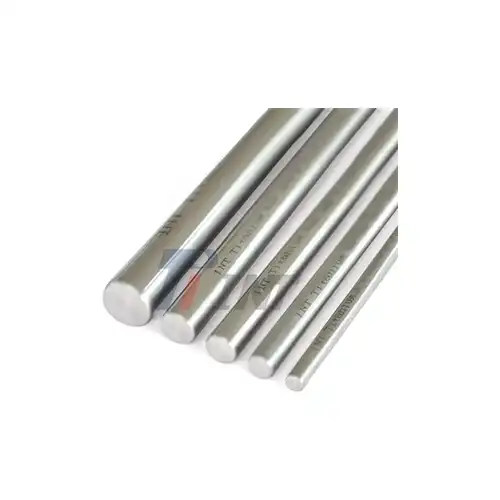
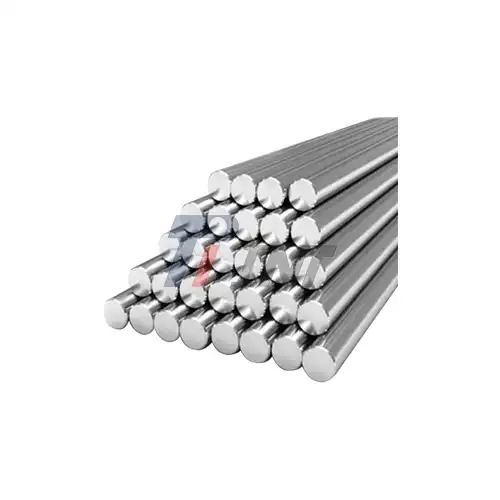
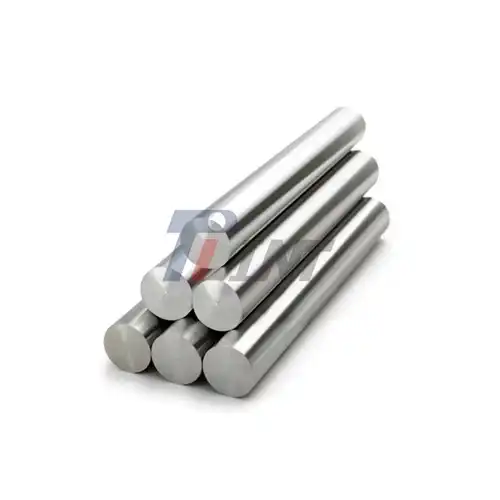
What Is ASTM F136 Titanium Round Bar for Medical Applications?


 2026-10-28 09:18:04
If you work in orthopedic implant manufacturing, you already know that material selection is not just a technical decision — it directly determines whether your product clears regulatory review. ASTM F136 titanium round bar is the implant-grade Ti-6Al-4V ELI alloy bar that serves as the foundational raw material for some of the most demanding surgical implant components in the world. This guide breaks down what it is, why it matters, how to procure it responsibly, and what to look for in a qualified supplier.
|
|
|
Understanding ASTM F136 Titanium Round Bar
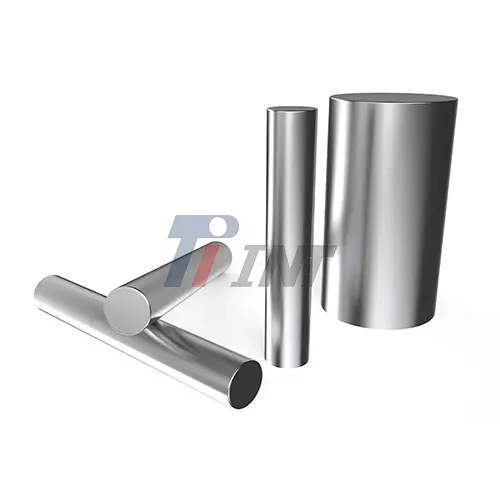
The ASTM F136 titanium round bar is a wrought Ti-6Al-4V Extra Low Interstitial (ELI) alloy bar made according to the ASTM International standard for use in surgical implants. The "ELI" name isn't just for looks; it requires very low amounts of oxygen (≤0.13%), iron (≤0.25%), carbon (≤0.08%), and nitrogen, which all affect how flexible and hard to break the material is.
How ASTM F136 Differs from Other Titanium Grades?
Standard Grade 5 titanium (ASTM B348) lets oxygen reach up to 0.20%. This may not seem like a big difference, but it has a big effect on how well the material can handle repeated physiological loads. Astm F67 only covers commercially pure titanium. It doesn't have the aluminum-vanadium alloying that makes F136 strong. ISO 5832-3 is like F136 in Europe, but it has slightly different interstitial limits. For companies that want to get FDA approval in the U.S. or a CE mark under MDR, F136 is the standard.
Mechanical Performance That Matters in the Clinic
The ASTM F136 titanium round bar has a minimum tensile strength of 860 MPa (125 ksi) and a minimum yield strength of 795 MPa (115 ksi). It can also stretch more than 10%. It has a stiffness value of about 110 GPa, which is about half of what stainless steel or cobalt-chrome have. When an implant carries weight that should go through the bone next to it, but doesn't because of its lower stiffness, this is called "stress shielding," and it leads to bone loss over time. For long-term orthopedic fixation, this metal is the best pick because of that one feature.
Why ASTM F136 Titanium Round Bar Is Preferred in Medical Applications?
This material is preferred by doctors because it has a number of qualities that no other material can fully replicate.
Biocompatibility and Corrosion Resistance
On its surface, the metal creates a solid, self-renewing titanium dioxide passivation layer that doesn't break down in body fluids and synovial conditions that are high in salt. Studies in the journals Biomaterials and Journal of Biomedical Materials Research show that Ti-6Al-4V ELI doesn't release as many ions as cobalt-chrome alloys do, which lowers the risk of metallosis and bad tissue reactions. It's also completely magnetic-free, which means it's safe for MRIs, which is becoming more and more important as imaging after surgery becomes normal practice.
F136 titanium is more resistant to rust in chloride settings than 316L stainless steel. It also has a much lower density (4.43 g/cm³ vs. 7.9 g/cm³), which means that implants are lighter without losing strength. Because of these qualities, it is the best material when patient safety and durability are very important.
Procurement Considerations for ASTM F136 Titanium Round Bar
Finding implant-grade titanium bars isn't just a business deal; it's also a process driven by compliance. Your regulatory affairs team, your SQE auditors, or the informed body will look over every record in the supply chain at some point.
Here are the most important procurement checkpoints that supply chain directors with a lot of experience always put first:
- Certificate of conformance (EN 10204 3.1): This document traces material composition and mechanical test results back to the original heat/ingot number. Without it, your material cannot be used in implant registration dossiers.
- Third-party chemical and mechanical verification: Reputable suppliers provide COA data alongside independent lab reports confirming oxygen, iron, aluminum, vanadium, and tensile/yield values meet F136 limits.
- Batch-to-batch consistency: CNC machining parameters for ASTM F136 titanium round bar — cutting speeds, tool life, feed rates — are calibrated to material hardness. Hardness drift between lots forces costly re-qualification and increases scrap rates.
- Flexible sizing and low MOQ for R&D phases: New implant programs require multiple diameter trials before locking production dimensions. Suppliers who accommodate sub-50kg sampling orders meaningfully accelerate development timelines.
- ISO 13485:2016 quality system certification: This is the minimum baseline for any supplier entering a medical device manufacturer's approved vendor list. Audit readiness — including remote/video audit support — is expected.
If your downstream product has a CE Mark or 510(k) clearance, you have to follow these rules. Your registration timeline will be safe if you choose a supplier who sees documentation as an important deliverable and not an afterthought.
Applications of ASTM F136 Titanium Round Bar in Medical Device Manufacturing
The mechanical structure of the metal matches the loads that happen in the human musculoskeletal system perfectly. Manufacturers use machines to shape this bar stock into parts that must work reliably inside the body for 15–20 years.
Orthopedic Trauma and Joint Reconstruction
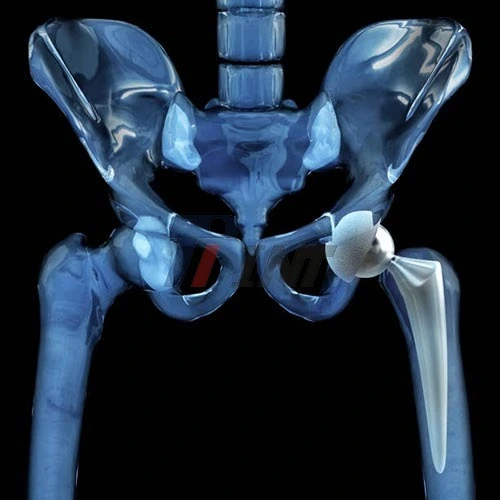
Most of the time, this bar is used to make hip stems, femoral components, tibial trays, bone plates, and intramedullary nails. The main reason doctors and engineers choose the ELI grade over normal Grade 5 is that it doesn't wear down easily under high cyclic loading. Hip joints go through about one million load cycles every year.
Spinal Fixation Systems
ASTM F136 titanium round bar is used to make spinal rods, pedicle screws, and locking plates because surgeons need to be able to shape rods during surgery without breaking them. High elongation threshold (≥10%) in F136 gives it the ductility that allows for this bending during surgery. Standard Grade 5 titanium, which has more interstitial content, can't always meet this need.
Dental and Craniofacial Applications
In the mouth, where the pH changes and the temperature changes all the time, F136 titanium perfectly avoids crevice corrosion and galvanic reactions. Long-lasting structural stability is shown by dental abutments, prosthetic screws, and craniofacial fixation plates that are machined from certified bar stock.
Tips for Selecting and Ordering ASTM F136 Titanium Round Bar
Making sure that the bar specs match your production needs before you place an order saves you a lot of money on repairs. For centerless ground bars, diameter tolerances are usually h8 or h9. Surface finish (peeled, ground, or polished) and length-cut tolerances all have an effect on the yield of the next step of the process. Make sure you agree to these terms in writing before you send out the buy order. Ask for a full material data package, not just the COA, from a new provider when you're reviewing them. As per ISO 10993, this should have the heat number, the ingot tracking record, the chemistry analysis, the mechanical test report, and any biocompatibility data that is needed. Suppliers who don't want to provide this paperwork pose a legal risk, no matter what price they offer.
Conclusion
ASTM F136 titanium round bar is the material specification that underpins regulatory compliance, patient safety, and long-term implant performance. Its ELI chemistry, fatigue resistance, low elastic modulus, and complete biocompatibility make it irreplaceable in orthopedic, spinal, and craniofacial device manufacturing. For procurement teams balancing compliance obligations with supply chain resilience, the right supplier combines certified documentation, batch traceability, flexible sampling, and a proven quality management system — not just competitive pricing.
FAQ
Q1: What is the difference between ASTM F136 and ASTM B348 Grade 5 titanium?
A: ASTM F136 is the ELI (Extra Low Interstitial) variant specifically designed for surgical implants. It enforces lower oxygen (≤0.13%) and iron (≤0.25%) limits compared to B348 Grade 5, which targets industrial and aerospace use. These tighter limits improve ductility, fracture toughness, and damage tolerance under physiological cyclic loading.
Q2: Does ASTM F136 titanium bar support MRI compatibility?
A: Yes. The alloy is non-ferromagnetic, producing no measurable deflection in magnetic fields and negligible heating during MRI sequences. Patients with implants machined from this material can safely undergo standard MRI examinations.
Q3: What traceability documents should accompany each shipment?
A: Each delivery should include an EN 10204 3.1 mill certificate, heat number markings on the bar or packaging, a certificate of analysis (COA), and, where applicable, biocompatibility support data per ISO 10993.
Q4: Can suppliers accommodate small-quantity orders for development programs?
A: Qualified suppliers with medical-focused operations typically accommodate sampling orders. Confirm MOQ flexibility and lead times for non-standard diameters during the supplier qualification phase.
Q5: Is ASTM F136 compatible with anodizing and surface treatment processes?
A: Yes. The alloy responds predictably to anodic oxidation, producing consistent oxide layer thickness across the diameter. Surface treatment lines should confirm bath chemistry compatibility with Ti-6Al-4V ELI to maintain biocompatibility certification.
Partner with a Trusted ASTM F136 Titanium Round Bar Manufacturer
Since 2003, Baoji INT Medical Titanium Co., Ltd. has been making medical titanium materials that are certified. Our stock of ASTM F136 titanium round bars is made in a way that is certified by both ISO 13485:2016 and ISO 9001:2015, and every heat has full EN 10204 3.1 traceability. We offer full documentation packages that speed up your regulatory filings, accept customer audits, and support sample orders for research and development projects. To get a quote and material specs, email our engineering team at export@tiint.com.
References
1. ASTM International. ASTM F136: Standard Specification for Wrought Titanium-6Aluminum-4Vanadium ELI Alloy for Surgical Implant Applications. ASTM International, 2023.
2. Geetha, M., et al. "Ti Based Biomaterials, the Ultimate Choice for Orthopaedic Implants." Progress in Materials Science, vol. 54, no. 3, 2009, pp. 397–425.
3. Niinomi, M. "Mechanical Biocompatibilities of Titanium Alloys for Biomedical Applications." Journal of the Mechanical Behavior of Biomedical Materials, vol. 1, no. 1, 2008, pp. 30–42.
4. Long, M., and H. J. Rack. "Titanium Alloys in Total Joint Replacement — A Materials Science Perspective." Biomaterials, vol. 19, no. 18, 1998, pp. 1621–1639.
5. ISO. ISO 5832-3: Implants for Surgery — Metallic Materials — Part 3: Wrought Titanium 6-Aluminium 4-Vanadium Alloy. International Organization for Standardization, 2021.
6. Rack, H. J., and J. I. Qazi. "Titanium Alloys for Biomedical Applications." Materials Science and Engineering: C, vol. 26, no. 8, 2006, pp. 1269–1277.