




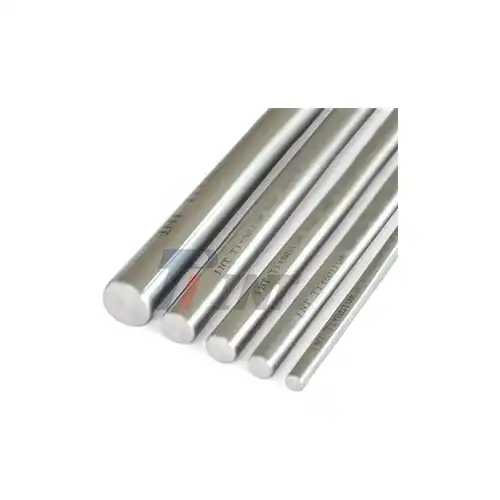
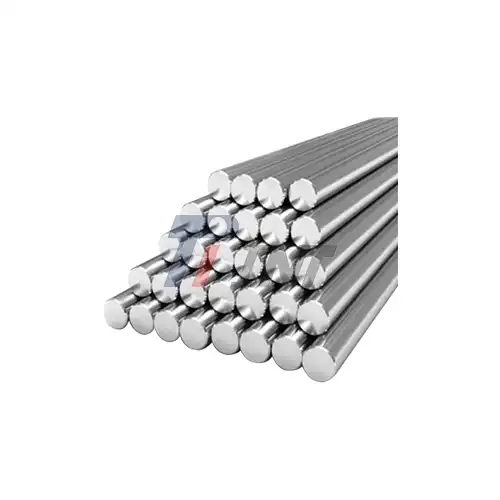
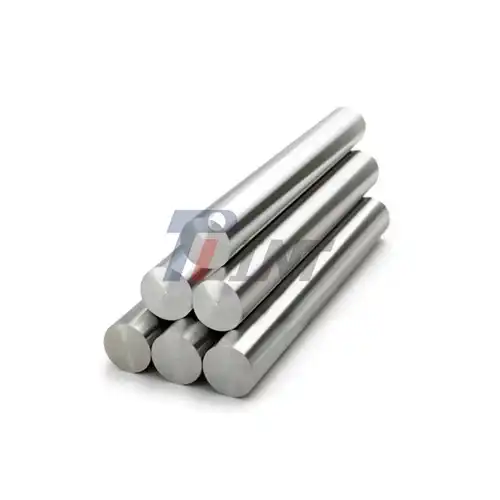
Is Gr23 Medical Titanium Bar Safe for Long-Term Implant Use in Surgery?


 2026-10-12 15:59:29
Yes — the Gr23 medical titanium bar is clinically validated as safe for long-term surgical implant use. Designated as Ti-6Al-4V ELI (Extra Low Interstitial), this alloy meets ASTM F136 and ISO 5832-3, the two most rigorous standards for implantable titanium materials. Its tightly controlled interstitial elements — oxygen below 0.13% and iron below 0.25% — deliver exceptional fracture toughness and biological inertness. Decades of orthopedic and spinal surgery outcomes confirm its durability inside the human body, making it the preferred raw material for device manufacturers building implants designed to last 20 years or longer.
|
|
|
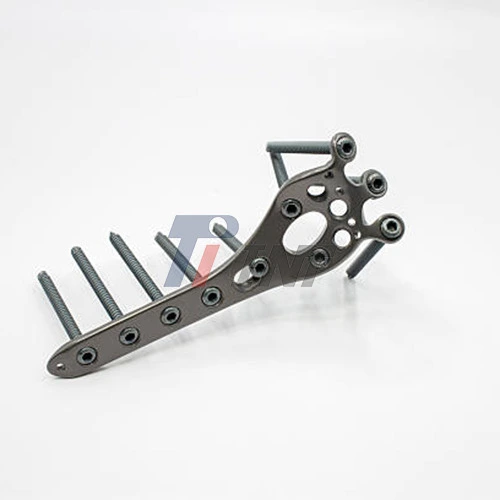
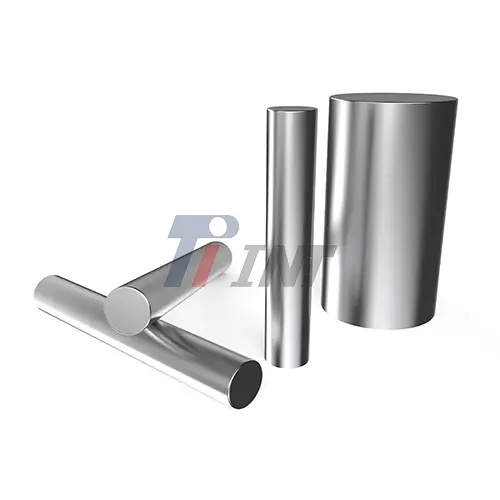
Understanding Gr23 Medical Titanium Bar and Its Properties
Gr23, which is also called Ti-6Al-4V ELI, is a high-purity version of Grade 5 titanium. The main difference is in how the intermediate elements are controlled. By lowering the amounts of oxygen, nitrogen, and iron below what Gr5 allows, the metal gets much higher ductility and fracture toughness. These are very important qualities for a hip stem or spinal rod that is loaded and unloaded millions of times a year.
Mechanical Performance That Matters for Implant Design
Gr23's numbers tell an interesting story. As per ASTM F136, the tensile strength is at least 860 MPa, the yield strength is at least 795 MPa, and the elongation at break is at least 10%. It has an elastic modulus of about 110 GPa, which is about half of what cobalt-chromium alloys and stainless steel have. That lower stiffness lowers stress shielding, which is when an implant that is too rigid makes the bone around it break down over time. When procurement experts ask for raw titanium bar stock, it's hard to find other metals that offer the same mix of strength and flexibility.
How Manufacturing Process Shapes Material Reliability
Controlled vacuum arc remelting (VAR), followed by precise casting and annealing, is needed to make uniform Gr23 bar stock. Each thermal cycle changes the final alpha-beta microstructure, which is made up of fine, evenly spaced grains that support fatigue resistance. Chemical and mechanical consistency from batch to batch is not just a marketing promise; it is a production practice that separates qualified medical titanium suppliers from cheap sources. If your CNC shop uses a material license to set the tooling settings, the bar that comes in six months later must behave the same way.
Safety and Biocompatibility of Gr23 Titanium Bar in Long-Term Implants
Validated Against International Medical Standards
The biocompatibility standards for ASTM F136, ISO 5832-3, and ISO 10993 are met by Gr23 medical titanium bar. The FDA says that Ti-6Al-4V ELI can be used to make internal devices. In physiological settings, stainless steel gives off nickel and chromium ions. Gr23 medical titanium bar, on the other hand, makes a solid, self-regenerating titanium dioxide layer on the surface that protects tissue from metal. Multiple peer-reviewed studies in orthopedic, craniofacial, and thoracic uses have proven that ion release in vivo is still very small.
This safety profile is supported by clinical data gathered over 30 years. Long-term follow-up studies on cementless hip stems made from Ti-6Al-4V ELI regularly report mortality rates of more than 95% at 15 to 20 years, with few adverse events due to the material. This level of published evidence makes biocompatibility justification a lot easier for regulatory affairs teams working on technical files under FDA 510(k) or EU MDR.
Comparative Analysis: Gr23 vs Other Implant Materials
When buying implant-grade raw materials, there are always trade-offs to think about. A smarter sourcing strategy is one that takes into account where Gr23 stands in comparison to other options.
Commercially pure titanium Gr2 is very resistant to corrosion and is best for dental parts that need to fuse with bone. But its tensile strength is only about 345 MPa, which means it can't be used in load-bearing orthopedic applications where Gr23 is needed. Stainless steel 316L is stronger, but it contains nickel, which can cause allergies, and there are concerns about MRI artifacts. Cobalt-chromium metals are better at protecting articular surfaces from wear, but their modulus is about twice that of bone, which makes stress buffering risks higher.
Gr23 is one of a kind because it is strong enough for structural implants, stiff enough to be close to bone, biocompatible, and MRI compatible all in one alloy. The slightly higher cost of the raw materials compared to stainless steel is balanced out by the lower rate of implant failure and the ease of working with a material that is widely accepted and has a lot of research behind it. When implant makers buy a lot of titanium bars, these saves make up for the difference in price up front.
Procurement Guide for Gr23 Medical Titanium Bars
Finding implant-grade Gr23 medical titanium bar is not a simple matter of following the rules. Here are the main things that supply chain directors with a lot of experience look for in a supplier:
- Certification breadth: Verify ISO 13485:2016 and ISO 9001:2015 certification. These are table-stakes requirements for any supplier entering a medical device supply chain audit.
- Material traceability: Every bar shipment must carry an EN 10204 3.1 Mill Test Certificate linking heat number, chemical analysis, and mechanical test results. Oxygen content reported at <0.13% and iron at <0.25% confirm genuine ELI grade compliance.
- Third-party test reports: Request independent laboratory verification of chemical composition, mechanical properties, and metallographic structure — not just in-house data.
- Small-batch flexibility: Development-stage implant programs require multi-specification trial quantities. A qualified supplier accommodates low-MOQ sampling without compromising documentation standards.
- Audit readiness: Accept scheduled customer audits, whether on-site or video-based, with full quality system documentation accessible.
These standards cover both the process of registering your goods and the production line at the same time. One batch of bar stock that doesn't meet the requirements can invalidate tooling parameters, start a chain reaction of scrap, and put at risk regulatory submissions that were based on a certain material specification.
If you buy Gr23 medical titanium bar from a maker with strong in-house process control instead of a selling middleman, your quality engineering team will have direct access to production data during audit season.
Best Practices for Handling and Using Gr23 Titanium Bars in Surgery
Machining Parameters and Contamination Control
Gr23 is not machined the same way as stainless steel. Due to its lower thermal conductivity, it needs sharp carbide tools, enough coolant flow, and slow cutting speeds to keep the surface from becoming too hard. The inactive oxide layer is damaged by any iron that gets into it during machining from tools, supports, or storage contact. Passivation after machining according to ASTM F86 gets rid of iron contaminants on the surface and restores corrosion resistance before the part goes through more processing.
Sterilization and Pre-Implantation Storage
All common ways of sterilization, like autoclaving, ethylene oxide, and gamma irradiation, don't change the mechanical properties of Gr23 titanium bar. The way something is stored is also important. Keeping it in sealed containers in a dry, temperature-controlled space keeps moisture out and stops surface oxidation, which can affect processes like anodizing that come after. Talk to your material provider about how to package the parts if they will be kept for a long time before they are processed.
Conclusion
The most clinically proven raw material for load-bearing surgical implants is still Gr23 medical titanium bar. Its controlled chemistry, near-bone elastic elasticity, and proven biocompatibility meet the main needs of companies that make orthopedic, spine, and craniofacial devices. If procurement teams are trying to build reliable, compliant supply chains, the most important thing is not whether to use Gr23 (the clinical record decides that), but whether your provider can deliver it with the paperwork, consistency, and audit transparency that your regulatory process needs.
FAQ
What is the difference between Gr23 and Gr5 titanium bar?
Both are made of Ti-6Al-4V, but Gr23 (ELI) has stricter rules on oxygen (below 0.13%) and iron (below 0.25%) than Gr5. This gives Gr23 better ductility and fracture toughness, making it the best choice for implantable devices where fatigue failure could put patients at risk.
Is Ti-6Al-4V ELI bar MRI compatible?
Gr23 is not magnetic and causes few imaging artifacts. Patients who have implants made from this alloy can safely go through an MRI scan. This makes tracking easier after surgery and lowers the device makers' clinical risk.
How do I verify that a supplied bar is genuine ELI grade?
Get the EN 10204 3.1 Mill Test Certificate and check the chemistry analysis part for the heat number. Oxygen levels below 0.13% and iron levels below 0.25% are proof that the material really meets Gr23 standards. Retesting by an independent third-party laboratory gives you more peace of mind during the initial supplier qualification process.
What certifications should a Gr23 titanium bar supplier hold?
At the very least, they must have ISO 13485:2016 for managing the quality of medical devices, ISO 9001:2015 for general quality systems, and be able to give ASTM F136-compliant material certificates with full documentation of their traceability.
Can Gr23 bar be supplied in small quantities for development projects?
Qualified suppliers allow low-MOQ samples with all the paperwork still in place, including the same Mill Test Certificates and COA that come with large orders. This gives developers of new implants more freedom without causing compliance holes.
Source Qualified Gr23 Titanium Bar from Baoji INT Medical Titanium Co., Ltd.
Since 2003, Baoji INT Medical Titanium Co., Ltd. has sold implant-grade titanium to companies around the world that make medical devices. As a recognized producer of Gr23 medical titanium bars with ISO 13485:2016 and ISO 9001:2015, we offer fully traceable bar stock with EN 10204 3.1 certificates in both custom sizes and low-minimum order quantities (MOQ). To get a material specification sheet and example, email our scientific team at export@tiint.com or go to inttitanium.com.
References
1. ASTM International. ASTM F136: Standard Specification for Wrought Titanium-6Aluminum-4Vanadium ELI Alloy for Surgical Implant Applications. 2023.
2. International Organization for Standardization. ISO 5832-3: Implants for Surgery — Metallic Materials — Part 3: Wrought Titanium 6-Aluminium 4-Vanadium Alloy. 2021.
3. Niinomi, M. Mechanical Biocompatibilities of Titanium Alloys for Biomedical Applications. Journal of the Mechanical Behavior of Biomedical Materials. 2008.
4. Geetha, M., Singh, A.K., Asokamani, R., & Gogia, A.K. Ti Based Biomaterials, the Ultimate Choice for Orthopaedic Implants — A Review. Progress in Materials Science. 2009.
5. Elias, C.N., Lima, J.H.C., Valiev, R., & Meyers, M.A. Biomedical Applications of Titanium and Its Alloys. JOM — Journal of the Minerals, Metals and Materials Society. 2008.
6. Rack, H.J., & Qazi, J.I. Titanium Alloys for Biomedical Applications. Materials Science and Engineering: C. 2006.