




How Do Titanium Bar Implants Compare With All-on-4 Dental Implants?


 2026-10-10 14:44:33
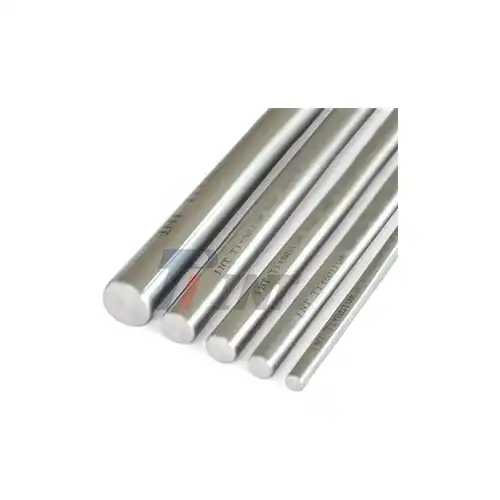
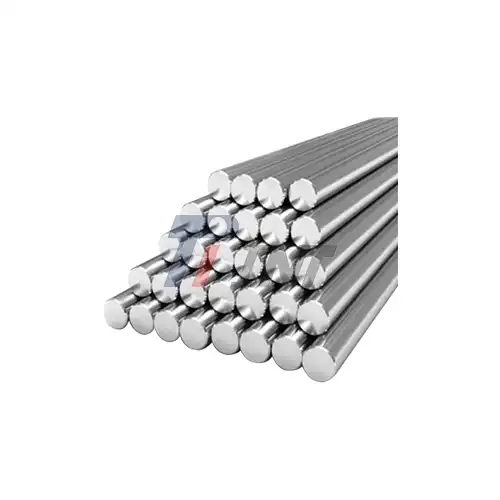
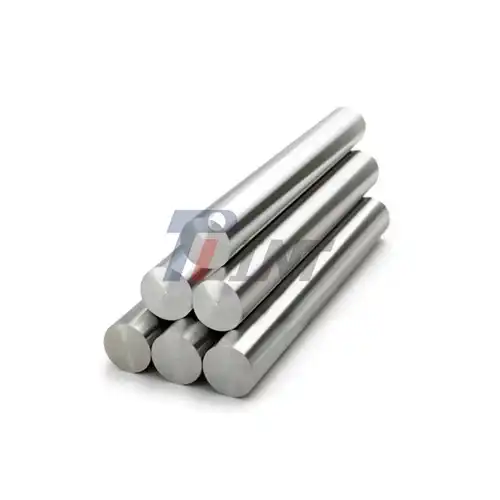
Titanium bar implants and All-on-4 dental implants serve fundamentally different structural roles, though both rely on medical-grade titanium as their core material. Titanium bar implants are precision-machined suprastructures — typically fabricated from Ti-6Al-4V ELI (Grade 23) — that bridge multiple endosseous fixtures, distributing occlusal load across the full arch. All-on-4, by contrast, is a surgical protocol using four strategically angled implants to support a fixed prosthetic arch. Understanding this distinction is critical for B2B procurement teams sourcing implant-grade titanium bar stock for downstream manufacturing and clinical application.
|
|
|
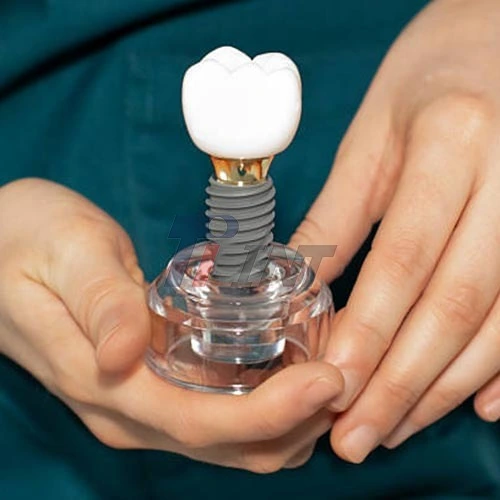
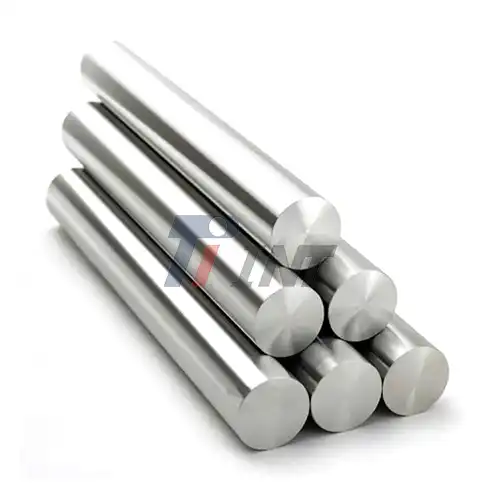
Overview of Titanium Bar Implants and All-on-4 Dental Implants
What Are Titanium Bar Implants?
A titanium bar implant is a rigid, machined substructure that connects several osseointegrated fixings. Its job is to carry and shift the forces of biting and chewing across the tooth arch. These bars are mostly made from Ti-6Al-4V ELI according to ASTM F136 or ISO 5832-3.
They have a tensile strength of more than 860 MPa and a Young's modulus of about 110 GPa, which is very close to the value of cortical bone. This lowers the risk of stress buffering and bone loss. CAD/CAM milling from monoblock titanium bar stock guaranties accurate measurements and passive fit, which is a requirement that has a direct effect on how well the bone integrates over time.
What Is the All-on-4 Protocol?
Dr. Paulo Maló came up with the All-on-4 technique in the early 2000s. It uses four implants—two straight in front and two tilted 45° at the back—to hold a full-arch fixed prosthesis in place, usually without bone grafting. The tilted placement of the implant makes the most of the available anterior bone, which lets many patients load their teeth the same day.
When compared to traditional multi-implant protocols, All-on-4 cuts down on treatment time and cost. However, the titanium parts that support both the implants and the connecting bar still have to meet the same strict material requirements. These include ASTM F136 compliance, confirmed biocompatibility, and tracked heat lot paperwork.
Core Comparison: Titanium Bar Implants vs. All-on-4 — Performance and Suitability
In the end, both systems depend on high-purity titanium metal, but their performance standards and structure needs are very different.
Design of the Structure and Distribution of Loads
Titanium bar implants work like braces that share the weight. A well-fitted bar reduces per-implant stress by spreading forces evenly across a full edentulous arch. This is especially important when patients produce occlusal forces close to 700 N. The All-on-4 prosthetic bar does a similar mechanical job, but because the procedure only uses four fixture points, the shape and strength of the bar are mechanically looked at more closely.
"Passive Fit" and "Milling Precision"
The most important thing in both methods is passive fit, which means that there is no internal stress when a bar sits on its abutments without being actively fastened. Studies in the International Journal of Oral & Maxillofacial Implants confirm that misfits greater than 150 µm are linked to higher rates of screw fracture and bone loss around the implant. To get a repeatable passive fit, you need to mill from approved, stress-relieved titanium bar stock that has a controlled microstructure and close dimensional limits (h8/h9 range).
Recovery and living a long time
All-on-4 methods often allow instant or early loading, which speeds up the healing process for patients. Traditional overdentures that are held in place by bars need more time to fuse with the bone before they can be loaded. Longevity: 10-year survival rates for both systems usually go over 94% when the right materials and surgical procedures are used. This shows that material quality at the bar level is a key factor in determining long-term success.
All-on-4 protocols often permit immediate or early loading, shortening patient recovery timelines. Traditional bar-retained overdentures require a longer osseointegration period before loading. In terms of longevity, published 10-year survival data for both systems typically exceeds 94% when appropriate materials and surgical protocols are followed, underscoring that material quality at the bar level is a primary determinant of long-term success.
Market Considerations for B2B Clients: Procurement, Pricing, and Supplier Landscape
One of the most compliance-sensitive buying choices a medical device company has to make is where to get implant-grade titanium bar stock. The following things affect how teams in North America, Europe, and Asia decide what to buy.
When supply chain directors with a lot of experience buy things, these are the main things they look at:
- Certification alignment: Raw material must conform to ASTM F136 (Ti-6Al-4V ELI) or ASTM F67 (CP titanium grades) and carry EN 10204 3.1 mill certificates with full chemical composition and mechanical property data per heat lot.
- Third-party verification: Leading buyers require independent laboratory confirmation of chemistry, hardness, and metallographic structure before approving a new titanium bar implants supplier into their approved vendor list.
- Flexible order quantities: New implant development programs require small-batch sampling across multiple diameters. Suppliers incapable of accommodating low minimum order quantities create unnecessary friction during the R&D phase.
- ISO 13485 system readiness: Regulatory affairs managers and supplier quality engineers treat ISO 13485:2016 certification as a baseline, not a differentiator. Audit readiness and documentation responsiveness are the real differentiators.
All of these things together show if a material supplier can support product registration, manufacturing scale-up, and production schedules that don't stop — titanium bar implants being a case in point.
Advantages and Limitations: Helping Buyers Make Informed Decisions
Strengths of Titanium Bar Implants as a Material Platform
When it comes to all the important factors, medical-grade titanium bars have a set of qualities that no other alloy can match. The naturally occurring TiO₂ oxide layer on the surface protects against corrosion in the mouth without the need for a coating. Grade 23 has extra-low interstitial chemistry, which improves ductility and fatigue toughness under cyclic occlusal loads.
This is a trait that is directly related to the 10+ year service life that device makers expect. When it comes to machinability, stress-relieved Ti-6Al-4V ELI cuts bur wear by about 30–40% compared to sintered cobalt-chrome. This means that dental labs and implant makers can save money on the cost of making each unit.
Considerations and Constraints
For all-on-4 bar fabrication, geometric tolerances must be tighter than for normal partial frameworks. This raises the standard for material consistency when it comes in. Any change from batch to batch in hardness or microstructure can change the parameters of a CNC tool, which can lead to more scrap during production. For procurement teams, this means that chemical and mechanical traceability can't be skipped; it's not just a legal requirement.
Future Trends and Innovations in Dental Implant Technologies
The market for oral implant products is changing quickly. Anodization and micro-arc oxidation are surface treatments that are being improved to speed up osseointegration at the implant-bone interface. For these treatments to work, the base titanium alloy must be consistent and free of contaminants. Zirconia options are becoming more popular in the dental field for front teeth cosmetic reasons, but titanium bar implants are still the best choice for full-arch load-bearing uses because they are more resistant to breaking.
Thanks to CAD/CAM processes, titanium bar stock is going from being a standard input to being a precise material specification. As scanning accuracy and milling technology get better, the tolerances that are needed on raw bar stock are getting tighter. This makes it even more important to choose a titanium bar implants maker whose microstructural consistency and stable batch-to-batch repeatability have been proven.
Conclusion
Titanium bar implants and All-on-4 frames both need implant-grade titanium metal that is made to strict, verifiable standards. There is no room for material uncertainty in the mechanical and chemical needs of making a full-arch bar. Certified, traceable, batch-consistent titanium bar stock is important for supply chain teams to protect both their legal standing and their output yield. The quality of an implant is finally decided by the materials that are chosen at the raw stock level.
FAQ
How long do titanium bar implants typically last?
Multiple prospective cohort studies show that implant-supported titanium bars have clinical survival rates above 94% after 10 years, as long as they are properly designed for occlusal loading and the material is proven to be compliant. A big part of how well a material works over time is its quality, especially how regular the grains are and how well the oxygen level is controlled in ELI grades.
What titanium grade is standard for full-arch bar fabrication?
The standard for load-bearing dental suprastructures is Ti-6Al-4V ELI (Grade 23) that meets ASTM F136. Because it is biocompatible, has a tensile strength of over 860 MPa, and is ductile, it is better for full-arch uses than commonly pure grades.
Can titanium bar stock be welded during fabrication?
Laser welding is technically possible, but the best way to mill is still from a single-block bar. When you weld, heat-affected zones can form that make the bond less resistant to stress and more likely to rust.
What documentation should a titanium bar material supplier provide?
At the very least, an EN 10204 3.1 mill certificate, a certificate of conformance (COA) with the heat lot number, a chemical makeup analysis, mechanical test data, and a biocompatibility statement using ISO 10993 or something similar.
How does batch-to-batch consistency affect CNC machining?
When batches of metal have different hardnesses, machinists have to re-adjust the tool paths and feed rates, which takes more time and leads to more scrap. Before accepting a new material source, procurement teams should ask for hardness data across a range of temperatures.
Partner With Baoji INT Medical Titanium Co., Ltd. for Certified Titanium Bar Stock
Baoji INT Medical Titanium Co., Ltd. has been in business since 2003 and sells ISO 13485:2016-certified Ti-6Al-4V ELI bar stock to companies around the world that make implant devices. The material we use is in line with ASTM F136 and ISO 5832-3. It can also be tracked back to EN 10204 3.1 and has a third-party test report to back it up. For research and development programs, we can do small-batch sampling, and we can scale up to annual framework volumes. To get specifications, email us at export@tiint.com or go to inttitanium.com.
References
1. Maló, P. et al. — "All-on-4 Immediate-Function Concept with Brånemark System Implants." Clinical Implant Dentistry and Related Research, 2003.
2. Branemark, P.I. et al. — "Osseointegration and Its Experimental Background." Journal of Oral Surgery, 1977.
3. Abdulmajeed, A.A. et al. — "Passive Fit of Implant-Supported Frameworks: A Systematic Review." International Journal of Oral & Maxillofacial Implants, 2011.
4. Niinomi, M. — "Mechanical Biocompatibilities of Titanium Alloys for Biomedical Applications." Journal of the Mechanical Behavior of Biomedical Materials, 2008.
5. ASTM International — ASTM F136: Standard Specification for Wrought Titanium-6Aluminum-4Vanadium ELI Alloy for Surgical Implant Applications, 2022.
6. ISO — ISO 5832-3: Implants for Surgery — Metallic Materials — Part 3: Wrought Titanium 6-Aluminium 4-Vanadium Alloy, 2021.