




Ti6Al4V Titanium Bar 8mm: A B2B Guide to Grades and Uses in Industry


 2026-10-12 15:59:34
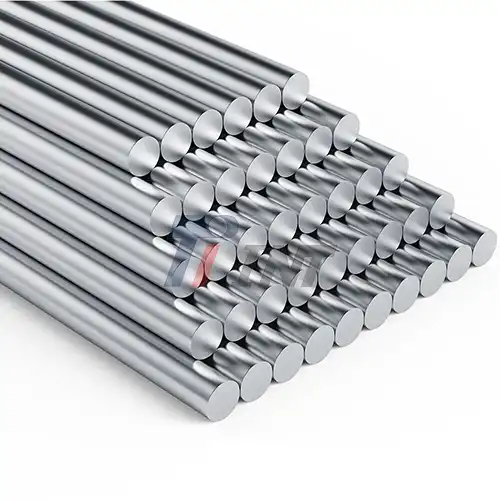
If you manufacture surgical instruments and source titanium bar stock regularly, the Ti6Al4V titanium bar 8mm diameter is likely already on your approved materials list — or it should be. This guide covers everything a B2B procurement team needs: alloy composition, mechanical data, real industrial applications, selection criteria versus alternatives, and a practical sourcing checklist. Whether you run a forging and CNC workshop in Sialkot or a precision instrument facility in Solingen, the information here will help you make faster, better-informed purchasing decisions.
|
|
|
Understanding Ti6Al4V Titanium Bar 8mm: Properties and Composition
What Makes This Alloy Different
Grade 5 titanium, or Ti6Al4V, is the most common type of titanium metal used around the world. It makes up about half of all the titanium used in all businesses. It is made up of about 6% aluminum and 4% vanadium, which creates a dual-phase alpha-beta lattice with a tensile strength of at least 895 MPa, a yield strength of at least 825 MPa, and an extension of at least 10%. With a density of only 4.43 g/cm³, it has a strength-to-weight ratio that is better than both stainless steel and aluminum metals in the same size range.
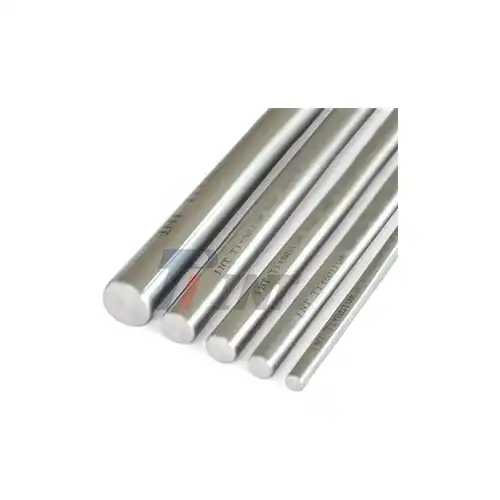
The 8mm diameter isn't just a guess. It is just the right thickness to be used as forging stock for instrument handles and intramedullary nail blanks, but not too thin to feed CNC Swiss-type lathes without too much material waste. As long as the bars are compliant with ASTM B348 and ISO 5832-3, they come with paperwork that can be tracked and will stand up to customer checks and export clearance processes.
Corrosion Resistance and Surface Performance
The metal creates a titanium dioxide (TiO₂) inactive layer that is steady and renews itself. This layer is resistant to attack from saline solutions, sterilization agents, and weak acids. In places that make medical instruments and autoclave them over and over, this feature is a must—which is exactly why Ti6Al4V titanium bar 8mm is specified for such demanding environments. With choices for polished, sandblasted, or custom surface finishes, downstream makers can meet specific tribological or esthetic needs without having to add a second outsourcing step.
Industrial Applications and Typical Uses of Ti6Al4V 8mm Bars
Surgical Instruments and Medical Forging Blanks
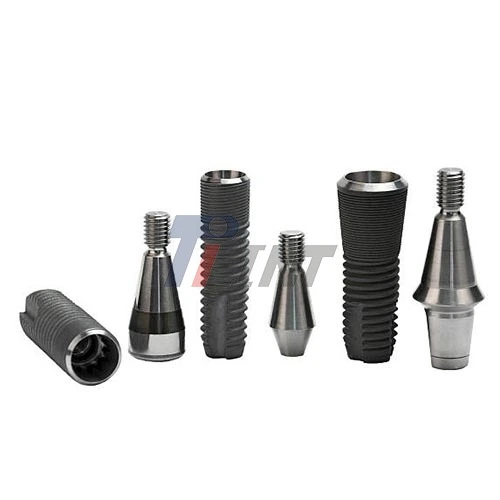
Forging billets are the main use for 8mm Grade 5 titanium rod in the manufacturing of surgical instruments. These bars are cut to length, heated in an alpha-beta phase field, and die-forged into net-shaped blanks in workshops that make retractors, clamp handles, and working-end parts. Because it has a low elastic modulus (about 114 GPa), the material is also a good choice for intramedullary nail blanks and orthopedic fixing parts that need to reduce stress.
When used in the following ways, 8mm Ti6Al4V bar stock produces measured benefits:
- Surgical instrument handles and shafts: The alloy's fatigue resistance withstands repeated mechanical cycling from sterilization and clinical use without dimensional creep. Consistent alpha-beta microstructure across bar length ensures uniform CNC tool wear rates, keeping per-part machining costs predictable.
- Forging blanks for orthopedic components: Tensile strength of ≥895 MPa supports thin-wall forged geometries without cracking. The material responds well to solution treatment and aging, allowing workshops to tailor hardness for specific instrument classes.
- Aerospace and precision engineering components: Aircraft structural fasteners and structural brackets leverage the same mechanical profile. Compliance with international aerospace material standards gives procurement teams dual-use flexibility across product lines.
When precision instrument makers are fighting for foreign contracts, they have to deal with cost and quality pressures. These benefits directly help them. When machinability is stable, tolerances get tighter and reject cycles go down. This protects margins in the long run.
Comparison and Selection: Ti6Al4V 8mm vs Alternatives
When to Choose Ti6Al4V Over Other Grades or Materials
Every process that comes after the bar stock level is affected by the materials that are chosen. The most important trade-offs that procurement teams look at are shown below:
Ti6Al4V (Grade 5) at 8mm has the best yield strength in the normal medical titanium family. This makes Ti6Al4V titanium bar 8mm the first choice when resistance to load or fatigue is the most important design factor. Grade 2 commercially pure titanium is better at being cold shaped and resisting corrosion in harsh chemical conditions, but its yield strength of about 275 MPa makes it unsuitable for use in structural surgery instruments. Ti-3Al-2.5V (Grade 9) is in the middle. It can be shaped better than Grade 5, but it's not strong enough for cast instrument cases.
Even though stainless steel 316L is still cheaper per kilogram, it is 57% heavier at the same cross-section and doesn't have the autoclave-cycle rust stability of titanium. The extra cost per kilogram of Grade 5 titanium bar can be made up for in how the product is positioned if the maker is sending it to markets that value instrument weight and long-term biocompatibility.
The 8mm width works better than the 6mm bar in forging tasks because it has enough die-fill volume for bigger instrument heads without needing an extra step to flatten it. For CNC-turned parts with a finished diameter of less than 6 mm, starting from 8 mm stock cuts down on the time it takes to turn while keeping the machine centered.
Procurement Guide for Ti6Al4V Titanium Bar 8mm
Sourcing Criteria That Protect Your Production Schedule
Finding titanium bars for making instruments is more complicated than just negotiating prices. When looking for a Ti6Al4V titanium bar 8mm supplier, experienced procurement managers put these things in order of importance:
- Traceable mill certificates: Every heat lot must carry a material test report (MTR) that documents chemical composition, mechanical test results, heat number, and compliance with ASTM B348 / ISO 5832-3. This documentation directly supports ISO 13485 supplier audits and customer factory inspections.
- Flexible MOQ and multi-spec splitting: Instrument workshops typically run 8–12 active bar diameters simultaneously. A supplier that allows split orders across Gr1, Gr2, Gr4, and Ti6Al4V in a single shipment reduces inventory carrying costs and simplifies logistics.
- Lead time reliability: A 3–4 week door-to-port lead time is the practical ceiling for monthly replenishment cycles. Suppliers holding finished bar inventory in standard diameters can compress this to 1–2 weeks for repeat orders.
- Certification readiness: ISO 9001:2015 and ISO 13485:2016 certificates from the manufacturer, not a trading intermediary, are essential. EU CE marking on the material documentation supports export declarations to European customers.
Readiness for certification: You must have ISO 9001:2015 and ISO 13485:2016 certificates from the maker, not a trade middleman. EU CE marking on the material documentation helps with export claims to customers in Europe.
Manufacturing and Heat Treatment of Ti6Al4V Titanium Bar 8mm
From Ingot to Finished Bar
To meet the ASTM B348 requirements for chemistry uniformity, production starts with either vacuum arc remelting (VAR) or electron beam melting. The ingot is then hot-forged in the alpha-beta phase field (below the beta transus of about 995°C) to smooth out the grain structure. It is then rolled carefully to an 8mm circle. This series of thermomechanical processes creates the balanced alpha-beta microstructure that makes the bar durable and easy to machine.
Usually, a mill anneal at 700–850°C followed by air cooling is used for heat treatment. This locks in the mechanical property profile and stabilizes any remaining stress. Before shipping, internal integrity is checked using non-destructive testing methods, such as ultrasonic inspection. This makes a bar that is the same roughness and microstructure from one end to the other. This is what CNC and grinding processes need to keep cutting parameters the same throughout a production run.
Conclusion
The 8mm Ti6Al4V Grade 5 bar—known in the trade as Ti6Al4V titanium bar 8mm—has a clear and logical place in the supply chains for making surgical instruments. Its tensile strength is at least 895 MPa, its yield strength is at least 825 MPa, and its density is 4.43 g/cm³. These mechanical properties, along with the fact that it is biocompatible and doesn't corrode, make it a reliable base for forging instrument blanks, CNC-turning shafts, and precision-ground working ends. When purchasing, teams should base their choices on traceable mill certificates, flexible MOQ terms, and suppliers who have been certified by ISO 13485. This will protect both product quality and production continuity.
FAQ
What tensile strength does an 8mm Ti6Al4V bar typically achieve?
A Grade 5 titanium bar with an 8mm width meets the requirements of ASTM B348 and ISO 5832-3. It has a minimum tensile strength of 895 MPa, a yield strength of 825 MPa, and an extension of at least 10%. These numbers are for the annealed state and are backed up by per-heat mechanical testing that is written down in the mill certificate.
How does Ti6Al4V differ from commercially pure titanium grades for instrument manufacturing?
The yield strength of Grade 5 metal is about three times that of Grade 2 CP titanium. This makes it the best choice for parts that need to withstand mechanical load after being formed or machined. CP grades (Gr1–Gr4) are still better for cold-forming, corrosion-sensitive, or highly polished uses where strength is not the most important thing.
What lead time should I expect for a repeat order of 8mm Grade 5 bar?
For regular customers with known specs, providers who keep finished bars in stock can usually ship within one to two weeks. New orders or diameters that aren't in stock usually have a 3–4 week lead time, which is about the same amount of time that instrument workshops need to restock every month.
Does the bar ship with documentation supporting ISO 13485 audits?
Yes. Each order comes with a full material test report that includes the heat number, chemical composition, mechanical test results, and standard compliance references. This helps meet the requirements for traceability set by ISO 13485:2016 quality management systems.
Partner with a Verified Ti6Al4V Titanium Bar 8mm Manufacturer
Since 2003, Baoji INT Medical Titanium Co., Ltd. has sold high-quality medical titanium materials. Our stock of Ti6Al4V titanium bar 8mm comes with full mill certificates, documentation for ISO 9001:2015 and ISO 13485:2016, and EU CE compliance. It has everything your production and audit teams need. As usual, we offer custom cut-to-length, a flexible MOQ, and solid lead times of 3–4 weeks. To get a price right away, email our team at export@tiint.com or go to inttitanium.com.
References
1. ASTM International. ASTM B348: Standard Specification for Titanium and Titanium Alloy Bars and Billets. ASTM International, 2021.
2. International Organization for Standardization. ISO 5832-3: Implants for Surgery — Metallic Materials — Part 3: Wrought Titanium 6-Aluminium 4-Vanadium Alloy. ISO, 2021.
3. Donachie, M. J. Titanium: A Technical Guide. 2nd ed. ASM International, 2000.
4. Rack, H. J., and Qazi, J. I. "Titanium Alloys for Biomedical Applications." Materials Science and Engineering: C, vol. 26, no. 8, 2006, pp. 1269–1277.
5. Lütjering, G., and Williams, J. C. Titanium. 2nd ed. Springer, 2007.
6. Peters, M., Kumpfert, J., Ward, C. H., and Leyens, C. "Titanium Alloys for Aerospace Applications." Advanced Engineering Materials, vol. 5, no. 6, 2003, pp. 419–427.