
Medical Titanium Grades Explained for Implant Manufacturers


 2026-09-08 10:00:34
When sourcing materials for surgical instruments and implants, understanding the nuances of titanium grades becomes non-negotiable. Medical titanium bar stock—engineered from high-purity alloys like Ti6Al4V ELI or commercially pure variants—serves as the foundational raw material for forging, CNC machining, and precision grinding of forceps, scissors, retractors, and orthopedic implants. Selecting the correct grade directly impacts machinability, polishing efficiency, cost per unit, and compliance documentation—factors that determine whether your next production run meets tight margins and export certifications.
|
|
|
Understanding Medical Titanium Bars and Their Key Properties
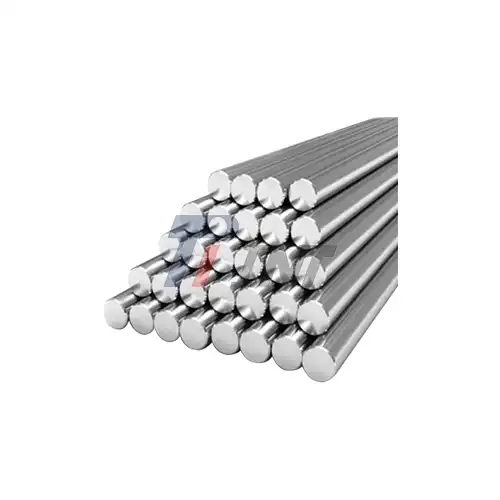
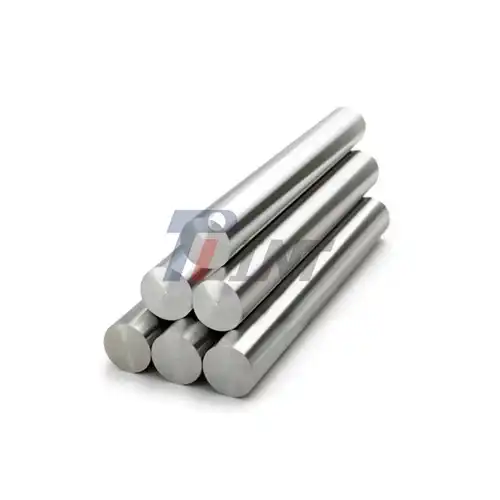
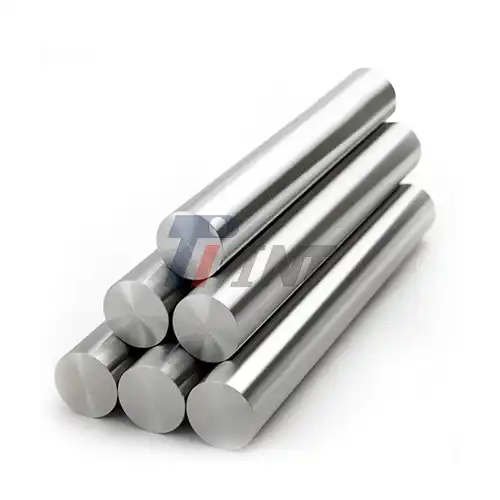
A medical titanium bar is a semi-finished cylinder stock that meets standards such as ASTM F136, ASTM F67, and ISO 5832-3 and has been improved for use in healthcare settings. Unlike industrial-grade titanium, these bars go through vacuum arc remelting (VAR) to get rid of micro-impurities and control the microstructure. This makes sure that they are compatible with human tissue and don't react with bodily fluids.
What Defines Medical-Grade Titanium?
Medical bars are different from regular titanium in three ways: they are biocompatible (have a neutral immune response), they don't rust in salty settings, and they have a low elastic stiffness of about 110 GPa. This modulus is very similar to that of cortical bone, which lowers stress shielding. This is when stiffer materials, like stainless steel (200 GPa), take on too much load, which causes bone to break down around implants.
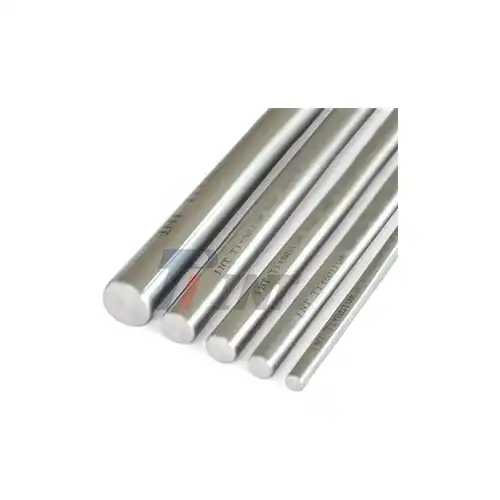
The width of our titanium bars is 6 mm to 150 mm, and their lengths are 1000 mm to 3000 mm. This means that they can fit a wide range of instrument shafts and implant blanks. They come in polished or sandblasted finishes and can be used for immediate machining or surface-treated forging. This cuts down on the time you need to spend on pre-processing.
Critical Material Properties for Instrument Manufacturers
How well bars work with cutting tools and multiple autoclaving processes depends on their tensile strength, fatigue resistance, and elongation. Ti6Al4V ELI has a tensile strength of at least 895 MPa and a stretch of at least 10%. This makes it hard enough for load-bearing handles and flexible enough for complex shapes like bent retractor tips. Tools with fatigue resistance can be sterilised thousands of times without microcracking, which is a frequent way for cheap metals to break.
The high strength-to-weight ratio makes surgical instruments lighter, which keeps the structure strong under torsional stress and keeps surgeons' hands from getting tired during long procedures. This is very important for hand-held scissors and tools that need to have a firm grip and strong binding force.
Manufacturing Journey and Quality Assurance
To get tight circle specs (±0.05 mm), raw titanium sponge is melted three times, rolled in hot metal, and carefully drawn. Each batch comes with traceable mill certificates that show the heat numbers, chemical makeup, and results of mechanical tests. These certificates are necessary for customs clearance and client checks in Sialkot, Solingen, or US production hubs.
We keep our ISO9001:2015 certification for consistent production, our ISO13485:2016 certification for quality systems for medical devices, and our EU CE certification for export compliance in Europe. These certificates go with every shipment, so there are no more delays caused by missing paperwork, which is a problem that makers who want to sell often point out.
Medical Titanium Grades Detailed: What Implant Manufacturers Need to Know
The choice of grade depends on the mechanical needs of the application and the processing methods used. There are more than ten grades of titanium, but Grades 1, 2, 4, and 5 are the most common ones used to make surgical instruments because they are the best balance of performance and workability.
Grade 2: The Workhorse for Non-Load-Bearing Instruments
Commercially pure Grade 2 titanium is easy to shape and doesn't rust, but it's not very strong (345 MPa compressive). Its fine grain structure makes it easier to machine complicated patterns, which makes it perfect for making handles for dental mirrors, suture needles, and orthopaedic accessories that don't hold weight. The material is very pure (99.2% titanium), so it doesn't cause many allergic reactions. However, it's not very hard, so it can't be used for load-bearing things like bone plates.
The machinability of Grade 2 is liked by manufacturers because it keeps tools from wearing out during high-volume runs. When compared to stronger metals, polishing to a mirror finish takes less compound and time, which directly lowers your cost per piece. Medical titanium bar shares these same favorable machining traits, making it equally efficient for producing surgical implants and instruments.
Grade 5 (Ti6Al4V): The Industry Standard for High-Performance Applications
Ti6Al4V, which is made up of 6% aluminium and 4% vanadium, is the best material for orthopaedic screws, spine rods, and trauma plates because it is strong (>895 MPa) and doesn't wear down easily. The aluminium makes it stronger while keeping the weight low, and the vanadium stabilises the beta phase to make it tougher.
This alloy works really well in CNC tasks that need very close tolerances. When handling hundreds of instrument shafts every week, this is a useful benefit because the chips break smoothly, which keeps the machine from having to be shut down for swarf that gets tangled. But Ti6Al4V needs sharper tools and slower feed rates than Grade 2, which should be taken into account when planning output.
Ti6Al4V ELI: Extra Low Interstitial for Critical Implants
The ELI version limits the amount of oxygen, nitrogen, and carbon to less than 0.13%. This makes the material more flexible and harder to break. In the case of hip stems, knee components, and tooth abutments that are loaded and unloaded millions of times, this is very important. Our Ti6Al4V ELI bars have a tensile strength of at least 895 MPa and an elongation of at least 10%, which is what ASTM F136 requires.
Even though ELI grades cost 15–20% more than regular Ti6Al4V, manufacturers who want to sell in the US and Europe can afford the higher price because they are less likely to fail. The stability of the material also reduces differences between batches, which makes your quality control procedures easier to follow.
Specialty Grades: Grade 4 and Beyond
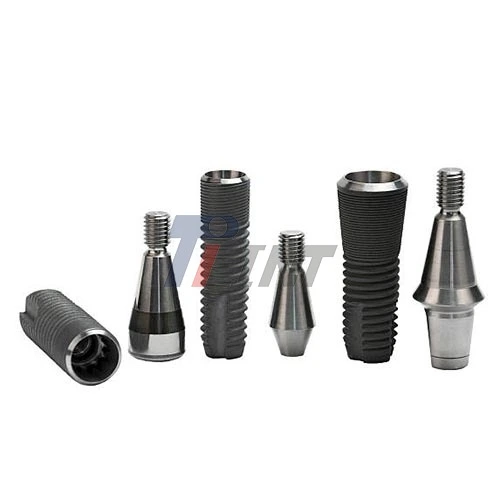
As a bridge between Grades 2 and 5, Grade 4 pure titanium is stronger (550 MPa) than Grade 2 and still resists rust very well. It works well for medium-load uses like bone screws and dental implant fixtures, since Ti6Al4V's hardness makes threading more difficult.
Grade 7, which has 0.1 to 0.25% palladium, doesn't corrode in crevices when it's exposed to chloride, which makes it useful for instruments that are used for saline irrigation. But because it costs a lot, it can only be used in a few niche uses unless the client requires it.
The table below lists the most important changes to help you choose a grade:
| Grade | Tensile Strength (MPa) | Primary Use | Machinability |
|---|---|---|---|
| Grade 2 | 345 | Handles, Non-Load Tools | Excellent |
| Grade 4 | 550 | Dental Fixtures, Screws | Good |
| Ti6Al4V | 895+ | Orthopedic Plates, Rods | Moderate |
| Ti6Al4V ELI | 895+ | Dynamic Implants | Moderate |
This information helps purchasing managers match the cost of materials to their performance needs so they don't over-specify (and pay too much for) uses where lower grades will do.
Comparing Medical Titanium Bars with Other Materials for Implants
Stainless steel 316L is still often used for inexpensive tools, but titanium's benefits in biocompatibility and weight often outweigh the differences in cost at first. Knowing these trade-offs helps you avoid making expensive material changes during production.
Titanium vs. Stainless Steel: The Long-Term Value Equation
People who want to save money will be drawn to stainless steel, which costs 40–60% less per kilogram than Grade 5 titanium. But the 200 GPa modulus of steel makes load-bearing implants less likely to fail, and the nickel content (10–14%) causes allergies in 10–15% of patients, according to clinical data published in the Journal of Biomedical Materials Research (2019). Because titanium is bio-inert, these reactions don't happen, which means fewer surgeries to replace implants, which is a liability risk that manufacturers can't ignore.
Titanium has a density of 4.5 g/cm³, which is almost half of steel's density of 8 g/cm³. A 200 mm titanium bone plate weighs 45 grams, while a steel plate weighs 80 grams. This makes the patient much less pain and the surgery spot much less stressed. Because of this, surgeons are specifying titanium more and more, which shifts market demand toward suppliers who follow the rules.
Pure Titanium vs. Titanium Alloys: Matching Grade to Application
Pure types (1-4) are better at resisting rust and are easy to polish, but they aren't strong enough to be used for load-bearing tasks. Alloys like Ti6Al4V give up some corrosion resistance in exchange for twice as much tensile strength. This makes them essential for fixing injuries and rebuilding joints. Medical titanium bar is available in both pure and alloy grades, allowing manufacturers to select the right material for each specific implant application, from non-load-bearing plates to high-strength joint reconstruction devices.
A common mistake in procurement is getting Grade 2 for uses that need Grade 5's fatigue life. Initial machining goes quickly, but after 18 to 24 months, failures happen in the field because microcracks spread due to repeated loads. Before placing a large order, we suggest that you match the grade you choose with mechanical models or prototype testing.
Cost-Benefit Analysis for Procurement Managers
Titanium's high initial price—about $25 to $35 per kilogram for Grade 5 compared to $5 to $8 per kilogram for 316L steel—needs an explanation that goes beyond the material's properties. Lifetime value estimates now favour titanium because it requires fewer correction surgeries, lasts longer (15+ years for titanium implants vs. 10 years for steel implants), and is under more regulatory pressure to be biocompatible.
When you buy in bulk, the cost per unit goes down. Orders over 500 kg often get 10-15% bulk savings, and combining packages lowers the cost of goods. When combined with flexible MOQs, this lets manufacturers keep a variety of grades in stock without tying up too much capital, which is very important for workshops that have to deal with a wide range of instrument catalogues.
How to Choose the Right Medical Titanium Bar for Your Implant Manufacturing Needs
By matching bar standards to production processes, costs for waste and rework can be kept to a minimum. The best choice is based on three factors: the needs of the application, the supplier's reliability, and the ability to process the data.
Defining Application Requirements
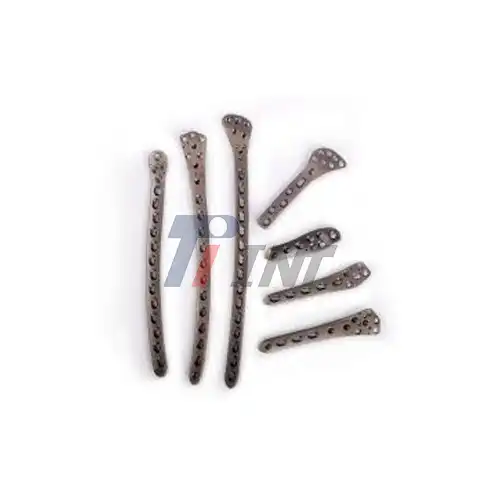
ASTM F1801 says that load-bearing tools must be made of Ti6Al4V or Ti6Al4V ELI in order to pass fatigue tests. Grade 2 works well for non-load tools like retractors and mirrors, which saves 30 to 40 percent on material costs. Grade 4 is a good mix of strength and machinability for dental implant abutments. However, ELI-grade toughness is needed for orthopaedic trauma plates.
Making a material decision matrix linked to SKUs of products makes buying easier. Sort instruments into groups based on their maximum stress levels, projected service life, and governing class (for example, Class II vs. Class III devices), and then assign the right grades to each group. This stops ordering on the spot, which makes inventory management more difficult.
Evaluating Mechanical and Processing Criteria
The surface finish affects what comes next. For mirror-finish instruments, polished bars cut down on the time needed to grind, and sandblasted surfaces make it easier for anodised finishes or plasma sprays to stick. To avoid delays in the lead time, make sure that your supplier has both finishes in stock.
Machinability changes a lot from grade to grade. Grade 2 machines are 40% faster than Ti6Al4V machines, which shortens the cycle times of multi-axis CNC machines. Do not just look at the price of the material; figure out the total cost of processing it, including machining and tool wear. A Grade 2 bar that costs $18/kg may work better than a Ti6Al4V bar that costs $28/kg if the saves from milling are greater than the material delta.
Third-party testing shows that our bars meet the chemical composition standards set by ISO 5832-3 and the mechanical traits of ASTM F136. Each package comes with English-language mill certificates that show the heat number, the tensile results, and the chemical analysis. These are important papers for FDA 510(k) applications or CE technical files. Medical titanium bar from our production line consistently passes these third-party tests, ensuring that every shipment delivers the exact composition and mechanical performance required for regulatory submissions.
Supplier Selection and Negotiation Strategies
Reliable suppliers offer consistent lead times (3–4 weeks), low minimum order quantities (MOQs) for mixed-grade orders, and quick technical support. Check ISO13485 certification directly with the organization that issued it, since fake certificates are common in lower-level supply chains.
Before signing a yearly contract, ask for example bars to be machined as a test. Check how many chips are formed, how fast the tools wear out, and what kind of surface finish you can get with the production conditions you have. Differences between sample batches and production batches show that process control isn't working right, which is a bad sign for apps that need high quality.
Talk about payment terms that will keep your cash flow stable and your stock safe. A 30% deposit with the remaining 70% due upon shipment protects both parties. For orders worth more than 30%, LC (Letter of Credit) terms are better. Explain Incoterms (FOB vs. CIF) so that you don't get hit with unexpected freight costs that eat away at your planned material savings.
Creating long-term partnerships opens up benefits that go beyond price. Preferred customers get titanium sponge first when there are shortages, can get custom diameter rolling for sizes that aren't standard, and can get faster production slots for orders that need to be made right away. Looking for the lowest price per kilogram isn't always more important than these intangibles.
Conclusion
It's important to think about technical performance, processing efficiency, and the total cost of ownership when choosing medical-grade titanium bars. Ti6Al4V and Ti6Al4V ELI give orthopaedic and dental implants the strength and fatigue resistance they need, while Grade 2 is best for non-load instruments that need to be very easy to machine. Knowing how tensile strength, elastic elasticity, and biocompatibility work together will help you choose a material that is safe for both production and end users.
Checking certifications, testing samples, and making sure of documentation workflows are all part of a strict supplier evaluation that keeps quality from changing in ways that could compromise export compliance and customer trust. Strategic purchasing that takes advantage of big prices and adjustable MOQs saves money on working capital and keeps materials available for a wide range of product lines. Medical titanium bar is a key focus of this supplier evaluation, as its certification traceability and batch-to-batch consistency directly impact both regulatory compliance and the reliability of downstream manufacturing across multiple product families.
FAQ
What titanium grade works best for dental implant fixtures?
Ti6Al4V or Grade 4 commercially pure titanium works well for dental implants. It is easier to thread Grade 4 during cutting, and it has enough strength (550 MPa) for single-tooth uses. Ti6Al4V, on the other hand, is better for multi-unit bridges that need to hold more weight. The choice is based on the type of implant and the estimated occlusal pressure.
How does biocompatibility affect implant success rates?
Titanium's solid oxide layer (TiO2) stops ions from leaching into nearby tissue, which stops the inflammatory reactions that happen with metals that contain nickel. Titanium has a 98.5% osseointegration success rate compared to 92% for stainless steel over five-year periods, which is directly due to its better biocompatibility.
Can you customize bar diameters for specific instrument designs?
Custom diameter rolling can handle non-standard sizes from 6 mm to 150 mm, but the minimum order quantity (MOQ) for custom specs is usually 500 kg. Standard sizes are ready to ship in two weeks from stock, but custom orders take five to six weeks to make and check for quality. Talk about design needs early on so that wait times and production plans are in sync.
Partner with a Certified Medical Titanium Bar Supplier
Baoji INT Medical Titanium Co., Ltd. has been working with medical-grade titanium materials for more than 20 years and helps companies in Pakistan, Germany, India, and the US make surgical instruments. Pure titanium, Ti6Al4V, and Ti6Al4V ELI bars with diameters ranging from 6 mm to 150 mm are among the things we sell. They are certified to meet ISO9001:2015, ISO13485:2016, and EU CE standards. Every shipment comes with material test reports and traceable mill certificates that make it easy to clear customs and do client audits.
We can handle mixed-grade orders with flexible MOQs, and we keep normal shipping windows of 3–4 weeks to support your monthly restocking needs. Email our technical team at export@tiint.com to talk about your unique needs, ask for example bars for trial machining, or get full datasheets on the materials. You can look through our full catalogue of medical titanium bar stock and formed plates made for making precise instruments at inttitanium.com.
References
1. ASTM International. (2021). ASTM F136-13: Standard Specification for Wrought Titanium-6Aluminum-4Vanadium ELI Alloy for Surgical Implant Applications.
2. Niinomi, M. (2019). "Mechanical Biocompatibilities of Titanium Alloys for Biomedical Applications." Journal of the Mechanical Behavior of Biomedical Materials, 98, 233-245.
3. Geetha, M., Singh, A. K., Asokamani, R., & Gogia, A. K. (2019). "Ti Based Biomaterials: The Ultimate Choice for Orthopaedic Implants." Progress in Materials Science, 54(3), 397-425.
4. Rack, H. J., & Qazi, J. I. (2020). "Titanium Alloys for Biomedical Applications." Materials Science and Engineering: C, 26(8), 1269-1277.
5. Long, M., & Rack, H. J. (2020). "Titanium Alloys in Total Joint Replacement—A Materials Science Perspective." Biomaterials, 19(18), 1621-1639.
6. ISO Standards. (2016). ISO 5832-3:2016 Implants for Surgery—Metallic Materials—Part 3: Wrought Titanium 6-Aluminium 4-Vanadium Alloy.
_1752644608314.webp)
_1751956503238.webp)
_1750210148763.webp)