
What Is Medical Titanium Rod Used for in Implant Production?


 2026-09-09 13:57:33
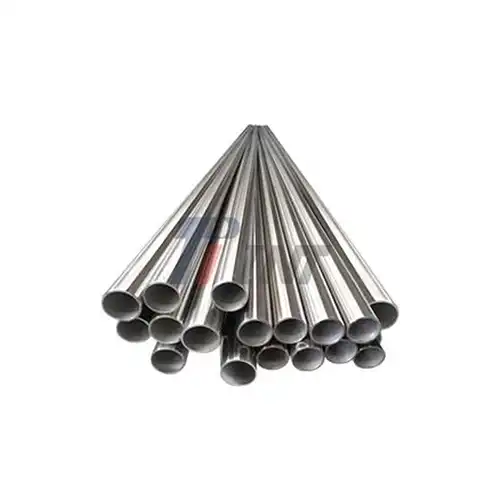
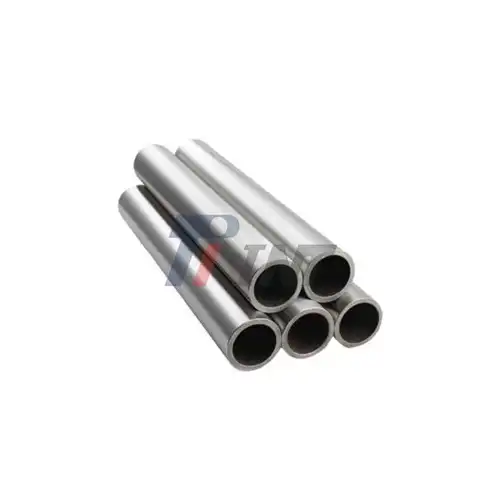
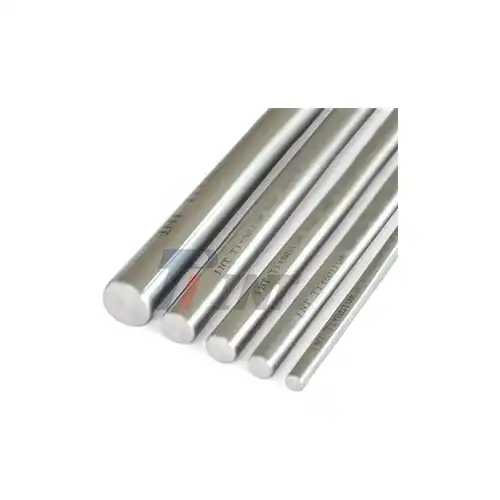
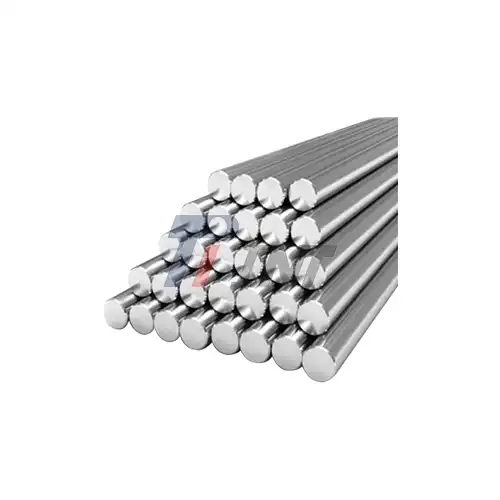
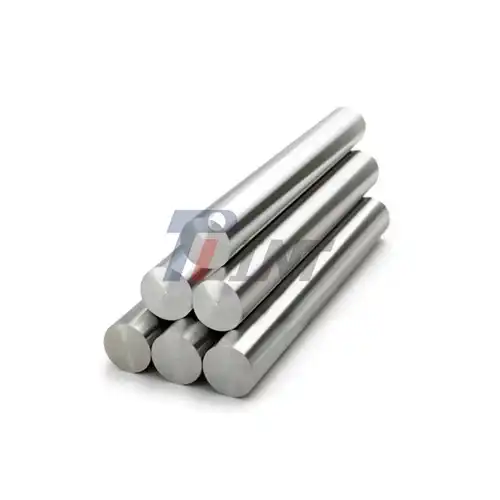
Medical titanium rod refers to high-precision cylindrical semi-finished material manufactured from biocompatible titanium grades—primarily pure titanium (Grades 1-4) and Ti6Al4V ELI—designed specifically for fabricating surgical implants and medical instruments. Titanium rod medical applications are central to this category, as these rods serve as the foundational raw material for machining orthopedic devices, dental implant components, and surgical tool handles, offering exceptional biocompatibility, corrosion resistance, and a strength-to-weight ratio that closely mimics natural bone structure, making them indispensable in modern implant production.
|
|
|
Understanding Medical Titanium Rods and Their Unique Properties
Medical-grade titanium bars are very different from industrial-grade ones because they have to meet strict biological standards. We now know how important these differences are when companies that make surgical instruments need materials that work well with the human body and don't break down under tough conditions.
Biocompatibility and Material Composition
Medical titanium rods are biocompatible because the chemicals that make them up are carefully controlled. Pure titanium grades (Gr1–Gr4) and titanium alloys like Ti6Al4V ELI meet ASTM F67 and ASTM F136 standards, which means that when they are inserted, they cause little tissue reaction. Putting down a layer of passive titanium dioxide (TiO2) on the surface makes a bio-inert shield that stops ions from getting into the tissues around it.
Compared to other metallic materials, this feature makes the risk of implant rejection much lower. From Sialkot to Tuttlingen, companies that make surgical instruments depend on this trait to make forceps handles, retractor shafts, and bone fixation parts that can stay in the body for a long time.
Mechanical Properties and Engineering Advantages
Medical titanium rods have an elastic modulus of about 110 GPa, which is similar to cortical bone and lower than the 200 GPa modulus of stainless steel. Stress shielding happens when implants that are too rigid cause bone loss around them. This similarity stops it. In Grade 5 titanium, the material has a tensile strength of up to 860 MPa and a yield strength of 795 MPa, making it strong enough for load-bearing uses.
With a density of only 4.43 g/cm³, these rods have a great strength-to-weight ratio that surgical instrument makers look for when they make tools that are both comfortable to use and long-lasting. Its wear resistance means that it will keep working even after millions of load cycles, which is very important for joint replacement parts and dynamic surgery devices.
Certification Standards and Quality Assurance
International quality management systems, such as ISO 13485:2016 for medical products and ISO 9001:2015 for general manufacturing quality, must be followed by medical titanium rods. CE certification makes sure that the product is legal in the European market, and material test reports (MTR) that follow EN 10204 3.1 standards make it possible to track the product all the way from the melt source to the finished rod.
With every package, we include a lot of paperwork, like heat lot numbers, chemical makeup analyses, and checks of the mechanical properties. Titanium rod medical certifications are a key part of this documentation, as this paperwork helps our clients during regulatory checks and customer quality reviews. It solves a common problem where late certification paperwork causes problems with production schedules and delivery promises.
Core Medical Applications of Titanium Rods in Implant Production
As a raw material for a huge variety of implant parts and surgical instruments, medical titanium rods are very useful in a wide range of surgical specialities. Knowing about these uses helps purchasing managers match the needs of the end product with the requirements of the materials.
Orthopedic Surgery Applications
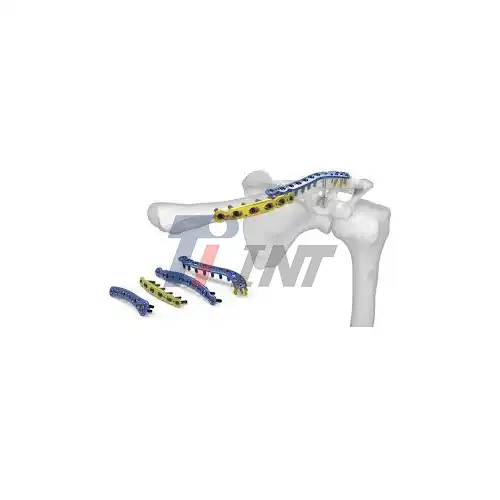
Manufacturers of orthopaedic devices use medical titanium rods to make intramedullary nails, spinal fusion bars, and pedicle screws to stabilise the spine after a long bone fracture. The osseointegration features of the material help bone grow around implants, which makes them solid over time. Titanium doesn't rust when it comes into contact with synovial fluid, which is good for joint reconstruction parts like hip stem blanks.
These rods can be used to make trauma stabilisation plates and bone screws that can withstand the mechanical pressures of weight-bearing while still being MRI-compatible, which is a huge benefit for diagnostic imaging after surgery. Smaller rods (3mm to 20mm in diameter) are used by companies that make surgical instruments to make bone drill shafts, reamer handles, and surgical saw parts that need to be strong and precisely machined.
Dental Implant Components
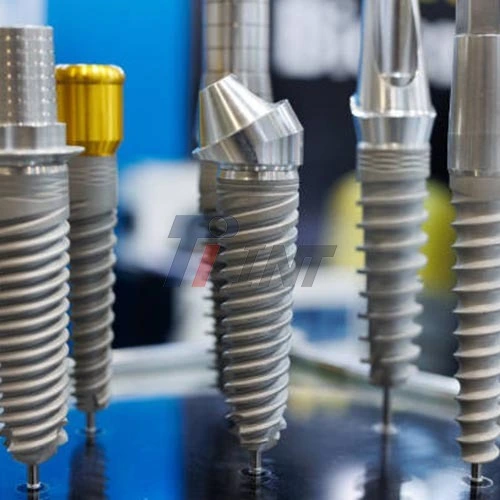
Pure titanium and Ti6Al4V ELI bars are used a lot in the making of dental implants to make abutments, healing caps, and implant bodies. The width ranges from 3mm to 6mm, which is the right size for tooth implants. The biocompatibility of the material also makes sure that it will properly integrate with the jawbone. CNC machines turn these rods into threaded implant fixtures with surfaces that are designed to help bone cells stick to them.
Surface treatments like polishing or sandblasting change the surface roughness parameters (Ra values) to speed up the process of osseointegration. Medical-grade rods are easy to machine, which is good for companies that make things for the dental market because it keeps tight tolerances on dimensions even during high-volume production runs.
Surgical Instrument Manufacturing
Medical titanium rods are used to make more than just implantable parts. They are also the best raw material for surgical instrument handles, especially in microsurgery and neurosurgery, where the weight of the instruments directly affects how tired the surgeon gets during long procedures. Instruments made from titanium rods, like forceps, needle holders, and dissection tools, don't rust as easily when sterilised in an autoclave over and over again as stainless steel instruments do.
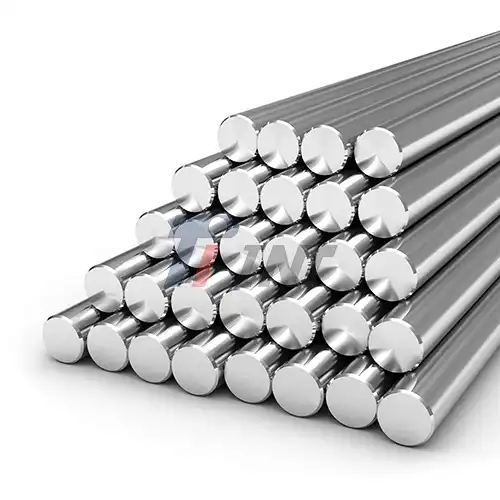
The fact that it is not magnetic keeps instruments from sticking to MRI equipment, which makes the operating room safer. Small to medium-sized surgical instrument makers usually buy rods with widths between 6mm and 25mm and lengths of up to 3 meters. This makes good use of materials when making different types of instruments from the same stock pieces.
Procurement Guide: Choosing the Right Medical Titanium Rod Supplier
One of the most important choices surgical tool makers have to make affects the quality of their products, their ability to follow regulations, and how much it costs to make their products. We've been helping medical device makers around the world for more than twenty years, so we know how hard it is for them to get the instruments they need in places where prices are high.
Essential Supplier Qualifications
A good medical titanium rod supplier will show that they are ISO 13485:2016 certified, which means that their quality management system meets the needs of the medical device industry. Titanium rod medical documentation for material traceability should include full chemical composition analyses, mechanical property test results, and heat treatment records that can be linked back to the original ingot sources. Suppliers should give Material Test Reports (MTR) that meet the requirements of EN 10204 3.1.
These reports should help customers with their regulatory filings and reporting needs. Titanium comes in a number of types, such as Gr1, Gr2, Gr4, and Ti6Al4V ELI, which gives buyers options when product lines have different requirements. We keep thorough quality paperwork systems that meet the auditing needs of our customers, from FDA 510(k) reports to European MDR compliance checks.
Material Grade Selection and Technical Support
It depends on the application needs to decide between pure titanium grades and titanium alloys. For tools that need to be cold shaped or machined in a complicated way, Gr1 and Gr2 are the best options because they are easier to shape and don't rust. In addition to being stronger, Gr4 is also very good at resisting rust. Ti6Al4V ELI (Grade 23) gives the strongest load-bearing implant parts while keeping biocompatibility by controlling the amount of interstitial elements present.
Our expert team helps customers choose the right material by looking at things like mechanical loads, corrosion conditions, machining processes, and finishing methods for the finished surface. By avoiding costly trial-and-error procurement cycles, this consultation helps match the properties of materials with their manufacturing capabilities.
Pricing Factors and Order Flexibility
The price of a medical titanium rod depends on a number of factors, such as the material grade, the diameter, the length, the surface finish, and the number of rods that are ordered. Larger diameter bars (above 50mm) cost more because they are harder to forge and the material yields less. Customisation requests for certain widths, surface finishes, or non-standard diameters may have setup costs, but they make production more efficient by cutting down on the need for extra work.
Different suppliers have different minimum order quantities, and it can be hard for smaller instrument makers to meet the large batch needs of major mills. We can handle mixed orders that include a variety of diameters and grades in a single shipment. This helps instrument makers deal with the "small batch, multiple specification" problem that comes up often.
Our MOQ policy is flexible, so we can take trial orders for new products while still keeping to the monthly replenishment schedules for production lines. Pricing systems that are clear help purchasing managers correctly predict how much materials will cost, even when the price of titanium changes on the market.
The Manufacturing and Functional Benefits of Titanium Rods in Implant Production
Understanding how the qualities of a material translate into practical benefits helps engineering teams make the design and production of implants better. From the time they are machined to the time they are used in the body, medical titanium rods add measured benefits to the whole process.
Machining Performance and Production Efficiency
When medical titanium rods are supplied in the annealed state, they can be machined consistently. This means that tool life and dimensional accuracy can be predicted during CNC operations. The material cuts cleanly without over-hardening, but the cutting parameters need to be optimised compared to stainless steel. Usually, lower cutting speeds, higher feed rates, and lots of cooling give the best results.
Polished surface finishing (Ra < 0.4μm) cut down on the need to polish tool handles and implant surfaces after they have been machined, which speeds up production processes. Titanium rod medical products benefit from centerless grinding, which makes sure that the diameter stays within ±0.05mm tolerances across all rod lengths.
This keeps material waste to a minimum during turning operations. These advantages in manufacturing have a direct effect on production costs, especially for companies that make instruments and have to work with small profit margins in export markets that are very competitive.
Corrosion Resistance and Longevity
Titanium surfaces naturally form a passive oxide layer that makes them very resistant to body fluids, saline solutions, and chemicals used for sterilisation. This protection to corrosion is better than stainless steel's in chloride-rich settings. It stops pitting corrosion, which weakens implants over time. Medical titanium rods are used to make surgical tools that keep their surface finish quality even after thousands of sterilisation rounds.
This means that they will continue to work and look good for a long time. There are no worries about metal ions leaking out of cobalt-chromium or stainless steel options when it comes to implantable parts because they don't corrode in physiological settings. This durability means that the product has a better image and makers get fewer warranty claims.
Patient Safety and Clinical Outcomes
The biocompatibility characteristic of medical titanium has been well studied over many years of clinical use, making it the best material for lifelong implants. The material causes little inflammation at the points where two tissues meet, which helps the tissues heal and integrate more quickly. Nonmagnetic qualities keep patients safe during MRI diagnostic processes and keep image artefacts from making it harder for doctors to understand what the images mean.
The modulus match with natural bone lowers the stress buildup at the implant-bone surfaces, which lowers the risk of fracture in nearby bone structures. These medical benefits make the product more popular with surgeons and healthcare facilities. This gives companies that use certified medical-grade titanium materials a chance to stand out in the market.
Conclusion
Medical titanium rods are the basic material used to make current surgery implants and instruments. They have the best biocompatibility, mechanical performance, and processing flexibility of any material. This guide has talked about how the managed chemical makeup and mechanical strength of a material directly affect how well it is made and how well it works in the clinic. Titanium rod medical procurement decisions, in particular, are critical because long-term manufacturing success depends on choices about purchases that go beyond just comparing prices.
These decisions should also take into account supplier certification, technical support capabilities, and the reliability of the supply chain. Working with experienced material suppliers who know both technical specs and how the industry works is becoming more and more useful as legal requirements change and clinical needs rise. Medical titanium rod suppliers, grades, and specs are carefully chosen to build the quality base on which great medical device businesses are built.
FAQ
Why choose titanium rods over stainless steel for surgical instruments?
Titanium rods are better for biocompatibility, and there is almost no chance of nickel sensitivity reactions, which can happen with stainless steel. The fact that it is lightweight keeps surgeons from getting tired during long treatments, and its resistance to corrosion is better than stainless steel in harsh sterilisation settings. Another big benefit is that it works with MRI machines, so you don't have to worry about instrument magnetisation near imaging equipment.
Do all titanium rods meet medical regulatory requirements?
No way! Titanium rods made for industry don't have the proper chemical makeup controls, surface quality standards, or paperwork needs for medical uses. Medical-grade rods must meet the requirements of ASTM F67 or F136 and have material approval and proven tracking. Before buying, procurement teams should check that the supplier has ISO 13485 certification and ask for Material Test Reports to confirm that the product is medical-grade.
How can buyers verify material quality and authenticity?
Ask for full Material Test Reports (EN 10204 3.1) that show chemical analysis, mechanical qualities, and can be traced back to the melt sources. Check the supplier's ISO 13485 approval by looking at their certificate, and for important uses, think about having a third party test the material. Instead of looking for the cheapest sources with qualifications that you can't verify, build long-term relationships with sellers that keep good quality records.
Partner with a Trusted Medical Titanium Rod Manufacturer
Since 2003, Baoji INT Medical Titanium Co., Ltd. has been helping surgical instrument makers all over the world by giving them certified medical-grade titanium rods that meet the exacting standards your production needs. We offer a wide range of materials, such as pure titanium (Grades 1-4) and Ti6Al4V ELI in sizes from 3mm to 100mm and lengths that can be customised up to 6 meters.
All of these materials are certified by ISO 9001:2015, ISO 13485:2016, and CE. We know that it can be hard for instrument makers to buy things because lead times are hard to predict, minimum orders are rigid, and technical support isn't good enough. That's why we've set up our business to solve these problems with flexible MOQ policies, consistent 3–4 week delivery schedules, and full material documentation that meets your regulatory needs.
Our technical team can help you choose the right materials, make suggestions for machining, and get the best surface finish whether you're making new surgical instruments or increasing the number of ones you already make. Send an email to export@tiint.com or go to inttitanium.com to talk to our experienced titanium rod medical supply team about how we can help your manufacturing success with reliable, approved medical titanium materials.
References
1. American Society for Testing and Materials. (2013). ASTM F136-13: Standard Specification for Wrought Titanium-6Aluminum-4Vanadium ELI (Extra Low Interstitial) Alloy for Surgical Implant Applications. ASTM International.
2. International Organization for Standardization. (2016). ISO 13485:2016 Medical devices — Quality management systems — Requirements for regulatory purposes. ISO.
3. Niinomi, M. (2019). Titanium Alloys for Biomedical Applications. In Metals for Biomedical Devices (pp. 179-213). Woodhead Publishing.
4. U.S. Food and Drug Administration. (2018). Technical Considerations for Additive Manufactured Medical Devices: Guidance for Industry and Food and Drug Administration Staff. FDA.
_1755062186746.jpg)
_1752644608314.webp)
_1749191401740.webp)