




Titanium Rod Medical Applications: Uses, Grades, and Benefits


 2026-10-23 10:03:48
If you manufacture surgical instruments and source raw titanium bar stock, understanding how a titanium rod medical grade material performs across different machining workflows can directly affect your production yield, delivery reliability, and profit margins. This article covers the essential grades, real-world applications, procurement considerations, and sterilization protocols for medical-grade titanium rods — giving you the technical clarity to make faster, more confident sourcing decisions.
|
|
|
Understanding Medical Grade Titanium Rods
What Defines a Medical Grade Titanium Rod?
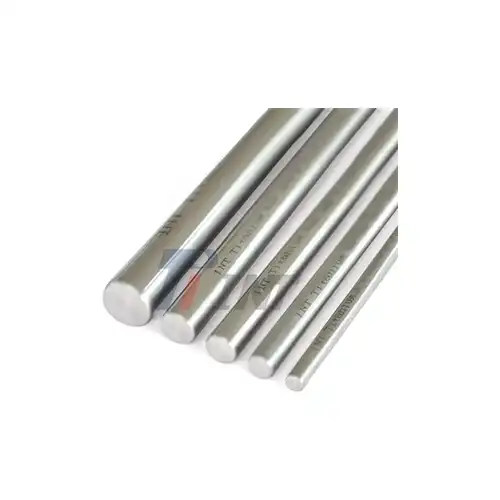
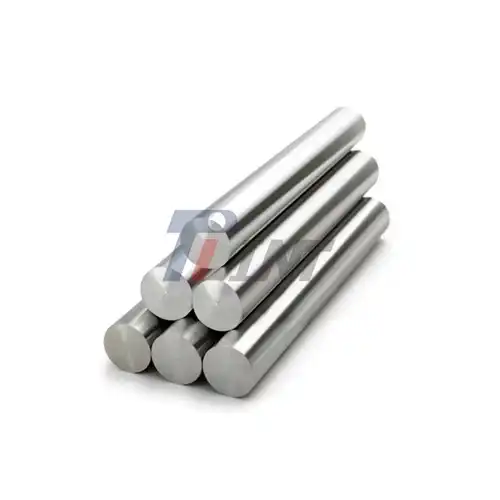
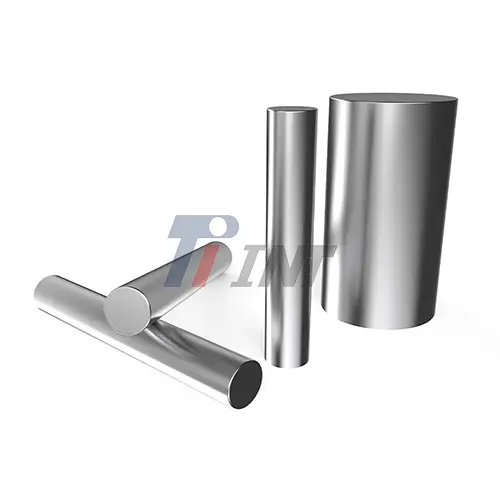
Medical-grade titanium rods are cylinder-shaped semi-finished bar stock made from commercially pure (CP) titanium (Grades 1 through 4) or titanium alloys like Ti-6Al-4V ELI (Grade 23). They are made in accordance with standards like ASTM F67, ASTM F136, and ISO 5832-3. Tough controls on interstitial elements set them apart from industrial peers.
For example, oxygen levels are limited to a maximum of 0.13% in Grade 23 to keep the material's fracture toughness and flexibility while it is being CNC turned and then implanted. The elastic modulus of the material is about 110 GPa, which is much lower than the elastic modulus of stainless steel, which is 200 GPa. This means that there is less stress buffering, which is a clinically important factor in how long implants last.
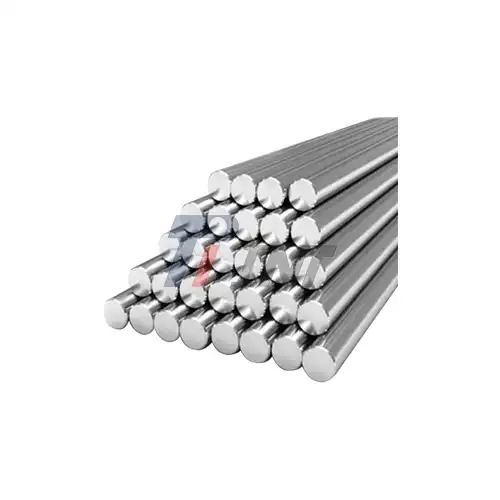
For companies that make surgical instruments, the diameters range from 3 mm to 100 mm, and the lengths can be changed up to 6 meters. Different types of surface finishes, like machined, sandblasted, or finished, can be used with different casting, grinding, and polishing processes. To help with export clearance and factory checks by the end customer, every package should have an EN 10204 3.1 Material Test Report (MTR) that lists the full chemical makeup, mechanical properties, heat number traceability, and annealed state approval of the goods.
Advantages of Titanium Rods in Surgery Compared to Alternatives
For many years, surgical instruments were mostly made of stainless steel and cobalt-chrome alloys. Medical-grade titanium rods have slowly replaced them in uses that need lighter materials, better biocompatibility, and MRI compatibility. The main reasons for this shift are the following: titanium rod medical offers a unique combination of strength, corrosion resistance, and non-magnetic properties, making it the preferred choice for implants and long-term surgical support devices.
- Biocompatibility: Titanium is almost completely inactive in bodily fluids because it forms a quiet TiO₂ oxide layer on its own. Because the body doesn't reject it, it's safe for tools to touch tissue or for parts of implants that will stay in place for a while.
- Strength-to-weight ratio: Titanium has a density of about 4.43 g/cm³, which means it has the same mechanical performance as steel but is almost half the weight. This is a real benefit for surgeons who have to hold tools for long processes.
- Corrosion resistance: Titanium doesn't rust like stainless steel does in chloride-rich body environments. Its oxide layer stays intact even after multiple sterilization cycles, keeping its shape.
- Fatigue resistance: Grade 5 (Ti-6Al-4V) has a tensile strength of 860 MPa and a yield strength of 795 MPa with 10% extension. This means it can be used for load-bearing parts in trauma and spinal fixation hardware that are constantly under cycle stress.
- MRI compatibility: Titanium is not magnetic, so there are no artifacts in images. This is a requirement that hospital procurement groups are putting more and more on any tool or implant component.
These features work together to lower the number of failures that happen in the field and the overall cost of ownership for instrument makers who have to honor long-term quality guaranties to their distribution partners. Even though stainless steel costs less per kilogram, the total cost is often higher when rework and rejection rates are taken into account because of its higher density and tendency to rust.
Procurement Guide: Buying Medical Grade Titanium Rods
When looking for medical-grade titanium rods, you need to pay attention to four important factors: certification, specification range, paperwork speed, and MOQ freedom.
Certification compliance can't be negotiated. You should make sure that any provider you look at has at least CE marking and ISO 9001:2015 and ISO 13485:2016 certifications. These credentials are needed not only for regulatory approval, but also to pass the factory audits of your own customers, which happen a lot in the Sialkot and Solingen instrument clusters. For any supplier offering a titanium rod medical, these same certification requirements are non‑negotiable and must be verified without exception.
Specification breadth matters because your orders aren't always the same. With short lead times on partial orders and having Grade 1, Grade 2, and Grade 4 CP titanium as well as Ti-6Al-4V ELI in diameters from 3 mm to 100 mm, your production plan will be safe even if order mixes change from month to month.
Material traceability directly relates to how quickly you can clear customs and pass supplier checks. When you get a Material Test Report (MTR) with full heat number traceability along with your shipment, you can speed up the documentation process and avoid delays that make buying from a competitive supplier less cost-effective.
Delivery lead time for normal grades should be between 3 and 4 weeks from the time the order is approved. Turnaround times can be cut down to less than two weeks for customers who have bought from us before. You can get a good idea of how stable a supplier's supply will be in the long term by looking at how deep their inventory is during your first sample order.
Applications and Case Studies of Titanium Rods in Medical Fields
Surgical Instrument Manufacturing
Pure titanium types that are sold in stores are often used for tool shafts, handles, and the working ends of forceps, retractors, scissors, and needle holders. Their mild hardness allows for smooth CNC turning and centerless cutting, and their low work-hardening rate keeps tools from wearing out during large production runs. Polished surfaces on medical-grade titanium rods get Ra values well below 0.4 µm, which is important for keeping the rods clean and meeting the requirements for esthetic quality set by European and North American distributors.
Orthopedic and Spinal Implant Raw Material
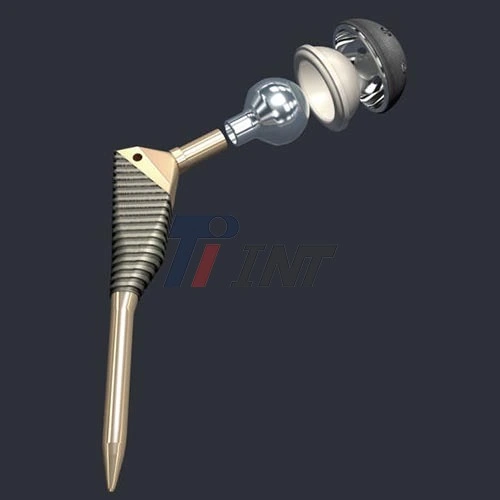
Ti-6Al-4V ELI rods are the main type of bar stock used to make trauma screws, intramedullary nails, spine rods, and pedicle screw blanks. In terms of long-term osseointegration and correction rates, clinical data from orthopedic implant registries constantly show that titanium alloy implants do better than stainless steel implants. The material's elastic modulus aligns with the cortical bone, which lowers the stress at the bone-implant interface that causes periimplant fracture, which has been seen to happen with alternatives with a higher stiffness.
Dental and Maxillofacial Applications
The strongest commercially pure grade of titanium is Grade 4 CP. This is the best bar stock for dental abutment blanks and maxillofacial plate semi-finished stock. Titanium rod medical grades are also available in this same high-strength CP formulation, and they share the same key advantages: it doesn't rust and can be easily machined, which makes it suitable for high-precision CNC milling that is needed in dental labs and for making unique craniofacial restoration parts.
Maintenance, Sterilization, and Longevity of Medical Titanium Rods
For raw medical-grade titanium rods that are used to make instruments, cleaning rules apply to the finished tool stage instead of the material stage. But knowing how titanium reacts to being sterilized helps with choices about design and surface finish earlier on.
Titanium's structure stays the same through standard autoclave cycles (134°C steam sterilization) without changing size or losing its oxide layer. Titanium instruments don't darken or char when autoclaved over and over again like stainless steel instruments do. This means that finished instruments will look and work better for longer, which is good for your customers.
Chemical sterilants like glutaraldehyde and hydrogen peroxide plasma don't damage the surface of instruments made from Grade 5 titanium bars. This means they can be used in places where steam autoclaving isn't practical.
Keeping raw rod stock in the right way—on horizontal racks in dry places away from chloride-containing areas—keeps the surface clean so that it doesn't get contaminated during machining. Any shipment that comes in with obvious surface scale or what you think is alpha case should be sent for chemical milling verification before it can go into your CNC process, because alpha case makes finished parts last a lot less time before they break.
Conclusion
Medical-grade titanium rods are an important part of the supply chain for surgical instruments and can't be replaced. Biocompatibility, fatigue resistance, machinability, and paperwork that is ready for compliance make them the best choice for instrument makers who sell to controlled markets. Whether you are making CP titanium handles or Ti-6Al-4V ELI shafts for trauma instruments, the quality and audit-readiness of your finished goods depend on the grades you choose and how well you record your suppliers.
Titanium rod medical specifications, in particular, demand the same rigorous traceability and grade verification, because even minor deviations can affect implant-grade performance. Buying from a qualified, experienced provider with clear traceability is not an extra cost; it is a choice that will help your business run more efficiently.
FAQ
What is the difference between Grade 2 and Grade 4 CP titanium for instrument manufacturing?
Grade 2 has the best mix of being flexible and moderately strong, so it can be used to make handles and rods that need to be shaped. In the CP range, Grade 4 has a higher tensile strength, which makes it useful for things like dental abutment blanks that need to be able to handle more load. Both are safe for living things and can be machined completely with standard CNC tools.
What certifications should accompany a titanium rod shipment for export?
It must have an EN 10204 3.1 Material Test Report (MTR) that lists the chemical make-up, mechanical qualities, heat number, and annealed state. You can help your customers with plant checks and regulatory submissions in the US, EU, and other regulated markets by getting ISO 9001:2015 and ISO 13485:2016 certificates at the supplier level.
What diameter range is typically stocked for surgical instrument applications?
Any size between 3 mm and 100 mm can be used for any part of a surgical tool, from small working ends to bigger handle billets. To keep up with monthly replenishment schedules, it's important to make sure that your supplier keeps your specific sizes of titanium rod medical grade in stock instead of making them to order.
Is customization available for surface finish and length?
Surface finishes like polished, sandblasted, and machined are standard. You can change the length up to 6 meters. Before you place a trial order, talk to the seller directly about your unique Ra needs and cut tolerances.
Partner with Baoji INT Medical Titanium Co., Ltd. for Reliable Titanium Supply
Since 2003, Baoji INT Medical Titanium Co., Ltd. has sold approved medical-grade titanium rods to companies that make instruments on four continents. We can meet your monthly restocking needs with no problems thanks to our ISO 9001:2015, ISO 13485:2016, and CE certifications, full Material Test Report (MTR) documentation on every shipment, and flexible MOQs for Grade 1–Grade 4 CP titanium and Ti-6Al-4V ELI. For a price from a reliable titanium rod medical provider, email our team at export@tiint.com or go to inttitanium.com right now.
References
1. ASTM International. ASTM F136: Standard Specification for Wrought Titanium-6Aluminum-4Vanadium ELI Alloy for Surgical Implant Applications. ASTM International, 2023.
2. International Organization for Standardization. ISO 5832-3: Implants for Surgery — Metallic Materials — Part 3: Wrought Titanium 6-Aluminium 4-Vanadium Alloy. ISO, 2021.
3. Rack, H.J., and Qazi, J.I. "Titanium Alloys for Biomedical Applications." Materials Science and Engineering: C, 2006.
4. Niinomi, M. "Mechanical Biocompatibilities of Titanium Alloys for Biomedical Applications." Journal of the Mechanical Behavior of Biomedical Materials, 2008.
5. Geetha, M., et al. "Ti Based Biomaterials, the Ultimate Choice for Orthopaedic Implants — A Review." Progress in Materials Science, 2009.
6. Long, M., and Rack, H.J. "Titanium Alloys in Total Joint Replacement — A Materials Science Perspective." Biomaterials, 1998.