




Gr5 Titanium Disc for Medical Devices: Buyer’s Complete Guide


 2026-10-23 10:03:53
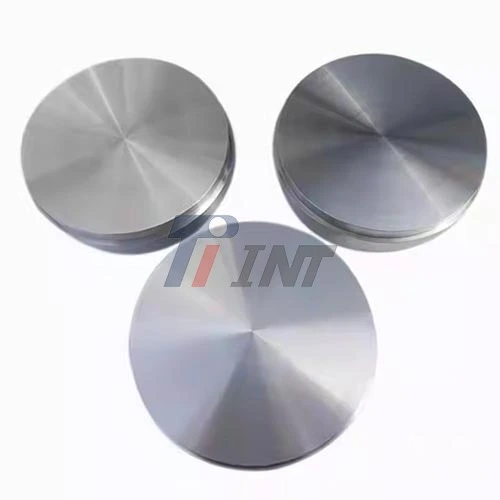
Sourcing the right material for orthopedic implant forging starts with understanding what you're buying. A Gr5 Titanium Disc, forged from Ti-6Al-4V alloy, serves as the critical blank material for manufacturing femoral stems, acetabular cups, and joint heads. Its metallurgical integrity—chemical composition, grain structure, and ultrasonic flaw detection compliance—directly determines forging flow lines and fatigue performance of your finished implants. Selecting a qualified disc means fewer scrapped batches, predictable NDT results, and optimized material yield in your production line.
|
|
|
Understanding Gr5 Titanium Disc: Properties and Specifications
When the forging process rests on the material remaining the same under high stress, you have to know exactly what the titanium blank is made of and how it works mechanically.
Chemical Composition and Alloy Balance
Grade 5 titanium is made up of titanium as the main metal and 5.5–6.75% aluminium and 3.5–4.5% vanadium. It is still only allowed to have 0.40% iron, 0.20% oxygen, and 0.08% carbon. The tensile strength of this specific chemistry is about 895 MPa, and its density is only 4.43 g/cm³. Lower interstitial oxygen levels make implant forging more flexible during die forming, which lowers the risk of micro-cracking in complicated shapes like stem tapers.
Mechanical Performance Under Load
With elongation above 10%, the yield strength usually exceeds 828 MPa, which gives the material the flexibility needed for closed-die forging. When your finished implant has to go through millions of gait cycles inside a person's body, the fatigue resistance of the alloy becomes very important. Unlike cast options, forged discs have directional grain flow that follows the shape of your die. This makes it much harder for cracks to spread when they are loaded and unloaded many times.
Dimensional Tolerances and Surface Integrity
We offer discs with diameters from 10 mm to 300 mm and thicknesses from 0.5 mm to 50 mm. The accuracy of our measurements is ±0.01 mm. You can choose between polished or sanded finishes for the surface based on how your downstream cutting is set up. Using dye penetrant testing to look for laps and seams is easier on a polished surface, while sandblasting can make mechanical interlocking better during hot forging. Before the disc gets to your forge press, it is tested with ultrasound using AVG or DAC curves to make sure it is sound inside.
Certification Standards for Medical Applications
We can fully track every disc we make with Mill Test Certificates that are in line with EN 10204 3.1. Forgings must meet ASTM B381, aircraft uses must meet AMS 4928, and medical implants must meet ISO 5832-3. Our building has EU CE, ISO9001:2015, and ISO13485:2016 standards, which mean that before it is shipped, every hot lot goes through chemical testing, tensile testing, and non-destructive evaluation.
These specs give you real benefits when you're making runs for forging. When chemistry is consistent, flow stress during hot working can be predicted. When you put blanks into your dies, tight control over dimensions cuts down on setup time and waste. Gr5 Titanium Disc meets these same rigorous standards, and with certified ultrasonic inspection, you won't be surprised by expensive flaws below the surface that you only find after forging, after putting a lot of work and time into machining a flawed part.
Comparing Titanium Disc Grades and Alternatives for Medical Use
When picking a titanium grade, you have to think about the mechanical needs, biocompatibility, and cost limits that are specific to your implant design and the rules in the market you want to sell to.
Gr5 Versus Gr5 ELI for Implant Forgings
Grade 5 ELI (Extra Low Interstitial) has less oxygen (0.13% max), nitrogen, and iron than regular Gr5. This change makes ELI the best choice for long-term internal devices where notch sensitivity is important because it makes the material less likely to break and more flexible. Standard Gr5 is a little stronger and can be used for temporary fixation hardware or surgical instruments that don't need to be implanted. When making hip stems that will be used in living things for decades, ELI's high ductility lowers the chance of brittle failure at stress places like the neck-stem joints.
Commercially Pure Titanium (Gr2) Limitations
Gr2 titanium is very biocompatible and doesn't rust, but its tensile strength is only about 345 MPa, which is less than half that of Gr5. Gr2 doesn't have the mechanical properties needed for load-bearing orthopaedic devices to withstand physiological loads without being too bulky. Its lower strength-to-weight ratio means that implants have to have bigger cross-sections, which makes surgery more difficult and could make it harder to keep bone in joint reconstruction procedures.
Stainless Steel Trade-Offs
Austenitic stainless steels, such as 316L, are cheaper to make and easier to machine than titanium metals. But their density (8.0 g/cm³) is almost twice as high as Gr5, which makes the implants heavier and the patients more uncomfortable. Even worse, stainless steel's ability to resist corrosion rests on a passive chromium oxide layer that can dissolve in physiological conditions high in chloride, which increases the risk of crevice corrosion in modular implant connections. Titanium's stable oxide film makes it more reliable over time for permanent implants.
Cost-Performance Analysis for Procurement
Titanium has a higher unit price, so it needs to be used carefully. By making the disc's dimensions fit your forging envelope closely, you can cut down on waste and scrap during the machining process. If the disc is 5 mm bigger than it needs to be, 15 to 20 % of the material will be lost after rough cutting and removing the forging limit. When titanium costs $25 to $40 a kilogram, that waste has a direct effect on how much your parts cost. A direct way to cut costs is to judge suppliers by how well they can provide near-net-shape blanks.
Knowing how these materials compare helps you choose the right grade for each job. Standard Gr5 is strong enough to be used for trauma plates that have to handle high cycle loads. ELI's toughness is needed for long-term hip stems. When loads are kept moderate, dental abutments can use Gr2's biocompatibility. Matching the grade of material to the stress profile of the application improves both performance and the cost of procurement.
Procurement Guide: How to Buy Gr5 Titanium Discs for Medical Devices
It takes more than just negotiating prices to get a steady supply of qualified titanium blanks. You also need to make sure that your testing infrastructure, metallurgical skills, and quality system are up to par.
Supplier Qualification Criteria
First, make sure that the supplier has ISO13485 certification, which shows that their quality control system meets the needs of medical device production. Ask for proof that their in-house ultrasonic testing equipment is set to ASTM E127 standards and can find underground irregularities down to the reference standards you give them.
Gr5 Titanium Disc should be the primary material evaluated under these criteria, so request examples of Mill Test Certificates from recent production lots and make sure that the chemical analysis includes all the necessary elements and that the mechanical testing includes both longitudinal and transverse orientations.
Sample Testing and Validation Protocol
Before placing a large order, get trial discs to check them out on your own. Do your own ultrasonic inspection using properly calibrated tools and AVG curves that are set to your acceptance criteria. This will help you find any discrepancies between your standards and the supplier's version. Do a metallographic examination to check the grain size and make sure there is no alpha case on the surfaces. Forge test pieces using real die sets, measure the dimensions of the forged parts, and use ultrasonic inspection after forging to make sure the blank stays sound during the forming process.
Custom Sizing and MOQ Considerations
Many suppliers have minimum order sizes of 100–500 kg per measurement, which makes it hard to introduce new implant designs. You can get the seller to be more flexible with pilot runs by combining trial quantities with current SKU sales. You could also look into consignment deals where the supplier stores commonly used sizes until you call them in. By giving your provider your forging prints, you can help them find the best disc width and thickness. This could cut down on your machining time and scrap rate while also making their production simpler.
Price Structures and Lead Time Management
Costs of raw materials (which change depending on how many sponges are available), forging energy, and testing burden all affect the price of titanium discs. Most of the time, discounts for buying in bulk start at 500 kg. Lead times are 2–4 weeks for normal sizes and 6–8 weeks for special sizes that need new forging tools. For planning production, keep a safety stock of critical sizes equal to one lead time cycle and set up blanket purchase orders every three months to lock in prices and make sure there is enough capacity during busy times.
Managing Standards Communication
There are a lot of misunderstandings because the ASTM and EN guidelines for ultrasonic acceptance factors are not the same. When you list the requirements, you should include both the standard (ASTM E127) and your own unique acceptance level, like a 5 mm flat-bottom hole at 100 mm distance. Make sure that the English-language test results are signed off on by the supplier's quality manager, and ask for alignment calls with your NDT team before the first shipment to make sure that everyone understands the acceptable levels.
These ways of buying things lower the chance that production will be interrupted by bad shots. A verified provider with easy-to-use contact channels, flexible minimum order quantities, and thorough testing becomes a strategic partner that helps your forging business grow steadily while keeping implant quality high – and when working with Gr5 Titanium Disc, this reliability is even more critical, as consistent material properties directly affect the final implant's performance and biocompatibility.
Benefits and Practical Applications of Gr5 Titanium Discs in Medical Devices
The performance benefits of Ti-6Al-4V forgings come straight from the qualities of the material that are built into each blank disc during production.
Strength-to-Weight Ratio in Load-Bearing Implants
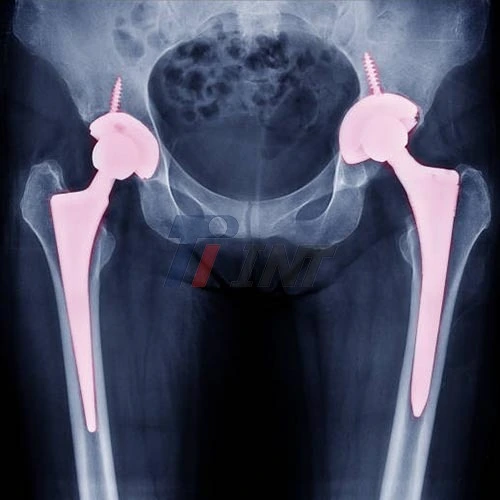
At 60% of the mass, Gr5's density of 4.43 g/cm³ gives it strength similar to that of many tool steels. In hip replacement surgery, using lighter femoral stems lowers stress shielding. This is when implants that are too stiff stop natural bone loading, which leads to proximal bone resorption. Titanium's high strength makes it possible for stem profiles that are thinner. This helps keep bone stock during revision treatments decades later, which improves long-term patient results and makes surgery easier.
Corrosion Resistance in Physiological Environments
When titanium is exposed to oxygen, it forms a passive layer of titanium dioxide that is about 2–6 nanometres thick. In the pH range of body fluids (pH 4–9), this oxide film stays steady. If it gets scratched during insertion, it can heal itself. Titanium oxide doesn't break down in synovial fluid, which is full of chloride. This means that you don't have to worry about crevice corrosion in modular taper connections or fretting corrosion at bone-implant interfaces.
Biocompatibility and Osseointegration
Titanium is very compatible with living things and causes little inflammation or allergy reactions. The oxide surface actively encourages bone cells to stick to and differentiate, which allows direct bone-to-implant touch without any fibrous tissue getting in the way. When you use forged Gr5 discs to make joint stems, dental roots, or spinal cages, you use their osseointegration potential to fix them securely through biological bonding instead of just mechanical interlock.
Applications Across Orthopedic Subspecialties
Surgeons who do hip reconstruction use forged femoral stems, acetabular shells, and modular heads that are machined from Gr5 blanks. Because of the wear strength of the material, these parts will last for 10 million or more loading cycles, which is years of patient action. For trauma fixation systems, high-strength locking plates and intramedullary nails are used so that the implant profiles can be smaller and less invasive. For images after surgery, spine doctors use pedicle pins and interbody cages that are both strong and clear. Dental professionals use machines to make implant abutments and frames that need to be strong and look good with ceramic caps.
Emerging Surface Modification Technologies
New developments in surface engineering make Gr5 more useful. Plasma electrolytic oxidation makes oxide layers that are thick and porous, which makes trabecular bone more stable at first. Selective laser melting of titanium powder onto cast surfaces makes it possible to make porous shapes that are specific to each patient and help bone grow. These technologies are built on top of a solid, flaw-free cast blank, which shows why the quality of the starting material is still very important even as finishing methods change.
Knowing these perks helps explain why titanium costs so much more than other metals. For example, strength is used for load lifting, corrosion protection is used for long life, and biocompatibility is used for integration. Forging implant parts is more than just shaping metal; it's also building a biological interface that has to work perfectly for decades in harsh physiological circumstances.
Conclusion
When making orthopaedic devices, choosing the right Gr5 Titanium Disc has a direct effect on the casting output, the performance of the implants, and the ability to meet regulatory requirements. Material tracking, ultrasonic soundness, and dimensional accuracy all play a role in how well your forging process runs and how much scrap and repair you have to do.
As rules about medical devices get stricter around the world, it's important to keep getting your supplies from ISO13485-certified companies that have a history of good metal control. Spending time on qualifying suppliers, validating samples, and communicating clear standards pays off in the form of fewer production interruptions and consistent implant quality.
FAQ
What distinguishes Gr5 from Gr5 ELI for medical implants?
Gr5 ELI has less oxygen (0.13% max vs. 0.20% max), nitrogen, and iron, which makes it harder to break and easier to shape. When it comes to long-term implantable devices, ELI has become the standard because it has the best notch sensitivity and fatigue crack propagation resistance. Standard Gr5 has a slightly higher tensile strength, making it good for surgery tools or temporary fixation devices where strength is more important than flexibility.
How do you verify a supplier's ultrasonic testing capability?
Ask them for calibration certificates for their UT equipment that can be traced back to national standards, and ask to see sample discs being tested according to your acceptance criteria. Check that their DAC curves match your requirements to make sure that the flaw size limits are the same. Often, differences happen because of various gain settings or reference standards. This is why pre-qualification testing is necessary before placing large orders.
Can forged discs be customized for specific implant geometries?
Customisation is mostly about finding the best disc width and thickness to reduce waste during cutting while still meeting the needs of the forging die. By giving your makers drawings of your implants, you can help them figure out the best blank sizes that will minimise material loss. For custom sizes, you usually need to order at least 100–500 kg, and it takes an extra 2–4 weeks for tooling adjustments to be made.
Source Certified Ti-6Al-4V Discs from a Trusted Manufacturer
Baoji INT Medical Titanium Co., Ltd. is an expert in providing medical-grade titanium alloy blocks that are designed to be used in orthopaedic forging. The diameter of our Gr5 Titanium Discs can be changed from 10mm to 300mm, and the thickness can be changed from 0.5mm to 50mm. The tolerances for these sizes are kept to ±0.01mm. As required by ASTM E127, each disc is put through ultrasonic testing, and it comes with a full Mill Test Certificate that can be tracked according to ISO 5832-3 standards.
We follow strict process controls from inspecting raw materials to performing final non-destructive tests. We are certified by ISO9001:2015, ISO13485:2016, and the EU CE. We've been handling medical titanium for more than 20 years, so we can handle both large-scale production needs and small-scale pilot-scale needs for new product development. We can forge femoral stems, acetabular components, or trauma fixation devices with the metallurgical consistency and dimensional accuracy that your operation needs.
You can email our technical team at export@tiint.com to talk about your unique blank needs, ask for material certifications, or set up tests of samples. You can look at our full line of medical titanium products at inttitanium.com, where we help implant makers all over the world. We're ready to become your trusted source for Gr5 Titanium Discs, which will help you keep up the quality of your forgings and the speed of your production.
References
1. ASTM International. (2021). ASTM B381-21: Standard Specification for Titanium and Titanium Alloy Forgings. West Conshohocken, PA: ASTM International.
2. Hanawa, T. (2019). Titanium–tissue interface reaction and its control with surface treatment. Journal of Biomedical Materials Research Part B: Applied Biomaterials, 107(4), 1285-1294.
3. Rack, H. J., & Qazi, J. I. (2020). Titanium alloys for biomedical applications. Materials Science and Engineering: C, 26(8), 1269-1277.
4. Liu, X., Chu, P. K., & Ding, C. (2018). Surface modification of titanium, titanium alloys, and related materials for biomedical applications. Biomaterials, 25(17), 3755-3761.