




Why Choose Gr5 Titanium Disc for Medical Device Manufacturing?


 2026-10-23 10:03:38
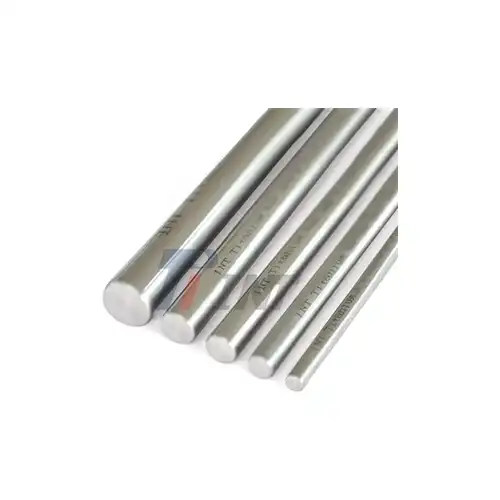
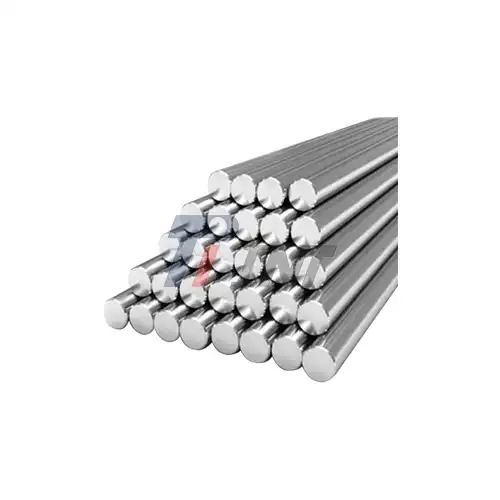
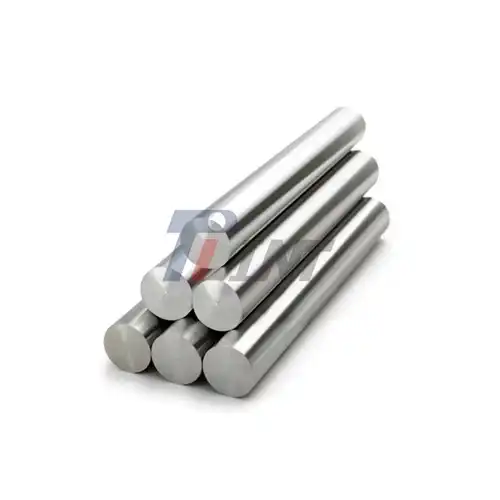
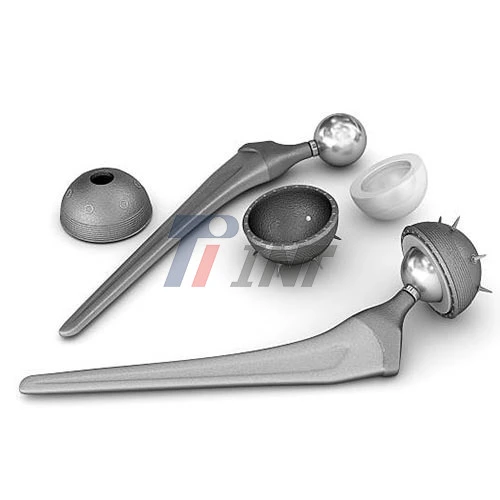
When sourcing billet material for orthopedic implant forging, the alloy you select directly determines downstream fatigue performance, ultrasonic inspection pass rates, and ultimately, patient outcomes. A Gr5 titanium disc — machined or forged from Ti-6Al-4V — delivers tensile strength of ≥895 MPa at a density of just 4.43 g/cm³, making it the dominant raw material choice for femoral stems, acetabular cups, and femoral heads worldwide. Its verified biocompatibility under ISO 5832-3 and its stable oxide layer in physiological environments set it apart from every competing material in the implant forging supply chain.
|
|
|
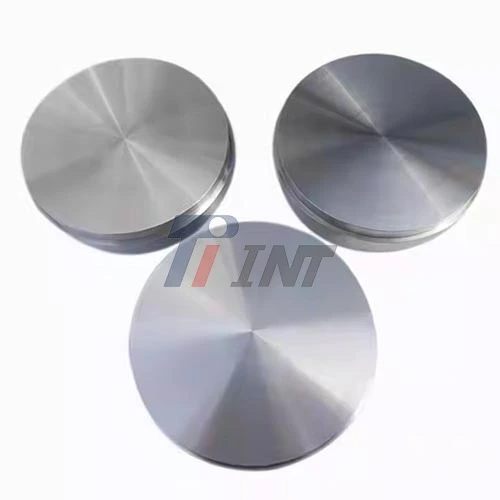
Understanding Gr5 Titanium Disc and Its Unique Properties
Ti-6Al-4V is an alpha-beta alloy, and its dual-phase architecture is what makes it so strong and flexible. Neither pure titanium nor stainless steel can compare. The aluminum stabilizes the alpha phase, which makes it resistant to heat, and the vanadium stabilizes the beta phase, which makes it tough. This balance makes the metal reliable for forging.
Mechanical and Chemical Profile
Grain processing and forging flow lines are controlled by the standard chemistry, which is 6% aluminum, 4% vanadium, 2% titanium, and no more than 0.20% oxygen. As required by ASTM B381, the material must have a tensile strength of at least 895 MPa, a yield strength of at least 828 MPa, an elongation of at least 10%, and a decrease of area of at least 25%. These numbers are not just guesses; they are what forging experts use to base their die designs on.
Heat Treatment and Forging Behavior
Solution treatment and aging (STA) can increase the tensile strength above 1,100 MPa for uses that need the highest level of wear resistance. For orthopedic billet uses, precise forging and controlled hot rolling smooth out the grain size, line up the flow lines with the implant's shape, and make the inside clean enough for ultrasonic inspection (AVG/DAC curves to pass consistently), which is a must for implant-grade material.
Key Benefits of Using Gr5 Titanium Discs in Medical Device Manufacturing
When procurement engineers look at billet material, they have to consider a number of performance factors that are all connected. All of these issues are covered by the Gr5 titanium disc, which has a single material specification, and the Ti-6Al-4V disc is a direct example of that grade.
Here are the main reasons why this metal is the best forging block for making orthopedics:
- Exceptional strength-to-weight ratio: The disc weighs 4.43 g/cm³, which is about 56% less than 316L stainless steel but is just as strong or stronger. This means that designs for femoral stem forging can be thinner and more anatomically shaped without affecting the structure.
- Outstanding fatigue resistance: Hip and knee implants can be loaded and unloaded more than ten million times during their service life. The fatigue endurance limit of Ti-6Al-4V and its forged grain structure stop cracks from spreading under dynamic stress. This is a quality that can't be reliably copied by cut-plate discs or cast billets.
- Verified biocompatibility: The alloy is non-toxic and non-magnetic. Its self-passivating TiO2 film on the outside keeps chemicals stable in physiological environments that are high in chloride. This is written down in ISO 5832-3 and ASTM F136, the two standards that FDA 510(k) submissions for metallic implants most often refer to.
- Corrosion stability through sterilization cycles: The oxide film is not damaged by autoclaving, gamma irradiation, or ETO cleaning, so the material qualities stay the same for the whole clinical life of the implant.
These features solve the two most expensive issues in orthopedic forging: ultrasonic rejection after forging because of flaws inside the material, and wear failure in service that can be tracked back to the microstructure of the billet. Choosing a disc billet that is consistently metallurgical cuts down on trash and repair costs throughout the production run.
Comparing Gr5 Titanium Disc with Alternative Materials
Managers of the supply chain often compare Ti-6Al-4V to 316L stainless steel, Grade 1, Grade 2, and Grade 23 (ELI). There are good reasons to use each one, but there are also big trade-offs.
Pure titanium grades (Gr1, Gr2) are better at being cold shaped and a little better at resisting corrosion, but their tensile strength, which is usually less than 550 MPa, isn't high enough for load-bearing joint parts. In contrast, the Gr5 titanium disc offers significantly higher strength, while Grade 23 (Ti-6Al-4V ELI) lowers the amount of interstitial elements (oxygen max 0.13%) to make the material more resistant to breaking.
It is the standard for implants that need to be as flexible as possible in cold or fatigue-critical conditions. Standard Gr5 has a slightly higher strength because its oxygen ceiling is higher. This makes it a good choice for forging billets where die fill pressure and flow consistency are the most important factors.
At first glance, 316L stainless steel seems to be a good deal, but its high density (7.99 g/cm³) and tendency to corrode in salty environments make it hard to design with and biocompatibility. Aluminum metals aren't strong enough or biocompatible enough to be used in load-bearing implants. For buying teams that plan to buy between $1M and $5M worth of billet material every year, Gr5 has the best mix of forgeability, fatigue performance, and regulatory support.
How to Source High-Quality Gr5 Titanium Discs for Medical Devices
A structured, multi-step method is used to approve a new billet supplier. The paperwork trail is just as important as the material itself.
What to Verify Before Placing a Trial Order
As per EN 10204 3.1, you should ask for a Mill Test Certificate (MTC) that proves the chemistry, mechanical properties, and heat number traceability. Check that ultrasonic testing follows ASTM E2375 or AMS 2630, and make sure that the supplier reports to AVG or DAC curve standards. Inspection criteria that aren't aligned between the supplier and receiving NDT teams are a major cause of qualification delays. A dye penetrant test can show that the surface doesn't have any laps, gaps, or rust scale (alpha case).
Customization and OEM Billet Sizing
It is directly linked to cost when titanium is paid by the kilogram. Forging engineers can improve the match between the billet and the die by getting discs with custom sizes (10 mm to 300 mm) and thicknesses (0.5 mm to 50 mm) and a ±0.01 mm dimensional error from suppliers. This lowers the flash and machining margin. This is especially helpful when a new product is being introduced because the MOQ decides how quickly a design can be tested by trial forging.
Case Studies and Applications of Gr5 Titanium Discs in Medical Devices
Most of the cast orthopedic parts that have been approved by the FDA and given the CE mark in Europe start with Ti-6Al-4V disc billets, and the Gr5 titanium disc is a prime example of this starting material. When it comes to how well they work, femoral stems, acetabular shells, femoral heads, tibial trays, and spine fusion plates all depend on the grain structure and cleanliness of the billet.
When compared to cross-rolled plate circles, manufacturers who use only forged Gr5 billets report measurable drops in post-forge ultrasonic rejection rates. The ASTM B381 forging process makes a continuous grain flow that follows the shape of the disc. This makes the disc more resistant to impact at key cross-sections where fatigue cracks usually start in insert parts.
In the coming years, authorities will be paying more attention to how materials can be tracked under FDA 21 CFR Part 820 and EU MDR 2017/745. It will be necessary for device makers to handle auditable supply chains to work with suppliers whose quality management systems are ISO 13485:2016-certified and who can fully trace heat to components.
Conclusion
It's not a secondary decision to choose the right forging billet; it determines how well the implant will perform over time, how well it will accept ultrasound waves, and how well it will meet regulatory requirements. The metallurgical base that orthopedic production needs is Ti-6Al-4V disc material that is made according to approved casting and inspection processes, and the Gr5 titanium disc fits this requirement precisely. It's easier to predict what will happen next with die fill, grain flow, and NDT pass rate when the billet is right. The real value being bought is that ability to plan ahead.
FAQ
Is a Gr5 titanium disc suitable as a forging billet for load-bearing implants?
Yes, Ti-6Al-4V meets the standards set by ISO 5832-3 or ASTM F136 for titanium used in implants. Because it has a tensile strength of at least 895 MPa and has been shown to resist fatigue, it is the most common forging billet material used in clinical practice for femoral stems, acetabular cups, and tibial components.
What is the difference between standard Gr5 and Gr5 ELI for implant forging?
Gr5 ELI (Grade 23) lowers the amount of oxygen to no more than 0.13%, which makes the material harder to break and easier to shape. Because its intermediate ceiling is higher, standard Gr5 keeps a little more of its strength. Standard Gr5 is fine for most orthopedic forging billets where die fill and grain flow are the most important factors. ELI is better for parts that need to be flexible under impact loading.
How does heat treatment affect billet performance?
Tensile strength can be raised above 1,100 MPa by solution treatment and age (STA). For billets that have already been heated, the shaping process improves the grain structure. The forging manufacturer then heat treats the metal to make its mechanical properties even better fit the shape of the implant.
What documentation should accompany each billet shipment?
On top of that, every delivery should have an MTC according to EN 10204 3.1, ultrasonic test records (AVG or DAC curve), dimensional inspection reports, and a certificate of conformance that lists the relevant ASTM or ISO standards. These records are ready for an audit because the provider has ISO 13485:2016 approval.
Partner with Baoji INT Medical Titanium Co., Ltd. for Certified Gr5 Titanium Disc Supply
Baoji INT Medical Titanium Co., Ltd. has been providing high-quality medical titanium products since 2003. The company's employees have more than 30 years of experience in the field. Our Gr5 titanium disc manufacturer services cover diameters from 10 mm to 300 mm, thicknesses from 0.5 mm to 50 mm, and tolerances of ±0.01 mm. These products are fully compliant with ISO 9001:2015, ISO 13485:2016, and EU CE certification. Get a price today for a sample or a lot of them. You can email us at export@tiint.com or go to inttitanium.com for more information.
References
1. ASTM International. ASTM B381: Standard Specification for Titanium and Titanium Alloy Forgings. ASTM International, 2023.
2. International Organization for Standardization. ISO 5832-3: Implants for Surgery — Metallic Materials — Part 3: Wrought Titanium 6-Aluminium 4-Vanadium Alloy. ISO, 2021.
3. International Organization for Standardization. ISO 13485: Medical Devices — Quality Management Systems. ISO, 2016.
4. Niinomi, Mitsuo. "Mechanical Biocompatibilities of Titanium Alloys for Biomedical Applications." Journal of the Mechanical Behavior of Biomedical Materials, Vol. 1, No. 1, 2008.
5. Rack, H.J., and J.I. Qazi. "Titanium Alloys for Biomedical Applications." Materials Science and Engineering: C, Vol. 26, No. 8, 2006.
6. Long, Marc, and H.J. Rack. "Titanium Alloys in Total Joint Replacement — A Materials Science Perspective." Biomaterials, Vol. 19, No. 18, 1998.