




Top Uses of ISO 5832-3 Ti6Al4V Titanium Bar in Orthopedics and Surgery


 2026-11-27 13:25:40
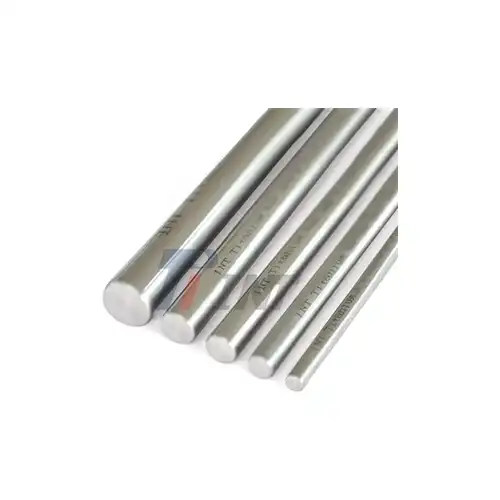
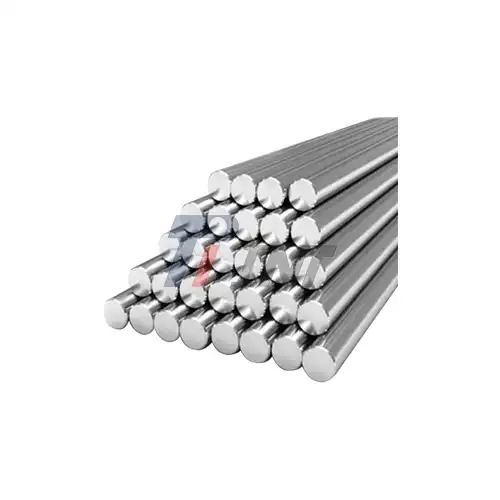
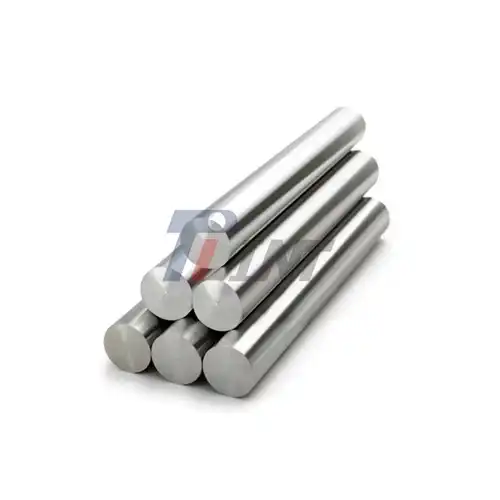
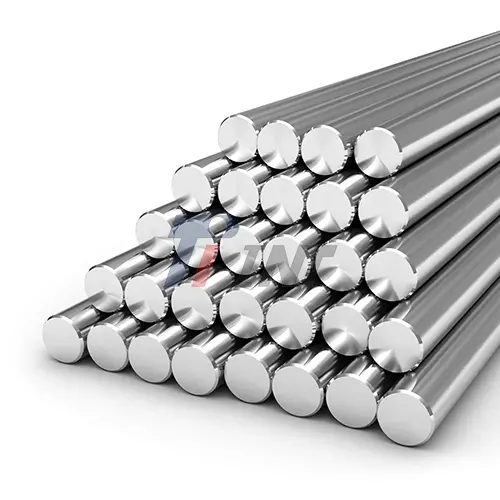
Orthopaedics and surgery employ ISO 5832-3 Ti6Al4V titanium bar for bone screws and plates, hip and knee joint parts, spinal rods and pedicle screws, dental and maxillofacial parts, reusable surgical equipment and bespoke implants. This alloy is robust for its weight, doesn't corrode, is simple to process, and has been used on humans for a long time for implants. ISO 5832-3 covers surgical implants made of wrought titanium-6aluminium-4vanadium. This bar's chemistry, microstructure, and documentation are clear. I'll explain each usage and the safety checks that protect your manufacturing line below.
A lot of people call it Grade 5 (Ti6Al4V). ASTM B348 Commercial Grade 5 bar is used in most fields. In surgery, implants that meet ISO 5832-3 and ASTM F136 are used. There are different rules, but the names look the same. Before you place your order, make sure you have the most recent standard edition, the heat number, the certificate, and the test records. Also, I think you should make sure of the size, the surface's condition, the way it was made, and the heat treatment.
|
|
|
Orthopedic Fixation, Joint Replacement, and Spinal Uses
That's where I'll start because this bar is mostly used for orthopedic devices.
Bone Plates, Screws, and Fixation Components
For trauma surgery, internal fixation is used to keep a broken bone in place while it heals. Bone screws, locking screws, pins, rods, connectors, and plate blanks are all made from ISO 5832-3 Ti6Al4V titanium bar. It weighs 4.43 g/cm³, which is about half as much as stainless steel. On top of that, a stable oxide film keeps it from rusting in body fluids. Titanium makes it hard to use tools on the shop floor.
Since it's not good at moving heat, it builds up at the cutting edge and wears down tools quickly. CNC shops are in charge of the feeds, coolant, and shape of the tools used for drilling and threading. They also check for burrs, tight threads, and tolerances. After that, the parts are cleaned and then put together, coated, or germ-free. They don't change from lot to lot because the bar is always straight and has the same chemistry.
Hip, Knee, and Other Joint Replacement Components
Ti is used in places like the hip, knee, shoulder, and ankle joints where strength and light weight are important. A lot of the time, bar is used to make femoral stem parts, modular necks, adapters, fixation elements, and custom implant parts. There are about 200 GPa of elasticity in steel, but only about 110 GPa in Ti6Al4V. When the modulus is low, the implant is stiffer, more like bone. This has been linked to less stress shielding in reviews.
Many times over the course of years, joint parts made from ISO 5832-3 Ti6Al4V titanium bar are loaded and unloaded. Because of this, fatigue performance, dimensional stability, and surface roughness need to be looked at. Along with being consistent, the metal should also have coatings and surface treatments that work with the base material. The design of the finished product and the confirmed production needs should match up with your plan for mechanical, dimensional, and process checks.
Spinal Implants and Orthopedic Support Devices
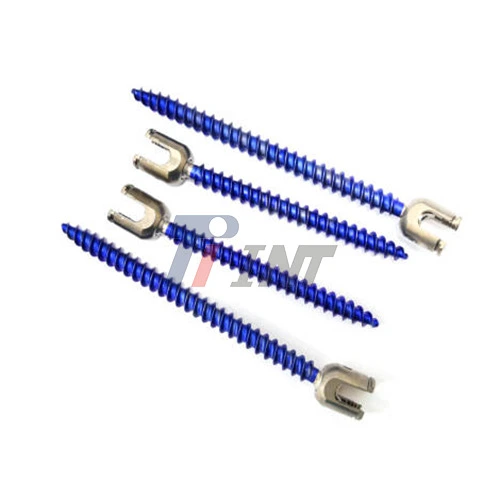
Rods, pedicle screws, hooks, cross-links, and connections make up spinal fixation assemblies. Titanium works well in these devices since it's light, doesn't corrode, and doesn't deform MRI images like stainless steel. Its intricate forms and strong linkages make it hazardous to make. Thread profiles, mating surfaces, tool marks, residual stress, and surface cleanliness must be monitored. Unstraight rods and lengthy screw blanks are discarded before machining, therefore they must be straight. Good lot documentation is also crucial. Each spine portion must be linked to a material heat.
Dental, Surgical Instrument, and Custom Implant Uses
The same metal can be used to make both big implants and smaller, more specialized things.
Dental Implants and Maxillofacial Components
Some of the parts that make up dental implants are the bodies, the abutments, the implant screws, the healing parts, and the precision connectors. For the same reason, reconstruction parts and plates that fix the maxillofacial area are used. When these parts are used, they need to be able to be machined reliably, have tight tolerances, and have a controlled surface quality. It matters what kind of surface it is because surfaces that have been machined, polished, or blasted react in different ways when they are coated, cleaned, and embedded in bone.
Something that can hold residue is a surface that has been blasted. Keeping things from getting dirty should be done with the same care. The raw material specification only talks about the bar, so the company that makes the device has to finish, clean, and germicidalize it in a way that is approved by that company. When people place an order, I tell them to be very clear about what surface they need. That way, the bar will be ready to use when it gets there.
Surgical Instruments and Reusable Devices
Surgeons hold instruments for long periods of time, and low density can help them do that more easily. Ti6Al4V bar is used to make machine handles, shafts, clamps, guides, and other precise parts for orthopedic and minimally invasive procedures. These tools can be used over and over to clean, sterilize, and do mechanical work because they are strong and don't rust. As long as the whole thing was made and tested to do those things, that is.
Titanium sticks to things that move, so designers make sure that everything fits well when it moves. Some of the controls that are used during production are making sure that surfaces are smooth so they can be cleaned and getting rid of burrs, sharp edges, and cracks where dirt can gather. Any passivation or post-processing should be done by a company that makes the instrument and has checked that it works.
Custom and Patient-Specific Orthopedic Implants
A flexible material supply is important for all OEM programs, custom implants, prototypes, and low-volume production that are used over and over again. It is possible to get ISO 5832-3 Ti6Al4V titanium bar in a lot of different sizes, shapes, finishes, and material conditions. Machines, forges, and other approved methods can be used to shape it. Before you ask for a quote, you should know the blank size, machining allowance, condition (annealed or heat-treated), cleaning needs, and the ability to keep track of lots.
An honest supplier will look over your drawing, give you advice on stock sizes, give you proof of conformity, and help you approve samples. At Baoji INT, we sell Ti6Al4V ELI, pure titanium, rods, wires, plates, and forged goods. To help us figure out the right stock sizes, we also look at drawings. To keep the global supply chains for medical devices running smoothly, labels and packaging must be the same.
Choosing ISO 5832-3 Ti6Al4V Bar Over Alternative Materials
You should look at the approved device documentation to help you choose a material. So, instead of alloy names, this comparison is based on standards.
ISO 5832-3 Compared With ASTM F136 and ASTM B348 Grade 5
People who want to buy alloys often ask if they can be used for more than one thing. They don't. ASTM B348 covers titanium bars that are used in industry in general. Grade 5 bar meets that standard and has a tensile strength of at least 895 MPa. ASTM F136 talks about Ti6Al4V ELI for surgical implants. We can pull it apart at least 860 MPa, stretch it at least 10%, and still hold together at least 795 MPa. ISO 5832-3 also has its own rules for chemical and mechanical properties, as well as microstructure, that are meant to be used in surgical implants.
For an implant file, general Grade 5 stock might not work, even if the chemistry looks close. This is because the forms and requirements are different. The first thing you should do is compare the expected use, test scope, traceability, and certification needs. Then, compare the bar to the standard that comes with your device and the requirements that the customer must meet.
Production Route and Material Condition
There are different ways to make bar, and each one changes how the metal works in your machine. The structure of the grains changes when you roll or forge something hot. It lowers the stress and sets the range of how strong and flexible the metal can be. Drawing, peeling, or grinding are finishing steps that usually improve the quality of the surface and make the diameter tolerance tighter. This helps auto-ladders keep their shape. The way a metal wears down and cuts is affected by its grain structure. ISO 20160 groups the microstructures of alpha+beta titanium bars used in surgery into these groups.
If the process control isn't good, there could be alpha case, a broken surface layer, or grains of different sizes. These all can lead to more scrap. In your purchase specification, you should list the needed condition, the production routes that are acceptable, and the microstructure requirement. In this way, each lot will get there in the same state.
Key Specifications Engineers and Buyers Should Review
From a practical point of view, chemistry is the first subject. The alloy can only have a certain amount of iron, oxygen, carbon, nitrogen, hydrogen, and other elements. Vanadium makes up 4% of it and aluminum makes up 6%. The mechanical properties are the next group. These are things like tensile strength, yield strength, elongation, and area reduction when the standard calls for them.
Next, write down the physical details of ISO 5832-3 Ti6Al4V titanium bar, like the diameter, length, straightness, roundness, surface defects, roughness, and tolerances. The heat number, the mill test certificate, and information about the lot should all be on every lot. A lot of people who buy something also want an EN 10204 type 3.1 certificate. For exact limits, don't copy numbers from a general datasheet. Instead, look at the most recent edition of ISO 5832-3.
Procurement and Risk Control for Medical Titanium Bar
Your registration file and the yield of your machine will be safe if you buy things the right way.
Writing a Complete Specification and Understanding Price Drivers
Make a list of all the technical details to start. If you need to, write down the ISO 5832-3 number, the product's shape, diameter, length, quantity, tolerance, material condition, surface finish, inspection scope, and any documents that you need. You can't compare quotes when you don't give enough information. All of these things affect the price: the size of the bar, the amount ordered, the processing condition, the testing scope, the tolerance, the surface treatment, where the bar is shipped to, the lead time, and the terms of the business.
The price goes up when there are more tests and tighter tolerances. A quote that doesn't include these things might look cheaper because it doesn't cover as much. For people in the U.S., the landed cost is also affected by the shipping route and delivery terms, so make sure you get them in writing. Bring drawings and an idea of how much you will need each year when you ask for a quote. The supplier will then be able to suggest stock sizes and cut lengths that will save you time and money by cutting down on waste.
Evaluating Suppliers, Samples, and Audits
It takes time to get to know a new supplier and trust them. One of the first things most buying teams ask for is the specification sheet, along with the certificates of analysis and test reports. After that, the samples are sent to a different lab to be tested for chemistry, mechanics, and metalography. It takes about two to four weeks for this to happen. The next step is either an in-person or a video quality check, and then there is a small test order.
You should ask about medical titanium experience, being able to track from heat to shipment, having stock on hand, and being able to do small tries of different sizes. There is also often a second source added to make it less likely that the supply will run out. Mr. set up the Baoji INT Medical Titanium Co., Ltd. Zhan Wenge has been in the titanium business for over 30 years. This is what our quality system looks like: ISO 9001:2015, ISO 13485:2016, and EU CE. We'd love to talk to you about your sample and audit needs.
Avoiding Common Compliance and Quality Risks
People always make the same mistakes when they buy medical titanium. People who buy general Grade 5 bar don't always check to see if it meets medical standards. Some people only look at prices and don't compare the different types of documents, the condition of the surface, or if the certificate doesn't match the heat or lot that was given. Before you place your first order, read the quality documentation, the representative test reports, the samples, and make a list of what needs to be done to fix the problem while you look over the samples.
On the shop floor, too, things change from lot to lot. The yield may drop if the chemistry or hardness changes, and it may be necessary to make new tool offsets. Being a supplier doesn't mean that you don't have to do your own regulatory work, device validation, machining qualification, cleaning validation, sterilization assessment, or device validation. The information you give them is useful and can be tracked. It should match the file you send to regulators.
Conclusion
The ISO 5832-3 Ti6Al4V titanium bar is strong, doesn't rust, has a low density, and can be machined. It can be used to make orthopedic fixation parts, joint components, spinal implants, dental and maxillofacial products, reusable instruments, and custom devices. For each use, there are different manufacturing needs, such as keeping burrs and thread accuracy under control and making sure the surface is in good shape. The material is not the same as ASTM F136 or commercial Grade 5.
It has a different standard, is not meant for the same use, and has different documentation. So, the approved device file, not the name of the alloy or its price, should be used to decide what to do. Labels and specifications that match the lot for things like chemistry, mechanical properties, sizes, production route, and heat treatment help cut down on waste and regulatory risk. Supplier certificates are helpful, but they don't take the place of checks by the manufacturer on the cutting, cleaning, and sterilizing.
FAQ
Is ISO 5832-3 Ti6Al4V the same as Grade 5 titanium?
Yes, both are Ti6Al4V alloys. However, ASTM B348 Grade 5 is for general industrial bars and ISO 5832-3 is for surgical implants. Make sure you know what you need before you place your order because different standards have different rules about testing, intended use, and paperwork.
What documents should arrive with a shipment?
The heat or lot number, an inspection record, a certificate of conformity, and information that lets you track each bar back to its heat should all be on the material test certificate.
Can I order custom diameters and lengths?
Yes, most of the time. Kindly send us your drawing along with the material's diameter, length, tolerances, and state. We are going to tell you what we can do. After checking out a sample, it makes sense to place an order for mass production.
How do I prevent contamination during machining?
Always keep titanium chips away from other metals and only use tools and coolants that are made to work with titanium. Clean, finish, and sterilize according to the steps that have been tried and tested to work.
Request a Quote for ISO 5832-3 Ti6Al4V Titanium Bar from Baoji INT Medical Titanium Co., Ltd.
Since more than 30 years ago, Baoji INT Medical Titanium Co., Ltd. has sold ISO 5832-3 Ti6Al4V titanium bars. We are certified by both ISO 13485:2016 and ISO 9001:2015. You can email export@tiint.com with your standard, diameter, length, quantity, and documentation needs. You can learn more about the item at inttitanium.com as well. Talk to our titanium materials team about ISO 5832-3 Ti6Al4V bar sizes, certifications, and custom supply options for your medical device project.
References
1. ISO 5832-3: Implants for Surgery — Metallic Materials — Part 3: Wrought Titanium 6-Aluminium 4-Vanadium Alloy, International Organization for Standardization, 2021
2. ASTM F136: Standard Specification for Wrought Titanium-6Aluminum-4Vanadium ELI Alloy for Surgical Implant Applications, ASTM International, 2013
3. Niinomi, M., "Mechanical Properties of Biomedical Titanium Alloys," Materials Science and Engineering: A, 1998
4. Geetha, M., et al., "Ti Based Biomaterials, the Ultimate Choice for Orthopaedic Implants – A Review," Progress in Materials Science, 2009
5. Rack, H. J., and Qazi, J. I., "Titanium Alloys for Biomedical Applications," Materials Science and Engineering: C, 2006
6. ISO 20160: Implants for Surgery — Metallic Materials — Classification of Microstructures for Alpha+Beta Titanium Alloy Bars, International Organization for Standardization, 2006