




What Certifications Should Dental Titanium Bar Suppliers Provide?


 2026-11-27 13:25:39
A supplier of dental titanium bars should provide ISO 13485:2016 and ISO 9001:2015 certificates for its quality system. It should also provide batch-specific material test certificates that name the grade and standard, such as ASTM F67 for commercially pure titanium or ASTM F136 for Ti-6Al-4V ELI. Buyers of dental titanium bars should also ask for dimensional inspection reports, traceability records, and a clear statement of regulatory scope. A management certificate proves process control. A test report proves the material in your shipment. Below, I explain each document, how to check it, and how to compare suppliers.
|
|
|
Why Supplier Certifications Matter When Buying Dental Titanium Bars?
Certificates Reduce Quality and Supply Risks
Parts that don't have the right paperwork can cause problems before they even reach their destination. The chemistry can change, the roughness can't be even, or the parts can't be straight. This can damage the threads on a Swiss-type lathe or break the frame on a five-axis mill. What if something gets lost? That might stop a customer check or a change in where the information came from. Before the cutting starts, your quality team can look over the certificates. They also make it easy for your buying team to compare prices. I've found that people who asked for papers first and then agreed on price get the best deals.
Management Certificates Versus Product Compliance
A lot of people who buy titanium think that an ISO license means it is safe for medical use. It doesn't. The fact that a company is in charge of its processes, records, and steps to fix problems is shown by both ISO 13485 and ISO 9001. Some bars don't say anything about the metal inside them. A test certificate with a heat or batch number that lists the chemical and mechanical qualities of the product along with its measures shows that it meets a certain standard. You must have both. Their system license shows that they follow the rules at work. What you bought is in the batch report for dental titanium bars.
Three Levels of Verification
I think you need to check three steps in a certain order. First, find out if the seller can make the thing. For example, does the supplier hot roll, forge, test, and ship at controlled temperatures? Second, check the bar against the term you gave it using batch data. Third, make sure you can keep track of the main materials from the time they are cut to the time they are given. The other two levels can't make up for a weak level. A provider can have a good license but not be able to control the heat number. In other words, you are still at risk while an audit or complaint investigation is going on.
Essential Quality System and Material Certifications
ISO 13485 and ISO 9001
ISO 13485:2016 is the quality control standard that companies that make medical equipment must follow. That's because it helps with risk management, document control, corrective action, and change management. Companies that make implants and other dental titanium bars often use it in their supply chains. ISO 9001:2015 makes sure that you always do things the same way when you buy something, make something, check something, or help a customer. Do not rush through reading the certificate's scope. Pay attention to the company name, the factory address, the group that issued the document, and the dates it is valid. Just because you give a license to a trade office doesn't mean it covers the plant that makes your bars.
ISO/IEC 17025 Laboratory Evidence
The rule for labs that test and measure things is ISO/IEC 17025. You can trust the results of chemical tests, tensile tests, and measuring sizes more if the lab has this certification. Along with their own quality system, some companies do their own tests. Not all of them use a well-known lab. You should find out which lab made the numbers on your license and see if there are any records of the tools being calibrated. Both could be fine. This will save you time and keep you from having to answer awkward questions if one of your clients does an audit. You can name the lab and show proof of testing.
ASTM and ISO Material Standards
They say what the bar should be made of and how it should be made. As per ASTM F67, Grades 1 through 4 of pure titanium can be used in surgery. The cast Ti-6Al-4V ELI meets ASTM F136 if it has no more than 0.13 percent oxygen. It is governed by two international standards, ISO 5832-2 and ISO 5832-3. These standards cover both pure titanium and titanium that has been mixed with aluminum and magnesium. Don't be happy with words like "medical titanium." Instead, ask for the correct grade, like Ti-6Al-4V ELI or Grade 4. You choose a standard that every batch report will follow when you place your order.
Mill Test Certificates for Every Shipment
It is also known as a material test certificate. A Mill Test Certificate links your bars to a certain heat or batch. There should be an official signature, the length, the width, the tensile and yield strengths, and the chemical make-up on a useful one. Someone who is approved by the producer but not in charge of making the goods can give buyers an EN 10204 type 3.1 certificate if they ask for one. Part of the named standard process is checking the certificate's numbers to make sure they are in the right ranges. The heat number on the certificate should also match the number on the bars or the label that comes with the package.
Manufacturing, Surface, and Regulatory Documentation
Production Route and Inspection Records
The way the bars were made must be shown. You should know how to use a CNC machine to make dental titanium bars that are hot-rolled, cast, cold-drawn, and cut. Figure out the best way for your order to go. It's helpful to write down the heat treatment, whether the pieces were checked for straightness and ovality, and how the measuring tools were set up. The sound tests let you know if the seller opens the items to see if they are broken before you send them out. It's just as important to know how straight and round the implants are as it is to know how the chemicals are mixed when heavy machines are used to make them. This is what you should do because even small changes can lead to scrap or shaking.
Surface Treatment Records
Find out what method was used to check the bars and whether they were ground, polished, passivated, or blasted. Some people want the surface of the stock they buy to be rough so they can make joint blanks. On the other hand, people who run a dental lab might want the stock to be clean, scratch-free, and clamp evenly. What does the seller do with stuff that doesn't meet the requirements? Does the company tell customers ahead of time when it changes a process or where it gets its raw materials? These two points can often tell you how stable your supply will be for many years.
FDA and CE Claims for Raw Titanium Bars
People from the US need to pay extra attention to the words used in rules. It's not good for the FDA to have raw titanium bars. The FDA Quality Management System Regulation goes into effect on February 2, 2026. After that date, implant makers will be in charge of their providers and will be able to use finished devices. In line with ISO 13485, this rule makes sense. CE marking is usually found on finished goods. You need to know what an FDA or CE statement says, what it refers to, and who is in charge of it. A better way to sell is to make sure that every claim is covered by the license.
Evaluating a Certification Package and Supplier Claims
Building a Certification Checklist
When you use a written list, it is fair to look at different suppliers. I believe that the list should include the name of the business and factory, ISO certificates, the named material standard, test results for each batch, a Certificate of Conformity, measurement records, lab information, and a way to keep track of the goods. To each thing, you should add a field that says "received," "verified," and "expires on." The list is also made up of things you want for dental titanium bars. For a dentist's office, being able to machine and do small jobs might be more important. A company that makes implants will need to be able to keep track of implants and change those more often. One supplier might be able to meet all of the needs, but not all of them at the same time.
Verifying Certificate Authenticity
It's not enough to just get a stamp. Make sure that the dates, license number, and subject are all the same. For this, you can either call the granting body or check its public record. The factory's address should match the one on your bill and quote. After that, check what you got against what you wrote. Find a piece, measure it, and send it to your own lab if the project asks for it. In this case, it makes sense to look at the first book. When the real bar and the paper bar both say the same thing, it's easy to believe it.
Decoding Terms Like "Medical-Grade"
"Medical-grade titanium," "ISO certified," and "FDA compliant" are some words that might not mean much to someone who doesn't know much about the subject. A good quote spells out the exact grade, standard, place of production, scope of the certificate, and person whose job it is to make sure the rules are taken care of. Because ASTM F67 and ASTM F136 standards are for goods, a regular ISO certificate does not show that a product meets them. Just ask basic things. How hot does this get? Which lab looked at it? Could you send the report on the batch before it goes out? If the seller gives clear answers, it means they know what people who would buy medical equipment want.
Procurement Process and Choosing a Manufacturer
Define Requirements Before Requesting Quotes
You should start with a clear plan if you want to do good buying. Note down the grade, standard, width, length, accuracy, surface finish, use, market location, number, and shipping time. Before you ask for a price, make sure you get sample certificates, inspection reports, wait times, information on how the product will be packed, and ideas for how to make it your own. They will know what grade of material you need, such as Grade 5, Grade 23, or pure titanium, if you send a full request. They can also check your papers to make sure you have them. All the sellers answer the same questions, which makes it easy to compare prices for dental titanium bars.
Qualify With Samples and a Pilot Order
Look at their certificates, do a virtual or in-person audit of the process, test some samples, and place a pilot order. It should be easy to tell if someone is qualified. Take the examples and run them through your own machines. Note down any changes in shape, tool wear, or thread quality loss. Write down what you want in the purchase deal as soon as the test goes well. The things that need to be done to be accepted, the paperwork that needs to be turned in, the responsibilities for telling people about changes and fixing things should all be on this. Check how good each batch is and how often they deliver. It costs less to find small issues early on than to find big ones during production.
What a Dependable Manufacturer Offers
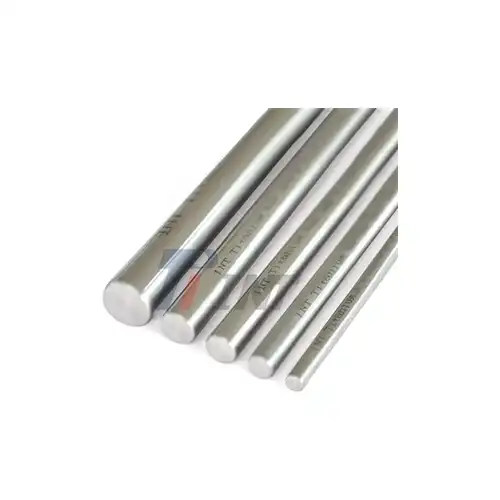
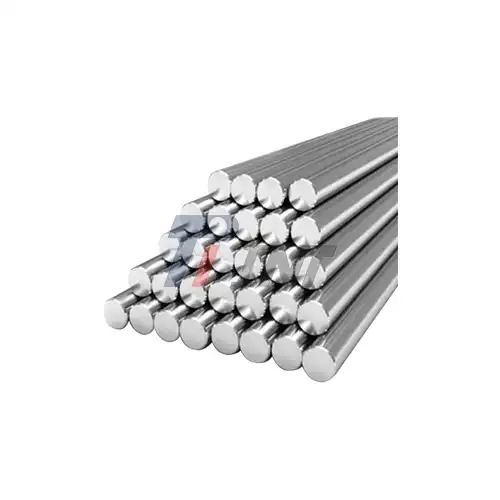
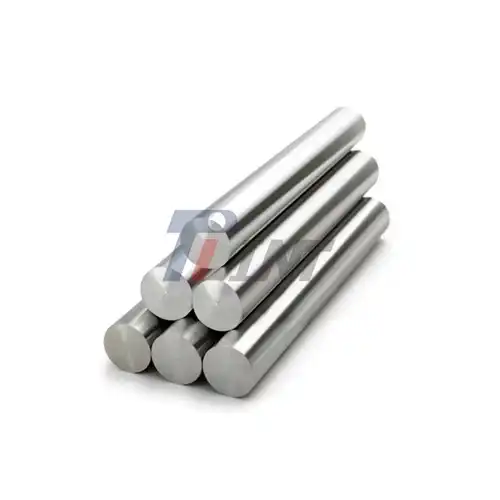
Baoji INT Medical Titanium Co., Ltd. was founded in 2003 by Mr. Zhan Wenge. He's worked with metal for more than 30 years. Things made of pure titanium and Ti-6Al-4V ELI are for sale, along with bars, wires, plates, and forging tools. There are two grades of our dental titanium bars: Ti-6Al-4V (Grade 5) and Ti-6Al-4V ELI (Grade 23). We can make them any size or shape you want. To begin, heat is used to roll and shape the bars. Then sound waves are used to check them out. Our products are safe because they have the EU CE mark, ISO 9001:2015, and ISO 13485:2016 marks on them. They are safe, strong for their weight, don't rust, and don't wear out quickly, so people buy them.
Conclusion
If you want to buy a dental titanium bars, you need to get the right paper for the right risk. When a seller has ISO 13485 and ISO 9001, you know that their processes are in order. You can be more sure of test results when you use ISO/IEC 17025. To make sure it meets a standard like ASTM F67 or ASTM F136, it needs a batch-linked Mill Test Certificate and a named standard. There are records of the steps used to make the picture, the measurements, the treatment of the surface, and the ability to be tracked to finish the picture. You need to compare what the FDA and CE say with the raw titanium bars to understand what they really mean. As a precaution, look at samples, place a test order, and check the paperwork to make sure the goods match the certificates. Audit work, lost materials, and breaks in the supply chain can all be avoided by carefully going over the papers.
FAQ
Which certifications matter most for dental titanium bars?
First, you should look at ISO 13485:2016 and ISO 9001:2015. Then you need a Mill Test Certificate that is specific to the batch and shows the grade and standard. One shows what the material is and how well the process is being managed for dental titanium bars.
Is FDA approval required for raw titanium bars?
Not at all. The FDA only lets through finished medical goods, not raw bars. Device makers have their own quality systems that they use to keep an eye on the suppliers they work with. Learn what the FDA or CE say about something.
Can a small dental lab ask for certified samples?
Yes. A lot of sellers give away samples or small amounts. Before you buy, make sure you know how to check the certificates, what papers come with the order, and how much the minimum order is.
Request Certified Dental Titanium Bars from Baoji INT Medical Titanium Co., Ltd.
Want to buy dental titanium bars from a company that can give you licenses and batch records right away? Baoji INT Medical Titanium Co., Ltd. sells bars in two grades: Grade 5 and Grade 23. They can make shapes just the way you want them, and OEMs can get free samples. Email export@tiint.com with your grade, width, length, and number.
References
1. ISO 13485:2016, Medical Devices — Quality Management Systems — Requirements for Regulatory Purposes, 2016
2. ASTM F136, Standard Specification for Wrought Titanium-6Aluminum-4Vanadium ELI Alloy for Surgical Implant Applications, 2021
3. ASTM F67, Standard Specification for Unalloyed Titanium for Surgical Implant Applications, 2017
4. ISO/IEC 17025:2017, General Requirements for the Competence of Testing and Calibration Laboratories, 2017
5. EN 10204, Metallic Products — Types of Inspection Documents, 2004
6. FDA Quality Management System Regulation Final Rule, Federal Register, 2024