
Welded vs Seamless Titanium Tube: Which Is Better


 2026-07-28 16:22:29
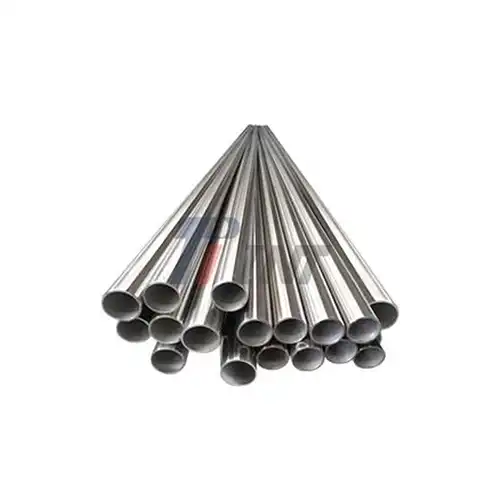
When selecting titanium tubing for medical device manufacturing, understanding the differences between welded and seamless options becomes essential to your project's success. Gr7 Welded Titanium Tube offers an exceptional balance of corrosion resistance, mechanical reliability, and cost-effectiveness, making it a compelling choice for demanding applications in surgical instruments, implants, and chemical processing equipment. While seamless tubes provide uniform wall thickness without weld seams, Grade 7 welded tubes—enhanced with palladium—deliver superior performance in aggressive environments at a more accessible price point, particularly for heat exchangers and high-chloride exposure scenarios.
|
|
|
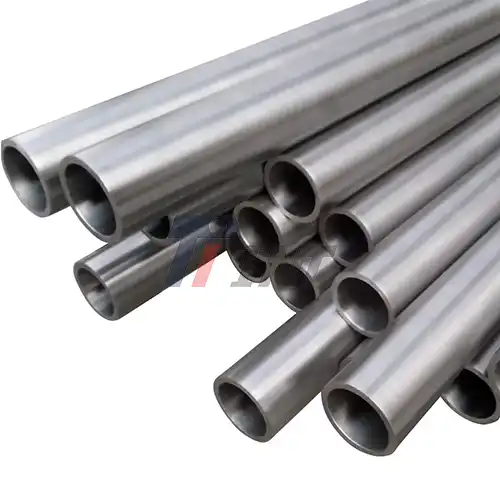
Understanding Welded and Seamless Titanium Tubes
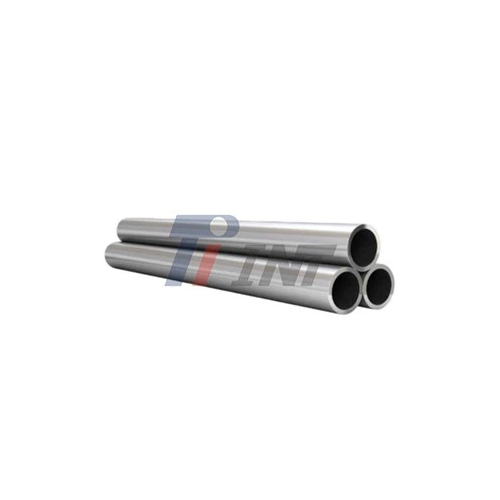
The way these two types of titanium tubes are made is what makes them truly different and directly affects how well they work in different situations. To make Gr7 Welded Titanium Tubes, flat titanium strips are shaped into cylinders and then the edges are joined using TIG (Tungsten Inert Gas) or plasma arc welding. This method makes it easy for makers to make tubes of different sizes and to specific customer requirements. Adding 0.12% to 0.25% palladium to normal commercial-pure titanium turns it into a corrosion-resistant powerhouse. This process works especially well when working with speciality metals like Gr7 Welded Titanium Tube.
Making seamless tubes is done in a different way. They are made by heating solid titanium billets and shaping them into hollow tubes without joining. This is called extrusion or rotating piercing. This gets rid of the heat-affected zone (HAZ) completely, making the material qualities the same all the way around the tube.
Manufacturing Methods and Their Impact
To keep the electrochemical benefits of the palladium in Gr7 Welded Titanium Tubes, the welding process needs to be carefully controlled. When the part is being made, the weld area needs to keep the alloy's passive film properties, which make it very resistant to crevice corrosion and pitting in reducing acid conditions. Modern automatic welding systems make sure that the penetration depth is always the same and that contamination is kept to a minimum. This results in join lines that have the same mechanical qualities as the base material.
Seamless production gets rid of worries about the stability of the weld, but it limits the sizes that can be made and the ways that they can be customised. The extrusion process works best for tubes with a smaller diameter. As the diameter gets bigger, the cost goes up because more equipment is needed and more material is wasted.
Lead Times and Customization Capabilities
We've seen that wait times for welded tube production are usually shorter than those for seamless tube production. Being able to start with strip material gives us more freedom to make custom sizes, changing the wall thickness and diameter combinations to fit your exact engineering needs. This flexibility is very helpful when making prototypes for new medical devices or improving current designs to work better.
Performance and Properties Comparison: Gr7 Welded vs Seamless Titanium Tubes
Knowing the technical details helps purchasing managers make choices based on facts that meet the needs of the application. The chemical makeup of Gr7 Welded Titanium Tube is mostly titanium with a small amount of palladium, iron (less than 0.30%), and oxygen (less than 0.25%). This mix has a density of 4.51 g/cm³ and a melting point of about 1660°C, which means it stays stable at high temperatures even in harsh conditions.
Mechanical Strength and Durability
For heat exchanger uses, ASTM B338 standards say that Gr7 Welded Titanium Tubes must have a minimum tensile strength of 345 MPa and a yield strength of 275 MPa. Both welded and seamless tubes meet these standards. The 20% extension requirement makes sure that the tube is flexible enough to be used for tube-forming processes like flaring and expanding into tubesheets. Welded tubes made with the right quality controls have been tested and found to have the same mechanical performance as smooth tubes.
A full review of the weld seam is done, including flare and flattening tests, to make sure that the HAZ has the same level of flexibility as the parent material. This keeps things from breaking too soon during installation or service. This is especially important when tubes are stretched into holes in heat exchanger assemblies made of tubesheet.
Corrosion Resistance in Aggressive Environments
Adding palladium to Gr7 Welded Titanium Tube changes the alloy's electrochemical behaviour in a fundamental way. As a cathodic depolariser, palladium moves the material's potential into the passive region. This makes an oxide film that stays stable even in reducing acid conditions, which is an environment where regular Grade 2 titanium would rust. This benefit is very important for chemical processing heat exchangers that deal with weak hydrochloric or sulphuric acid, because rust usually starts in the gaps between tubes and tubesheets.
When used in distillation processes above 80°C with high-chloride brine, Gr7 Welded Titanium Tubes stay strong while other materials break down quickly. When hydrometallurgical extraction processes use acidic slurries at high temperatures and pressures, they need this level of resistance to corrosion to keep production from having to stop for long periods of time, which costs a lot of money.
Quality Assurance and Testing Protocols
To make sure quality is always the same, thorough inspection procedures are needed. Positive Material Identification (PMI) shows that the palladium content is between 0.1 and 0.25%. This is important because not having enough palladium lowers the corrosion protection, which is why Gr7 Welded Titanium Tube was chosen. Before the tubes get to your plant, they are tested without damaging them using 100% eddy current and ultrasound examination to find any longitudinal weld flaws or subsurface holes. Testing the ability to hold pressure, either hydrostatically or pneumatically, is usually done at 1.5 times the original pressure. In order for medical device manufacturers to stay in line with FDA and ISO rules, these quality measures provide the traceability documentation they need.
Cost, Procurement, and Supply Chain Considerations for Gr7 Welded Tubes
Every purchase choice is affected by budget, but in medical uses, quality and compliance cannot be compromised. Gr7 Welded Titanium Tubes are usually 15–30% cheaper than seamless equivalents in standard sizes. This makes them a good choice for projects that need to balance performance and cost. The price difference comes from the fact that less material is wasted during production and less energy is used during the welding process compared to extrusion.
Supplier Selection Criteria
Finding trusted providers means looking at more than just the price at first. The ISO 9001:2015 quality management certification shows that processes are controlled in a planned way, and the ISO 13485:2016 certification talks about the specific needs of making medical devices. Our facility keeps both certifications up to date and is CE-compliant to make sure that goods meet foreign standards during all stages of research and production. Technical help is what sets partners who care about your success apart from sellers who just sell goods. Having access to mechanical experts can help you choose the right materials, get the best tube specs for your needs, and fix any problems that come up in the field during device development or production scale-up.
Minimum Orders and Delivery Schedules
Knowing the parameters of a normal sale helps you plan when to buy things. Welded tube minimum order numbers usually run from 100 to 500 kilograms, but we work with new and innovative businesses that need smaller amounts at first for research and development. Lead times are usually between 4 and 8 weeks for standard sizes, but they can be up to 10 to 12 weeks for custom sizes if they need special tools. Keeping a smart inventory of sizes that are bought a lot lets you get them faster when your production schedule calls for it. Setting up framework deals with clear quality standards, testing requirements, and pricing systems makes it easier to place repeat orders and makes sure that the properties of the materials are the same from batch to batch.
Making the Right Choice: How to Decide Between Welded and Seamless Titanium Tubes?
Choosing the right material for a job depends on a number of factors. Conditions of environmental exposure are some of the most important things to think about. Gr7 Welded Titanium Tubes work great in acidic and high-chloride conditions because the palladium makes them more passive, which stops localised attack. When the weld seam is done right, it doesn't make a good place for rust to happen because the surface stays solid with an oxide film.
When choosing between welded and seamless construction, safety gaps and pressure standards come into play. Both types meet the same standards for mechanical properties, but seamless tubes may be better in ultra-high-pressure applications (above 10,000 psi) because they don't have a weld line, which gives users more trust. But for normal heat exchanger pressures between 150 and 3,000 psi, welded tubes work well as long as the right wall thickness is chosen.
Budget Optimization Without Compromising Quality
When procurement teams are trying to save money, they like that using Gr7 Welded Titanium Tubes for the right jobs can redirect funds to other project needs without affecting performance. It saves a lot of money when working on big projects that need hundreds of tubes. This could pay for more testing, certification, or product development. This financial flexibility is especially important for new medical device companies that don't have a lot of money to start up.
The total cost of ownership over time goes beyond the price of the initial buy. Gr7 Welded Titanium Tube is very resistant to rust, which means it lasts longer and doesn't need to be replaced as often, which saves money on downtime costs. Even if it costs more than less corrosion-resistant options, equipment that works reliably for 15-20 years instead of needing to be replaced every 5–7 years gives a strong return on investment.
Application-Specific Recommendations
The biocompatibility and sterilisation protection of Gr7 Welded Titanium Tube are good for companies that make medical devices like surgical tools. The material can be put through many steriliser cycles without breaking down. It will keep its shape and surface finish for the life of the instrument. When cleanliness and resistance to rust are very important, welded tubes are the best choice for cannulas, irrigation systems, and minimally invasive surgery tools.
Designers of chemical processing equipment use Gr7 Welded Titanium Tubes in shell-and-tube heat exchangers, condensers, and evaporators that work with aggressive fluids. When you combine thermal conductivity, mechanical strength, and resistance to corrosion, you get reliable thermal transfer equipment that can be used all the time with little upkeep.
Case Studies and Real-World Examples of Gr7 Welded Titanium Tubes in Action
Real-world examples show how Gr7 Welded Titanium Tubes can be used to solve tough manufacturing problems. A big chemical processing plant on the Gulf Coast switched from stainless steel heat exchanger tubes to Gr7 Welded Titanium Tubes because the stainless steel ones kept corroding at the joints where the tubes and sheets joined. When working with weak sulphuric acid at 95°C for 18 to 24 months, the first stainless tubes broke. Since they switched to Gr7 Welded Titanium Tube, the heat exchangers have been running nonstop for over eight years without any rust problems, which has saved a lot of money by cutting down on output stops.
Desalination and Brine Processing Applications
Multi-stage flash desalination plants have to deal with especially tough conditions, including high salt levels, high temperatures, and cracks that are prone to rusting. Gr7 Welded Titanium Tubes were used in 110°C brine heaters at a desalination plant in the Middle East. Crevice rust used to attack flange faces and tube joints made of normal Grade 2 titanium. The tubes stopped this from happening, so maintenance cycles went from once a year to five years. This improvement in reliability cut operational costs by a large amount while making the plant more available.
Hydrometallurgical Extraction Success
In acid leaching autoclaves, where high temperature, pressure, and acidic slurry make conditions too harsh for stainless steel or normal commercial-pure titanium, nickel and cobalt extraction operations use Gr7 Welded Titanium Tubes. One mine that uses pressure acid washing to process laterite ore chose Gr7 Welded Titanium Tube for the autoclave cooling coils. After three years of continuous use, the tubes have kept their integrity. In the past, materials had to be replaced every 12 to 18 months because they corroded.
Conclusion
Choosing between welded and seamless titanium tubes depends on how well technical needs are met and how easy it is to get the tubes. By strategically adding palladium, Gr7 Welded Titanium Tubes offer better corrosion protection compared to normal titanium grades in harsh chemical environments while still being priced competitively compared to seamless options. The process of making the tubes meets strict requirements for their mechanical properties and ensures quality, so they can be used in demanding medical, chemical processing, and marine settings. By knowing your specific working conditions, pressure needs, and budget limits, you can choose materials that will give you the best performance and value for your money over the life of your equipment.
FAQ
Q1: What makes Grade 7 titanium tubes more corrosion-resistant than other titanium grades?
A: Palladium (0.12-0.25%) in Gr7 Welded Titanium Tube acts as a cathodic depolariser, which changes the material's electrochemical behaviour in a fundamental way. This addition moves the alloy's potential into the passive region, making a stable protective oxide film that can be used in reducing acid settings where regular commercially pure titanium grades would rust in certain places. The mechanism works especially well against crevice corrosion in places with a lot of chlorine above 80°C.
Q2: How do welded tubes compare to seamless tubes in strength and reliability?
A: When made according to ASTM B338 standards and with the right quality controls, Gr7 Welded Titanium Tubes have the same mechanical properties as seamless versions. They must have a minimum tensile strength of 345 MPa and a minimum yield strength of 275 MPa. A lot of tests, like flattening, flaring, and NDT inspection, make sure that the weld seam has the same ductility and integrity as the base material. This means that it is just as reliable in the right situations.
Q3: What are typical lead times and minimum order quantities?
A: Standard lead times for popular tube sizes are between 4 and 8 weeks, while special sizes could take up to 10 to 12 weeks. Depending on the specs, the minimum order quantity is usually between 100 and 500 kilograms. However, sellers who are flexible can accept smaller amounts for R&D and prototype development projects.
Partner with Baoji INT Medical Titanium for Your Gr7 Welded Titanium Tube Requirements
With more than 20 years of experience, Baoji INT Medical Titanium Co., Ltd. has been making medical-grade titanium materials, such as high-performance Gr7 Welded Titanium Tube for tough jobs. Our ISO 9001:2015, ISO 13485:2016, and CE approvals show that we are dedicated to quality excellence and meet the strict needs of medical device makers and OEM partners around the world. We keep a full range of testing tools, such as PMI, eddy current inspection, and mechanical property verification, to make sure that every tube meets your needs. In addition to providing materials, we also offer expert advice to help with choosing materials, creating quality control protocols, and putting together regulatory paperwork. You can email our team at export@tiint.com to talk about your project needs, ask for material certifications, or set up an evaluation sample. As your trusted Gr7 Welded Titanium Tube supplier, we're here to help you meet your procurement goals with a reliable supply, competitive pricing, and quick service.
References
1. American Society for Testing and Materials. (2021). ASTM B338-21: Standard Specification for Seamless and Welded Titanium and Titanium Alloy Tubes for Condensers and Heat Exchangers. West Conshohocken, PA: ASTM International.
2. Boyer, R., Welsch, G., & Collings, E.W. (2019). Materials Properties Handbook: Titanium Alloys. Materials Park, OH: ASM International.
3. Schutz, R.W. & Thomas, D.E. (2018). Corrosion of Titanium and Titanium Alloys in Industrial Environments. In Corrosion: Fundamentals, Testing, and Protection (Vol. 13A, pp. 252-299). Materials Park, OH: ASM Handbook.
4. International Organization for Standardization. (2016). ISO 13485:2016 Medical Devices—Quality Management Systems—Requirements for Regulatory Purposes. Geneva, Switzerland: ISO.
5. Donachie, M.J. (2020). Titanium: A Technical Guide (3rd Edition). Materials Park, OH: ASM International.
6. Peters, M., Kumpfert, J., Ward, C.H., & Leyens, C. (2017). Titanium Alloys for Aerospace Applications. Advanced Engineering Materials, 5(6), 419-427.
_1751956503238.webp)
_1751620280646.webp)
_1750669056274.webp)
_1749447504716.webp)