




What Is ASTM F136 Titanium Round Bar for Medical Use


 2026-11-26 09:47:25
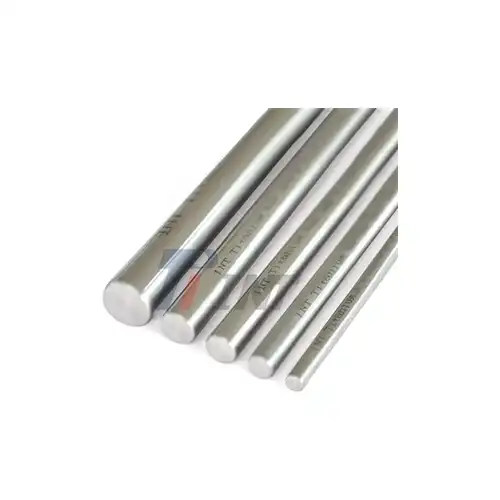
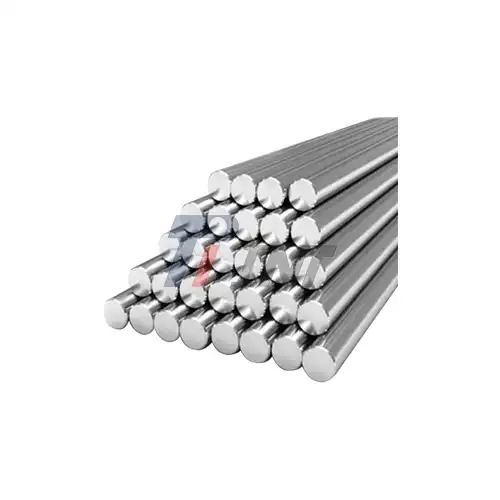
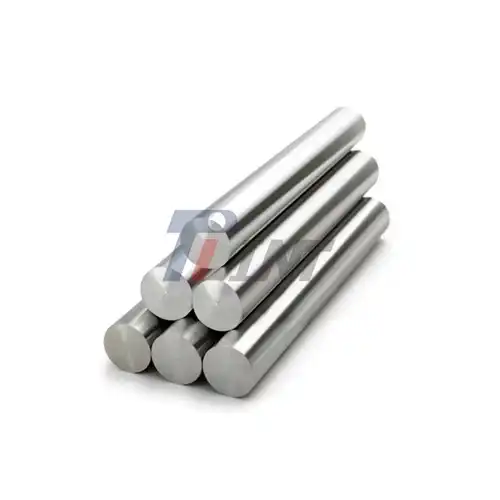
ASTM F136 titanium round bar is a wrought Ti-6Al-4V ELI (Extra Low Interstitial) alloy bar product manufactured specifically for surgical implant applications. Governed by ASTM International's F136 standard, it enforces tighter chemical composition limits than general-purpose titanium grades—particularly on oxygen, iron, and nitrogen—to maximize ductility, fracture toughness, and long-term biocompatibility. For orthopedic implant manufacturers, procurement teams, and quality engineers, this material represents the regulatory baseline for FDA-cleared and CE-marked devices. Understanding its specifications helps procurement professionals qualify compliant suppliers, avoid batch-to-batch inconsistency, and protect downstream CNC yields.
|
|
|
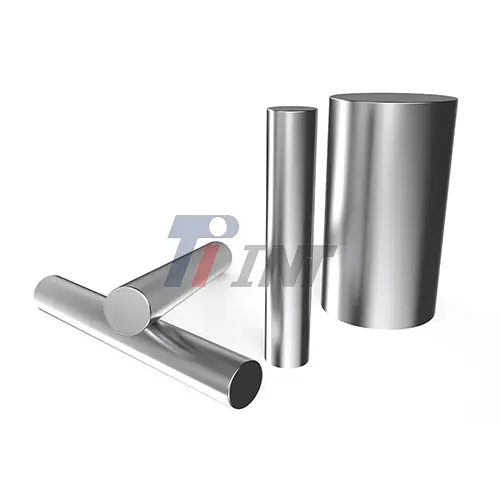
Understanding ASTM F136 Titanium Round Bar Specifications and Properties
Chemical Composition: Where Compliance Begins
The "ELI" name is not a marketing tag; it is a chemical limit that is strictly followed. ASTM F136 limits the amount of oxygen to 0.13% (rather than 0.20% in normal Grade 5 / ASTM B348), the amount of iron to 0.25%, and the amount of carbon to 0.08%. These rules keep the alpha-beta microstructure flexible and protect it from stress corrosion cracks. Every COA must include these intermediate values along with a heat-number tracking and an EN 10204 3.1 mill certificate for regulatory affairs managers who are making device registration dossiers.
Mechanical Performance That Matches Clinical Demands
ASTM F136 has minimum tensile strength of 860 MPa (125 ksi) and minimum yield strength of 795 MPa (115 ksi). It may extend more than 10% It has a stiffness value of around 110 GPa, which is roughly half that of 316L stainless steel (193 GPa) or cobalt-chrome (210–253 GPa). This reduced rigidity drastically reduces the chance of stress shielding happening. Stress shielding occurs when a stiffer implant takes unequal strain and promotes bone resorption surrounding it. These materials are non-magnetic and so may be safely utilised in MRIs. They are likewise radiolucent on X-ray and do not produce any artefacts.
How F136 Compares to F67, F129, and Grade 5?
ASTM F67 covers commercially pure titanium (Grades 1–4) and is the best choice for dental implant bodies that need to be highly resistant to corrosion while also being light on mechanical load. The high-strength implant tier is made up of ASTM F136 titanium round bar. More processing states have been added to ASTM F3001, which is the newer annealed and STA version. Standard Grade 5 (ASTM B348) has the same Ti-6Al-4V makeup as Grade 4 but has higher interstitial limits, which means it can't be certified as implant-grade under FDA 21 CFR Part 820 or EU MDR 2017/745.
Applications and Advantages of ASTM F136 Titanium Round Bar in Medical Industry
Primary Orthopedic and Spinal Applications
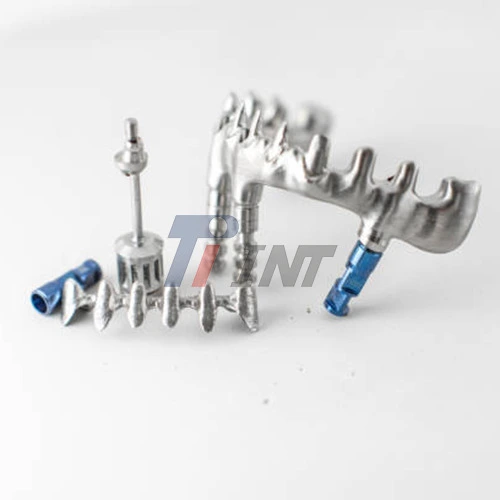
Companies that create orthopaedic implants employ Ti-6Al-4V ELI bar stock to make trauma plates, hip stem blanks, tibial components, pedicle screws and spine rods. The alloy is flexible enough that surgeons may bend spinal rods during surgery without breaking them, which is not feasible with standard Grade 5. The low density (4.43 g/cm³) and strong fatigue strength are advantageous for cranio-maxillofacial and thoracic fixation, providing long-term performance of the device under varying physiological demands.
It's worth looking into the benefits of this metal over other nanomaterials. Here are the main material benefits that matter when making decisions about implants:
- Weight-to-strength superiority: At 4.43 g/cm³, Ti-6Al-4V ELI is approximately 43% lighter than 316L stainless steel (7.99 g/cm³), reducing implant mass without compromising load-bearing performance.
- Osseointegration capability: The native TiO₂ surface oxide layer promotes direct bone apposition, reducing fibrous encapsulation risk and supporting stable long-term fixation.
- Corrosion resistance in vivo: The alloy maintains a stable passive film in chloride-rich physiological fluids, preventing ion leaching that could trigger adverse tissue reactions.
- MRI compatibility: Zero ferromagnetic response eliminates image artifact and heating risk, an essential criterion for post-operative imaging.
These features work together to lower the number of long-term repair surgeries and make devices last longer, which directly lowers the total cost of ownership for healthcare systems and gives implant makers a way to stand out from the competition.
Procurement Considerations for ASTM F136 Titanium Round Bar
It takes more than just negotiating prices to get ASTM F136 titanium round bar from a new supplier. When orthopedic OEMs hire new suppliers, they usually look at them based on six factors: standard compliance documentation, batch-to-batch consistency, full material traceability, flexibility for small-volume prototype runs, quality system auditability, and delivery reliability.
The supplier should be capable of meeting ASTM F136 criteria for titanium round bars with EN 10204 3.1 mill certifications that can be connected to the ingot heat number with chemical and mechanical test reports from third party. Most centerless-ground bars are within h8 or h9 dimensional tolerances which is what is necessary for precise CNC machining of implant pieces. Buyers should verify that they may request varied diameters, cut lengths and surface treatments (peeled, ground or polished) throughout the prototype phase and that there are no excessively high minimum order numbers.
Implant-grade titanium bar from ISO 13485 certified producers in China is frequently less expensive than mill suppliers in North America or Europe, such ATI or Carpenter, without compromising the quality of the paperwork. Procurement teams may secure their supply chains and increase negotiating leverage by having two sources of supply, one domestic supplier and one certified Chinese manufacturer.
Machining, Welding, and Handling Best Practices for ASTM F136 Titanium Bars
Ti-6Al-4V ELI works hard fast. CNC machinists working on implant pieces need to utilise sharp carbide tools, maintain a rapid coolant flow and prevent dwell. High speeds may make the surface excessively heated and cause the inactive oxide layer to break down and reduce biocompatibility. Turning rates of 40 to 60 m/min are generally used. Stable tool life is a direct result of consistent batch chemistry and measurable reductions in CNC scrap rates may be achieved by those who have tight control over intermediate composition.
Due to the alloy's low oxygen level in ASTM F136 titanium round bar, it is possible to weld, but a fully inert argon environment is needed to keep oxygen and nitrogen from picking up. Heat-affected areas can be made more flexible again with post-weld cooling. Bars should be stored and handled in clean, dry places that are free of metal poisoning. Cross-contamination from iron particles can cause corrosion pits, which is a flaw that makes implant surfaces unsuitable.
ASTM F136 Titanium Round Bar vs Competing Materials: Making the Right Decision
The choice of materials used to make implants has effects on biology, regulations, and how the implants work. The comparison below helps the engineering and buying teams make sure that the materials they choose meet the needs of the device:
- vs. 316L Stainless Steel: Stainless steel offers lower raw material cost but delivers higher modulus (stress shielding risk), potential nickel ion release concerns, and MRI incompatibility. For long-term load-bearing implants, Ti-6Al-4V ELI outperforms it on every biological metric.
- vs. Commercially Pure Titanium (ASTM F67): CP titanium grades offer excellent corrosion resistance and biocompatibility but lack the mechanical strength required for high-load orthopedic applications. F136 fills the gap between biological performance and structural demand.
- vs. Cobalt-Chrome Alloys: Co-Cr delivers higher hardness and wear resistance in articulating surfaces but carries ion release concerns and is significantly denser. It is not a substitute where weight and MRI compatibility matter.
F136 is still the best choice for long-term implantation under cyclic mechanical load, as proven by science and approved by regulators.
Conclusion
In the process of making surgical implants, ASTM F136 titanium round bar plays a unique role that can't be filled by anything else. All other materials are judged against this one because it has controlled interstitial chemistry, proven mechanical performance, MRI compatibility, and regulatory acceptance. The most important thing for procurement teams that are trying to make supply chains that are legal, easy to track, and cost-effective is to find a manufacturer that knows both the metallurgy and documentation needs and can meet both consistently.
FAQ
Q1: What certifications should an ASTM F136 titanium bar supplier hold?
A: At minimum, a qualified supplier should hold ISO 13485:2016 (medical device quality management) and ISO 9001:2015 certifications. Each bar shipment should come with an EN 10204 3.1 mill certificate, chemical composition test report, and mechanical property data traceable to the heat number. Third-party validation from accredited laboratories adds another layer of confidence during supplier qualification audits.
Q2: Can ASTM F136 titanium bar be customized in diameter and length?
A: Yes. Reputable suppliers offer a range of diameters—typically from 3 mm to 200 mm or beyond—in centerless-ground, peeled, or polished finishes. Custom cut lengths are standard practice. During prototype development, buyers should confirm whether small-quantity mixed-spec orders are accepted without penalizing unit pricing.
Q3: How does heat treatment affect the corrosion resistance of Ti-6Al-4V ELI?
A: Annealing and solution treatment plus aging (STA) influence grain structure and residual stress, which affect fatigue life more directly than corrosion behavior. Corrosion resistance in Ti-6Al-4V ELI is primarily governed by the stable TiO₂ passive film, which reforms spontaneously even after surface damage. However, improper high-temperature processing in contaminated atmospheres can compromise surface integrity and should be avoided.
Q4: Is ASTM F136 titanium bar safe for MRI environments?
A: Yes. Ti-6Al-4V ELI is non-ferromagnetic. Patients with implants manufactured from this alloy can safely undergo MRI procedures without risk of device movement, heating, or image distortion—a critical requirement under IEC 62570 and ASTM F2182 test standards.
Partner with Baoji INT Medical Titanium Co., Ltd. for Certified Ti-6Al-4V ELI Bar Supply
Since 2003, Baoji INT Medical Titanium Co., Ltd. has been making implant-grade titanium products. They are certified by ISO 13485:2016, ISO 9001:2015, and EU CE. As a confirmed provider of ASTM F136 titanium round bars, we offer full heat-number traceability, EN 10204 3.1 certificates, and a range of order sizes, from prototype samples to yearly framework contracts. You can email our technical team at export@tiint.com to get a material specification sheet and a sample price.
References
1. ASTM International. ASTM F136: Standard Specification for Wrought Titanium-6Aluminum-4Vanadium ELI Alloy for Surgical Implant Applications. ASTM International, 2013.
2. Niinomi, M. "Mechanical biocompatibilities of titanium alloys for biomedical applications." Journal of the Mechanical Behavior of Biomedical Materials, 2008.
3. Geetha, M., et al. "Ti based biomaterials, the ultimate choice for orthopaedic implants – A review." Progress in Materials Science, 2009.
4. Long, M., & Rack, H. J. "Titanium alloys in total joint replacement—a materials science perspective." Biomaterials, 1998.
5. Rack, H. J., & Qazi, J. I. "Titanium alloys for biomedical applications." Materials Science and Engineering: C, 2006.
6. ISO 5832-3:2021. Implants for Surgery — Metallic Materials — Part 3: Wrought Titanium 6-Aluminium 4-Vanadium Alloy. International Organization for Standardization, 2021.