




Top Medical Gr5 Titanium Disc Suppliers for Implant Makers - INT


 2026-11-26 09:47:27
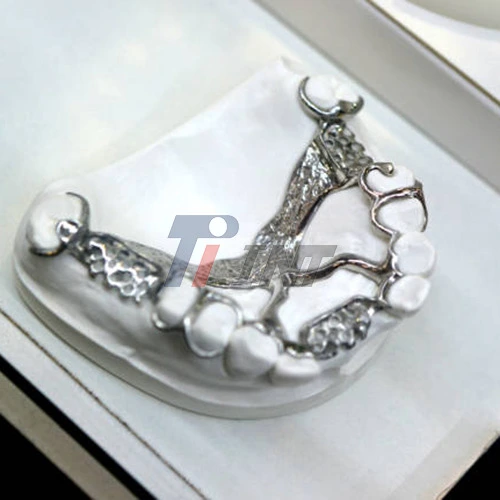
When sourcing billet material for orthopedic forging, the quality of your starting stock determines everything downstream. For manufacturers producing femoral stems, acetabular cups, and femoral heads, a reliable Gr5 titanium disc supplier is not a vendor — it is a production-critical partner. This guide covers what separates a qualified Ti-6Al-4V disc source from a risky one, how INT measures up, and what procurement teams should verify before placing their first order.
|
|
|
Understanding Gr5 Titanium Discs: Key Properties and Specifications
What Makes Ti-6Al-4V the Default Alloy for Orthopedic Forgings
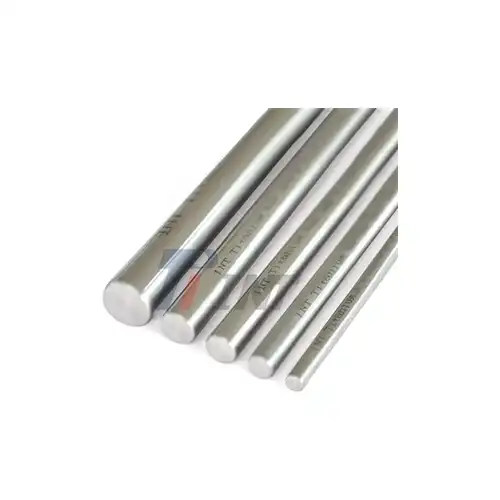
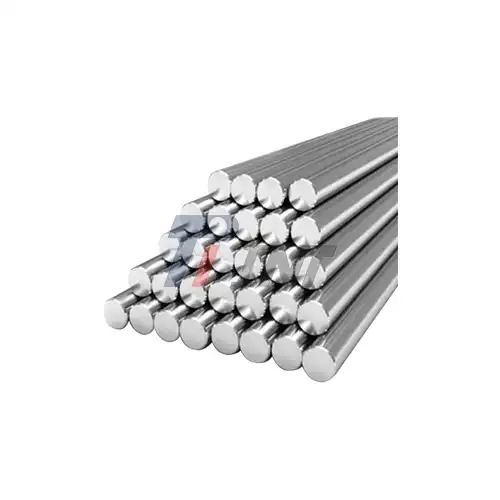
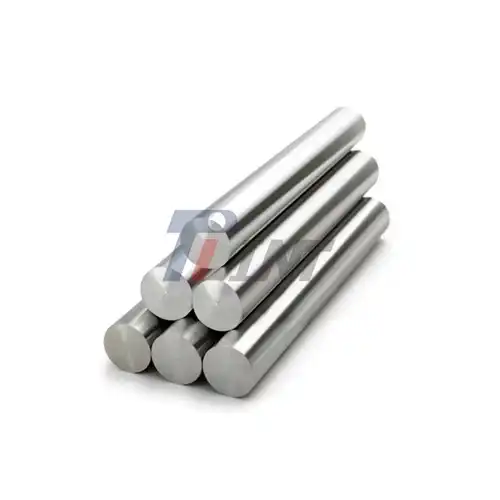
Ti-6Al-4V, also known as Gr5 titanium disc in the business world, is the most common titanium metal used to make medical devices. It makes up more than half of all the titanium used in biomedical uses around the world. The normal chemistry of it is 6% aluminum, 4% vanadium, and the rest is titanium.
This makes an alpha-beta microstructure that combines tensile strength (≥895 MPa per ASTM B381) with the ductility and wear endurance needed for repeated loads inside the body. Density is 4.43 g/cm³, which is about 60% of steel. This directly lowers the mass of cast parts without affecting their structural performance.
Specifications That Matter to Forging Engineers
Dimensional and metallurgical parameters must be controlled at the same time for a disc to work reliably as forging stock. This is what INT gives you:
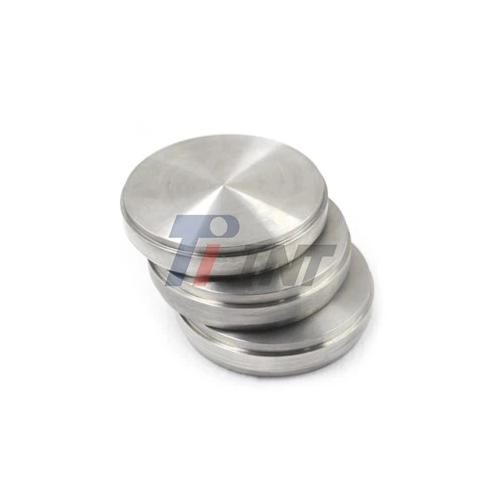
- Material: Gr5 titanium disc (Ti-6Al-4V) is used, which meets ASTM B381 and ISO 5832-3 standards.
- Diameter Range: 10 mm to 300 mm in diameter, and can be fully customized to fit the shape of a near-net forging.
- Thickness: From 0.5 mm to 50 mm thick.
- Tolerance: There is a ±0.01 mm range for both width and thickness.
- Surface Finish: You can polish or sandblast the surface, and it shouldn't have any laps, gaps, or oxide scale problems.
- Certifications: We have ISO 9001:2015, ISO 13485:2016, and EU CE certifications.
Each lot has records of the consistency of grain size and the cleanliness of the ultrasonic system (AVG/DAC curve reporting is possible). Gr5 titanium disc is included in this documentation, and this is very important when your NDT team needs to connect inspection data from before the forge to acceptance standards after the forge.
All of these requirements work together to give your press workers the precision they need for die-loading and your fatigue engineers the metallurgical consistency they need during the design phase.
Why INT Stands Out Among Gr5 Titanium Disc Manufacturers
Two Decades of Medical-Grade Titanium Production
Baoji INT Medical Titanium Co., Ltd. was started in 2003 by Mr. Zhan Wenge, who has worked with titanium metals for more than 30 years. In the last 20 years, INT has become a renowned leader in the research and development, production, and processing of medical titanium materials. Each shipment comes with full EN 10204 3.1 mill test certification, chemical composition proof, and ultrasonic inspection records. These are the kinds of records that your supplier-qualification inspectors will need.
Hot rolling and closed-die forging are used by INT to create the controlled grain flow that makes forging-grade billet different from plate offcuts. Before shipping, ultrasonic testing checks the whole production amount for internal flaws. This is not an extra step; it is part of the creation process.
Because it is made of better materials, INT's Gr5 titanium disc stock is a good choice for orthopedic forging lines:
- Exceptional strength-to-weight ratio: tensile strength of at least 895 MPa at a density of 4.43 g/cm³ lowers the mass of the component while still meeting the load requirements of the implant.
- Outstanding fatigue resistance: the controlled alpha-beta microstructure keeps its integrity under high-cycle dynamic loading, which is a key requirement for forgings used in hip and knee joints.
- Verified biocompatibility: confirmed to be non-toxic, non-magnetic, and in line with ISO 10993 standards. There is also no risk of a bad tissue response for long-term implantation.
- Precision customization: The diameter and thickness combinations are made to fit the shape of your casting die. This cuts down on material waste and lowers the cost of each titanium part, which directly lowers costs given the current price of titanium.
- Corrosion stability: The stable TiO₂ passive film protects against attack by salt and bodily fluids, making sure it lasts a long time in the implant environment.
Each lot has records of the consistency of grain size and the cleanliness of the ultrasonic system (AVG/DAC curve reporting is possible). Gr5 titanium disc is included in this documentation, and this is very important when your NDT team needs to connect inspection data from before the forge to acceptance standards after the forge. These benefits directly lead to fewer rejects during post-forge checking, lower costs for material write-offs, and a more stable production schedule for your forging team.
Comparing Ti-6Al-4V Disc Stock with Alternative Billet Materials
Procurement teams examine Gr5 titanium disk stock and other billet materials to evaluate whether 316L stainless steel or GR2 pure titanium might be utilized in weight-bearing orthopedic forgings. According to the facts, transformation is impossible. GR2 pure titanium is biocompatible and rust-resistant, but its tensile strength is only 345 MPa, which is too low for femoral stems when bending stresses approach 600 MPa equivalent stress. While stainless steel 316L has a tensile strength of 515 MPa, its density of 7.99 g/cm³ makes it almost twice as heavy and negates titanium's strength-to-weight advantage.
GR23 (Ti-6Al-4V ELI) is the closest clinical-grade option. It has less interstitial content, which makes it less likely to split and more flexible. It is the best choice for cryogenic uses and implants that need to be flexible. Standard Gr5 titanium disc, on the other hand, is slightly stronger and is still the most cost-effective choice for femoral stems and acetabular shells that need to be tough within standard ELI-equivalent heat treatment windows. INT offers both types; your forging process expert should check with you to see which one your device design needs.
Procurement and Ordering Guide: What to Verify Before You Commit
It takes more than a low price to get a new Gr5 titanium disc source approved. A approval period of two to four months is normal, and if you cut corners here, the whole batch could be rejected after forging. The steps below are similar to what orthopedic forging companies in the US and Europe usually do:
Include your forging drawing and the size of the billet you want to buy with your first RFQ. This lets INT's technical team suggest the best disc diameter-to-height ratio for reducing flash loss and die underfill. Before trial forging, sample lots (usually one heat) should be checked with a dye penetrant, a metallographic cross-section, and an ultrasound C-scan. INT lets you track materials from the melt heat number to the end disc measurements, which helps your receiving inspection process.
Concerning MOQ, INT allows development-scale amounts for introducing new products, lowering the obstacle that usually slows down supplier approval for new implant geometries. Lead times are in line with when forgings are made; check with INT's team at export@tiint.com to see what their present capacity is.
Ensuring Quality and Performance: Verification and Future Trends
Testing Protocols That Protect Your Production Line
INT uses ultrasonic immersion testing on all of its discs, making AVG/DAC curve records that match the standards set by ASTM E2375 and AMS 2631. Optical emission spectrometry is used to check the chemical makeup per heat, and certificates can be tracked back to the ingot melt. Visually and numerically, the surface state is confirmed: there are no slips, folds, or oxide scale intrusions that would spread as flaws under forge pressure.
Titanium casting material is a market that is always changing. For use at higher temperatures, near-net-shape hot isostatic pressing (HIP) and new alloys like Ti-6242 are becoming more popular. INT is constantly keeping an eye on these events. However, ASTM B381 Gr5 titanium disc is still the most proven, government-approved, and cost-effective option for manufacturers of orthopedic forging stock right now.
Conclusion
Choosing the right Gr5 titanium disc supplier is both a technical and business decision that has direct effects on the quality of the implant and the cost of production. INT has been working with medical titanium for more than 20 years and is fully ISO 13485:2016 and EU CE certified. They can make discs in any size with a tolerance of ±0.01 mm and check every shipment for flaws using ultrasound. For orthopedic forging companies that make femoral stems, acetabular cups, and joint heads, a qualified source qualification check requires this exact mix of paperwork, dimensional control, and metal consistency.
FAQ
What certifications should a medical-grade titanium disc supplier hold?
Suppliers should have at least ISO 9001:2015 and ISO 13485:2016 (medical device quality control). EU CE approval is needed for products that are going to be used to make devices in Europe. All three are owned by INT, and all shipments come with EN 10204 3.1 mill test papers.
How does Gr5 differ from Gr23 (Ti-6Al-4V ELI) for implant forgings?
Gr23 has less oxygen, nitrogen, and iron, which makes it harder to break and easier to shape. It is the standard for implants that need to be as fatigue-resistant as possible. Standard Gr5 titanium disc has a slightly higher tensile strength and is a good value for many orthopedic forging tasks. INT offers both; your design engineer should choose which one to use based on the needs of the device.
Can INT supply custom disc dimensions for new implant geometries?
Yes. The diameter ranges from 10 mm to 300 mm, and the thickness ranges from 0.5 mm to 50 mm, with a tolerance of ±0.01 mm. To keep forging stock loss to a minimum, custom sizes are offered.
What is a typical lead time for a qualification sample lot?
For a specific wait time, email INT at export@tiint.com with your forging model. With a flexible MOQ, sample lots for launching new products can be made.
Partner with Baoji INT Medical Titanium Co., Ltd. for Your Ti-6Al-4V Disc Supply
Since 2003, Baoji INT Medical Titanium Co., Ltd. has sold certified medical titanium materials to companies that make implants in the US, Europe, and other places. INT, a reputable Gr5 titanium disc maker, offers dimensional accuracy of 0.01 mm, full ISO 13485:2016 paperwork, and custom sizing to cut down on forging waste and speed up supplier approval. You can email INT's technical team at export@tiint.com or visit inttitanium.com to see all of their products.
References
1. ASTM International. ASTM B381: Standard Specification for Titanium and Titanium Alloy Forgings. ASTM International, 2019.
2. ISO. ISO 5832-3: Implants for Surgery — Metallic Materials — Part 3: Wrought Titanium 6-Aluminium 4-Vanadium Alloy. International Organization for Standardization, 2021.
3. Rack, H.J., and Qazi, J.I. "Titanium alloys for biomedical applications." Materials Science and Engineering: C, vol. 26, no. 8, 2006, pp. 1269–1277.
4. Geetha, M., et al. "Ti based biomaterials, the ultimate choice for orthopaedic implants — A review." Progress in Materials Science, vol. 54, no. 3, 2009, pp. 397–425.
5. Long, M., and Rack, H.J. "Titanium alloys in total joint replacement — a materials science perspective." Biomaterials, vol. 19, no. 18, 1998, pp. 1621–1639.
6. ISO. ISO 13485:2016: Medical Devices — Quality Management Systems — Requirements for Regulatory Purposes. International Organization for Standardization, 2016.