




Why Titanium Bar Is Used for Dental Implant Manufacturing


 2026-10-26 09:37:05
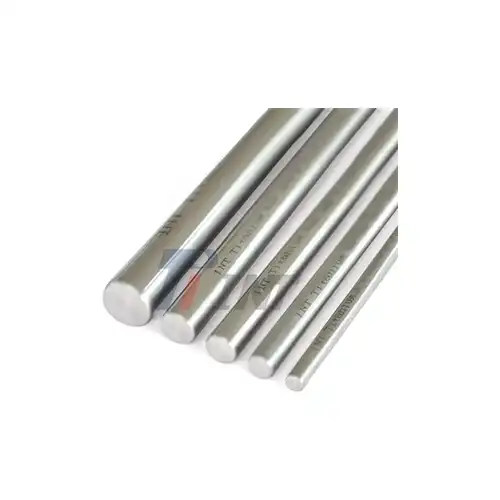
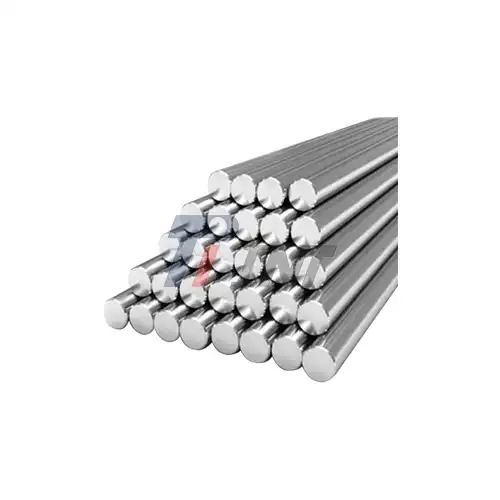
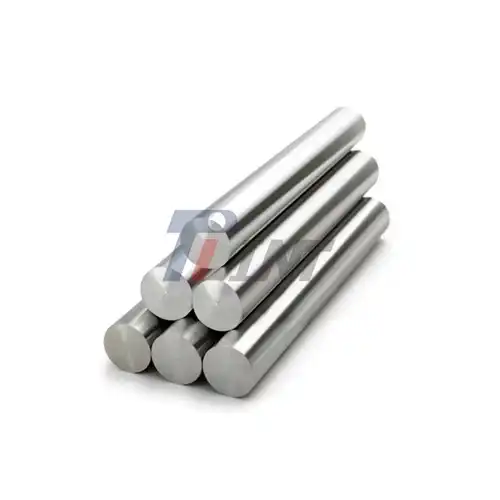
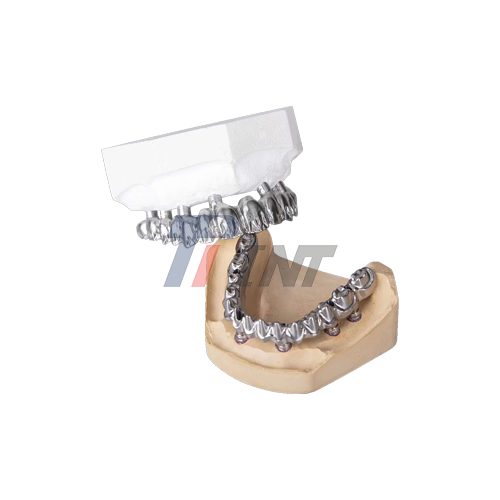
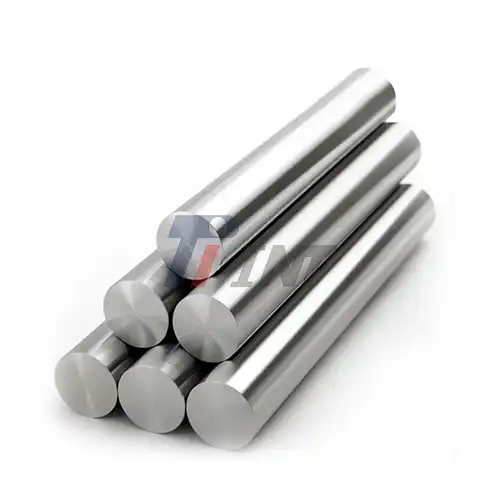
Worldwide, titanium bar is the chosen dental implant feedstock for scientific reasons. Medical-grade titanium alloy rods, notably Grade 5 (Ti-6Al-4V) and Grade 23 (Ti-6Al-4V ELI), provide unmatched osseointegration, corrosion resistance, and dimensional stability. Titanium bar for dental implants serves as the primary raw form for these rods, ensuring consistent microstructure and mechanical properties from the source material. Implant producers create dental screws, abutments, and framework substructures from precision-ground titanium bar stock, underpinned by decades of clinical data and international standards like ASTM F136 and ISO 5832-3.
|
|
|
Understanding Titanium Bars in Dental Implants
A titanium dental implant bar is more than metal. Every implant's downstream machining yield and long-term clinical performance depend on its precisely designed material blank's microstructure, surface integrity, and dimensional tolerances.
The Structural Role of Titanium Bar Stock
Every implant body, abutment, and prosthetic component in Swiss-type CNC turning and multi-axis milling begins with bar stock. Dimensionality—h6 diameter tolerance—determines thread form, post-machining surface roughness, and implant–abutment passive fit. The International Journal of Oral & Maxillofacial Implants discovered that interface micro-gaps exceeding 10 µm cause bacterial colonization and bone loss. Tight-tolerance titanium bar stock is clinically necessary, not procurement.
How Titanium Compares with Alternative Bar Materials
While zirconia and ceramic materials offer aesthetic translucency, they fracture under cyclic masticatory loading in a way that titanium does not. Stainless steel provides adequate strength yet releases nickel and chromium ions in the oral environment, raising biocompatibility concerns that regulatory bodies in the EU and United States increasingly scrutinize.
Gold alloys remain biocompatible but carry prohibitive material costs and a density (~19.3 g/cm³) that makes lightweight prosthetic design impractical. Titanium, at 4.43 g/cm³, combines structural integrity with a modulus of elasticity (~114 GPa) that approximates human cortical bone, reducing stress shielding and preserving periimplant bone density over time.
Why Titanium Is the Material of Choice for Dental Implant Bars
The clinical preference for titanium is not anecdotal. A 2023 systematic review in Clinical Oral Implants Research reported osseointegration success rates exceeding 95% at ten-year follow-up for titanium bar for dental implants‑based systems, a benchmark that no alternative material has matched at scale.
Corrosion Resistance and Biocompatibility
Exposure to oxygen naturally creates a permanent TiO₂ oxide layer on titanium. Milling or installation mechanically attrites the passive film, which regenerates within milliseconds. The coating reduces ion leakage into periimplant tissue, titanium's key biocompatibility mechanism. To prevent residual cytotoxicity, ASTM F136 specifies Grade 23 (Ti-6Al-4V ELI) to have extra-low oxygen, nitrogen, and carbon interstitial limits.
High Strength-to-Weight Ratio and Fatigue Performance
Grade 5 and Grade 23 titanium alloys can survive the cyclic masticatory forces—200–1,000 N depending on molar position—an implant encounters over a decade with tensile strengths of 860–965 MPa and yield strengths of 795 MPa. Due to their fatigue resistance, these alloys prevent micro-crack propagation during physiological loading cycles, ensuring implant dependability.
Procurement Considerations for Titanium Dental Implant Bars
Sourcing medical-grade titanium bar stock involves more than price negotiation. When procurement managers evaluate a titanium bar for dental implants supplier, they must assess material traceability, certification documentation, dimensional inspection protocols, and supply reliability in equal measure.
Here are the core procurement factors implant manufacturers should verify before qualifying a supplier:
- Standard compliance: Each heat lot must be accompanied by a material test report (MTR) confirming conformance to ASTM F136 or ISO 5832-3, including chemical composition and mechanical property data.
- Dimensional precision: Diameter tolerances at h6 or h7, straightness, and roundness specifications must be verified by CMM inspection reports supplied per batch.
- Surface integrity: Ultrasonic testing (UT) per ASTM E2375 should confirm freedom from subsurface flaws. Polished or acid-pickled surface finishes must be free of seams, laps, and oxidation scale.
- Packaging: End-face protection and anti-scratch interleaving are non-negotiable for bars destined for Swiss-type lathes, where any surface defect propagates into machined part scrap.
- Lead time and minimum order quantity: Quarterly rolling orders in mixed small-diameter specifications (Ø3–6 mm being most common) require a supplier with genuine inventory depth and flexible MOQ policies.
These criteria collectively determine machining yield and ultimately the per-unit cost of every implant produced. A supplier that meets all five reduces total cost of ownership far more decisively than one offering only the lowest unit price.
Comparing Titanium Bars with Other Dental Implant Bar Materials
The table below summarizes key differentiators across materials commonly evaluated for implant bar applications:
| Property | Ti-6Al-4V ELI | Stainless Steel (316L) | Zirconia (Y-TZP) | CoCr Alloy |
|---|---|---|---|---|
| Density (g/cm³) | 4.43 | 7.98 | 6.05 | 8.30 |
| Tensile Strength (MPa) | 860–965 | 480–620 | 900–1200 | 900–1540 |
| Biocompatibility | Excellent | Moderate | Good | Moderate |
| Corrosion Resistance | Excellent | Good | Excellent | Good |
| Machinability (CNC) | Excellent | Good | Challenging | Moderate |
| ASTM/ISO Medical Standard | F136 / 5832-3 | F138 / 5832-1 | ISO 13356 | F75 / 5832-4 |
Zirconia has good aesthetics and chemical inertness, although its brittleness index makes it poorly suited for thin-section bar applications where cyclic bending stresses emerge. CoCr alloys are used in cast frameworks but machine poorly and provide a galvanic danger in mixed-metal prosthetics. The only material that meets mechanical, biological, and machinability requirements is titanium bar for dental implants, which combines high fatigue strength with proven biocompatibility and favorable processing characteristics.
Best Practices and Innovations in Titanium Bar Manufacturing
Production Process and Quality Control
Baoji INT Medical Titanium Co., Ltd., established in 2003 and with over 30 years of experience, manufactures medical titanium bar stock by hot rolling and precision forging to improve grain structure and mechanical isotropy. No bar is sent without 100% ultrasonic testing for internal flaws. Each batch arrives with MTR paperwork and calibrated equipment traceable to national standards for dimensional inspection.
All items have ISO 9001:2015, ISO 13485:2016, and EU CE certifications, which European and US implant manufacturers demand before certifying new material suppliers. Grade 5 (Ti-6Al-4V) and Grade 23 (Ti-6Al-4V ELI) bars have polished or acid-pickled surfaces, configurable lengths, and 4–30 mm diameters to eliminate cutting station waste.
Emerging Trends in Medical Titanium Bar Feedstock
Improved acid pickling techniques that maximize micro-roughness are enhancing titanium bar surface adherence for implant producers' downstream anodizing and sandblasting. Leading suppliers are using traceability technologies, including heat-lot QR coding, to reduce procurement team qualification audit processes and enable EU MDR 2017/745 post-market monitoring.
Conclusion
Titanium's biocompatibility, mechanical strength, corrosion resistance, and CNC machinability make it ideal for precision dental implant manufacture. The right titanium bar for dental implants—with confirmed dimensional tolerances, thorough documentation, and consistent batch quality—protects machining yield, downstream product performance, and regulatory compliance. Since 2003, Baoji INT Medical Titanium Co., Ltd. has provided implant producers worldwide with ISO 13485:2016 and EU CE-certified medical titanium bar stock that meets every major target market's qualification standards.
FAQ
Why is Grade 23 (Ti-6Al-4V ELI) preferred over Grade 5 for implant-critical applications?
Grade 23 carries extra-low interstitial (ELI) limits for oxygen, nitrogen, hydrogen, and carbon under ASTM F136. These tighter elemental controls enhance ductility and fracture toughness, which matters in thin-wall implant geometries. Grade 5 remains suitable for applications where maximum tensile strength takes priority over ductility.
What diameter tolerances should implant manufacturers require from their bar supplier?
For Swiss-type CNC turning of implant bodies, diameter tolerance at h6 (typically −0 to −0.016 mm for Ø6 mm bar) is the accepted benchmark. h7 tolerance is acceptable for rougher cutting passes but may increase scrap rates during finish-turning operations.
How does surface finish on the bar stock affect downstream processing?
A polished or acid-pickled surface free of seams, laps, and oxidation scale reduces cutting-tool wear and minimizes the risk of surface defects propagating into the machined implant. Ultrasonic testing combined with visual inspection per ASTM E2375 provides the necessary assurance before the bar reaches the lathe.
What documentation should accompany each delivery of medical-grade titanium bar?
At minimum: a material test report (MTR) with heat number, chemical analysis, and mechanical property results; a certificate of conformance to ASTM F136 or ISO 5832-3; and an ultrasonic testing report per applicable ASTM standards.
Partner with a Trusted Titanium Bar for Dental Implants Manufacturer
Baoji INT Medical Titanium Co., Ltd. delivers precision-ground, fully certified medical titanium bar for dental implants stock built to the exact tolerances your CNC workshop demands. Our Grade 5 and Grade 23 bars, available from Ø4 mm to Ø30 mm with h6 tolerances, ISO 13485:2016 certification, and full MTR documentation, are ready to support your quarterly rolling orders with 3–5 week lead times. Contact our technical team at export@tiint.com or visit inttitanium.com to request a sample kit and qualification documentation package today.
References
1. Branemark, P.-I., & Zarb, G. A. (Eds.). Tissue-Integrated Prostheses: Osseointegration in Clinical Dentistry. Quintessence Publishing, 1985.
2. Albrektsson, T., & Wennerberg, A. "Oral implant surfaces: Part 1—Review focusing on topographic and chemical properties of different surfaces and in vivo responses to them." International Journal of Prosthodontics, 2004.
3. Geetha, M., Singh, A. K., Asokamani, R., & Gogia, A. K. "Ti based biomaterials, the ultimate choice for orthopaedic implants—A review." Progress in Materials Science, 2009.
4. Elias, C. N., Lima, J. H. C., Valiev, R., & Meyers, M. A. "Biomedical applications of titanium and its alloys." JOM, 2008.
5. Nicholson, J. W. "Titanium alloys for dental implants: A review." Prosthesis, 2020.
6. Smeets, R., Stadlinger, B., Schwarz, F., Beck-Broichsitter, B., Jung, O., Precht, C., & Heiland, M. "Impact of dental implant surface modifications on osseointegration." BioMed Research International, 2016.