




Gr5 Titanium Square Disc: Uses in Medical Device Production


 2026-10-26 09:37:13
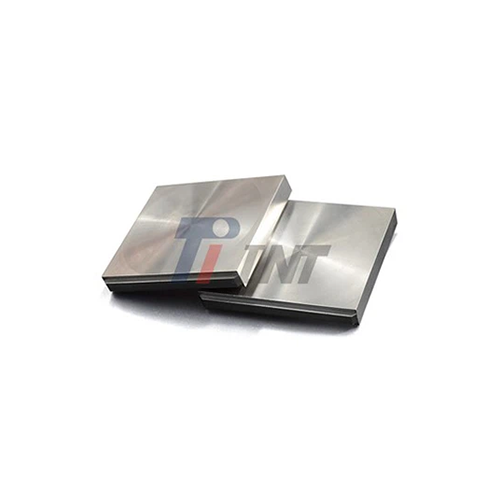
When medical device manufacturers evaluate raw materials for implants and surgical components, Ti-6Al-4V alloy consistently ranks at the top of the shortlist. The Gr5 titanium square disc — machined from this alpha-beta alloy — serves as a precision near-net-shape blank that procurement engineers rely on for orthopedic, spinal, cranial, and trauma fixation applications. With a density of just 4.43 g/cm³, tensile strength exceeding 895 MPa, and outstanding biocompatibility, this material blank gives CNC machining teams a reliable, waste-efficient starting point for high-complexity implant components.
|
|
|
Understanding Gr5 Titanium Square Disc: Properties and Composition
What Makes Ti-6Al-4V the Benchmark Alloy?
Ti-6Al-4V is made up of 6% aluminum, 4% vanadium, and titanium to keep the balance. The alpha-beta microstructure gives this material a unique mix of ductility and tensile strength that neither pure titanium grades nor stainless steel can match when it comes to weight. The elastic modulus is about 113.8 GPa, which is closer to cortical bone than steel. This lowers the risk of stress shielding in designs for load-bearing implants. At 4.43 g/cm³, its density is about 60% that of steel. This makes it a great material for reducing the size of implants without affecting their strength.
How Gr5 Compares to Other Medical-Grade Titanium
A lot of the time, procurement engineers compare Grade 5 to 316L stainless steel, Grade 2 (which is commercially pure titanium), and Grade 2. Grade 2 is better at resisting corrosion in settings with a lot of oxygen, but its tensile strength is only about 345 MPa, which is too low for trauma plates or spinal fusion gear that needs to hold weight.
Stainless steel is almost twice as dense as regular steel, and it is more likely to rust over time in physiological environments. Gr5 titanium square disc solves both problems: it is light and doesn't react with living things, but it meets the chemical makeup and mechanical performance standards set by ASTM F136 and ISO 5832-3. Its stable TiO₂ oxide film protects it from erosion caused by salt, which directly affects how long the implant lasts and how safe it is for the patient.
| Property | Gr5 Ti-6Al-4V | Gr2 Pure Ti | 316L Stainless Steel |
|---|---|---|---|
| Density (g/cm³) | 4.43 | 4.51 | 7.99 |
| Tensile Strength (MPa) | ≥895 | ≥400 | ~515 |
| Corrosion Resistance | Excellent | Excellent | Moderate |
| Biocompatibility | Excellent | Excellent | Acceptable |
Why Gr5 Titanium Square Discs Are Ideal for Medical Device Production
When it comes to material qualification, the medical device industry has some of the strictest rules in all of manufacturing. Materials need to be able to handle being sterilized in an autoclave over and over, staying chemically stable in bodily fluids that are high in salt and protein, and being loaded and unloaded mechanically millions of times. All three needs are met at the same time by Gr5 titanium square discs.
There is a useful benefit to square shape that round bars don't have: it reduces material waste when CNC milling rectangular implant blanks, bone plates, and spine interbody cages. Machining teams say that the buy-to-fly ratio goes down by a measurable amount when they start with a nearly net-shape square disk instead of cutting out rectangular profiles from round stock that is too big.
Here are the core performance characteristics that make this material form ideal for medical manufacturing:
- Lightweight yet structurally robust: The alloy weighs only 4.43 g/cm³, which makes the implant lighter while still having a tensile strength above 895 MPa. This makes it easier to handle during surgery and easier on the patient afterward.
- Outstanding fatigue resistance: The material keeps working mechanically even when it's loaded and unloaded many times, like in trauma fixation plates or hip stem components. This is important for devices that are meant to last for decades.
- Heat stability through sterilization: The alloy keeps its shape and mechanical integrity even after being heated and cooled many times in a steam autoclave at 134°C. This means it can be used with standard hospital sterilization procedures without losing its properties or deforming.
- Broad biocompatibility documentation: The biological evaluation data in the ISO 10993 series for Ti-6Al-4V ELI and standard Grade 5 can be used for regulatory applications in the EU MDR, the FDA 510(k), and other places.
Procurement Guide: Buying Gr5 Titanium Square Discs for Medical Manufacturing
Certifications and Traceability Documentation
To get medical-grade titanium, you need more than just a material data sheet. Quality engineers and RA managers usually ask for an EN 10204 3.1 Mill Test Certificate that lists the chemical make-up, mechanical test results, heat number, and confirmation of an ultrasonic inspection. It needs to be made clear whether the product meets ASTM B265, ASTM B348, or ASTM F136 (for ELI variants).
For device makers who are putting together technical files for regulatory bodies, batch-to-batch traceability through heat number management is a must, and this requirement applies equally to Gr5 titanium square disc, whose heat number must be consistently tracked from raw material through to finished implant components.
Specification and Customization Flexibility
Standard thickness ranges for Gr5 titanium square discs are 2 mm to 50 mm, and the side measurements can be changed to fit needs for a near-net form. Tolerances are agreed upon when the order is placed and are proven by measurement inspection reports. When purchasing materials for new implant development programs, procurement teams find it helpful when sources allow small trial quantities without requiring high minimum order volumes. This is important during the prototyping part of a device program.
How to Choose the Right Gr5 Titanium Square Disc Supplier
A structured audit process is used to qualify suppliers of implant-grade titanium material, which is the same level of strictness used for suppliers of finished medical device parts. The following criteria guide a reliable supplier selection:
- ISO 13485:2016 certification: This standard for quality control systems goes directly to supply chains for medical devices. A seller with current ISO 13485 certification shows that they have detailed process controls, corrective action systems, and are ready for a customer audit.
- Third-party material verification: Reliable sources send samples with results from a third-party lab that include chemical analysis using ICP, mechanical tensile testing according to ASTM E8, and a metallographic study that confirms the uniformity of the alpha-beta phase and the lack of the alpha case.
- On-site or video audit cooperation: Before signing framework agreements, B2B procurement teams often do supplier qualification audits. Being willing to take part in SQE exams, whether in person or remotely, shows that you are honest and have a mature business.
- Responsive technical communication: When engineers ask about tolerances, heat treatment conditions (annealed vs. STA), or surface finish choices, they should get quick, technically sound answers instead of general sales answers.
Baoji INT Medical Titanium Co., Ltd. was started in 2003 by Mr. Zhan Wenge, who has more than 30 years of experience in the titanium business. Every shipment of Gr5 titanium square disc comes with full traceability paperwork and inspection data from a third party. It has ISO 9001:2015, ISO 13485:2016, and EU CE approvals, and it actively backs up customer checks. Visit inttitanium.com to find out more.
Gr5 Titanium Square Disc in Action: Case Studies from Medical Device Production
Orthopedic Trauma Plate Machining
After 14 weeks of sample confirmation, a European company that makes hip implants approved a new titanium source from China. Starting with customizable Gr5 titanium square disc blanks that had been annealed, their CNC team was able to get the same tool life across 12 production runs. This was possible because the chemical makeup and alpha-beta microstructure stayed the same from batch to batch. Compared to their old round-bar process, the amount of material that was wasted during milling went down, which directly increased output yield.
Spinal Interbody Cage Development
In the prototyping phase, a North American device engineering team working on the next generation of TLIF cage needed a small number of Gr5 titanium square disc samples in three different thicknesses. They were able to speed up their R&D without having to commit to a full production order because they could get exact measurements without having to meet a high minimum order quantity. The supplier's EN 10204 3.1 certificates were added directly to the design history file, which made getting ready for the 510(k) submission easier.
Conclusion
Gr5 titanium square discs are an important raw material for medical device makers who work in the orthopedic, spine, and trauma fixing fields. Their alpha-beta microstructure gives them the right mix of strength, resistance to wear, and biocompatibility that regulatory standards and clinical performance requirements call for. The best suppliers for procurement teams are those who offer flexible quantity options, thorough documentation, and materials that are compliant with regulations. Choosing the best source for Ti-6Al-4V materials isn't just about how much it costs; it's also about quality and risk management, and it affects when devices can be registered and how long production can go on.
FAQ
What is the difference between Gr5 and Gr2 titanium for implant applications?
Grade 2 is commercially pure titanium that is less strong (about 345 MPa tensile) and better for uses that don't need to hold weight. Because Grade 5 (Ti-6Al-4V) has a tensile strength of more than 895 MPa, it is usually used for trauma plates, spinal hardware, and parts that are close to joints and are subject to a lot of mechanical stress.
Does the square disc form require different machining parameters than round bar?
Yes. The square shape makes it easier to set up the basic fixtures for parts with rectangular dimensions and makes better use of the material. To keep work from stiffening and galling, machining settings for Ti-6Al-4V should include carbide tools, slower cutting speeds, high feed rates, and a coolant flow that never stops.
Can custom thickness and dimensions be ordered?
Of course. The thickness can be anywhere from 2 mm to 50 mm, and the side dimensions can be changed in any way you want. Custom specs allow near-net-shape blanking techniques that cut down on machining cycle time and material waste for a wide range of implant shapes.
What certifications should accompany each shipment?
An EN 10204 3.1 Mill Test Certificate should be included with every delivery. This certificate should list the chemical makeup, mechanical test results, heat number, and proof of ultrasonic testing. Third-party inspection reports and ISO 13485 compliance documents are also included to help regulatory submission packages.
Is Ti-6Al-4V ELI different from standard Grade 5?
Yes. The ELI (Extra Low Interstitial) version sets stricter limits for oxygen and iron, which makes the material stronger and better at withstanding wear and tear. It is better for implant parts that need to last a long time and is covered by ASTM F136 instead of the standard ASTM F67 pure titanium series.
Partner with Baoji INT Medical Titanium Co., Ltd. for Certified Ti-6Al-4V Square Disc Material
With full EN 10204 3.1 traceability, custom dimensions from 2 mm to 50 mm thickness, and third-party inspection support, Baoji INT Medical Titanium Co., Ltd. offers Gr5 titanium square disc material that is ISO 13485:2016 and EU CE certified. We accept sample requests, audit arrangements, and technical talks as a seasoned Gr5 titanium square disc maker serving global implant OEMs since 2003. To start the approval process, email our team at export@tiint.com or go to inttitanium.com.
References
1. ASTM International. ASTM F136: Standard Specification for Wrought Titanium-6Aluminum-4Vanadium ELI Alloy for Surgical Implant Applications. ASTM International, 2023.
2. ISO. ISO 5832-3: Implants for Surgery — Metallic Materials — Part 3: Wrought Titanium 6-Aluminium 4-Vanadium Alloy. International Organization for Standardization, 2021.
3. Rack, H. J., & Qazi, J. I. "Titanium alloys for biomedical applications." Materials Science and Engineering: C, 2006.
4. Niinomi, M. "Mechanical biocompatibilities of titanium alloys for biomedical applications." Journal of the Mechanical Behavior of Biomedical Materials, 2008.
5. Long, M., & Rack, H. J. "Titanium alloys in total joint replacement — a materials science perspective." Biomaterials, 1998.
6. ISO. ISO 13485:2016: Medical Devices — Quality Management Systems — Requirements for Regulatory Purposes. International Organization for Standardization, 2016.