




Are Titanium Bar Implants Better Than Traditional Denture Options?


 2026-11-03 16:12:27
Yes, but not all the time and only for certain patients. An overdenture with titanium bar implants has a metal base that holds the implants together. This lets you chew while the prosthesis stays in place, but it can still be taken out to clean. Normal false teeth work by sucking, the shape of the ridges, and glue. When there is enough bone volume to put in implants, an overdenture held in place by bars usually works better for chewing and staying in place.
If you can't have surgery, the best thing to do is still what you normally would. The more important thing for labs and OEM buyers is to make sure that the bar material they buy meets ASTM F136, can be milled to a passive fit, and comes with paperwork that can be kept track of. That's what this guide looks at.
|
|
|
Introduction: Why Titanium Bar Implants Are Being Considered
What Conventional Dentures Still Get Wrong
Soft tissue supports full dentures. These are held in place by adhesive, suction, and ridges. That design has flaws. Talking or biting moves the base, forcing the ridge to take weight it wasn't supposed to. Sore areas form where pressure increases. Hard meals are hard to chew, thus people avoid them. Alveolar bone progressively breaks down under strain. The patient requires a reline when the fit loosens. They repeat it every few years, costing money and chair time.
What an Implant-Retained Bar Changes
Overdentures with bars are held in place by implants, not gums. A machined metal bar binds numerous fixings together, and the denture clips onto it to stay put. The bar joins the implants, so the force hits many fixtures. Fully covers the arch. Unlike a fixed hybrid, the denture may be removed and cleaned. It helps them remain clean. Since tissue no longer holds the bite, chewing feels easier and uncomfortable places disappear. This shift in function intrigues physicians about titanium bar implants.
Who This Comparison Is For
Dental lab owners, distributors, OEM implant buying teams, and surgeons who install fixtures should read this. They recommend parts, purchase them, or make them. Doctors want to know whether cases should go to bars. A buyer wants to know what goes in a purchase order. Brochures must go beyond promises. They must understand standards, tolerances, passive fit, traceability, and service life. Both the clinical and procurement aspects are crucial to me since they determine case success.
What Are Titanium Bar Implants and How Do They Work?
Bar, Implants, and Attachments Are Three Different Parts
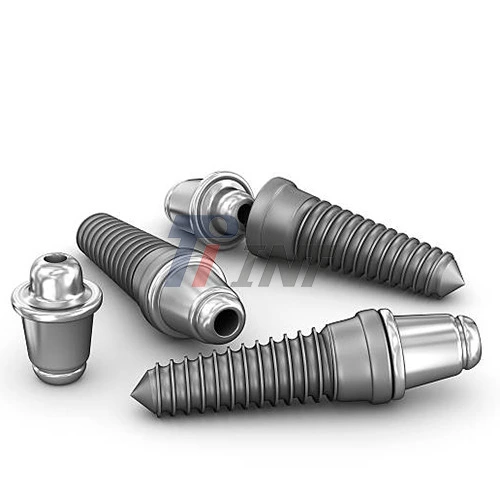
The same sentence often appears in three sections. Threaded implants are bone-inserted. Titanium bar implants screwed along the bottom form the machined substructure across those fittings. The denture base has clips, housings and friction pins to retain the bar. When you combine the three, you mess up the sequence. Despite a lab bar quotation, the clinic requires abutments, prosthesis screws, and a verification jig. Clear part numbers and an implant platform-matching graphic simplify things. This prevents redoing later.
From Intraoral Scan to Seated Bar
The procedure begins with an occlusal registration, CBCT scan, intraoral scan, and photos. The lab employs CAD and an implant system library to construct the bar. Then, a multi-ax machine cuts it from a titanium block. After checking, a jig or resin try-in is utilised to ensure the milled bar fits and doesn't rock. Work on the teeth follows the check. Because no tests were done, a bar often fits the model exactly and stresses the implants in the mouth.
Material Grade, Tolerances, and Traceability
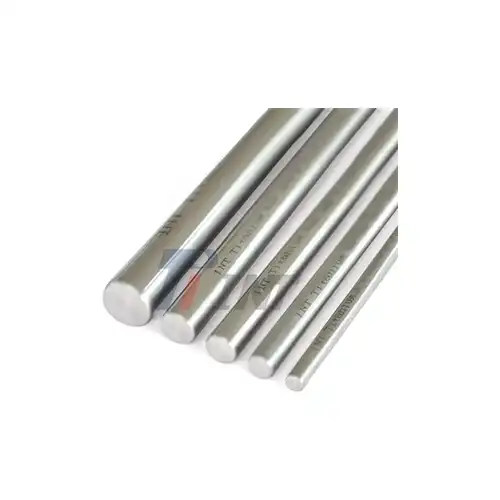
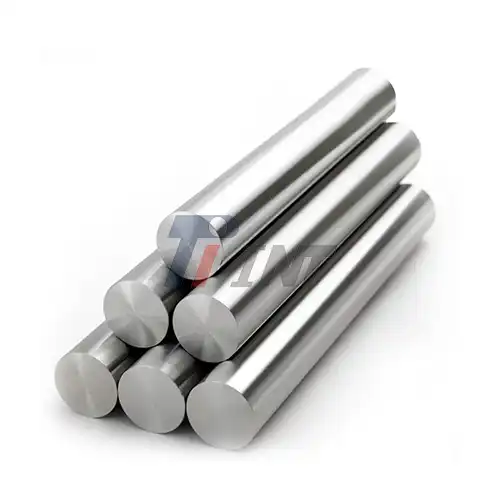
As to ASTM F136 or ISO 5832-3, most titanium bar implants dental bars are Grade 23 Ti-6Al-4V ELI. Pure Grade 4 to ASTM F67 lasts less for company. It is at least 860 MPa when pushed apart and 795 MPa when stretched. It has tougher oxygen and iron limitations than Grade 5. It bends before breaking under cyclic biting loads. Buyers should request the heat number, mill certificate, and EN 10204 3.1 test report. These articles let a skilled engineer track a bar from melting to solid. Device registration is assisted.
Titanium Bar Implants vs Traditional Denture Options
For the same missing tooth case, there are four different prosthetic routes that are all making an offer. There are different ways that each one trades off cost, surgery, and service life.
Against Conventional Removable Dentures
Traditional, non-surgical dentures are the cheapest. Patient satisfaction surveys show that most complain about moving around. Bar-retained overdentures need scanning, implantation, and additional preparation, thus they cost more initially. It improves chewing, keeps the prosthesis in place, and stimulates the bone surrounding the implants better than a tissue foundation. Those with adequate bone and no medical reason to avoid surgery may achieve more with their lives after going the pub way. For a sick individual who can't have surgery, the old technique is better.
Against Locator and Snap-In Overdentures
No connecting bar is needed for locators and "snap-in" dentures. Individual studs are used on each implant. Planning and making them is simpler, and you can replace an old attachment alone. With divergent implants or a soft ridge, studs are obviously ineffective. Vertical lift is their strength, however tipping and lateral load are not. A bar keeps angled implants in place. Simple situations with two implants benefit from studs. If the implant isn't straight or the arch is broad, use a milled bar.
Against Fixed Hybrids and Acrylic Bars
Some people like how a fixed hybrid stays in place and doesn't come loose. It also needs more room for restorations, better hygiene, and longer chair-side repairs when a tooth breaks. A bar made of acrylic wears out faster at the clip interface and can break under heavy load, but a bar made of milled titanium costs more. Ti-6Al-4V costs more to make and use, but it stays in shape longer and breaks less often. The right answer will depend on how much vertical space there is, how clean the patient is, and what the lab can make.
Key Benefits and Potential Limitations
Where Bar Retention Pays Off
Most of the benefits have to do with how it works and how clean it is. In clinical and lab talks, three things come up most of the time.
- Retention under load. A clip-retained bar holds the base against vertical dislodging force, so the denture resists lifting during speech and chewing. Patients stop rationing food by texture, use less adhesive, and report the change within weeks.
- Load sharing across the arch. Splinting implants through one rigid bar spreads occlusal force over every fixture. Single studs concentrate stress at the crest, while a bar lowers peak strain on the bone-implant interface, which helps when fixtures sit at angles.
- Removable access for cleaning. The denture lifts out, so the patient can brush the bar and reach the embrasures with an interdental brush. A fixed hybrid demands floss threaders and steady hands, and many patients cannot keep up with it.
Some people with wide arches and implants that aren't straight may find that a titanium bar implants bar attachment works better than a stud attachment.
Limitations, Wear, and Maintenance Load
An open bar costs more and takes more work to set up. It will take months for the graft to grow after surgery. Over time, parts break down. Screws and clips can come loose, and the acrylic base can break at a joint. You can still get peri-implant disease if you don't clean well, especially if your bar is close to the tissue. People don't need just one visit; they need to go often. No one, not even me, should say that a bar doesn't need help. Having extra money for things like replacing clips, relining every so often, and having extra screws for prosthetics on hand is a realistic case plan.
Upper Jaw Versus Lower Jaw
Jaw may support a bar. If bone is thick, two to four implants should suffice. This design misses the palatal region because to a bar. This improves speech and taste. Maxilla pain increases. Bone grafting softens bone, separates implants, and reduces restorative space. The maxillary bar should have the proper length and breadth for the denture base, housings and teeth when made. Phonetics, tongue space, and cleaning make it tougher to design. I'll include additional photographs and a lengthier checking process for maxillary situations.
Procedure, Healing, and Maintenance
The Clinical Pathway from CBCT to Delivery
The first records are things like photos, CBCT scans, and exams. The surgeon puts in implants based on a plan that looks at how much bone there is and how much room there is for the prosthesis. The doctor uses scan bodies or an impression to keep track of where the implants are after osseointegration. The lab then uses CAD to make the bar. The next steps are to mill, finish, inspect, and use a verification jig to make sure the part fits correctly. The checked bar is used to put the denture on, and then it is sent to the patient already adjusted to fit their mouth. At each checkpoint, a mistake is found before the game starts over.
Healing Time and How to Read the Evidence
Your health, smoking status, graft status, main structural stability, and loading regimen affect how quickly you recover. You must wait three to six months to load your teeth. The maxilla takes longer, but if the insertion torque is great, you may start straight away. I don't state each case's success rate. Implant type, follow-up period, and case choice affect survival rates. Implant survival and prosthesis complications are indicated individually. Check the follow-up time and dropout rate before trusting a figure.
What Long-Term Maintenance Involves
Taking care of things has a simple rhythm. When a professional cleaner comes in, they make sure that plaque is under control, tissues are healthy, and the bar is shining. When the doctor looks at the occlusion, he or she checks to see if any contacts are making too early, which speeds up wear. If they are, the screws are tightened or replaced. It might be time to reline as the tissue changes. Replacement parts must always be on hand since the restoration lasts a long time. This is a question about both supply and safety. If the lab still can't find a matching screw or clip after two years, the doctor is stuck with the case.
Choosing a System, Comparing Cost, and Qualifying Your Supplier
Technical Checks Before You Place an Order
First, enquire how many titanium bar implants there will be, what they will be used for (maxillary or mandibular, immediate or delayed loading), and whether the lab grinds its own teeth or hires someone else. Then examine the interface specifics, such as implant connection type, platform diameter, screw thread and length, bar height, and implant spacing.
Discover passive-fit tolerance and how the supplier verifies it. CAD/CAM libraries in implant systems should be checked. Designers choose custom bars for their flexibility and ability to accommodate complex bodies. However, prefabricated blanks decrease inventory risk and lead time. Choose the proper case volume for your task.
Cost Drivers and a Quotation Checklist
The price covers titanium type, blank size, machining time, inspection, packaging, shipping, and documentation. A low unit price without a mill certificate isn't a savings. When requesting an estimate, provide the heat number, minimum order quantity, lead time, grade and standard, size and tolerance, EN 10204 3.1 certificate, and mechanical test report. Include lead time and standard. Remakes, downtime, and the bill are expensive. Unfit bars cost far more than the difference between two quotations.
How to Qualify a Titanium Bar Implants Manufacturer
Look beyond the price list. Make sure you have the quality management certificate, know what you may register, and check the recent audit. Send a sample batch to a third party for chemical and mechanical testing following request. Check how the provider bills, records, and addresses complaints. Determine where, how, and whether the metal is melted and cooled in-house. These stages determine microstructure and machineability. A certificate won't tell you everything; a video or in-person audit will. Any titanium bar implant supplier should show you their nonconformance record before signing.
Conclusion
Titanium bar implants are not always better, and I wouldn't say that. They are pricey, but they are worth it when a person needs retention, cross-arch stability, and easy access for cleaning, and when their body can support enough implants spread out in a way that works. Dentures that fit over your teeth are still the best choice when surgery is not an option or when money is tight.
For simple two-implant mandibular cases, locator studs are a less expensive choice. Using materials that meet ASTM F136 or ISO 5832-3 standards, making sure the fit is passive, keeping records that can be tracked, and making sure that replacement parts are still available years later are all things that set a good result apart from an expensive remake. It's not the idea itself that makes the difference.
FAQ
Do bar-retained overdentures really hold better than conventional dentures?
The bar holds the base to the implants instead of glue and suction most of the time. It stays in place better when you talk and chew, and many people use less glue. For this reason, a doctor shouldn't promise a certain result. It depends on how many implants are used, how good the bone is, and how the bar is made.
How long does a bar overdenture take from start to finish?
Plan ahead for a few months. It takes weeks to image and plan, three to six months for the implant to heal, and another two to four weeks for the lab to make it, depending on how complicated it is. Instant-loading protocols can cut down on the time it takes in some situations. The lab does what your doctor tells them to do.
What is the difference between a bar and a locator attachment?
A locator uses a stud to find each implant. A bar connects the implants to a milled substructure, and the denture clips onto that bar. There is less risk of damage to the implant and it costs less than locators. The weight is spread out across the arch by bars. "Snap-in dentures" can mean either type, so be sure you know which one you want before you place your order.
Source Titanium Bar Implants Material from Baoji INT Medical Titanium Co., Ltd.
You can send your needs to Baoji INT Medical Titanium Co., Ltd., and our staff will find Grade 23 or Grade 5 titanium bar stock that fits them. After that, the bars will be cut to your drawing. They will also come with EN 10204 3.1 paperwork and a heat number that can be used to keep track of them. Since 2003, we've been giving medical titanium to people who make implants. Our goods are approved by EU CE, ISO 9001:2015, and ISO 13485:2016. If you want to get a quote for titanium bar implants, email export@tiint.com with your size, standard, and volume.
References
1. ASTM F136-13(2021), Standard Specification for Wrought Titanium-6Aluminum-4Vanadium ELI Alloy for Surgical Implant Applications, ASTM International, 2021.
2. ISO 5832-3:2021, Implants for Surgery — Metallic Materials — Part 3: Wrought Titanium 6-Aluminium 4-Vanadium Alloy, International Organization for Standardization, 2021.
3. Feine JS et al., "The McGill Consensus Statement on Overdentures," International Journal of Prosthodontics, 2002.
4. Thomason JM et al., "Mandibular Two Implant-Supported Overdentures as the First Choice Standard of Care for Edentulous Patients — The York Consensus Statement," British Dental Journal, 2009.
5. Karl M et al., "In Vitro Study on Passive Fit in Implant-Supported 5-Unit Fixed Partial Dentures," International Journal of Oral & Maxillofacial Implants, 2004.
6. Assunção WG et al., "Comparing the Efficacy of Mandibular Implant-Retained Overdentures and Conventional Dentures Among Elderly Edentulous Patients: Satisfaction and Quality of Life," Gerodontology, 2007.