




Can Titanium Bar for Medical Use Be Customized for Surgical Implants?


 2026-10-10 14:44:16
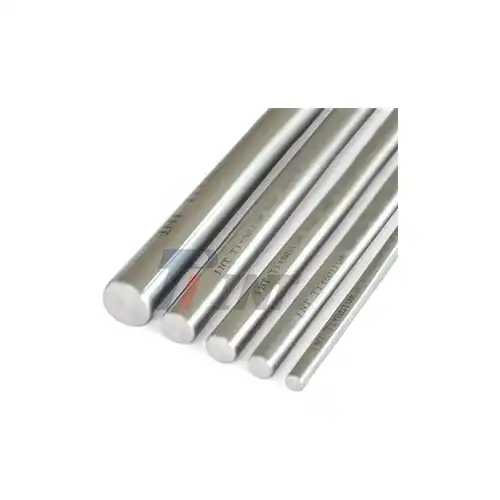
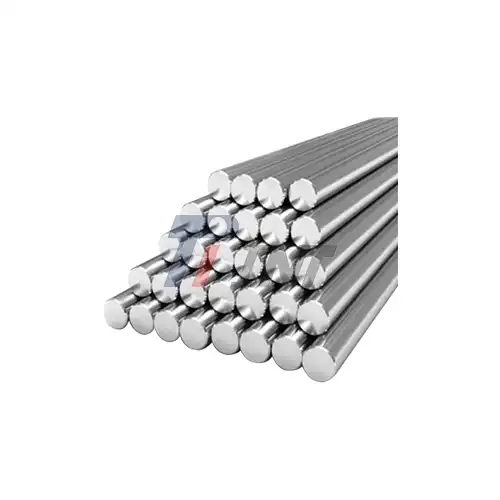
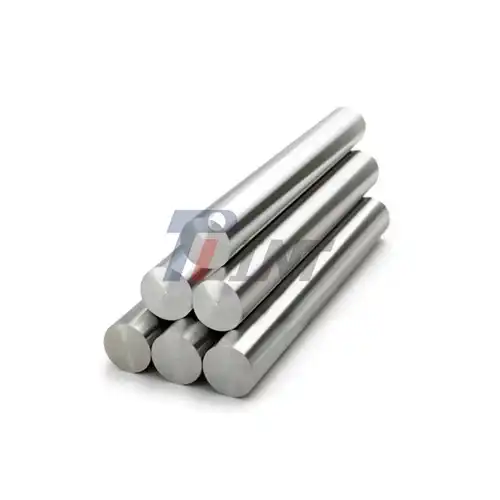
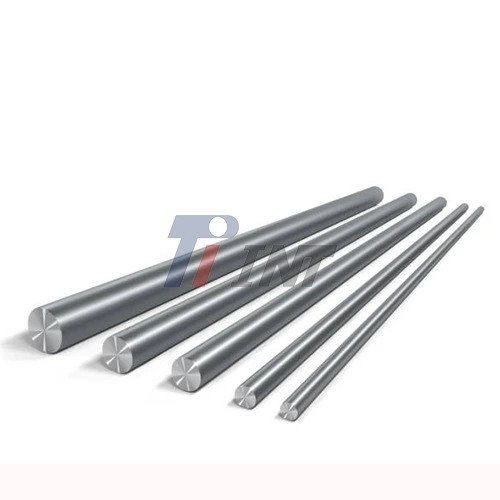
Yes — a titanium bar for medical use can absolutely be customized for surgical implants. Medical-grade titanium bars, particularly Ti-6Al-4V ELI (Grade 23) and commercially pure grades (Gr1–Gr4), serve as the primary raw material feedstock for manufacturing surgical instruments and implant components. Manufacturers routinely specify custom diameters, lengths, tolerances, and surface finishes to match their CNC machining and forging workflows. Whether you are producing orthopedic bone screws, spinal rods, or instrument handles, the right customized titanium bar stock makes precision machining faster, more consistent, and fully compliant with ASTM F136 and ISO 5832 standards.
|
|
|
Understanding Titanium Bars for Medical Use
Medical-grade titanium bars are not the same as industrial-grade stock. They go through vacuum arc remelting (VAR) to get rid of high-density inclusions, make the alpha-beta microstructure uniform, and make sure they meet strict chemical composition limits. This is especially important for interstitial elements like oxygen, nitrogen, and hydrogen that weaken the metal.
Grade Selection Matters More Than You Think
Grade 23 (Ti-6Al-4V ELI) and commercially pure grades (Gr1–Gr4) are the two grades that are most useful for surgical uses. Grade 23 has a maximum oxygen content of 0.13% and a maximum iron content of 0.25%. It is stronger than standard Grade 5 and can't break easily. CP grades are great for making instrument handles and working ends because they don't rust and can be shaped easily. Choosing the wrong grade has a direct effect on how easy it is to machine, how long it lasts, and how well it works with living things. This is why buying teams should say the grade, not just "titanium."
Why Titanium Outperforms Stainless Steel and Cobalt Chrome
Titanium has a modulus of elasticity of about 110 GPa, which is much lower than the modulus of elasticity of cortical bone (20 GPa) and much higher than that of stainless steel (200 GPa) or cobalt-chrome (230 GPa). This lower stiffness makes orthopedic implants less likely to protect against stress, which helps bone heal naturally. Titanium bar for medical use works better than other metals in long-term implant settings where neither corrosion nor immune response is okay because it has an inactive oxide layer that protects against chloride-rich body fluids.
Why Customization of Titanium Bars Matters in Surgical Implants
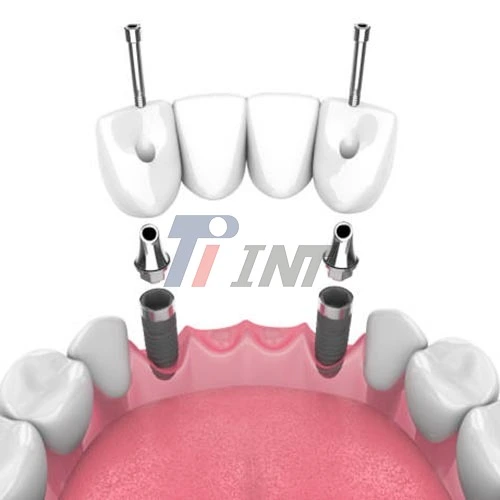
Standard titanium bar stock that you can buy off the shelf rarely meets the size and performance needs of complex implant designs. A spine rod needs different diameter ranges and surface conditions than a trauma fixation screw blank or a tooth abutment blank. Customization fills in the quality gap between the raw materials and the finished implant.
Dimensional Customization Drives Machining Efficiency
Swiss-type CNC lathes are used to make a lot of medical instruments in Sialkot, Solingen, and other related areas. They depend on guide bushings that need to be very consistent in thickness. Bars that have been centerless-ground to ISO h7 or h8 standards and have a surface roughness of Ra < 0.8 µm feed smoothly without shaking. This keeps the tool life and accuracy of the measurements safe during large-scale production runs. Custom-cut lengths also cut down on waste and time spent moving things around in the shop.
Surface Treatments and Sterilization Compatibility
Customization goes beyond geometry and includes surface condition. Anodized oxide layers (Type II or III) do two things: they make it easier to find bars by color-coding them by thickness, and they also make them more resistant to rust. All surface treatments must be able to withstand gamma radiation and autoclaving (134°C steam sterilization) without harming the base material. By laying out these needs up front instead of adding them later, you avoid having to do expensive changes later on.
How Customized Titanium Bars Are Manufactured and Processed
Most procurement managers don't know how tightly controlled the process is for making special medical titanium bars. It starts a long time before a bar hits your CNC floor.
From VAR Melting to Centerless Grinding
To get chemical homogeneity, double or triple VAR melting is the first step in making a compliant medical titanium bar. The billet that is made goes through controlled thermo-mechanical processing to make the grains smaller (ASTM E112 #5 or smaller) and get rid of the "alpha case" surface layer that forms during high-temperature processing.
If the alpha case isn't removed by grinding or pickling, it can cause microcracks that make the implant's fatigue life much shorter. After the titanium bar for medical use is finished, it is centerless-ground to very tight tolerances and tested using ultrasonic waves according to AMS 2631 Class A1 to find holes inside it that can't be seen.
Here are the main quality standards that show if a custom medical titanium bar is ready for production:
- Chemical verification: Inert gas fusion testing confirms oxygen, nitrogen, and hydrogen levels stay within ASTM F136 or ISO 5832-3 limits, preventing interstitial embrittlement.
- Dimensional tolerance: Laser micrometer checks across the full bar length confirm diameter consistency within h7/h8/h9 bands required for automated CNC feeders.
- Ultrasonic inspection: Volumetric scanning detects sub-surface inclusions that visual inspection cannot catch — a mandatory step for fracture-critical implant material.
- Mill Test Certificate (EN 10204 3.1): Documents heat number, chemical composition, mechanical properties, and applicable standard — essential for export clearance and customer audits.
These standards cover the whole supply chain, from your forging press to the regulatory report from your final customer.
Procurement Considerations for Customized Medical Grade Titanium Bars
There's more to picking a titanium bar for medical use supplier than just looking at prices. For instrument makers who get orders with a wide range of specs every month, speed of paperwork and dependability are just as important as unit cost.
What to Evaluate Before Placing a Trial Order
- Certifications on file: ISO 9001:2015 and ISO 13485:2016 certification confirms the supplier operates a documented quality management system. EU CE certification adds another layer of compliance assurance relevant for European market access.
- Grade and size inventory: Gr1, Gr2, and Gr4 CP grades plus Ti-6Al-4V ELI in common diameters should be available in stock or with a lead time under four weeks for standard sizes.
- MOQ flexibility: Mixed-specification orders with small per-grade quantities are the norm in surgical instrument manufacturing. A capable supplier accommodates split orders without forcing unnecessarily large minimum quantities.
- Document turnaround: Mill test certificates and material traceability documents issued within 24–48 hours of shipment confirmation prevent delays in your export paperwork and customer factory audits.
Grade and size inventory: Standard sizes of Gr1, Gr2, and Gr4 CP grades as well as Ti-6Al-4V ELI should be in stock or have a wait time of less than four weeks.
Comparison and Decision-Making: Titanium Bars vs Alternative Materials
Choosing a material for an implant depends on three things: how well it works mechanically, how well it works with living things, and how much it costs to own over its lifetime. Titanium (Gr23), 316L stainless steel, and cobalt chrome are the materials that are used.
Different materials have different moduli of elasticity, corrosion resistance, and artifact concerns. Biocompatibility ranges from excellent to acceptable to acceptable. MRI compatibility ranges from non-magnetic to ferromagnetic issues. Long-term implantation is preferred, but only for a few applications.
| Parameter | Titanium (Gr23) | 316L Stainless Steel | Cobalt-Chrome |
|---|---|---|---|
| Modulus of Elasticity | ~110 GPa | ~200 GPa | ~230 GPa |
| Corrosion Resistance | Superior | Moderate | Good |
| Biocompatibility | Excellent | Acceptable | Acceptable |
| MRI Compatibility | Non-magnetic | Ferromagnetic issues | Artifact concerns |
| Long-term Implantation | Preferred | Limited applications | Selected applications |
Titanium is the clear choice for implants that stay in people who have been MRI-scanned because it is not magnetic. Because it doesn't react chemically with chloride, it doesn't release ions that cause inflammatory reactions. This is known to be a problem with cobalt-chrome metals in some patient groups.
Conclusion
It is not only possible to customize a titanium bar for medical use, but it is also what most makers do when they want to compete on accuracy, compliance, and quality. There are a lot of choices in the bar stock that affect what your CNC floor makes. These choices include VAR-melted billets, alpha-case-free surfaces, ISO h7 standards, and EN 10204 3.1 mill certificates. Surgical instrument and implant makers who get titanium bar stock that meets the right specifications cut down on scrap, speed up the machining process, and meet their customers' audit requirements on the first try. The investment in materials pays off all along the production line.
FAQ
What grades of titanium bar are most suitable for surgical instruments?
When shapeability is more important than tensile strength, Gr1 and Gr2 CP titanium are best for instrument handles and working ends. Gr4 has more strength in the CP range, making it a good choice for instrument blades that need to be stronger. Ti-6Al-4V ELI (Grade 23) is the standard for load-bearing implant parts that need to be very resistant to fatigue and hard to break.
What documents should accompany a shipment of medical titanium bar stock?
Every order should come with at least an EN 10204 3.1 Mill Test Certificate that lists the heat number, chemical composition, mechanical test results, and the standard that applies (ASTM F136 or ISO 5832). These papers help with both your export clearance and your customers' inspection procedures when they come in.
What tolerance is recommended for Swiss CNC machining?
As a general rule, the diameter tolerance should be ISO h8 or h7, and the surface roughness should be Ra < 0.8 µm. To keep concentricity during complex turning operations, guide rings in Swiss-style lathes need to have a tight diameter uniformity.
Is a small mixed-specification order viable?
Yes, reputable sellers of titanium bars for medical use can handle split orders of more than one grade or thickness. This is a common way for surgical tool makers to buy supplies when they are making a lot of different products at the same time.
Partner With Baoji INT Medical Titanium Co., Ltd. for Your Next Order
Since 2003, Baoji INT Medical Titanium Co., Ltd. has been making medical titanium materials. All of their products are certified to meet ISO 9001:2015, ISO 13485:2016, and EU CE standards. As a supplier of titanium bars for medical use, we keep a wide range of diameters in stock in the grades Gr1, Gr2, Gr4 CP, and Ti-6Al-4V ELI. Our minimum order quantity is open, and we provide paperwork quickly. To get samples or a reasonable price, email our team at export@tiint.com or visit inttitanium.com.
References
1. ASTM International. ASTM F136: Standard Specification for Wrought Titanium-6Aluminum-4Vanadium ELI Alloy for Surgical Implant Applications. 2023.
2. ISO. ISO 5832-3: Implants for Surgery — Metallic Materials — Part 3: Wrought Titanium 6-Aluminium 4-Vanadium Alloy. 2021.
3. Niinomi, M. Mechanical Biocompatibilities of Titanium Alloys for Biomedical Applications. Journal of the Mechanical Behavior of Biomedical Materials. 2008.
4. Geetha, M., Singh, A.K., Asokamani, R., & Gogia, A.K. Ti Based Biomaterials: The Ultimate Choice for Orthopaedic Implants. Progress in Materials Science. 2009.
5. Rack, H.J., & Qazi, J.I. Titanium Alloys for Biomedical Applications. Materials Science and Engineering C. 2006.
6. Long, M., & Rack, H.J. Titanium Alloys in Total Joint Replacement — A Materials Science Perspective. Biomaterials. 1998.