




Gr 1 Titanium Disc vs Other Grades: Which Material Should You Choose?


 2026-10-27 08:42:58
If you manufacture orthopedic implant forgings — hip stems, acetabular cups, femoral heads — the billet material you start with defines everything downstream. When it comes to pure titanium disc selection, Gr 1 titanium disc consistently emerges as the preferred forging blank for applications demanding maximum biocompatibility and cold formability. But is it always the right call? This guide breaks down the material science, procurement logic, and real-world tradeoffs so you can make a confident sourcing decision.
|
|
|
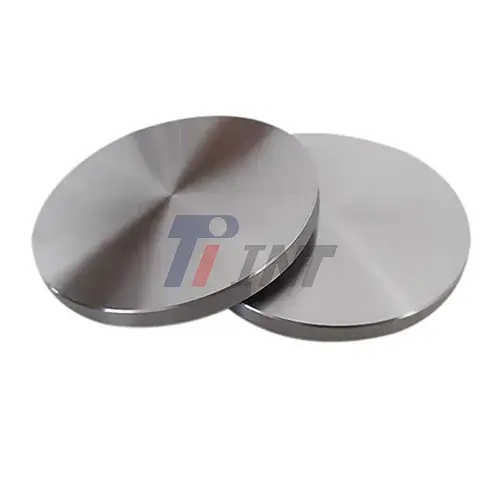
Understanding Gr 1 Titanium Disc: Properties and Applications
What Makes Gr 1 Commercially Pure Titanium Unique?
While Gr 1 has a minimum titanium level of 99.5%, it is the purest type of commercially pure (CP) titanium. Standard ASTM B265 and ASTM F67 say that the oxygen level must stay below 0.18% and the iron level must stay below 0.20%. Because of its low interstitial levels, it has a yield strength of about 170 MPa, an elongation of more than 24%, and a density of 4.51 g/cm³. This makes it the most flexible and easy to shape of all the CP grades.
The steady passive oxide film Gr 1 forms right away when exposed to air, which is a very important feature on the forging shop floor. The film is chemically strong and can fix itself. This is a big reason why it is almost immune to rust from air, saltwater pitting, and organic acid attack. This means that the Gr 1 titanium disc surface of implant forging billets stays metallurgically clean while it is being stored, moved, and loaded into the die.
Where Gr 1 Discs Are Deployed in Medical Manufacturing
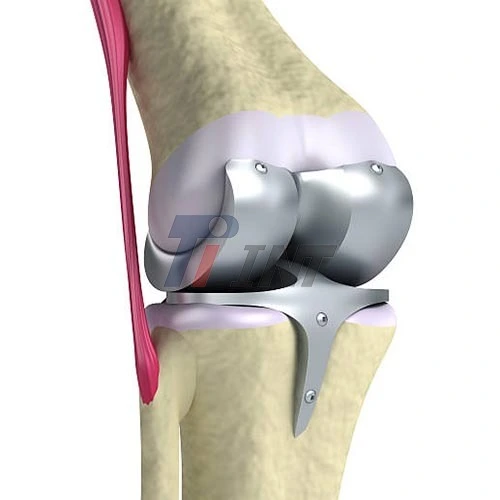
Because the material is soft and easy to shape, it works well for craniofacial plates, pacemaker housings, and dental meshes, where surgeons can shape the material to fit the patient's body. When it comes to orthopedic forging billets, the high elongation and uniform alpha-phase microstructure help the metal flow smoothly during impression die forging, and there is no risk of cold-cracking at room temperature. In addition to their use in medicine, Gr 1 titanium discs are used as anode substrates in PEM electrolyzers and chlor-alkali cells, which must be able to survive wet chlorine gas. This grade is also used in marine pressure sensor diaphragms and desalination plant flanges, which shows how chemically stable it is across industries.
Comparing Gr 1 Titanium Disc with Other Titanium Grades and Metals
There is no such thing as a one-size-fits-all material choice. This is how Gr 1 titanium disc stacks up against the grades your engineering team probably looks at:
- Gr 1 vs. Gr 2 CP Titanium: Gr 2 has a little more oxygen (up to 0.25%) and iron (up to 0.30%) than Gr 1. This makes its yield strength about 275 MPa, which is 60% higher than Gr 1. Gr 2 works if your forging line needs a billet that can handle a tighter die fill without tearing. But Gr 1 is still the best choice when deep-drawing shapeability or bio-inertness in thin-section implants is very important.
- Gr 1 vs. Gr 4 CP Titanium: The finest grade of CP is Gr 4, which has a yield strength of about 480 MPa. During forging, it work-hardens quickly, which makes the die wear out faster and the process take longer. It's not very useful as a core for orthopedic implants, but it is used in dental root form implants that need to be more resistant to cortical load.
- Gr 1 vs. Ti-6Al-4V ELI (Grade 23): Ti-6Al-4V ELI is best for high-load orthopedic forgings like femoral stems and tibial trays because it has a yield strength higher than 795 MPa. That strength comes at a price: the metal needs to be forged at higher temperatures (above 900°C), is easily damaged by hydrogen if the amount of hydrogen in the block is more than 0.0125%, and needs more precise control during the heating process. A pure titanium disc at the Gr 1 purity level is a cheaper and more stable place to start when making low-stress implant parts where biocompatibility and ease of shaping are more important than mechanical load.
- Gr 1 vs. Stainless Steel (316L): Stainless steel is easier to work with and costs less to make, but it is almost twice as dense as titanium (about 8.0 g/cm³) and doesn't hold up as well against corrosion in biological environments high in chloride. Nickel ion release from 316L is also known to be a problem in implant applications. This is not a problem with CP titanium.
These similarities show that there isn't a single score that is best in all situations. You will make the right choice if you know your forging shape, wall thickness, load requirements, and the NDT procedure further down the line.
How to Choose the Right Titanium Disc Grade for Your Business Needs?
Define Performance Criteria Before Requesting a Quote
Your forging process engineers and NDT lead should agree on three things before you send in a billet inquiry: the minimum elongation needed at die-fill temperatures; the acceptable grain size range (usually ASTM E112 Grade 5–8 for implant forgings); and the ultrasonic inspection class. For billets going through Class A UT inspection according to AMS 2631, internal cleanliness (not having any high-density inclusions or stratification) is no longer just a shipping condition; it's also a vendor qualification step for your Gr 1 titanium disc supply.
Match Grade to Total Cost of Ownership
Titanium is expensive per unit, and if the thickness of the billet doesn't fit the shape of the forging envelope, scrap is lost. If you choose a custom-cut disc diameter that is close to the projected circle of your part, less titanium will be removed during pre-forging and post-forging machining. Material return efficiency is often more important than the price per kilogram of raw materials when figuring out the cost per finished forging. A supplier that can send you custom-sized discs with tight flatness tolerances cuts down on the waste you have to deal with before the first blow even lands.
Procurement Guide for Gr 1 Titanium Disc: How and Where to Buy?
There is an organized way to find a qualified titanium forging billet seller. Here are the points of review that supply chain managers with a lot of experience use:
- Certifications and Standards Compliance: Suppliers should show that they follow ISO 9001:2015, ISO 13485:2016 for medical-grade billets, and the ability to track materials all the way back to the melting point. CP titanium for surgical implants is governed by ASTM F67, and any Gr 1 titanium disc that is supplied should have a certificate of conformance that references that standard.
- NDT Documentation: Ask for ultrasonic test reports with AVG/DAC curves instead of just a "pass" or "fail" note. Your NDT team will know what to expect when they re-inspect after forging thanks to internal flaw mapping.
- Custom Sizing Capability: If a provider can cut discs to the diameter and thickness you specify, instead of just giving standard catalog sizes, you can get the best weight ratio for your billet-to-finished-part and spend less on expensive machining allowance.
- Grain Size and Chemical Validation: Every heat batch should come with an ICP-OES chemical composition report and an ASTM E112 grain size analysis. Hydrogen content must stay below 0.015 percent to keep steel from becoming weak during forming.
In a controlled implant supply chain, these requirements are the minimum and can't be skipped. It usually takes two to four months to check out a new billet source. During that time, trial forging runs are done on one or two heat batches before the seller is officially added to the approved vendor list (AVL).
Industry Use Cases with Gr 1 Titanium Forging Billets
When making orthopedic implants with acetabular cup geometries, makers usually choose Gr 1 titanium disc blanks as their chosen blank. The hemispherical shell of the cup needs even metal flow when it is forged. Gr 1 CP titanium's high elongation allows that flow to happen without breaking or disrupting the fibrous grains, which would shorten the material's wear life. Pass rates for ultrasonic inspection after forging are much higher when billets have a consistent, fine-grained microstructure that was checked in the mill.
Mixed metal oxide (MMO) catalytic layers are put on Gr 1 titanium disc substrates for chemical processing. These discs are used as long-lasting anodes in industrial electrolyzers. The substrate's ability to resist wet chlorine and its stable oxide chemistry make cell service intervals much longer than those of coated stainless steel alternatives. These examples from different industries back up a consistent finding: the quality of the billet metallurgy at the input stage determines the reliability of the part at the output stage.
Conclusion
Choosing the right grade for titanium forging billets is both a technical and a business choice that will have long-lasting effects. When biocompatibility, cold formability, and corrosion resistance are important design criteria, Gr 1 titanium disc material performs admirably. When mechanical load needs rise, Gr 2 and Ti-6Al-4V ELI step in. The right answer will depend on the geometry of the forge, the NDT process, and the performance range of the part. What stays the same is the need for a billet source whose metallurgical uniformity you can check, not just guess, before the production run starts.
FAQ
Q1: How does a Gr 1 titanium disc differ from Gr 2?
A: Gr 1 has less iron and oxygen in it, which makes it more flexible (>24% extension) and easier to shape. Gr 2 has a yield strength that is about 60% higher. If you need a material that can be shaped deeply and is biocompatible, choose a Gr 1 titanium disc. If you also need something with middling strength, choose Gr 2.
Q2: Can Gr 1 titanium disc material be welded?
A: Yes. It can be welded cleanly with either TIG or MIG processes and an inert argon shield. Because it is very pure, it doesn't form rigid phases in the heat-affected zone. This makes it safe for bonded implant subassemblies and electrochemical cell parts.
Q3: What is the highest temperature that is safe to use?
A: Most structures can only work at temperatures up to about 250°C (480°F). When this level is reached, the yield strength drops significantly, and the material can no longer be used for load-bearing tasks.
Q4: What NDT standard applies to implant-grade billets?
A: A standard for ultrasonic inspection is AMS 2631 Class A. To help your new inspection process, suppliers should give you AVG/DAC curve data instead of just pass/fail records.
Q5: Why does grain size matter for forging billets?
A: When the die is forged, coarse grains leave a "orange peel" on the surface, and the finished implant has a shorter fatigue life. Checking the grain size according to ASTM E112 at the block stage saves the forging yield and the NDT pass rates further down the line.
Partner with Baoji INT Medical Titanium Co., Ltd. for Your Next Billet Order
Baoji INT Medical Titanium Co., Ltd. has supplied medical-grade titanium materials since 2003, backed by ISO 9001:2015 and ISO 13485:2016 certifications and over 30 years of hands-on metallurgical expertise. As a trusted Gr 1 titanium disc manufacturer, we offer custom-sized discs with full NDT documentation, heat-batch traceability, and flexible MOQ options to support both new product introduction and high-volume production schedules. Send your forging drawing and billet specification to export@tiint.com to start the qualification process.
References
1. ASTM International. ASTM F67: Standard Specification for Unalloyed Titanium for Surgical Implant Applications. ASTM International, 2023.
2. ASTM International. ASTM B265: Standard Specification for Titanium and Titanium Alloy Strip, Sheet, and Plate. ASTM International, 2020.
3. ASM International. Titanium: A Technical Guide. ASM International, 2000.
4. Rack, H.J., and Qazi, J.I. "Titanium alloys for biomedical applications." Materials Science and Engineering: C, 2006.
5. Niinomi, M. "Mechanical biocompatibilities of titanium alloys for biomedical applications." Journal of the Mechanical Behavior of Biomedical Materials, 2008.
6. Donachie, M.J. Titanium: A Technical Guide, 2nd Edition. ASM International, 2000.