




OEM Ti6Al4V ELI Titanium Bar: Custom Sizing and Quality Guide


 2026-10-27 08:43:07
When orthopedic implant manufacturers search for a reliable Grade 23 titanium bar supplier, material compliance and batch consistency sit at the top of every checklist. A Ti6Al4V ELI titanium bar — defined by tightly controlled interstitial elements under ASTM F136 and ISO 5832-3 — delivers the biocompatibility, fracture toughness, and mechanical stability that implant-grade machining demands. This guide walks procurement and engineering teams through alloy specifications, OEM custom sizing workflows, material comparisons, and sourcing criteria, so every purchasing decision is grounded in verifiable technical fact.
|
|
|
Understanding Ti6Al4V ELI Titanium Bar: Properties and Specifications
Grade 23 titanium (UNS R56407) is the Extra Low Interstitial form of the Ti-6Al-4V alloy that is used a lot. The "ELI" name is not a marketing device; it means that the amount of oxygen (-0.13%), iron (-0.25%), nitrogen (-0.05%), and carbon (-0.08%) has been chemically reduced. Each of these limits directly raises the toughness to fracture and the resistance to wear without lowering the tensile strength significantly.
Mechanical Performance at a Glance
As per ASTM F136, bars must have a minimum yield strength of 795 MPa and a final tensile strength of at least 860 MPa, with more than 10% extension. The elastic modulus is close to 113 GPa, which is much lower than stainless steel's 200 GPa range and much closer to that of cortical bone (15–25 GPa range in composite structure). This makes it safer for load-bearing implant designs to use. The alloy is also non-ferromagnetic, which means it can be used in MRI machines, and it stays tough even at very low temperatures, close to -253°C.
Governing Standards
Implant-grade bars are defined by three main standards: ASTM F136 (for surgical implants), ASTM F67 (for unalloyed titanium), and ISO 5832-3 (for surgical implants made of wrought Ti-6Al-4V alloy). For companies that use ISO 13485 quality management systems to register medical devices with the FDA or notified bodies in the EU MDR framework, they need full EN 10204 3.1 mill certificates and heat/lot tracking paperwork.
OEM Custom Sizing: Meeting Your Exact Specifications
Diameter, Length, and Tolerance Control
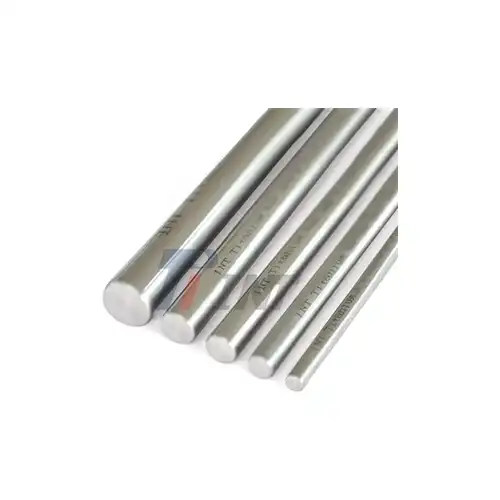
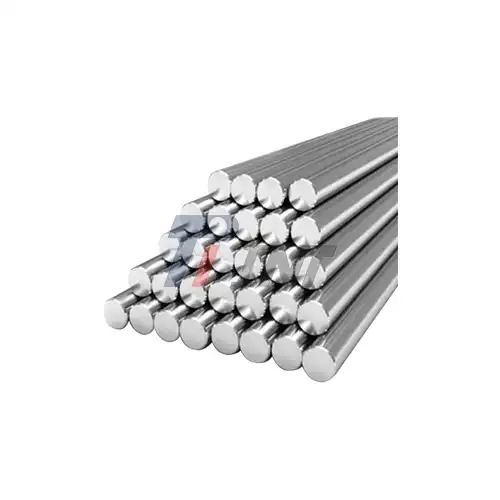
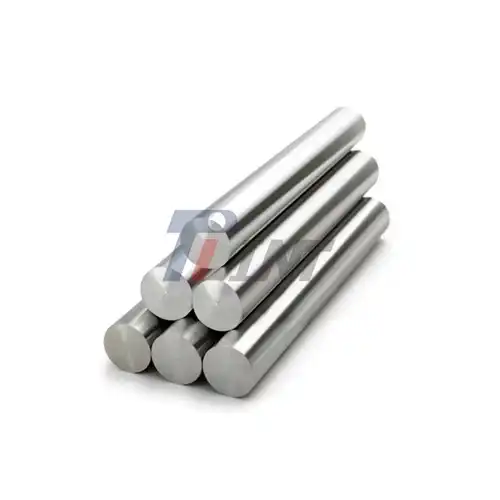
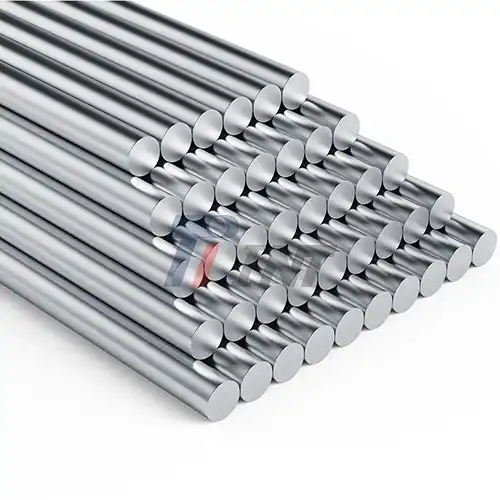
OEM makers of implants don't usually work from stock sizes. Spinal pedicle screw blanks, trauma nail preforms, and craniofacial plate feedstock all need to be a certain length and cross-section. A good Ti6Al4V ELI titanium bar provider can make round bars with diameters ranging from about 3 mm to 200 mm, and they can fix the straightness and roundness tolerances to h9 or better upon request. This cuts down on CNC setup waste and ensures that tool life is consistent across batches.
Custom Order Workflow
A typical OEM custom order follows a set path that makes sure quality is checked at every step. The buyer sends in dimension drawings and the relevant standard reference. The supplier verifies the chemistry against a retained heat certificate. Forging and rolling are done with process parameter records attached to the lot. Finally, a COA is generated that is linked to a unique heat number after hardness, dimension, and surface condition checks. This chain of custody is what makes it possible to submit master files for implant devices.
To make sure your custom bar order is legal, these are the control points that mean the most:
- Heat traceability: Every bar carries a heat/lot number linking it back to the vacuum arc remelting (VAR) melt record, confirming alloy composition before a single machining pass begins.
- Dimensional certification: Mill certificates confirm diameter tolerance, straightness per meter, and surface finish class (turned, ground, or polished), directly informing CNC toolpath parameters.
- Third-party verification option: Buyers may request independent chemical and mechanical testing at an accredited lab (ISO/IEC 17025) before accepting a shipment, a step that eliminates batch-rejection risk downstream.
Together, these three checkpoints lower the chance of a material nonconformance in the middle of production, which stops implant production lines and causes expensive CAPA events. Setting them up with your supplier right away is normal practice for device makers who are ISO 13485-certified.
Comparing Ti6Al4V ELI Titanium Bars with Alternatives
ELI Grade vs. Standard Grade 5 and Other Alloys
Purchasing managers often look at three materials that are in competition with each other: commercially pure (CP) titanium grades, standard Ti-6Al-4V (Grade 5, ASTM B348), and the Ti6Al4V ELI titanium bar variant. CP titanium doesn't rust very well, but it's not strong enough to be used for load-bearing spine or trauma gear. Stainless steel (316L) is very strong, but it has a higher mass than titanium (about 7.9 g/cm³ vs. 4.43 g/cm³) and can cause problems with MRI images.
ELI grade lowers oxygen from 0.20% to 0.13% compared to Grade 5. This raises fracture toughness (K₁c) and makes elongation better. This difference in crack spread resistance is what makes the difference in high-cycle fatigue situations, which is exactly what an intramedullary nail or pedicle screw is in. The trade-off is a small drop in yield strength, which is usually fixed by changing the shape of the implant rather than using a different material. The higher cost per kilogram of material up front is balanced out by lower scrap rates during CNC machining, fewer non-conformance events, and less regulation re-qualification work when batch properties stay within a tight, predictable range.
Sourcing OEM Ti6Al4V ELI Titanium Bars: Trusted Suppliers and Quality Assurance
There's more to choosing a Ti6Al4V ELI titanium bar maker than just looking at prices per kilogram. Device makers judge a seller on at least three factors: how well they handle regulations, how consistent their production is, and how quickly they respond to questions during approval.
A reliable supplier for Ti6Al4V ELI titanium bar keeps ISO 13485:2016 certification, allows on-site or video checks by customers or informed bodies, and keeps heat records for at least as long as required by EU MDR Article 10 traceability rules. The technical proof point that lowers the risk of a SQE audit is chemical and mechanical consistency from batch to batch, which can be shown through statistical process control data from multiple production runs. Small-batch flexibility is also important when making new implants. For R&D timelines to stay competitive, suppliers must be able to fill prototype-scale orders (even if they're just a few meters of a certain diameter) without requiring production-scale MOQs. Once validation is done, consolidated yearly framework deals keep prices stable.
Applications: Where Grade 23 Titanium Bar Performs
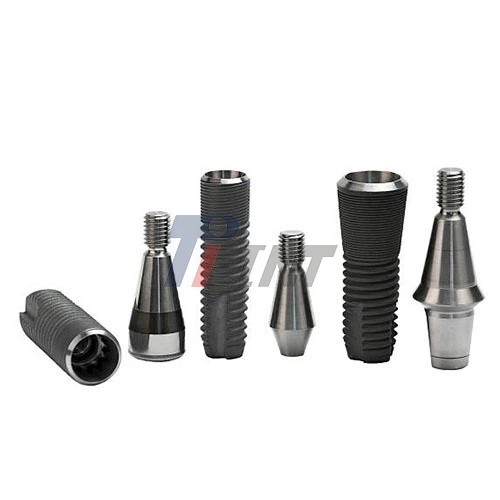
Bar stock made of Ti6Al4V is used as the starting material for many different types of insert cutting. Trauma plates and intramedullary nails need to be consistently hard and have a solid surface in order to survive repeated loading after insertion. To keep fixturing variations to a minimum on multi-axis machining machines, spinal interbody cage preforms need to have a tight circle tolerance. The alloy is easy to shape, which is good for cranial and thoracic fixation parts because it lets low-radius bends happen during intraoperative contouring without starting micro-cracking.
In every type of application, material consistency is what makes it unique. When a CNC operator checks the toolpath parameters against a confirmed lot of material, a later delivery that differs in hardness by even a small amount needs to be re-qualified, which is expensive and throws off the schedule. That variable is taken away by stable, traceable bar stock.
Conclusion
Finding the right Ti6Al4V ELI titanium bar provider is more than just a purchase of a commodity. It's a matter of safety and keeping production going. Any company that makes implants should have a quality system that can be audited, EN 10204 3.1 paperwork, variable custom sizing, and tested chemicals. The material works exactly as regulatory submissions and design validation reports say it will when those conditions are met. It has been shown to be fatigue resistant, biocompatible, and safe for MRI scans.
FAQ
Q1: What distinguishes ASTM F136 from ASTM B348 for titanium bars?
A: ASTM F136 is the implant-specific standard for wrought Ti-6Al-4V ELI alloy, imposing tighter limits on oxygen (≤0.13%) and iron (≤0.25%) than the general industrial standard ASTM B348. Device manufacturers must reference F136 in their device technical files to satisfy FDA and EU MDR material traceability requirements.
Q2: Can custom bar dimensions be ordered in small prototype quantities?
A: Yes. Suppliers with flexible production scheduling can fulfill small-batch orders for development-phase projects. Confirming minimum order quantities and lead times before prototype machining begins is advisable.
Q3: What documentation supports a supplier audit?
A: Key documents include ISO 13485:2016 certification scope, EN 10204 3.1 mill certificates per heat, COA with chemical and mechanical test results, and — where required — ISO 10993-series biocompatibility support files.
Q4: Does heat treatment after bar production affect ASTM F136 compliance?
A: Stress-relief or annealing treatments applied within validated parameter windows do not void ASTM F136 compliance, provided the final mechanical properties still meet the standard's minimums and the treatment is documented in the lot records.
Q5: How is alpha-case managed on turned or ground bar surfaces?
A: Reputable mills remove thermally induced alpha-case through controlled acid pickling or precision surface grinding, then verify absence via metallographic cross-section inspection before issuing the final COA.
Partner With Baoji INT Medical Titanium Co., Ltd. for Your Next Order
Since 2003, Baoji INT Medical Titanium Co., Ltd. has sold titanium products that are safe for implants. They have ISO 13485:2016 and ISO 9001:2015 certifications to back this up. As a provider of Ti6Al4V ELI titanium bars, we can meet your specific needs for diameter and length. We also offer full heat traceability, EN 10204 3.1 certificates, and third-party proof. You can email our technical team at export@tiint.com to get a material specification sheet or talk about the needs of your OEM project.
References
1. ASTM International. ASTM F136: Standard Specification for Wrought Titanium-6Aluminum-4Vanadium ELI Alloy for Surgical Implant Applications. 2013.
2. International Organization for Standardization. ISO 5832-3: Implants for Surgery — Metallic Materials — Part 3: Wrought Titanium 6-Aluminium 4-Vanadium Alloy. 2021.
3. Rack, H.J., & Qazi, J.I. "Titanium alloys for biomedical applications." Materials Science and Engineering: C, 2006.
4. Niinomi, M. "Mechanical biocompatibilities of titanium alloys for biomedical applications." Journal of the Mechanical Behavior of Biomedical Materials, 2008.
5. Long, M., & Rack, H.J. "Titanium alloys in total joint replacement — a materials science perspective." Biomaterials, 1998.
6. European Commission. EU Medical Device Regulation (EU) 2017/745: Regulation on Medical Devices. Official Journal of the European Union, 2017.